


























Views
Downloads

Essential Grade 6 Math Assessment: Area and Percentages
Paste this activity's link or code into your existing LMS (Google Classroom, Canvas, Teams, Schoology, Moodle, etc.).
Students can open and work on the activity right away, with no student login required.
You'll still be able to track student progress and results from your teacher account.
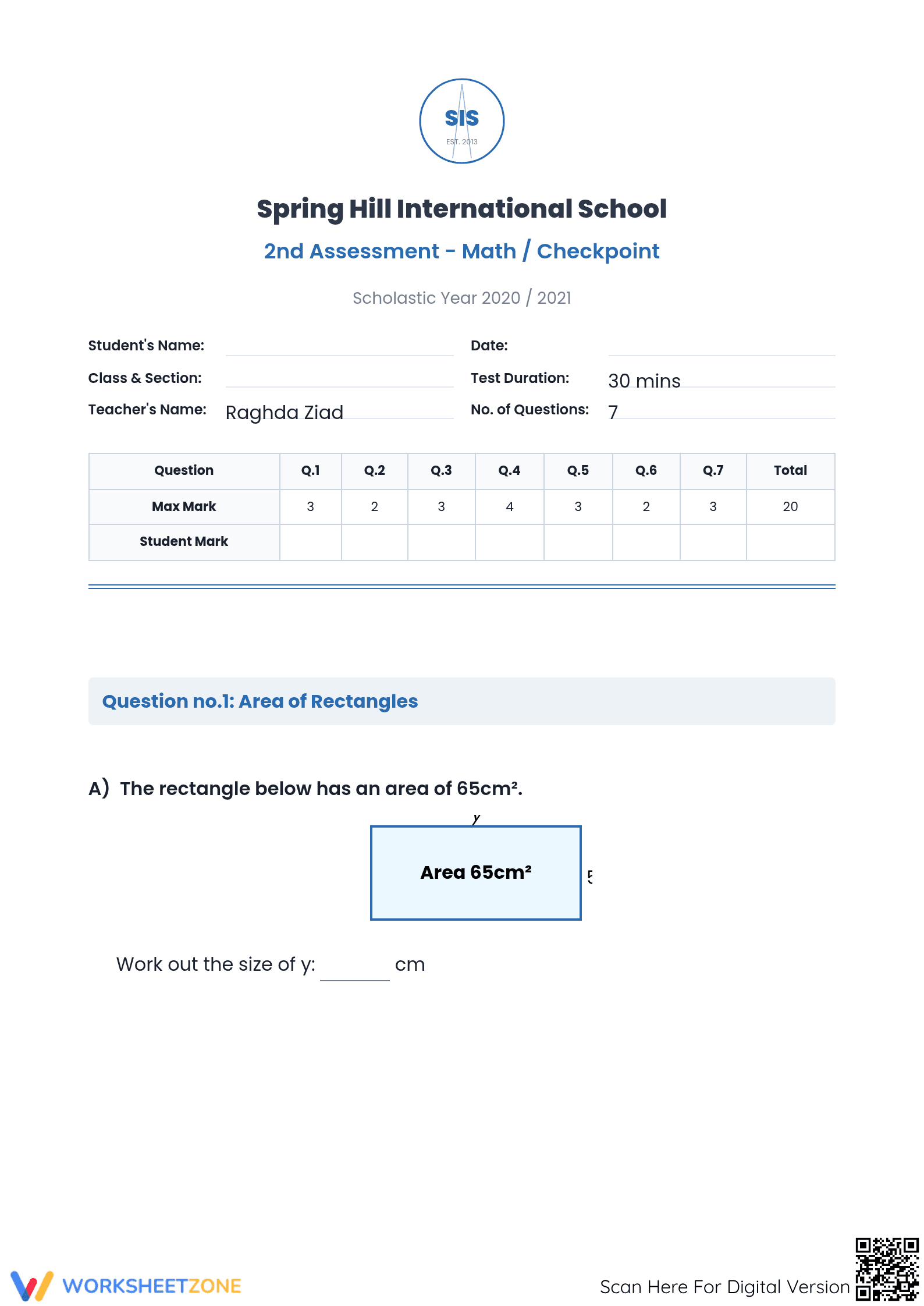
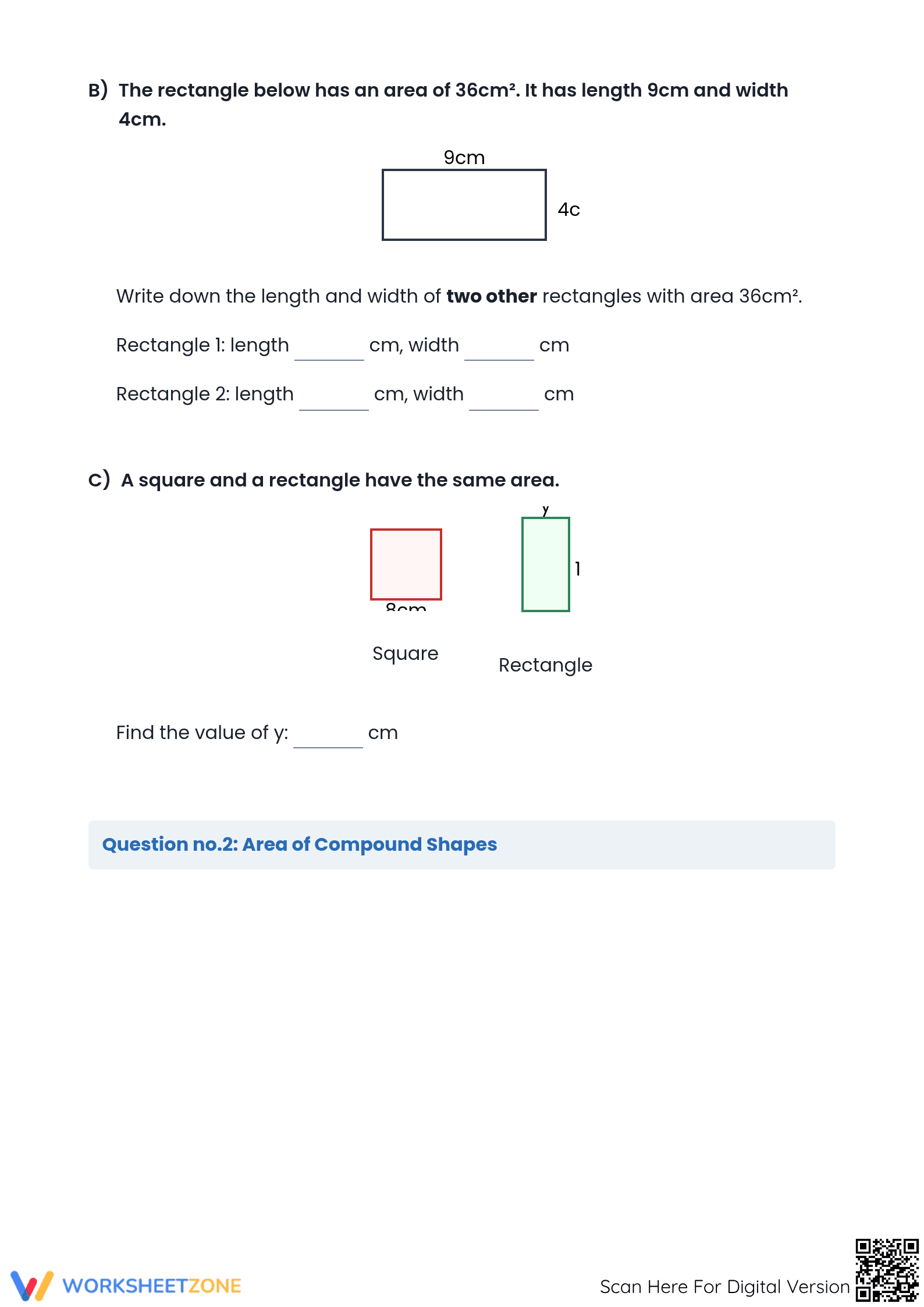
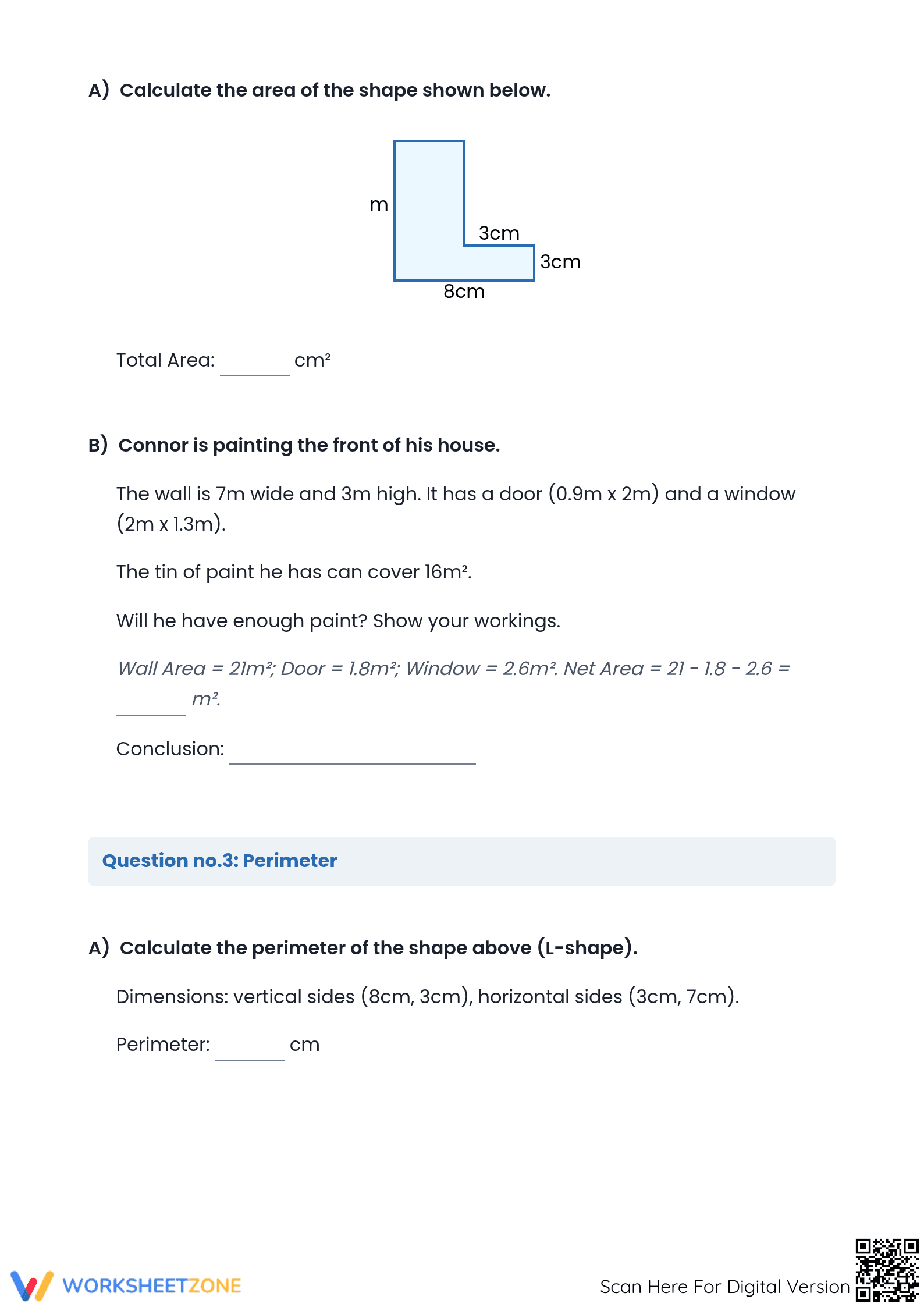
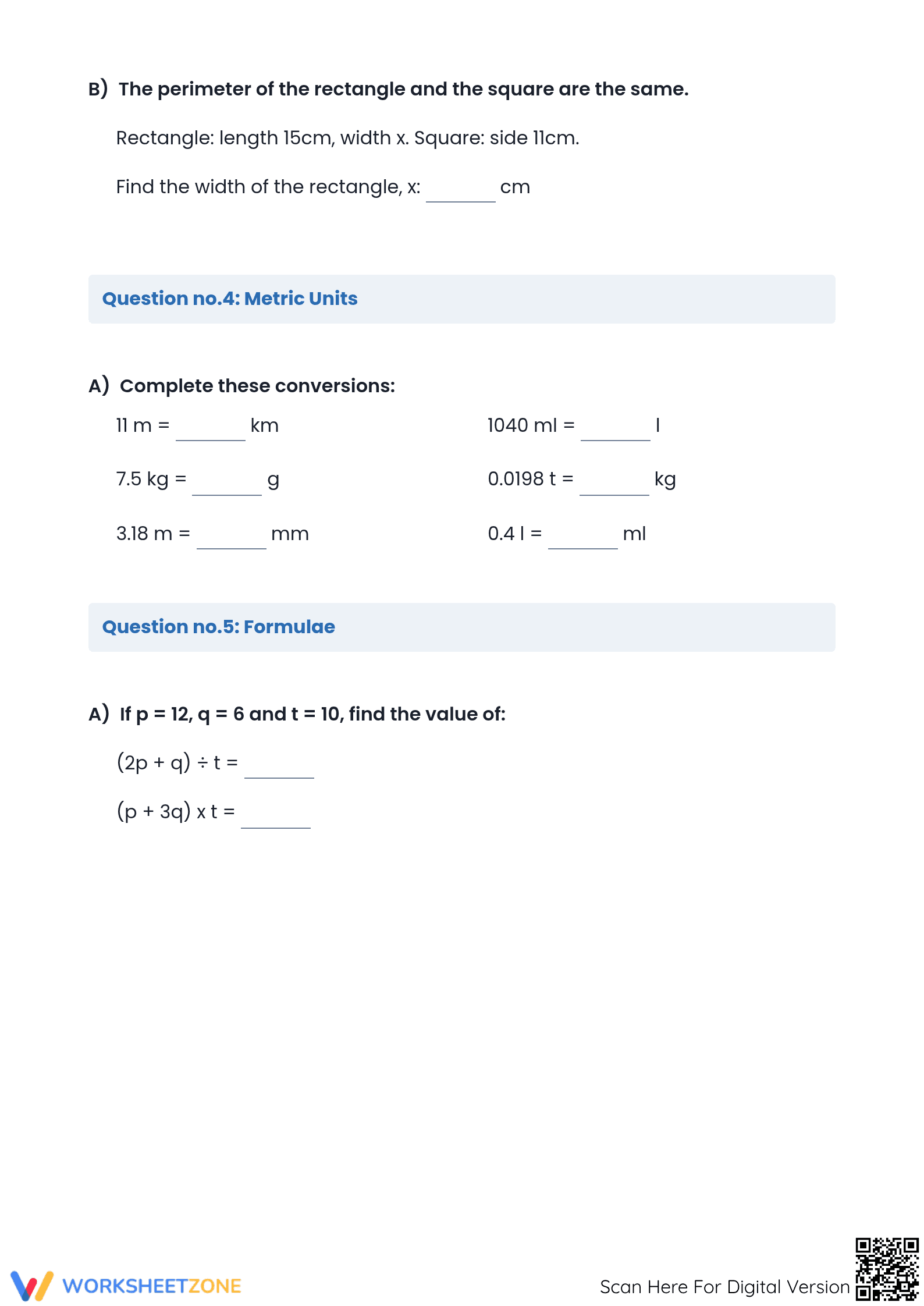
This comprehensive Grade 6 mathematics assessment provides a structured evaluation of essential middle school geometry and algebraic skills. Students demonstrate proficiency in calculating the area and perimeter of both regular and compound shapes while applying conversion logic to metric units. The multi-page format ensures a rigorous check of mathematical fluency and problem-solving accuracy.
At a Glance
- Grade: 6 · Subject: Math
- Standard:
CCSS.MATH.CONTENT.6.G.A.1— Find the area of right triangles, other triangles, special quadrilaterals, and polygons- Skill Focus: Composite area and multi-step calculations
- Format: 5 pages · 7 problems · Answer key included · PDF
- Best For: Mid-term summative assessment or intensive review
- Time: 30–45 minutes
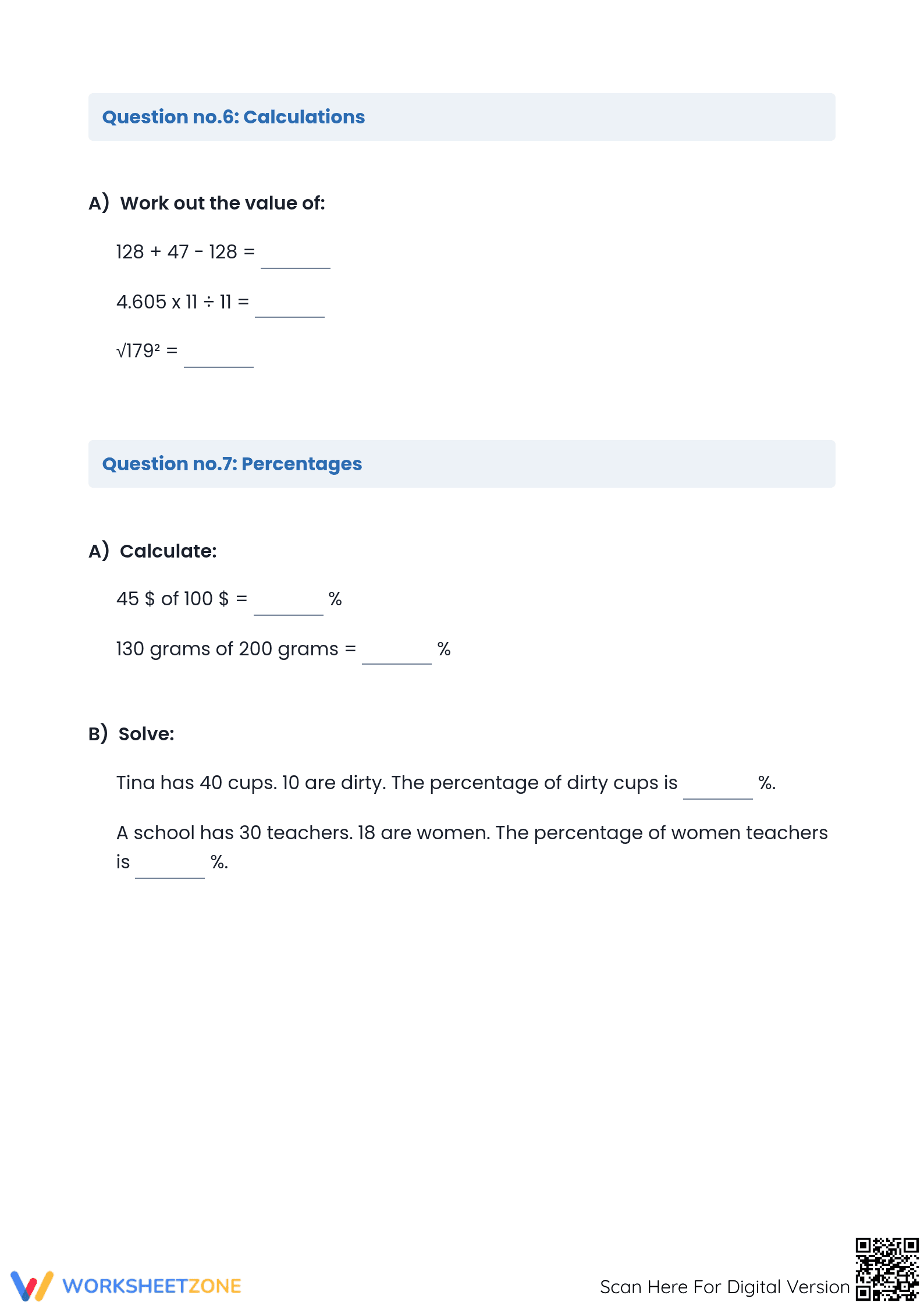
What's Inside: This 5-page assessment features seven distinct question blocks, including visual geometry problems, metric unit conversion tables, and real-world word problems involving percentages. The document includes a professional header for student data and a centralized mark distribution table to facilitate rapid grading and data collection. A complete answer key is provided for immediate feedback.
Mastery Evidence and Scoring
Each of the seven tasks is mapped to specific scoring tiers—Approaching, Meeting, or Exceeding—allowing teachers to identify precise gaps in student understanding. Question 1 and 2 focus on geometric visualization, while Question 5 requires algebraic substitution into formulae. The included mark scheme allows for partial credit, and total scores can be entered directly into digital gradebooks or IEP progress notes to track mastery over time.
Standards Alignment: This resource is aligned to `CCSS.MATH.CONTENT.6.G.A.1`. Students find the area of right triangles, other triangles, special quadrilaterals, and polygons by composing into rectangles or decomposing into triangles and other shapes. Both standard codes can be copied directly into lesson plans, IEP goals, or district curriculum mapping tools to ensure instructional compliance and clarity.
Instructional Implementation
Use this worksheet as a summative assessment following a unit on geometry and measurement, or as a high-stakes review before state testing. During the 30-minute testing window, observe students as they approach Question 2A; their ability to decompose the L-shape into two rectangles is a critical formative indicator of spatial reasoning skills. Expect most students to complete the five pages within 40 minutes.
Who It's For: This assessment is designed for Grade 6 students in general education or Grade 7-8 students requiring intensive math intervention. It pairs naturally with instructional passages on unit conversion or anchor charts detailing area formulas. The clear layout supports students with executive functioning needs by providing distinct workspaces for each calculation step.
The `CCSS.MATH.CONTENT.6.G.A.1` standard requires students to apply geometric principles to find the area of polygons by composing and decomposing shapes. This assessment captures that skill through 7 multi-part tasks that challenge students to visualize spatial relationships and perform accurate calculations. Research by Fisher & Frey (2014) indicates that regular, standards-aligned checkpoints are vital for the gradual release of responsibility, moving students from guided practice to independent mastery. By providing a clear rubric and structured problem sets across 5 pages, this resource ensures that educators can collect high-quality data on student performance in geometry, metric systems, and percentage logic. The inclusion of an answer key and specific mark values supports consistent grading practices across middle school mathematics departments, making it a reliable tool for both classroom teachers and curriculum specialists.


