


























Views
Downloads
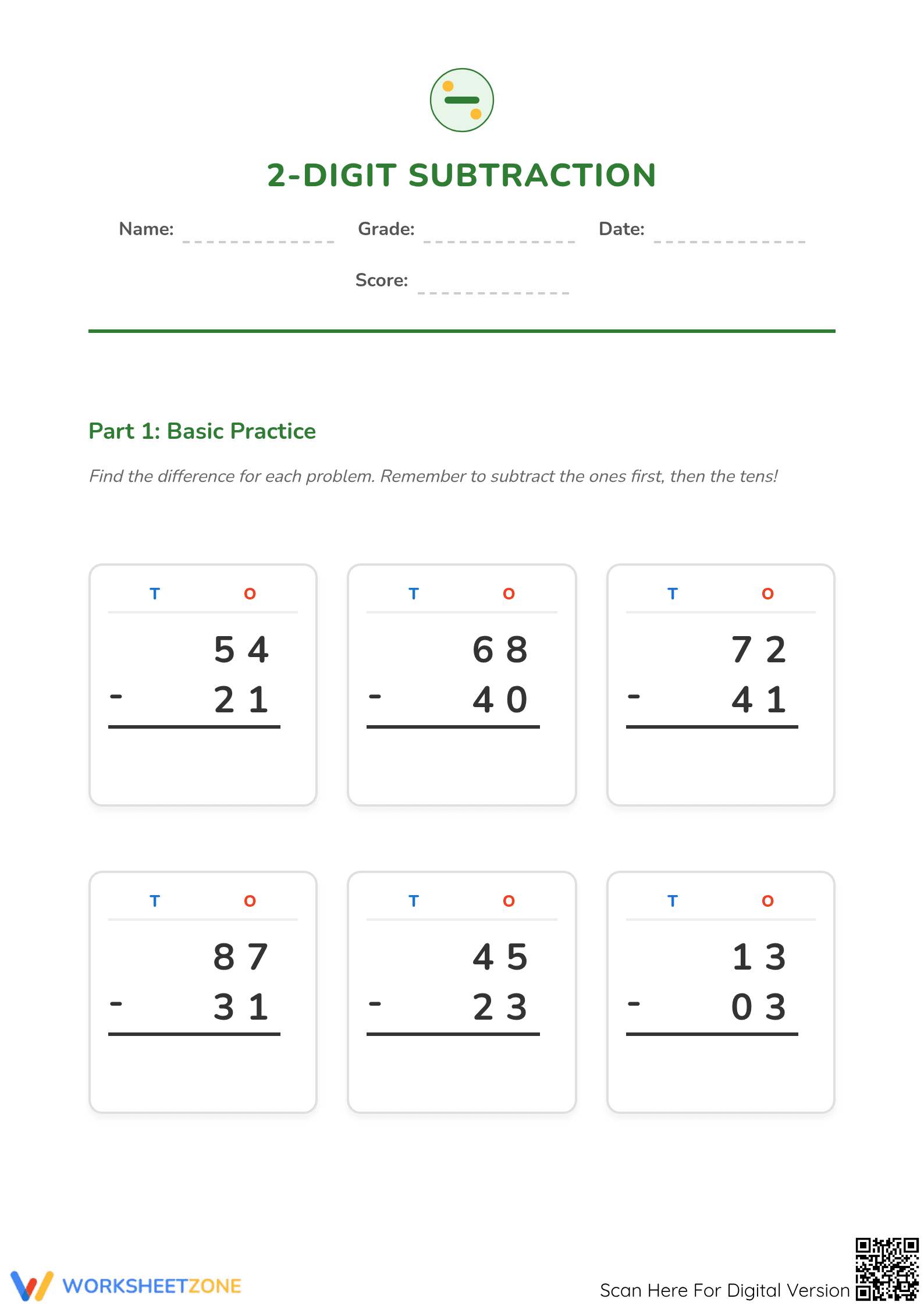
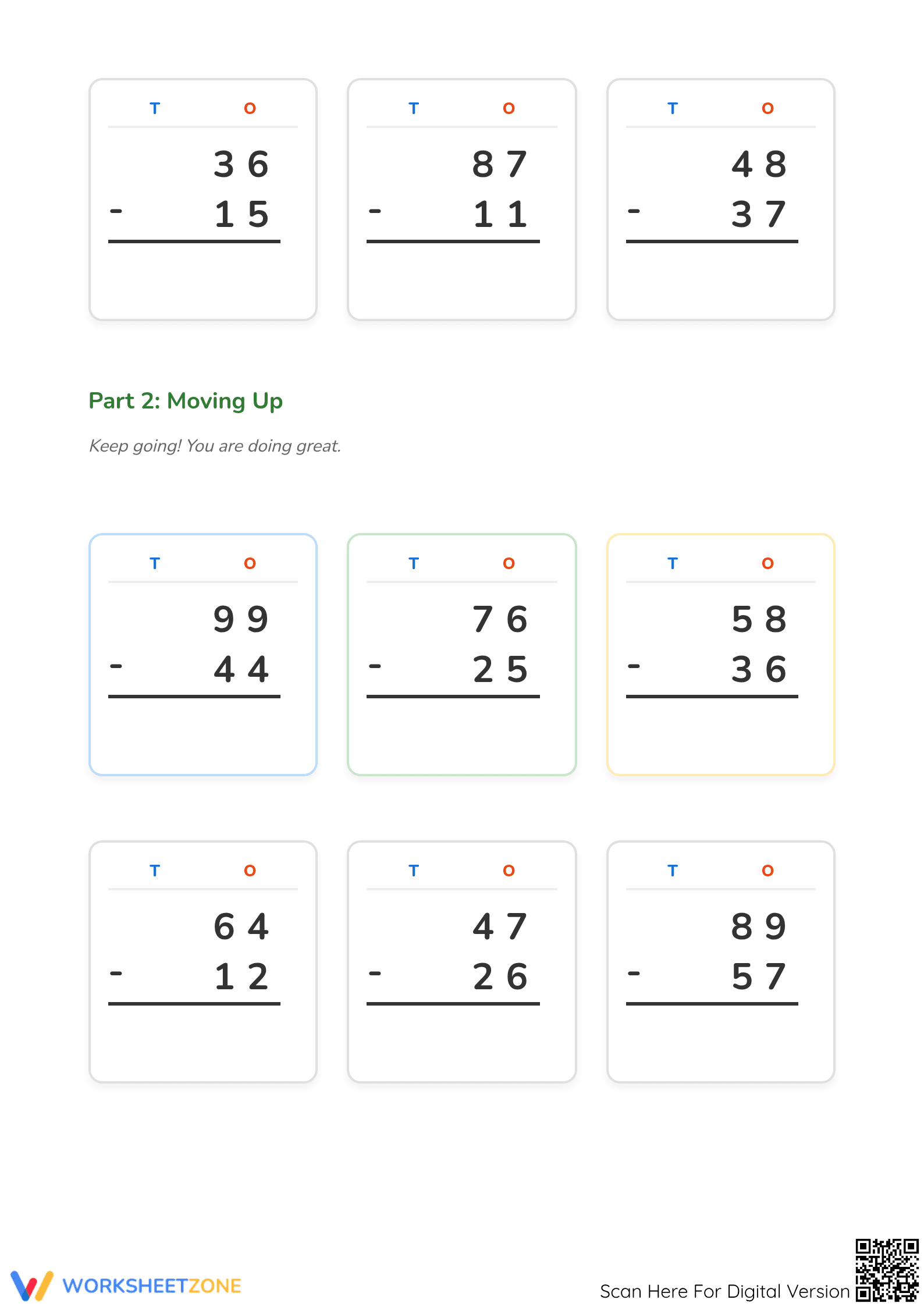
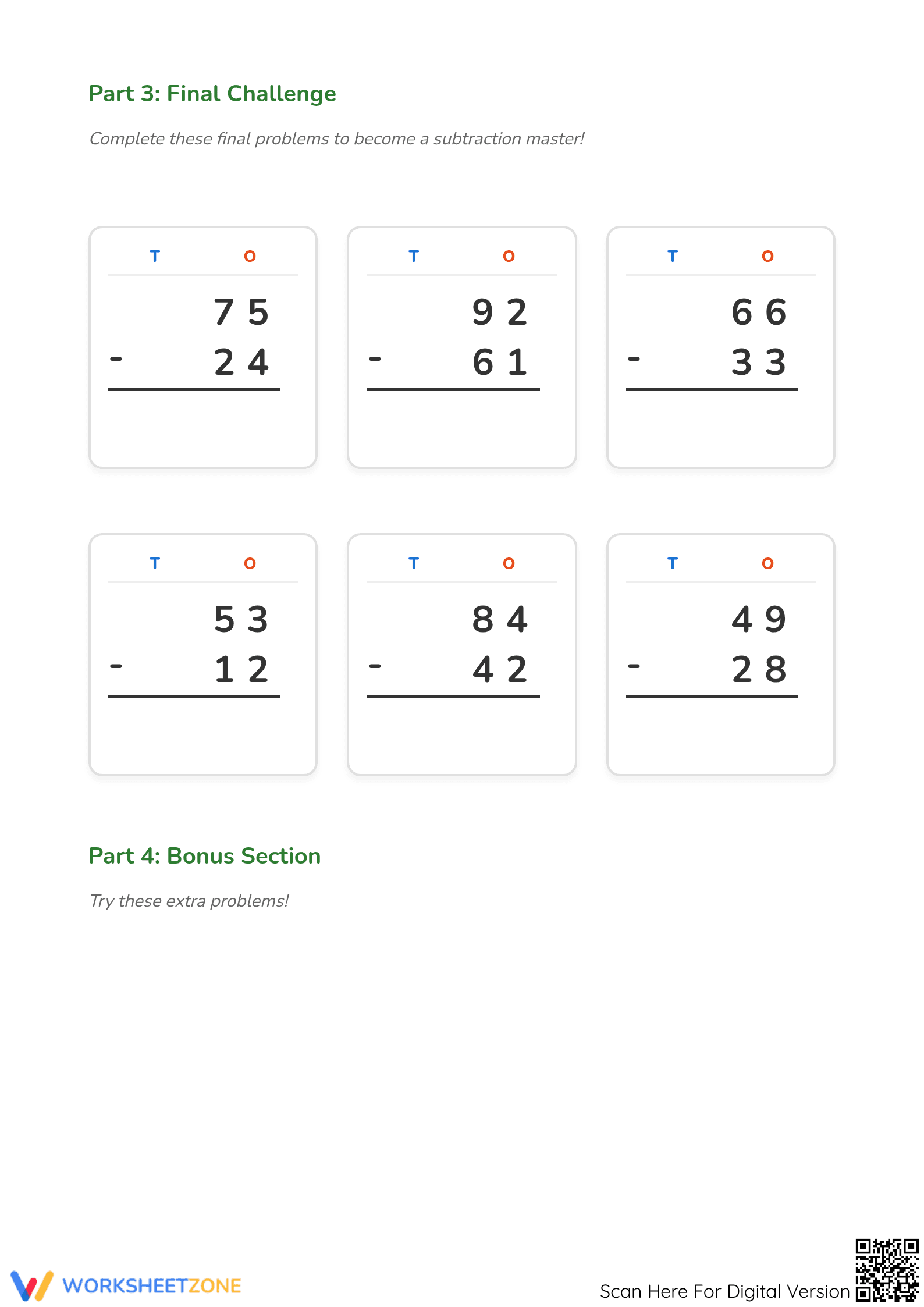
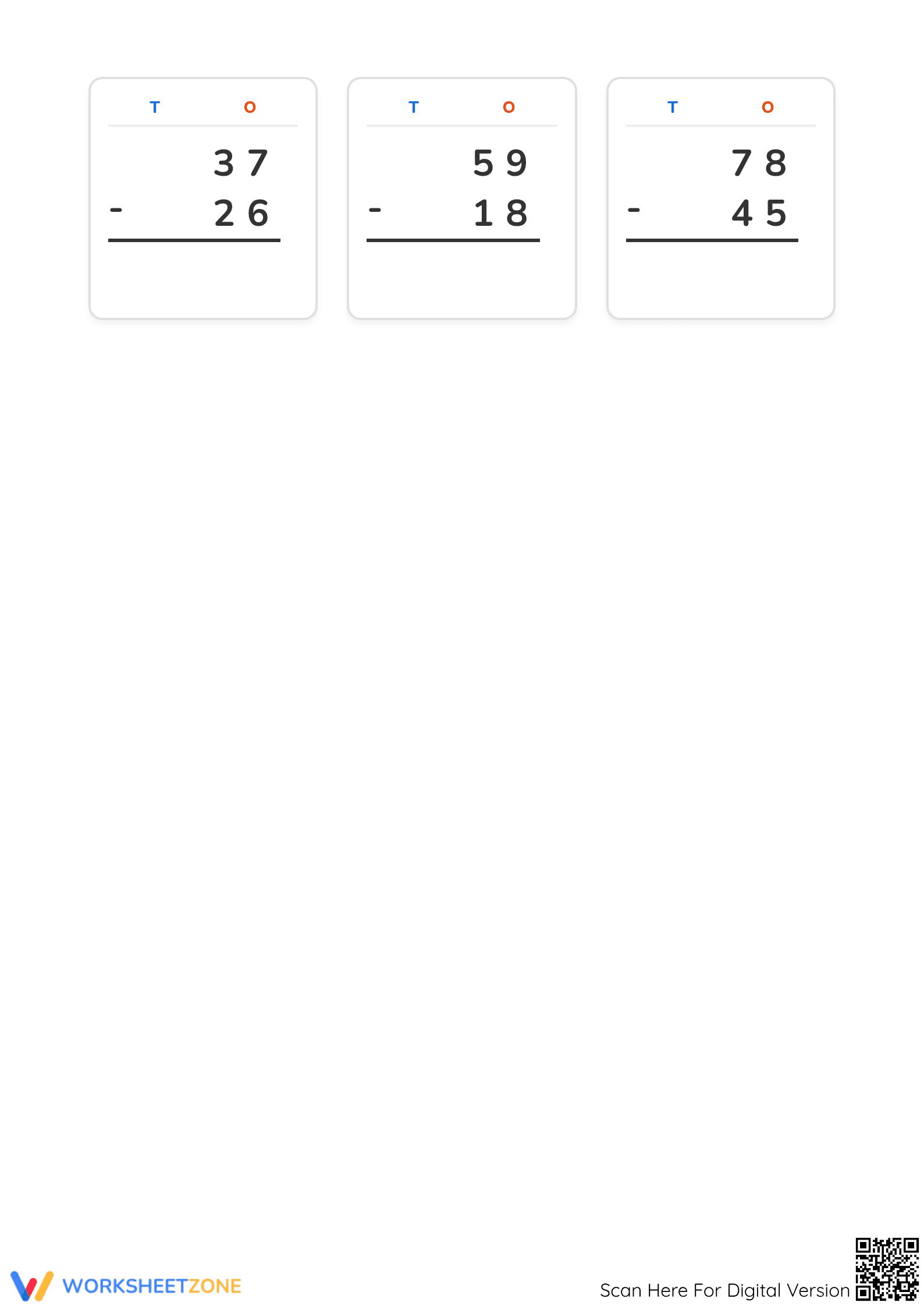

Printable Grade 1 2-Digit Subtraction Worksheet
Paste this activity's link or code into your existing LMS (Google Classroom, Canvas, Teams, Schoology, Moodle, etc.).
Students can open and work on the activity right away, with no student login required.
You'll still be able to track student progress and results from your teacher account.
Mastering double-digit subtraction is a pivotal milestone for first-grade mathematicians. This comprehensive four-page resource provides a structured progression from basic vertical subtraction to a final challenge, ensuring students build confidence in place value logic. By focusing on subtraction without regrouping, learners solidify their understanding of tens and ones columns before moving to more complex multi-digit arithmetic.
At a Glance
- Grade: 1 · Subject: Math
- Standard:
CCSS.MATH.CONTENT.1.NBT.C.6— Subtract multiples of ten from two-digit numbers using place value logic- Skill Focus: 2-Digit Subtraction (No Regrouping)
- Format: 4 pages · 24 problems · Answer key included · PDF
- Best For: Independent practice or small group instruction
- Time: 20–30 minutes
This packet contains four distinct sections designed to scaffold learning. Part 1 introduces basic practice with six vertically aligned problems, while Part 2 and Part 3 increase difficulty through "Moving Up" and "Final Challenge" tiers. The packet includes 24 total problems with clear column labeling (Tens and Ones). A complete answer key is provided for rapid grading or self-correction during the lesson.
Teachers can implement this resource in under two minutes with a simple three-step workflow. First, print the four-page PDF. Second, distribute the packets to students during the independent practice block. Third, review the answers using the included key. This "print-and-go" design makes it an ideal choice for emergency substitute plans or busy morning work transitions. Prep time is minimal, allowing teachers to focus on student engagement.
Standards Alignment
This worksheet aligns to CCSS.MATH.CONTENT.1.NBT.C.6, which requires students to subtract multiples of 10 from 2-digit numbers using place value logic. Students apply foundational column subtraction strategies to build multi-digit fluency without the added complexity of borrowing. Both standard codes can be copied directly into lesson plans, IEP goals, or district curriculum mapping tools to ensure instructional alignment and document student progress.
How to Use It
Use this worksheet as a formative assessment after a direct instruction lesson on place value columns. As students work through Part 2, circulate the room and observe whether they are consistently subtracting the ones column before the tens column; this provides an immediate pulse-check on their procedural fluency. Alternatively, assign the "Final Challenge" and "Bonus Section" as a targeted exit ticket to identify students ready for regrouping concepts.
Who It's For
This resource is tailored for Grade 1 students who have mastered single-digit subtraction and are ready to apply place value concepts to larger numbers. It also serves as a high-quality intervention tool for Grade 2 students requiring a quick review of foundational multi-digit subtraction algorithms. Pair this worksheet with base-ten blocks or a digital number line to provide visual support for struggling learners in any instructional setting.
Effective mathematics instruction for early learners relies on the gradual release of responsibility, a framework heavily supported by the research of Fisher & Frey (2014). This worksheet embodies that methodology by transitioning students from "Basic Practice" to a "Final Challenge," providing a predictable structure that reduces cognitive load. By focusing on 2-digit subtraction without regrouping, the resource allows students to focus specifically on the spatial organization of vertical algorithms and the isolation of tens and ones digits. Research indicates that mastering these "no-borrowing" scenarios is a critical prerequisite for future success with complex regrouping and mental math strategies. The inclusion of 24 problems ensures sufficient repetition for procedural fluency without overwhelming the student. Educators can confidently cite CCSS.MATH.CONTENT.1.NBT.C.6 when integrating this tool into data-driven instruction or multi-tiered systems of support (MTSS).


