


























Views
Downloads
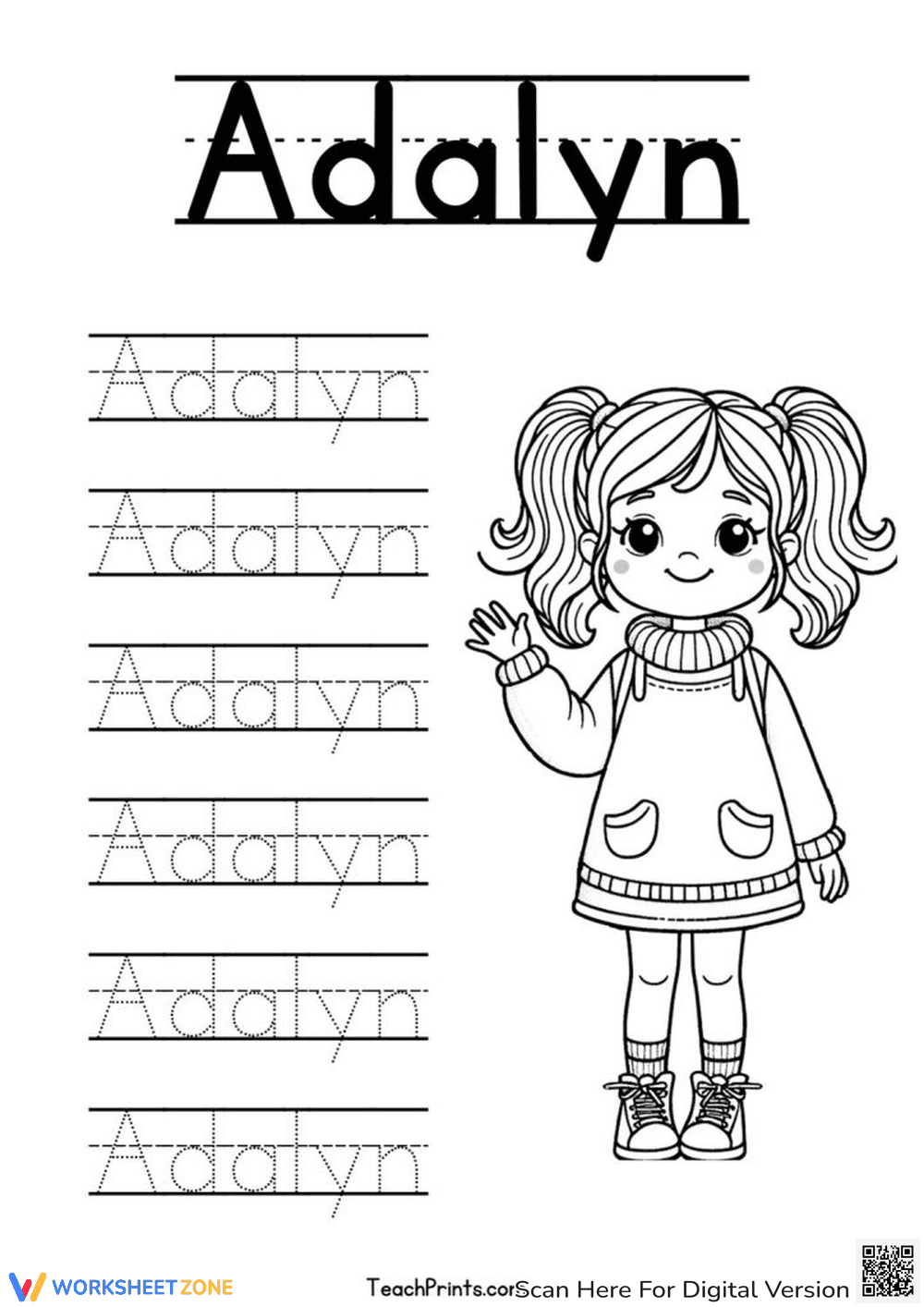

Adalyn Name Tracing — Printable Grade K Worksheet
Paste this activity's link or code into your existing LMS (Google Classroom, Canvas, Teams, Schoology, Moodle, etc.).
Students can open and work on the activity right away, with no student login required.
You'll still be able to track student progress and results from your teacher account.
This Adalyn name tracing worksheet helps early learners master letter formation and personal identification through repetitive practice. By tracing their own name, students develop the muscle memory required for fluent handwriting while building confidence in their literacy skills. This resource provides a structured environment for Kindergarten and Preschool students to refine fine motor control and letter recognition.
At a Glance
At a Glance
- Grade: Kindergarten · Subject: ELA Writing
- Standard:
CCSS.ELA-LITERACY.L.K.1.A— Print many upper- and lowercase letters accurately and legibly- Skill Focus: Name tracing and letter formation
- Format: 1 page · 6 problems · Answer key N/A · PDF
- Best For: Morning work or name recognition practice
- Time: 5–10 minutes
What's Inside
This single-page PDF features a large, clear model of the name "Adalyn" at the top to serve as a visual reference. Below the header, students find 6 dedicated tracing lines with dotted-line fonts to guide their pencil strokes. The right side of the page includes a high-quality line-art illustration of a young girl, offering a creative coloring break once the writing tasks are finished.
Zero-Prep Workflow
The workflow for this resource is designed for maximum efficiency in busy classrooms. First, print the single-page PDF (30 seconds). Next, distribute the sheets to students during morning arrival or center rotations (1 minute). Finally, provide immediate verbal feedback as students complete the 6 tracing lines (2 minutes). This zero-prep approach makes it an ideal choice for emergency sub plans or daily handwriting warm-ups.
Standards Alignment
This resource aligns with `CCSS.ELA-LITERACY.L.K.1.A`, which requires students to print many upper- and lowercase letters. By focusing on a specific name, the worksheet provides a meaningful context for practicing the distinct shapes of both capital and lowercase characters. Both standard codes can be copied directly into lesson plans, IEP goals, or district curriculum mapping tools.
How to Use It
Use this worksheet during the first week of school to help students learn to recognize and write their names independently. It works best as a "bell-ringer" activity where students can begin working immediately upon entering the classroom. Teachers should observe the student's grip and stroke direction during the first two lines to provide formative corrections before the student completes the remaining four tasks.
Who It's For
This worksheet is specifically designed for Preschool and Kindergarten students who are beginning their handwriting journey. It is particularly helpful for students named Adalyn or for classrooms focusing on specific letter groups. It pairs naturally with alphabet anchor charts or tactile sand-tray writing activities to reinforce letter shapes through multiple modalities.
According to Fisher & Frey (2014), the gradual release of responsibility begins with clear modeling, which this worksheet provides through its prominent header text. The repetitive nature of the 6 tracing tasks supports the development of fine motor pathways essential for later writing fluency. Research from the NAEP indicates that early mastery of letter formation is a significant predictor of future writing achievement in primary grades. By focusing on the specific name "Adalyn," this resource leverages personal relevance to increase student engagement and retention of the CCSS.ELA-LITERACY.L.K.1.A standard. The inclusion of a coloring element further supports the development of the pincer grasp, which is foundational for pencil control. This worksheet serves as a practical tool for educators to document progress in letter formation and fine motor development during the critical early childhood years.


