


























Views
Plays


O. Henry Short Stories Essential Worksheet | Grade 9-12
Paste this activity's link or code into your existing LMS (Google Classroom, Canvas, Teams, Schoology, Moodle, etc.).
Students can open and work on the activity right away, with no student login required.
You'll still be able to track student progress and results from your teacher account.
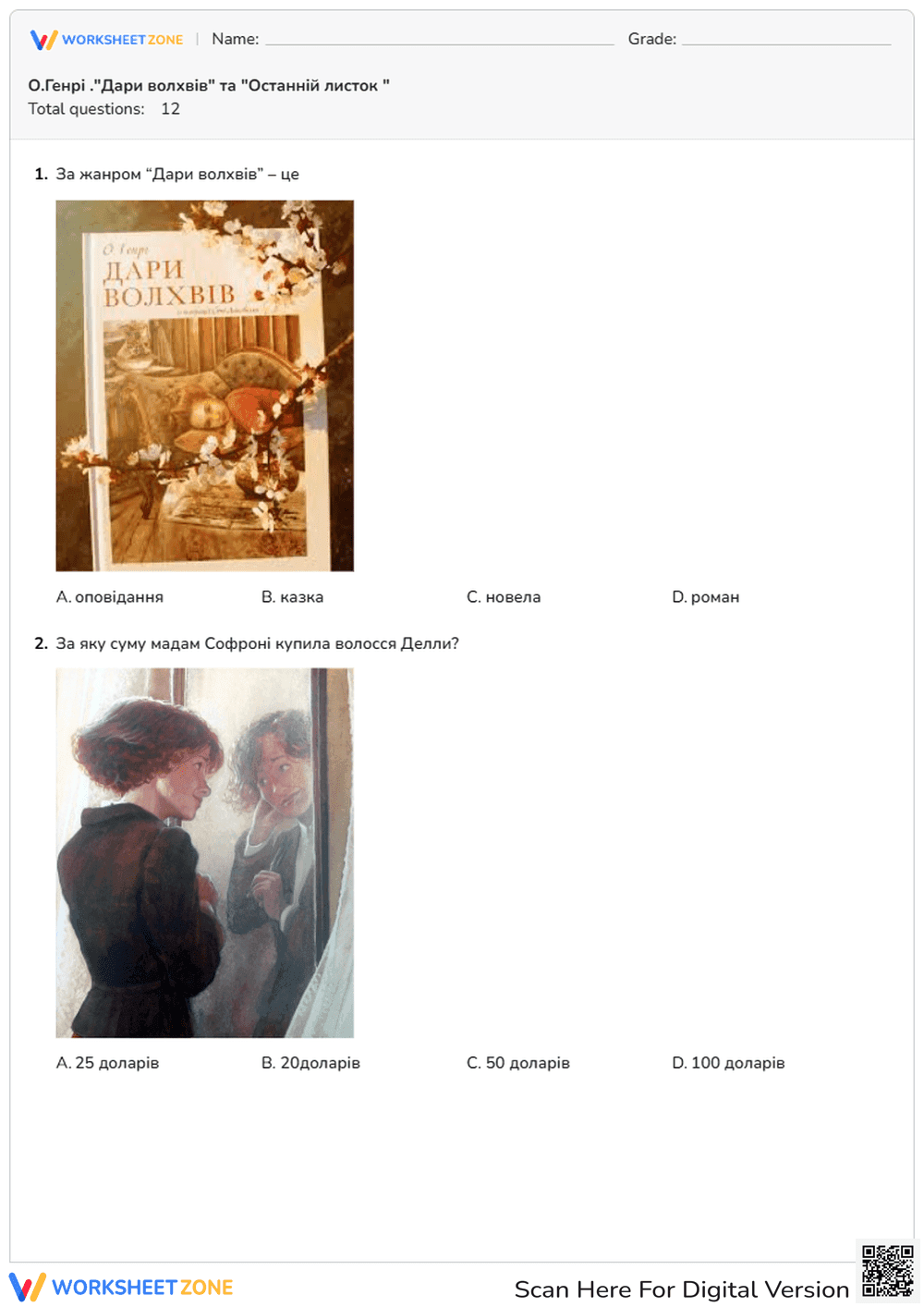
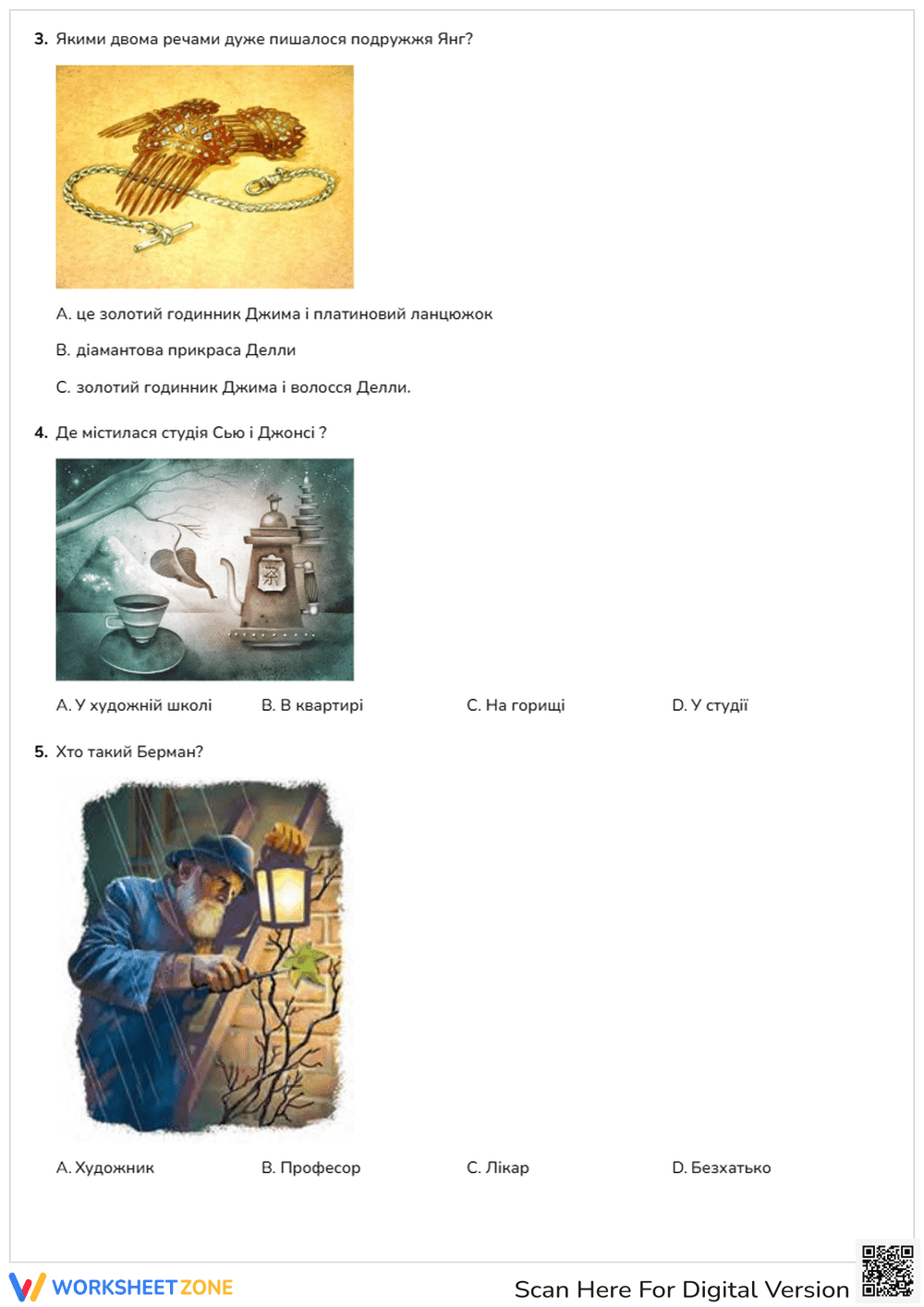
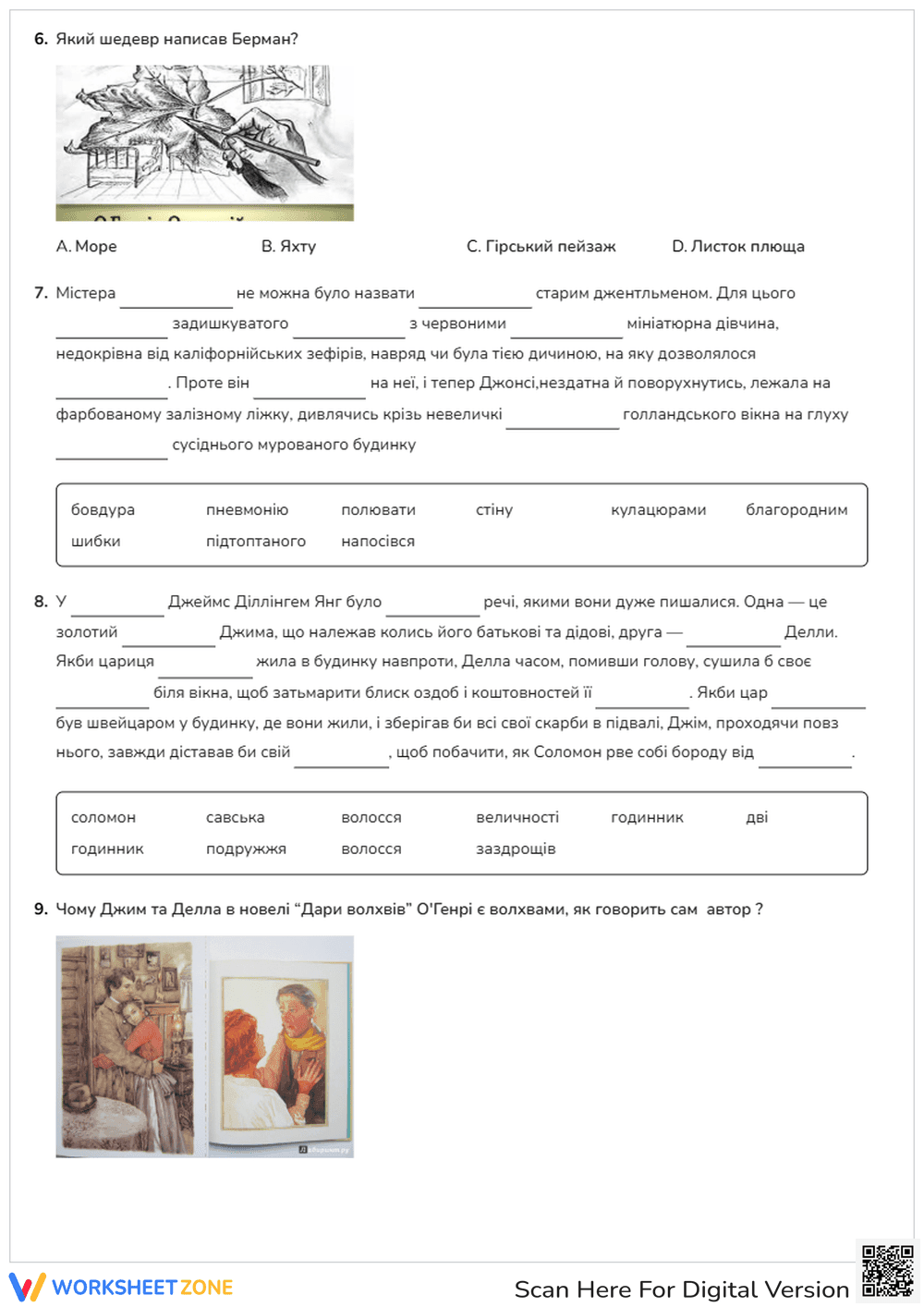
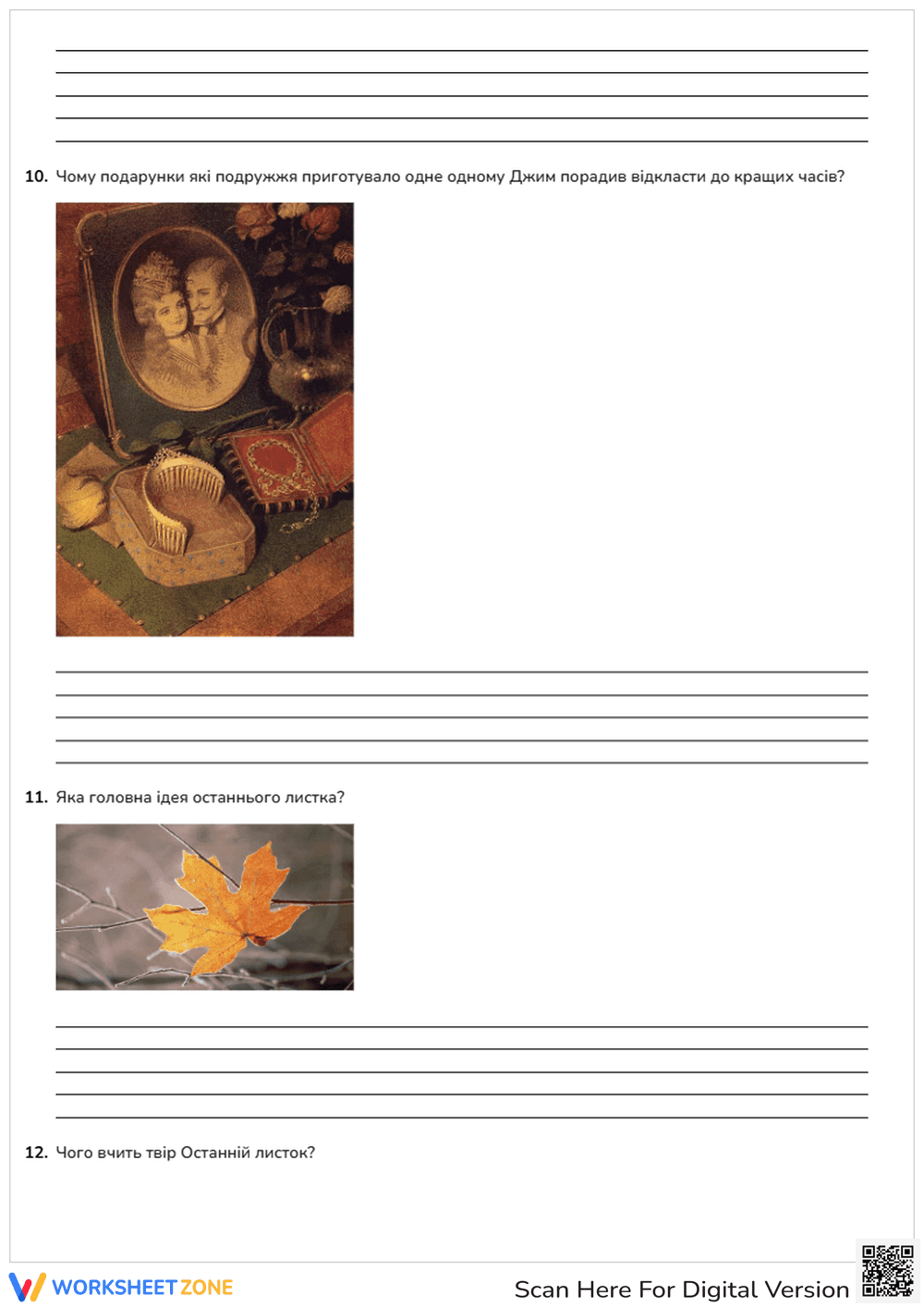
This Grade 9-12 literature worksheet provides a comprehensive analysis of O. Henry’s classic short stories, "The Gift of the Magi" and "The Last Leaf." Students engage with 12 structured tasks to demonstrate mastery of plot dynamics, character sacrifice, and thematic irony. It is designed to facilitate deep reading and critical thinking in high school ELA classrooms.
At a Glance
- Grade: 9-12 · Subject: ELA Literature
- Standard:
CCSS.ELA-LITERACY.RL.9-10.2— Determine a theme or central idea and analyze its development- Skill Focus: Short Story Analysis
- Format: 5 pages · 12 problems · Answer key included · PDF
- Best For: Formative assessment or unit review
- Time: 30–45 minutes
The packet contains 5 pages featuring a mix of assessment styles. It begins with 6 image-supported multiple-choice questions, followed by 2 detailed fill-in-the-blank passages with word banks to reinforce vocabulary and plot sequence. The final section includes 4 open-ended prompts requiring students to synthesize their understanding of O. Henry's signature irony and moral lessons through written response.
Teachers can implement this resource in under 2 minutes. Simply print the 5-page PDF, distribute it to students, and allow 30 minutes for completion. The structured layout makes it an ideal sub-plan or a quick end-of-unit check for understanding, requiring no additional teacher setup or external materials beyond the primary texts. This workflow ensures maximum instructional time is spent on student analysis.
This resource is aligned with CCSS.ELA-LITERACY.RL.9-10.2, focusing on determining a theme or central idea of a text and analyzing in detail its development over the course of the story. It also supports RL.9-10.3 by examining how complex characters develop and interact with the plot. Both standard codes can be copied directly into lesson plans, IEP goals, or district curriculum mapping tools.
Use this worksheet as a summative assessment after reading both O. Henry stories to compare thematic elements of sacrifice. Alternatively, assign it as a collaborative group activity where students must cite specific textual evidence for the open-ended questions. Observe student responses to question 11 to gauge their grasp of literary irony before moving to more complex texts. Completion typically ranges from 30 to 45 minutes.
This resource is tailored for high school students in Grades 9-12, including those in honors tracks who need to practice identifying structural irony. It pairs naturally with an anchor chart on literary devices or a direct instruction lesson on the American Realism movement and O. Henry's unique narrative style. The visual supports assist students in recalling specific plot points during the assessment.
According to the RAND AIRS 2024 report, structured literary assessments that combine multiple-choice recall with open-ended synthesis significantly improve student retention of thematic concepts. This worksheet targets CCSS.ELA-LITERACY.RL.9-10.2 by requiring students to identify the central idea of sacrifice in "The Gift of the Magi" and "The Last Leaf." By utilizing 12 distinct tasks, the resource provides a scaffolded approach to literary analysis, moving from basic identification to higher-order evaluation. Research from Fisher & Frey (2014) suggests that such gradual release models in reading comprehension tasks help bridge the gap between surface-level reading and deep analytical mastery. This PDF resource serves as a reliable tool for educators seeking to align their curriculum with national standards while maintaining high engagement through visual cues and varied question formats. The inclusion of cloze passages further supports linguistic development within the context of complex narrative structures.


