


























Views
Downloads

Essential Homonyms Worksheet | Grade K Printable
Paste this activity's link or code into your existing LMS (Google Classroom, Canvas, Teams, Schoology, Moodle, etc.).
Students can open and work on the activity right away, with no student login required.
You'll still be able to track student progress and results from your teacher account.
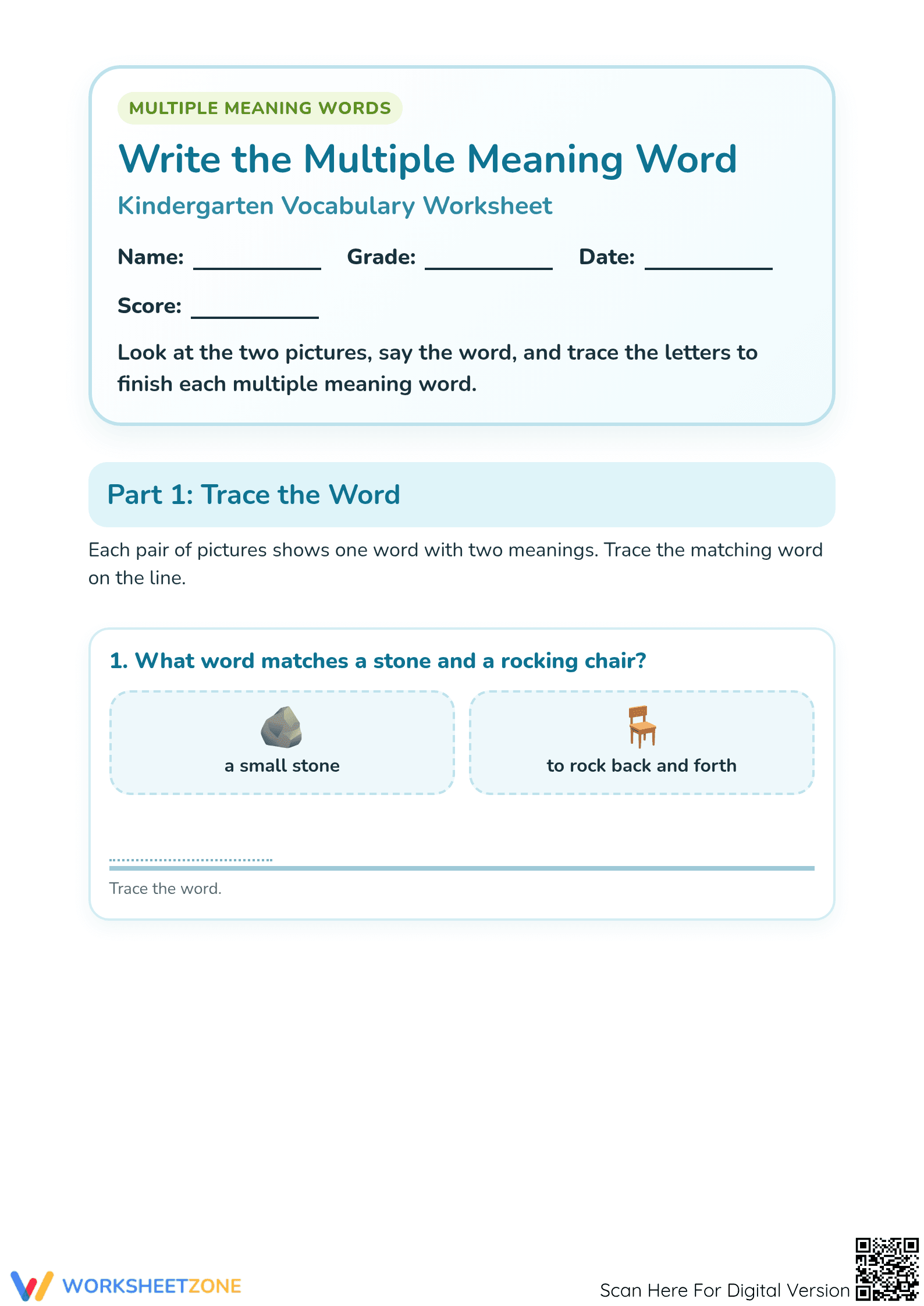
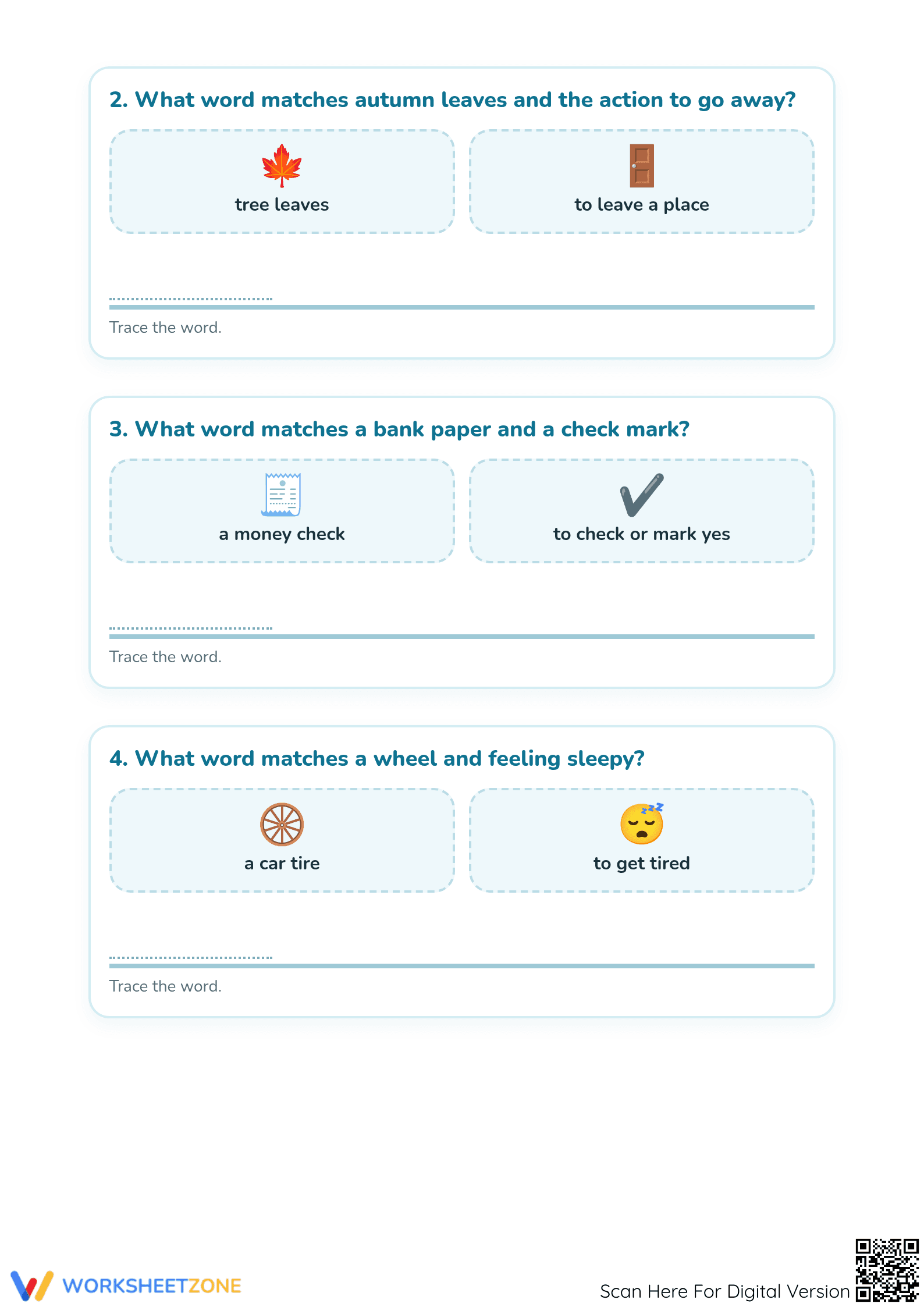
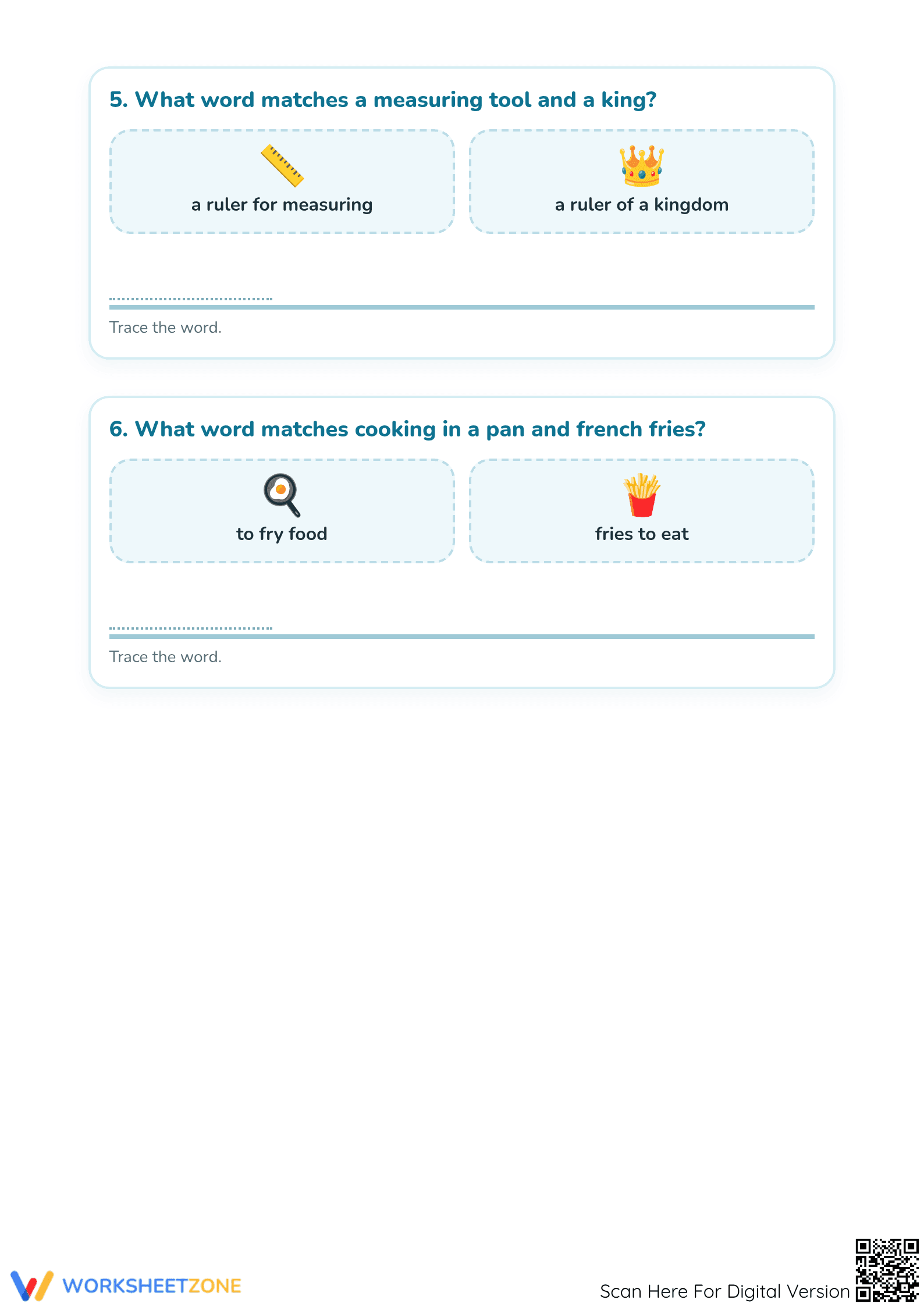
This printable Kindergarten vocabulary worksheet helps young learners master multiple meaning words through visual cues and tracing exercises. By connecting familiar objects with different contexts, students build essential semantic awareness and language flexibility. This resource ensures students identify homonyms with confidence, establishing a foundation for future reading comprehension and vocabulary development.
At a Glance
- Grade: Kindergarten · Subject: ELA
- Standard:
L.K.4— Determine the meaning of multiple-meaning words based on kindergarten content- Skill Focus: Multiple Meaning Words (Homonyms)
- Format: 3 pages · 6 problems · Answer key included · PDF
- Best For: Independent practice or morning work
- Time: 15–20 minutes
This three-page PDF package features six multiple-meaning word exercises for the kindergarten level. Each task provides two illustrations representing different meanings of the same word, such as a "money check" and a "check mark." Below the images, a tracing prompt reinforces spelling while cementing the linguistic connection. A comprehensive answer key facilitates rapid grading or self-correction for teachers and parents.
The zero-prep workflow is designed for busy classrooms. First, print the document directly from the PDF—no formatting adjustments are required (1 minute). Next, distribute the sheets to students as a standalone activity or literacy center rotation (30 seconds). Finally, review completed work using the answer key to identify misconceptions in real-time (under 1 minute). Total preparation time is less than two minutes, making this an ideal emergency sub-plan.
This resource is directly aligned with CCSS.ELA-LITERACY.L.K.4, requiring students to determine the meaning of multiple-meaning words and phrases. Specifically, it addresses L.K.4.A by helping students identify new meanings for familiar words. This alignment ensures practice is pedagogically sound and meets district literacy requirements. Both standard codes can be copied directly into lesson plans, IEP goals, or district curriculum mapping tools for easy documentation.
Use this worksheet as a formative assessment after introducing homonyms during direct instruction. Observe students as they say the words aloud to ensure they recognize that pronunciation remains identical despite the change in meaning. Alternatively, assign the pages as morning work to reinforce previously taught vocabulary. The visual nature of the tasks allows students to work independently, typically finishing all six problems within 20 minutes.
This worksheet is primarily for kindergarten students but serves as an effective intervention for first graders requiring remedial support. It is particularly beneficial for English Language Learners (ELL) who need visual aids to understand English homonyms. Pair this resource with a "Multiple Meanings" anchor chart or a read-aloud session featuring "The King Who Rained" to deepen conceptual understanding and foster a love for language.
Effective vocabulary instruction in early childhood emphasizes multiple meanings for common words to prevent comprehension breakdowns. Research from Fisher & Frey (2014) highlights the importance of visual scaffolds and "gradual release" models when teaching semantic relationships. This worksheet applies these principles by utilizing paired imagery to bridge concrete objects and abstract linguistic concepts. By focusing on L.K.4, the resource targets "word consciousness," allowing students to notice how words function differently across various contexts. According to NAEP data, students with early exposure to diverse word meanings demonstrate higher reading proficiency as they transition into complex texts. This resource provides the necessary structured practice to ensure Kindergarten students achieve mastery of homonyms, turning a potentially confusing linguistic feature into a tool for clearer communication and expressive language.


