


























Views
Downloads

Multiple Meaning Words Worksheet | Grade K Printable
Paste this activity's link or code into your existing LMS (Google Classroom, Canvas, Teams, Schoology, Moodle, etc.).
Students can open and work on the activity right away, with no student login required.
You'll still be able to track student progress and results from your teacher account.
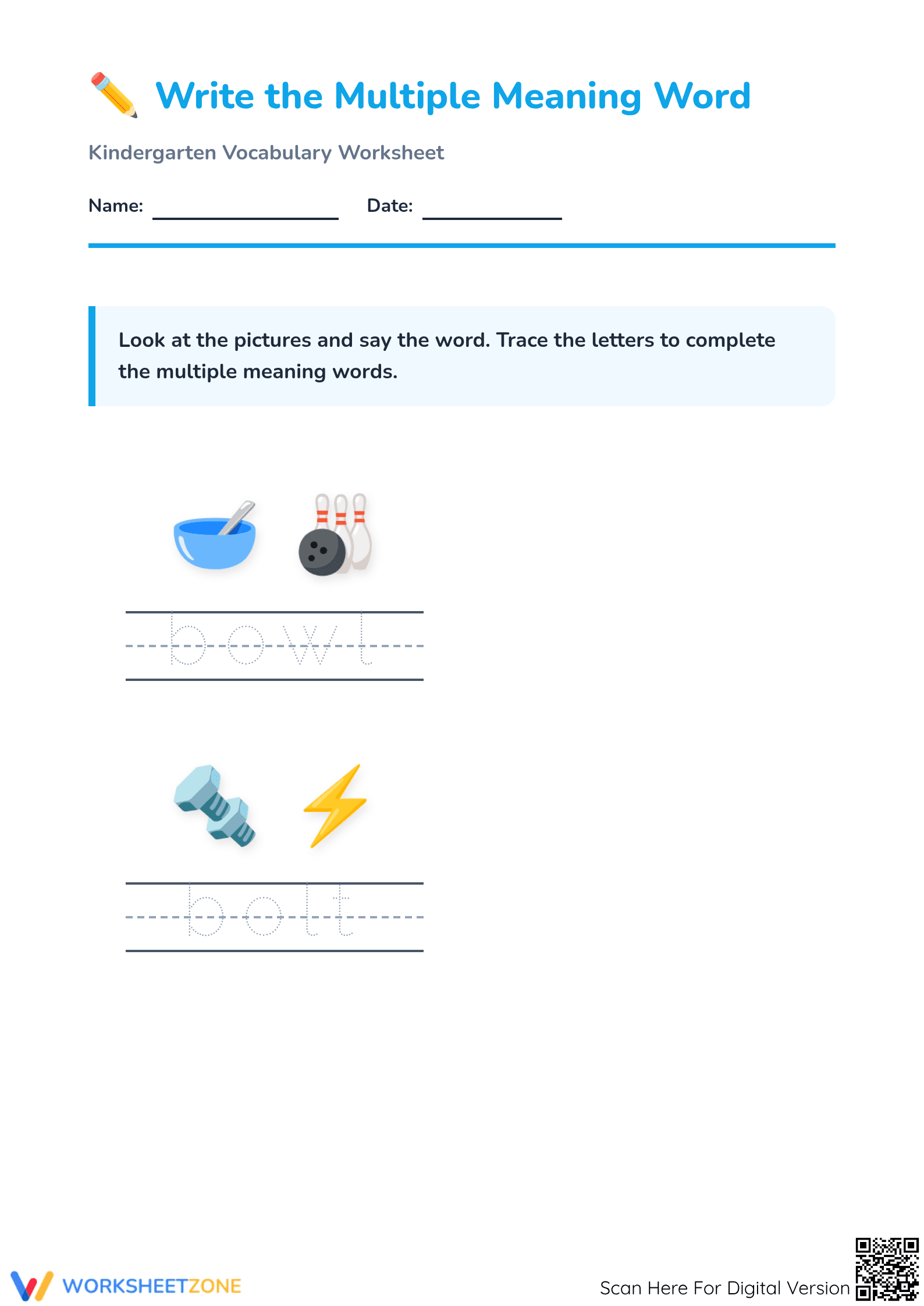
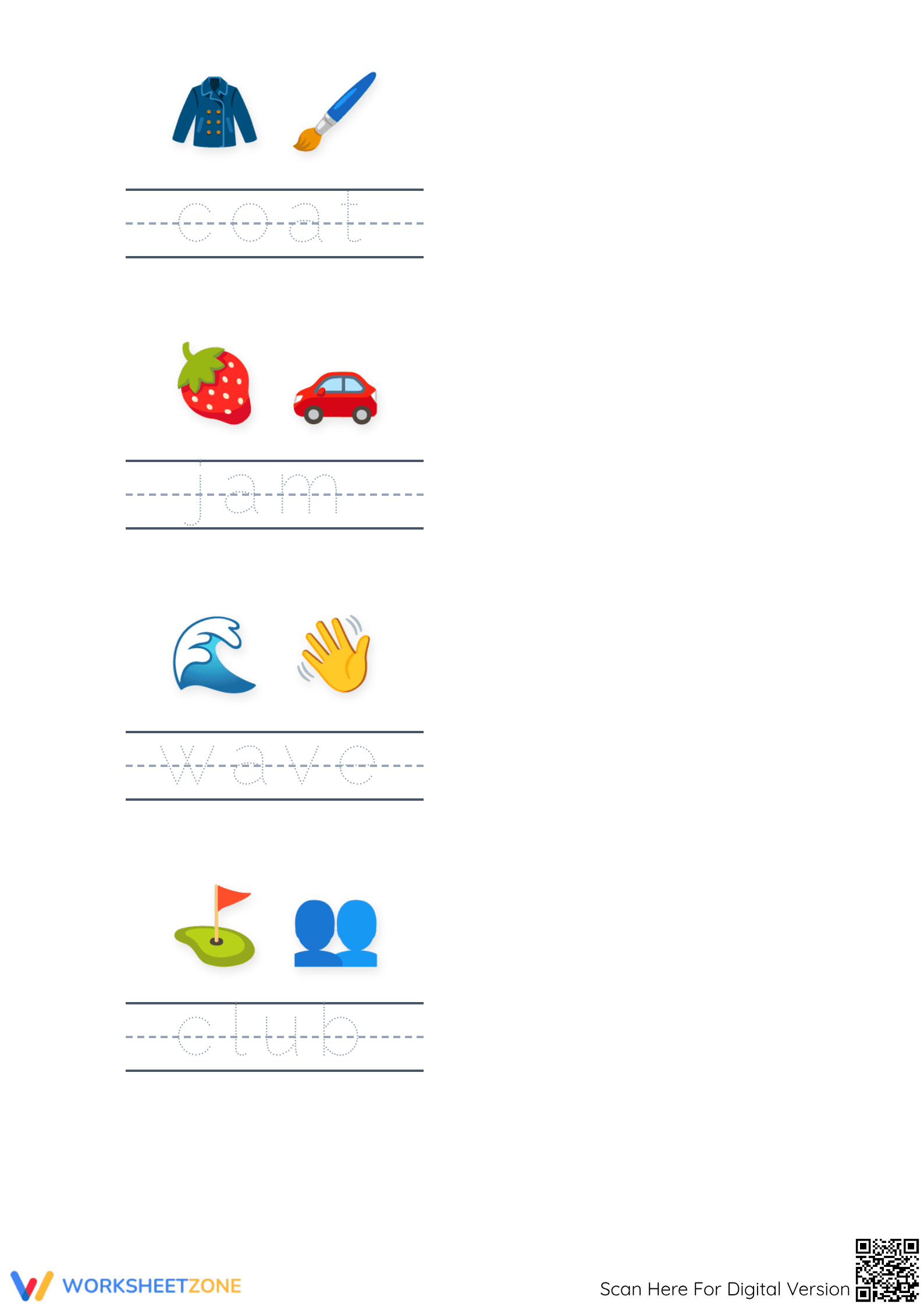
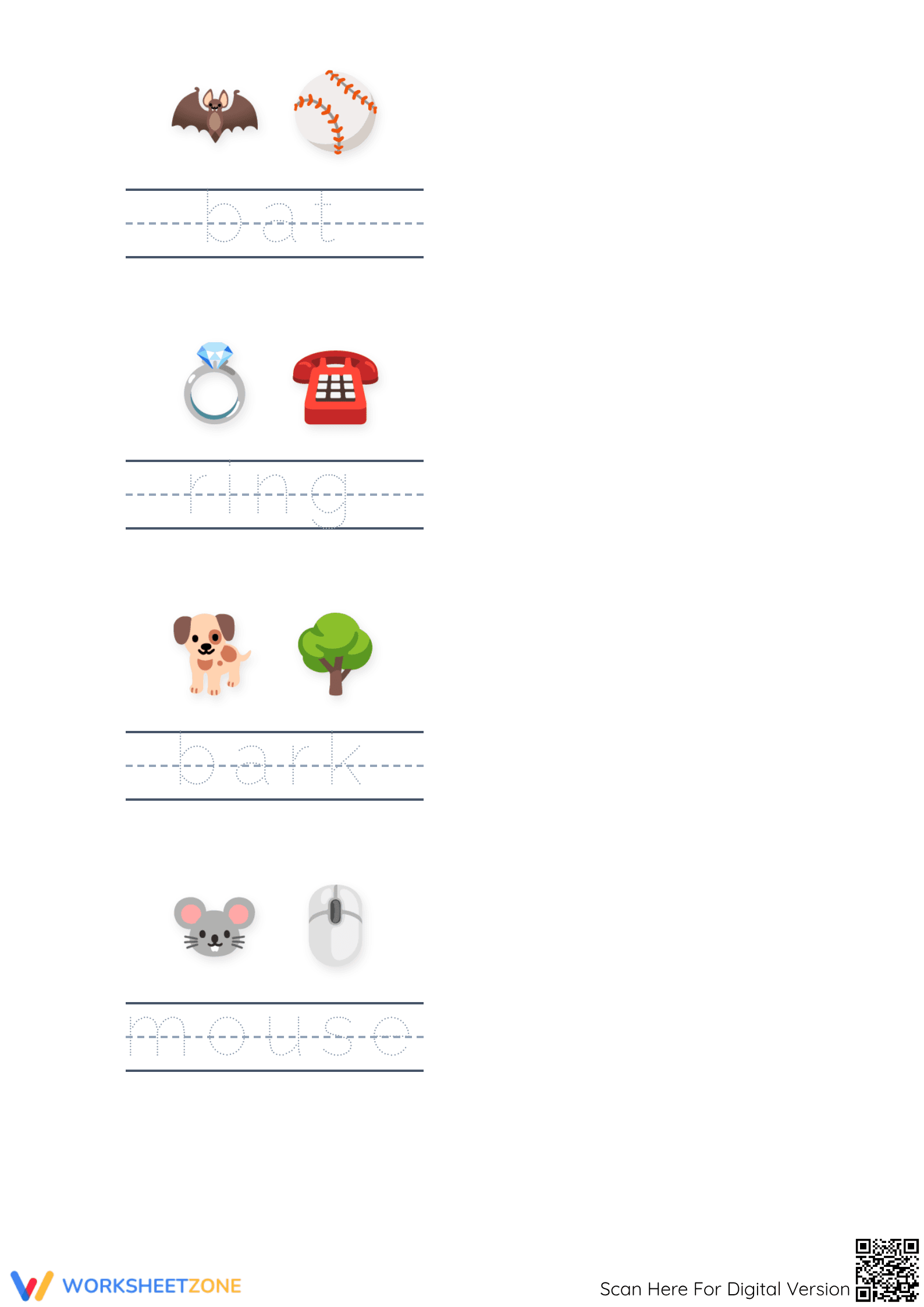
This kindergarten vocabulary worksheet helps young learners identify and write multiple meaning words. By pairing clear visual cues with traceable text, students build foundational handwriting skills while expanding their understanding of homonyms. This resource provides a straightforward approach to early vocabulary development and letter formation.
At a Glance
- Grade: Kindergarten · Subject: ELA
- Standard:
CCSS.ELA-LITERACY.L.K.4.A— Identify new meanings for familiar words- Skill Focus: Multiple meaning words and tracing
- Format: 3 pages · 10 problems · No answer key needed · PDF
- Best For: Independent practice or morning work
- Time: 10–15 minutes
Inside this three-page packet, educators will find ten tracing tasks focused on common homonyms. Each problem features two colorful illustrations representing different meanings of the same word, positioned above a dashed-line word for students to trace. The layout is clean and distraction-free, ensuring early readers focus entirely on visual connections and fine motor control. Because the activity relies on tracing, no answer key is required.
This resource is designed for immediate classroom implementation with a highly efficient zero-prep workflow:
- Print (1 minute): Simply download the PDF and print the three pages. The high-contrast dashed lines and clear graphics print beautifully in both color and grayscale.
- Distribute (1 minute): Hand out the sheets during morning work, literacy centers, or as a quick transition activity.
- Review (0 minutes): The tracing format makes the activity self-explanatory for students and instantly checkable for teachers.
Total teacher preparation time is under two minutes, making this perfect for any sub plan.
This worksheet is directly aligned to CCSS.ELA-LITERACY.L.K.4.A, requiring students to identify new meanings for familiar words and apply them accurately. By connecting two distinct images to a single vocabulary word, children visually grasp the concept of homonyms. Both standard codes can be copied directly into lesson plans, IEP goals, or district curriculum mapping tools.
Teachers can utilize this worksheet during independent literacy centers to reinforce vocabulary lessons on homonyms. It serves as an excellent follow-up activity after a whole-group read-aloud that features multiple meaning words. For formative assessment, observe students as they trace the words; ask them to point to the picture that matches a specific definition you provide aloud. Expected completion time ranges from 10 to 15 minutes, depending on the student's fine motor proficiency.
This resource is primarily designed for kindergarten students developing their early vocabulary and handwriting skills. It is also highly effective for preschool students ready for an extra challenge, or first graders who need targeted intervention with fine motor control and basic homonyms. For a complete lesson, pair this tracing activity with a classroom anchor chart displaying other common multiple meaning words.
Developing a robust early vocabulary requires explicit instruction in how words function in different contexts. According to Fisher & Frey (2014), providing students with multiple exposures to vocabulary through varied visual and textual representations significantly enhances long-term retention and reading comprehension. This worksheet supports that foundational research by requiring students to connect dual visual representations to a single traced word. Aligned with CCSS.ELA-LITERACY.L.K.4.A, the activity helps young learners identify new meanings for familiar words in a highly structured format. By integrating fine motor practice with cognitive vocabulary tasks, educators can maximize instructional time and support holistic literacy development. The clear visual cues ensure that students are not just copying letters, but actively linking written text to complex semantic concepts, laying a critical foundation for future reading comprehension success in the primary grades.


