


























Views
Downloads

Printable Multiple Meaning Words Worksheet | Grade K ELA
Paste this activity's link or code into your existing LMS (Google Classroom, Canvas, Teams, Schoology, Moodle, etc.).
Students can open and work on the activity right away, with no student login required.
You'll still be able to track student progress and results from your teacher account.
This foundational vocabulary worksheet helps early learners grasp the concept of multiple meaning words, or homonyms. By pairing clear visual cues with handwriting practice, students build essential word recognition skills while discovering that familiar words can represent entirely different objects or actions.
At a Glance
- Grade: K · Subject: ELA
- Standard:
CCSS.ELA-LITERACY.L.K.4.A— Identify new meanings for familiar words and apply them accurately- Skill Focus: Multiple meaning words (homonyms)
- Format: 3 pages · 10 problems · PDF
- Best For: Independent vocabulary practice
- Time: 15–20 minutes
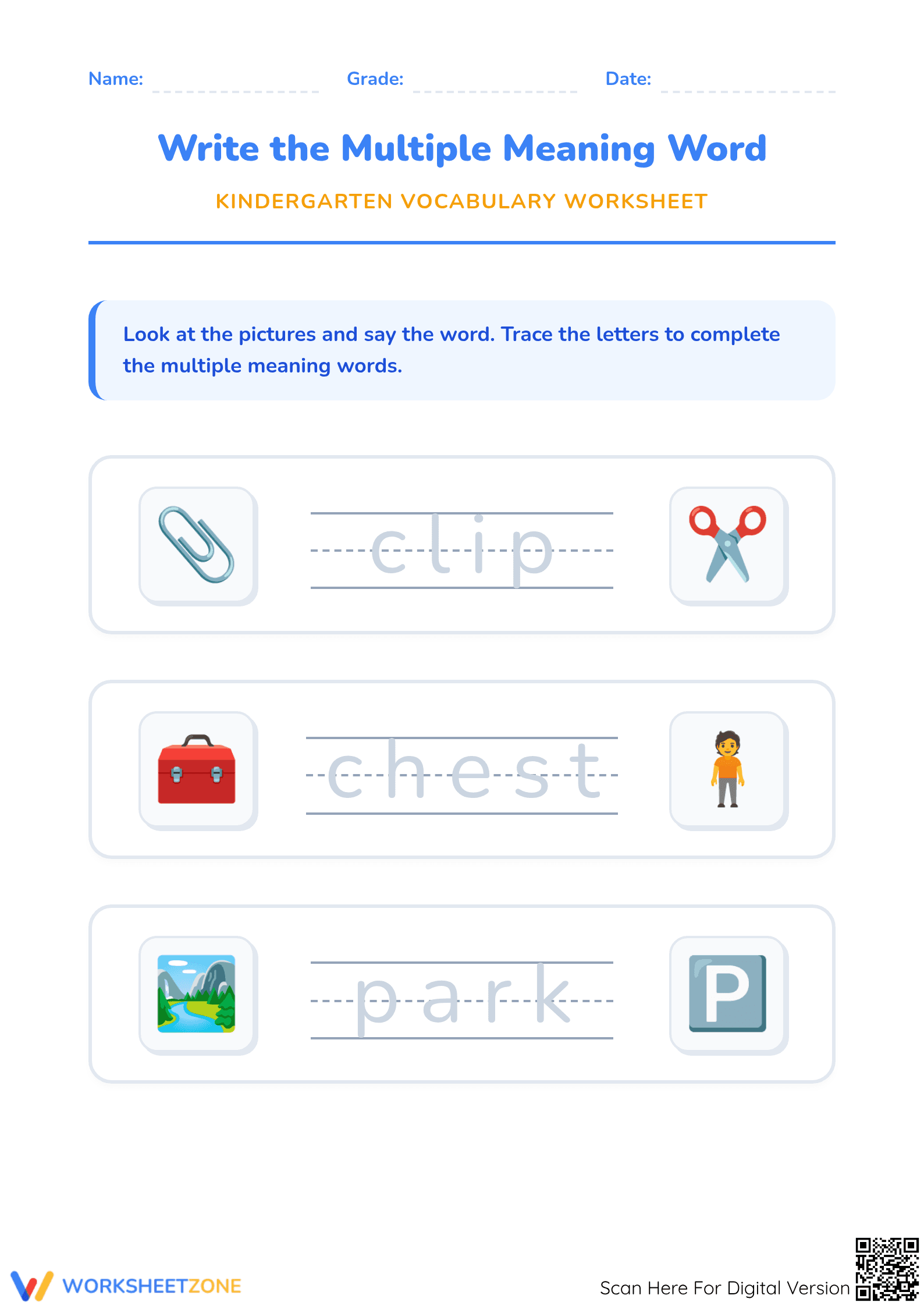
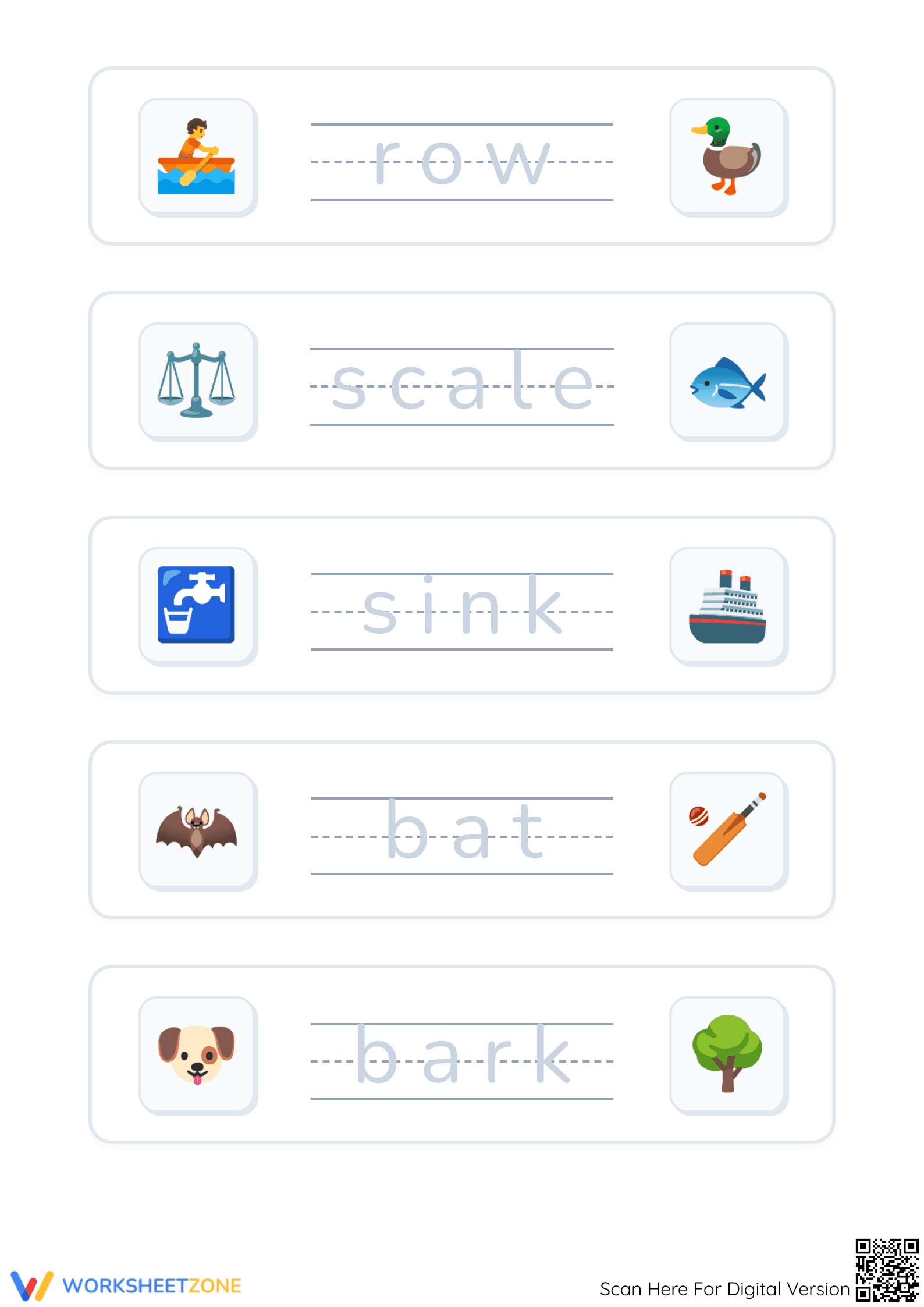
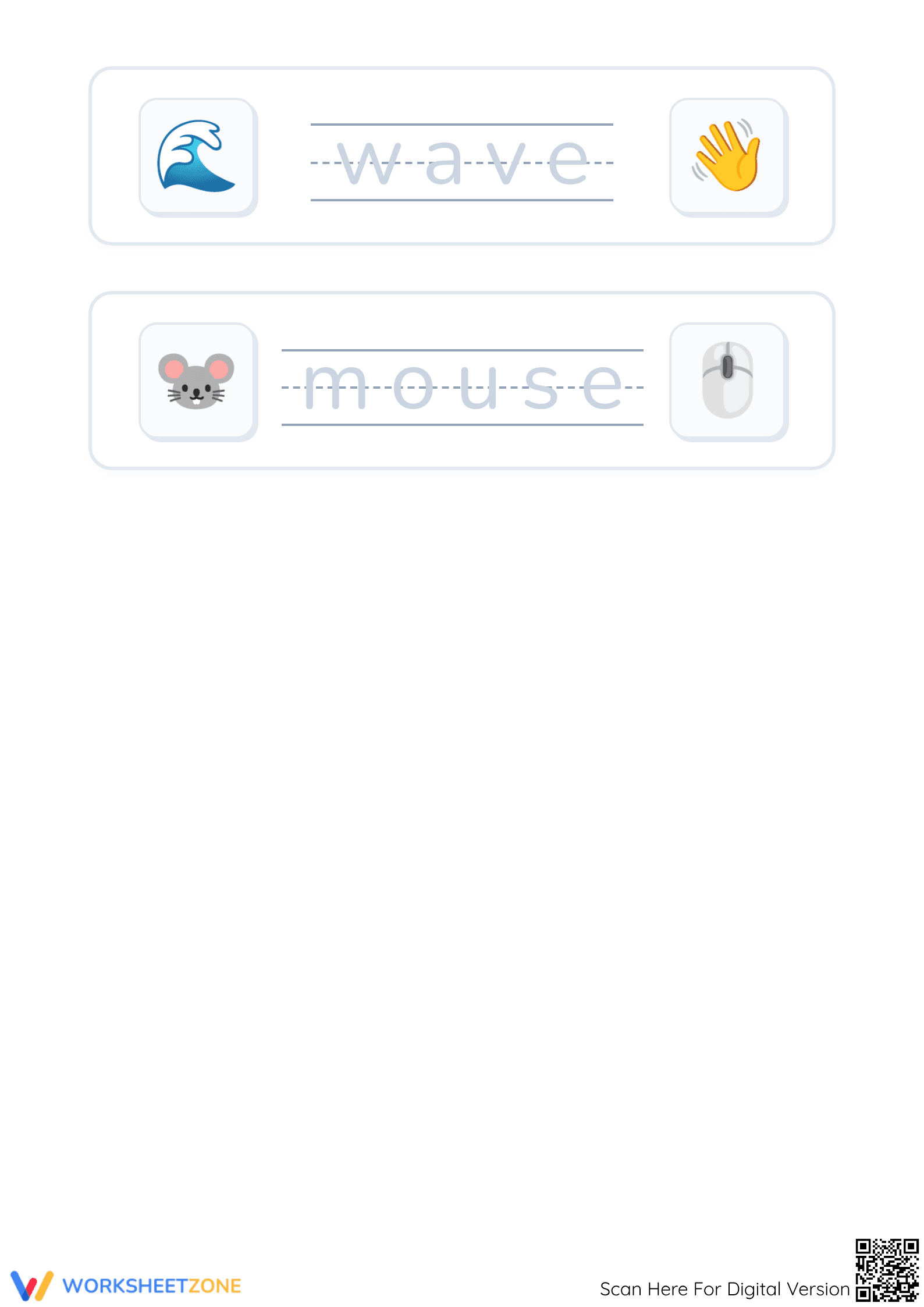
This three-page resource features 10 distinct tracing tasks centered around common homonyms. Each problem presents a single vocabulary word flanked by two colorful illustrations representing its different meanings (for example, a paper clip and scissors for "clip"). Students trace the dotted letters to reinforce spelling and fine motor skills while visually connecting the shared spelling to dual concepts. The clean, distraction-free layout ensures young learners stay focused on the vocabulary and handwriting tasks.
The activity follows a straightforward progression to support early literacy:
- Guided practice: The first page introduces highly familiar words like "park" and "chest" with clear, relatable imagery to establish the concept.
- Supported practice: Subsequent pages offer 8 additional words, maintaining the exact same visual structure so students can anticipate the task.
- Independent practice: By the final page, students confidently trace the words while independently analyzing the dual picture cues.
This consistent structure perfectly supports a gradual-release model, allowing teachers to transition smoothly from "I Do" to "We Do" to "You Do."
This resource is directly aligned to CCSS.ELA-LITERACY.L.K.4.A: Identify new meanings for familiar words and apply them accurately. By explicitly linking one written word to two distinct visual representations, the worksheet provides concrete evidence of this standard in action. Both standard codes can be copied directly into lesson plans, IEP goals, or district curriculum mapping tools.
Deploy this worksheet during morning work or as a dedicated literacy center activity following direct instruction on homonyms. It serves as an excellent quiet-time task that reinforces both vocabulary and handwriting simultaneously. As students work, observe whether they can verbally explain the connection between the two pictures and the traced word—this provides immediate formative assessment of their comprehension. Expected completion time is 15 to 20 minutes depending on the student's fine motor proficiency.
This printable is designed for kindergarten students, though it serves as an excellent review for first graders or a challenge for advanced preschoolers. The heavy reliance on visual cues makes it particularly accessible for English Language Learners (ELLs) building foundational vocabulary. Pair this activity with a read-aloud book that features playful homonyms to further solidify the concept in context.
Developing an early understanding of multiple meaning words is a critical step in reading comprehension and vocabulary acquisition. When students practice how to identify new meanings for familiar words, as outlined in CCSS.ELA-LITERACY.L.K.4.A, they build cognitive flexibility that aids in future text decoding. According to Fisher & Frey (2014), explicit vocabulary instruction that incorporates visual representations significantly enhances retention and deepens semantic understanding for early learners. By combining handwriting practice with dual picture cues, this worksheet provides a multimodal approach to literacy. This method ensures that young students do not just memorize spelling, but actively connect written language to the diverse world around them. Engaging with homonyms at the kindergarten level lays the groundwork for more complex contextual analysis in later grades, making this simple tracing activity a highly effective educational tool.


