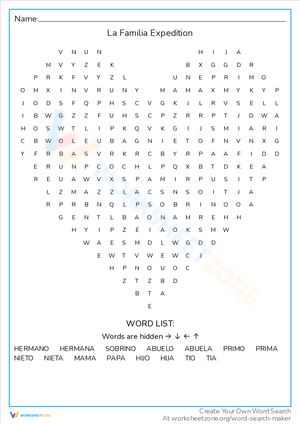
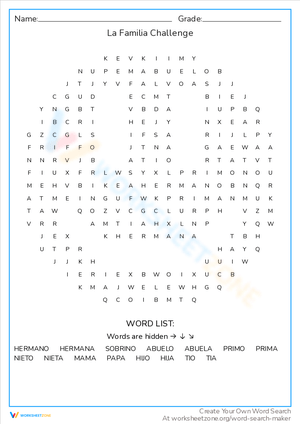
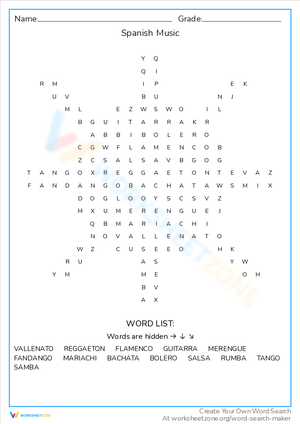
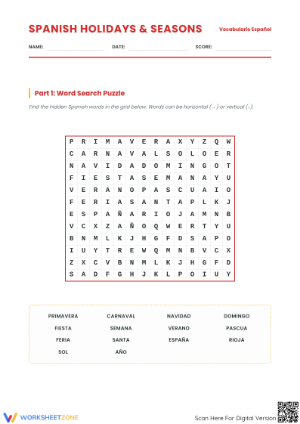
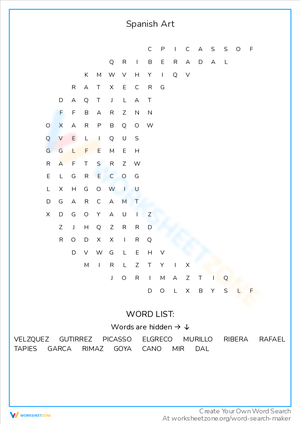
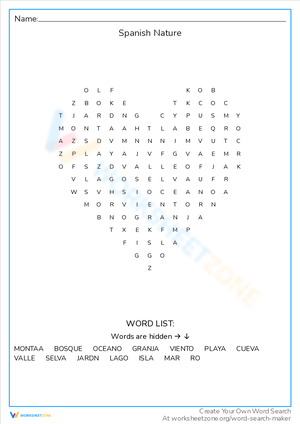
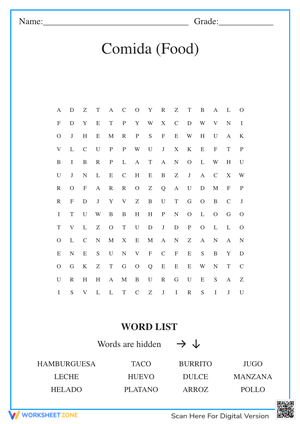
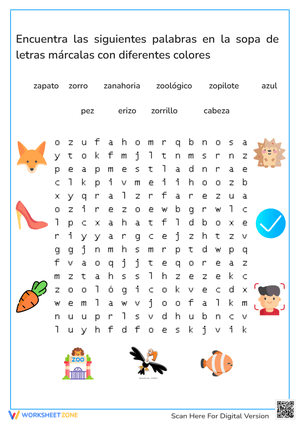
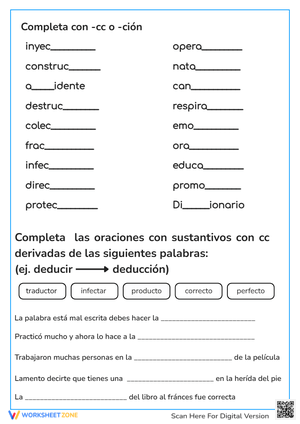
A Spanish word search gives learners a playful way to build vocabulary without the pressure of memorizing long word lists. Spanish can feel exciting but challenging when students first meet new words for colors, animals, food, family members, numbers, and classroom objects. A word search turns those terms into a focused discovery task. Students scan the grid, recognize letter patterns, and become more familiar with Spanish spelling while staying actively engaged.
This activity is especially helpful because language learning depends on repeated exposure. Seeing a word once is rarely enough for students to remember it. When learners search for words like rojo, azul, perro, casa, familia, escuela, or gracias, they interact with each term carefully and intentionally. The process supports spelling, visual memory, and vocabulary recognition. For beginners, this repeated contact can make Spanish words feel less unfamiliar before they are used in speaking, reading, or writing tasks.
Teachers can use a Spanish word search in many parts of a lesson. It can introduce vocabulary at the beginning of a unit, reinforce words after instruction, or give students a calm review task during transition time. After completing the puzzle, students can translate the words, group them by theme, write simple sentences, or draw pictures that show meaning. For younger learners studying colors, a Spanish colors coloring page can pair well with word search practice and help connect vocabulary with visual learning.
A Spanish word search also works well for differentiated instruction. Beginning learners may focus on short, familiar words such as uno, dos, sol, pan, and gato. More advanced students can work with longer vocabulary related to travel, emotions, weather, verbs, or cultural topics. Teachers can adjust the challenge through word length, grid size, direction variety, and follow-up tasks. Parents can also use the activity at home as a relaxed way to support Spanish learning without needing to lead a full lesson.
Worksheetzone’s Spanish word search resources help make vocabulary practice clear, enjoyable, and flexible for different learning settings. Students build focus, spelling confidence, word recognition, and language awareness while working through a familiar puzzle format. Whether used in a classroom, homeschool routine, tutoring session, or quiet review block, a Spanish word search gives learners a simple way to strengthen Spanish vocabulary one hidden word at a time.
Frequently Asked Questions
Question 1: What age groups benefit most from Spanish word search activities?
Spanish word search puzzles work well for learners from early elementary through high school. Younger students benefit from simple themed puzzles with common nouns, while older students can work with more advanced vocabulary. The format adapts easily to different grade levels, making it a versatile tool for teachers and parents across classroom and home learning settings.
Question 2: How do Spanish word search puzzles support vocabulary retention?
Searching for words actively engages visual memory and spelling recognition at the same time. When students locate a Spanish word hidden in a grid, they process the letters carefully, which reinforces how the word looks and how it is spelled. Repeated exposure through puzzle-solving helps vocabulary move from short-term recall into longer-term memory more effectively than passive review.
Question 3: Can Spanish word search activities be used for differentiated instruction?
Yes, these activities are well suited for differentiated instruction. Teachers can assign simpler puzzles with basic vocabulary to beginning learners while giving more challenging grids to advanced students. Themed activities also allow educators to align puzzle content with current curriculum units, ensuring that the words students search for are directly relevant to what they are studying in class.
Question 4: How should Spanish word search activities fit into a lesson plan?
A Spanish word search works best as a warm-up activity, vocabulary review exercise, or early-finisher task. Introducing the puzzle at the start of a unit previews key terms students will encounter later. Using it at the end of a lesson reinforces words already introduced. Either approach keeps students actively engaged with Spanish vocabulary in a low-pressure, productive way.












 Interactive Worksheet Maker
 Quiz Maker
 Word Search Maker
 Crossword Puzzle Maker
 Word Scramble Generator
 Sentence Scramble Generator
 Handwriting Worksheet Generator
 Name Tracing Generator
 Fill In The Blank Generator




 BACK TOSCHOOL