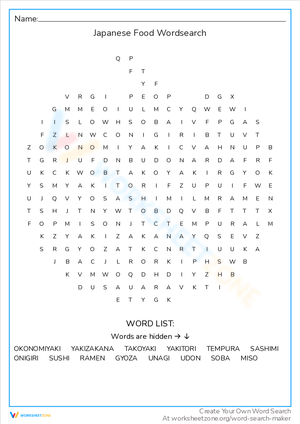
Japanese Word Search Puzzles For Language Practice
A hidden grid of letters sits in front of you, and somewhere inside it, a collection of Japanese words is waiting to be discovered. These Japanese word search puzzles turn language learning into an exciting quest where every row and column holds a potential clue. Students who take on these puzzles sharpen their ability to recognize Japanese vocabulary while training their eyes to spot patterns that standard drills often miss.
Each puzzle works like a detective assignment. Learners scan horizontally, vertically, and diagonally to locate words drawn from everyday Japanese topics such as greetings, animals, food, colors, and family members. This active scanning process helps the brain store new vocabulary more effectively than passive reading, because students must recall letter combinations and match them against a target word list.
Teachers and parents will find these Japanese word search activities especially useful for building review sessions that feel less like homework and more like a challenge. Pair a puzzle with a vocabulary lesson plan, and students get immediate reinforcement of the terms they just studied. Homeschooling families can print a puzzle for morning warm-ups, while classroom educators can use them as a quiet independent station during rotation blocks.
For students who are just beginning their journey with the Japanese language, starting with shorter word lists and larger grids builds confidence before moving to advanced puzzles. Older learners can tackle grids that include romaji or basic hiragana to stretch their recognition skills even further. If you are looking for tips on building your own custom grids, check out this guide on how to make a word search worksheet for step-by-step instructions.
Whether used in a classroom, at the kitchen table, or during a tutoring session, these printable puzzles give learners a hands-on way to engage with Japanese vocabulary. Download a Japanese word search puzzle today and watch students transform quiet study time into an active, rewarding experience.
Frequently Asked Questions
Question 1: What age group benefits most from Japanese word search puzzles?
Students from elementary through high school can benefit from Japanese word search activities. Younger learners practice basic vocabulary recognition with simple grids, while older students tackle more advanced word lists that include romaji or hiragana terms. Teachers can adjust grid size and word count to match each learner's skill level and keep the activity appropriately challenging.
Question 2: How do Japanese word search puzzles support vocabulary retention?
Scanning a grid for specific words forces the brain to recall spelling patterns and letter sequences repeatedly. This active retrieval strengthens long-term memory far more effectively than passive review methods like rereading a list. Repeated exposure to target words within the puzzle context also helps students connect written forms with their meanings over time.
Question 3: Can these puzzles be used alongside a structured language curriculum?
Absolutely. Teachers often pair Japanese word search worksheets with themed vocabulary units covering topics like food, animals, or daily routines. Assigning a puzzle after a lesson gives students a low-pressure way to review new terms. Parents homeschooling their children can also integrate these puzzles into weekly language study sessions as a supplemental review tool.
Question 4: What skills besides vocabulary do these word search activities develop?
Beyond vocabulary building, Japanese word search puzzles strengthen pattern recognition, visual scanning, and sustained focus. Students learn to process information systematically as they search rows, columns, and diagonals. These cognitive skills transfer to other academic areas including reading comprehension, spelling tests, and standardized assessments that require careful attention to detail.