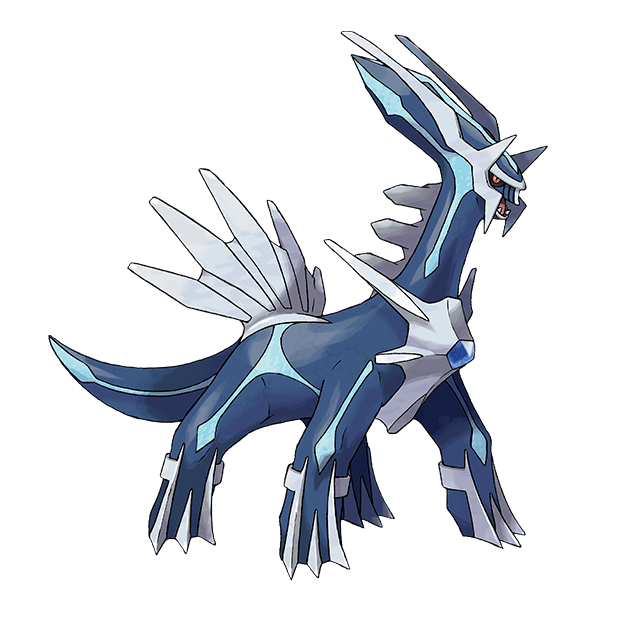
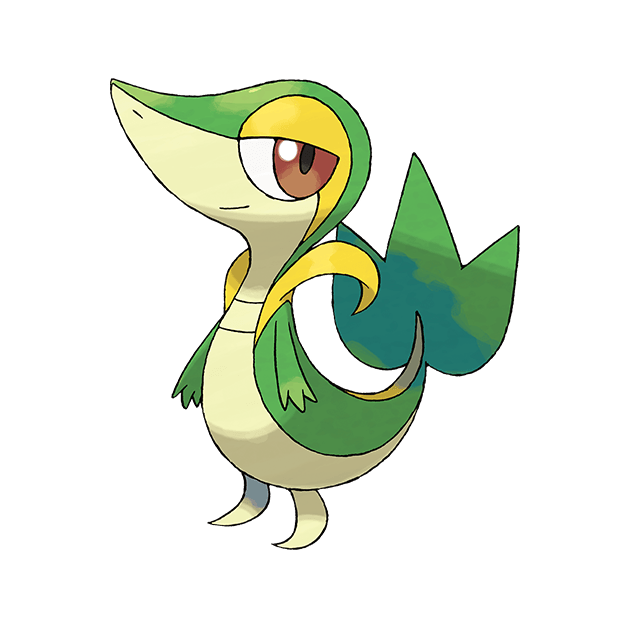
These pokemon quiz pdf worksheets give elementary teachers a themed trivia and skills resource that students reach for willingly — a harder outcome to engineer than it sounds. Each worksheet draws on Pokémon characters, type relationships, and lore to build reading comprehension, vocabulary, and logical reasoning in students who otherwise disengage the moment a printed task lands on their desk.
The Skills Inside Each Worksheet
Students read short descriptive passages about individual Pokémon and answer comprehension questions that demand both literal recall and inference — not just "What type is Charizard?" but "Why would a Water-type move be particularly effective in this situation?" Vocabulary work appears when character descriptions use terms like evolved, habitat, and nocturnal, and students must match or define them in context rather than memorize an isolated list.
Several worksheets build classification thinking: students sort Pokémon by type, region, or evolutionary stage, which is the same skill applied in science units on living organisms. The logic questions go further — if a Fire-type move is weak against Water-types, and Water-types are weak against Electric-types, which Pokémon wins a three-way match? That chain of conditional reasoning maps directly onto the structure of math word problems and scientific prediction tasks. Difficulty varies across the set, from basic character recognition at one end to multi-step inference questions at the other.
How to Build These Worksheets Into Your Lesson Plans
The most natural slots are transition moments: the ten minutes after specials before the next block begins, the stretch between morning meeting and independent reading, or the last fragment of Friday afternoon when sustaining whole-class instruction becomes unrealistic. A student can pick up one worksheet, work through it independently, and set it aside without breaking the arc of the larger lesson.
A more structured approach is rotating the pokemon quiz pdf worksheets into small-group stations. A group of four students working through a type-advantage logic task while the teacher pulls a reading group makes productive use of two instructional contexts at once — the station group stays on task because the content holds their attention, and the teacher focuses entirely on the pull group. Some teachers use the completed set as the anchor of a Friday reward block, turning the last fifteen minutes into a structured team trivia challenge that doubles as a check on the week's reasoning and comprehension work.
Patterns in Student Work Worth Anticipating
Students who are deep Pokémon fans tend to move too fast. They pull answers from memory rather than reading the passage, which means the comprehension skill gets bypassed entirely. You see this when a student gets the trivia question right but cannot locate the supporting sentence in the text. Asking everyone to underline the sentence that backs each answer before moving on addresses this directly; the fans resist briefly, then comply once they realize a few of their confident answers are actually contradicted by the worksheet's version of events.
The inverse problem appears with students who have no Pokémon background. These students read the character descriptions as genuinely unfamiliar informational text — which is fine for comprehension practice — but they often stall on the logic questions because they have no prior framework for the type system. A two-minute orientation before distributing the worksheet resolves most of this: tell them to think of type advantages the way they think about rock-paper-scissors, and they have enough structure to proceed without friction.
Adjusting Each Worksheet for a Range of Learners
For students still building reading fluency, the character-identification and matching tasks require minimal extended reading and give them a foothold before the more text-heavy worksheets. Students reading above grade level can work through the inference-heavy passages and be asked to justify their answers in writing — adding a constructed-response layer that the worksheet itself does not require, without needing a different resource entirely.
For students who need additional support, pairing a pokemon quiz pdf worksheets activity with a printed type-chart reference reduces the working memory load and keeps the focus on reasoning rather than recall. For extension, ask those same students to write one new trivia question in the format of the worksheet. Writing a question demands deeper understanding than answering one, and it gives you a quick window into what they actually absorbed from the passage.
Frequently Asked Questions
What grade levels do these worksheets fit?
The set works best across kindergarten through sixth grade. Younger students gravitate toward character recognition and simple matching; upper elementary students handle multi-step logic and reading comprehension questions well. Teachers in grades 3–5 tend to get the most use from the inference and categorization worksheets, which align with ELA expectations at those levels.
Do I need to know Pokémon to run these activities?
No prior knowledge is necessary. Each worksheet includes all the information students need to answer the questions, so you facilitate the activity rather than teach content. When knowledgeable students explain an answer to a classmate with no background, they build oral communication and academic vocabulary — they have to make their reasoning legible in complete sentences, which is its own instructional gain.
Can these be used digitally rather than printed?
Each pokemon quiz pdf worksheets file opens cleanly in any standard PDF reader, so students can annotate directly on a tablet or read on-screen and record answers in a notebook. The layout holds on screen exactly as it prints, which matters when questions refer to images or type diagrams. For classes with device access, the digital route works without any formatting loss.












 Interactive Worksheet Maker
 Quiz Maker
 Word Search Maker
 Crossword Puzzle Maker
 Word Scramble Generator
 Sentence Scramble Generator
 Handwriting Worksheet Generator
 Name Tracing Generator
 Fill In The Blank Generator