Worksheetzone logo

Narrative Writing Quiz Worksheets PDF

Narrative Writing Quiz worksheets curated by Worksheetzone

With Narrative Writing Quiz Worksheets PDF, engaging practice is always within reach, no matter your schedule or setting. Designed for early learners through middle grades, these Narrative Writing Quiz Worksheets PDF deliver high-impact worksheets that support key milestones and curriculum objectives. Each resource is professionally formatted for clarity, consistency, and ease of use, saving educators and parents hours of prep time. Forget the frustration of scattered, low-quality materials; Narrative Writing Quiz Worksheets PDF give you a cohesive collection that reinforces learning while building student confidence. Whether used for daily review, skill reinforcement, or enrichment, these worksheets make it easier to plan with purpose and teach with confidence. Elevate your instruction with targeted, ready-to-go resources that align with real learning needs.
More additional Nonfiction Writing worksheets


Clear All

Narrative Writing
Verified
4 pages

Narrative Writing

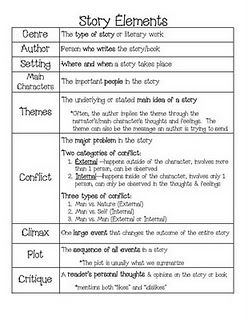
What is a narrative: A story. _________________ means the time and place in which the events happen in a story: Setting. True or False. Descriptive words are important because they add detail to the story: True. Dialogue is : The conversation between characters. The part of the story that ties up all the loose ends and takes care of the conflict: the resolution. What is the purpose of a narrative: To tell a story. Why should we use descriptive words in our narrative essays: They "paint a picture" for our readers. What is narrative writing: Fictional story with a problem, events, and a solution. What is the first step of the writing process: . Why do we need to brainstorm before writing a narrative essay: It helps us organize our thoughts and ideas before writing.. When a main character's problem is resolved authors call that the _______________ of the story: Solution. Select the word that correctly defines each story element. The characters of a story are.: who is in the story.. Select the word that correctly defines each story element. The plot of a story includes..: . Select the word that correctly defines each story element. The conflict of a story is the..: problem the character faces.. Select the word that correctly defines each story element. The protagonist of a story is..: the main character. . Select the word that correctly defines each story element. The introduction, or exposition, of a short story is also its..: beginning.. All of the following are elements of narrative writing except: Teaches the reader something new. A strong, meaningful story title and introduction serves the purpose of making the reader ..: want to keep reading. Narrative writing tells a story to ........... the reader: entertain. All narratives have.......Choose all correct answers: point of view and plot

Grade:Grade 2_AI - Grade 4_AI
13
LAT Assessment
Verified
3 pages

LAT Assessment

LAT stands for : Literary Analysis Task. You will be required to read both _________ and ___________ on the NJSLA: . What two main areas are being assessed on the NJ Holistic Scoring Rubric: 1. Reading Comprehension and Written Expression 2. Knowledge of Language and Conventions. On one of the NJSLA days, you will be required to write one or the other: Narrative OR LAT. Choose 1 literary device that you may see in a LAT prompt. : conflict. What is the definition of theme: a lesson or moral of a story. This is conversation between two or more people in a work of literature: dialogue. Tension in literature can be defined as : evoking emotion such as worry, anxiety, fear and stress on the part of both the reader and the characters.. The story circles around this character’s experiences, and the audience is invited to see the world from his or her perspective: protagonist. This is the highest point of tension or drama in a narratives’ plot: climax.  This is the conclusion of the story’s plot. It’s where any unanswered questions are answered, or “loose ends are tied.": resolution. What is the 1st step when you are approaching a literary analysis task: . What is the 2nd step in approaching a Literary Analysis Task: . Choose 1 example of a hook that you can use in your LAT: rhetorical question. How many pieces of evidence do you need from each text to support your answer in a LAT: 3. Choose a closing transition you can use in your LAT: To summarize. Organization can be demonstrated by using : . Addressing the prompt means: staying on task. My goal is to aim for a ____ on the LAT: 4

Grade:Grade 3_AI
1
Fictional Narrative Writing
Verified
2 pages

Fictional Narrative Writing

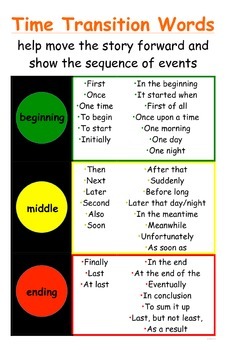
A narrative essay: is a fictional story.. A person, an animal, or object that takes part in the action of a narrative is a ________: character. The time and location in which a story takes place is the _____: setting. True or False. Descriptive words are important because they add detail to the story: True. Marsha wanted to play baseball. Rachel taught Marsha the game after school. She taught her how to hold a bat. She also taught her how to catch the ball. Now Marsha plays the game well. What did Rachel teach Marsha first in the game of baseball: She taught her how to hold a bat. . Jennifer built a toy airplane. Her father helped her. First, they painted the parts. Then, they glued the parts together. They were pleased with their airplane even though it could not fly. What happened right after they painted the parts: They glued the parts together. . The Jones family went to the beach. First they found a spot to put their towels and beach bags. Then they all went for a swim in the ocean. After drying off they ate a delicious picnic lunch. Then the kids built a giant sand castle. Finally they went for a walk and collected shells to bring home.What happened just before they went for a walk: They built a sand castle.. Which one should come last: Tie the ribbon.. When you're getting dressed, what do you put on last: shoes. Mr. Kemphaus has beautiful hair. He wanted to get it cut. His students screamed "NO! please don't cut you hair." After that he promised never to cut his hair. What happened at the end of the story? : Mr. Kemphaus promised never to cut his hair

Grade:Grade 1_AI - Grade 3_AI
--