What Rounding Decimals Worksheets Cover
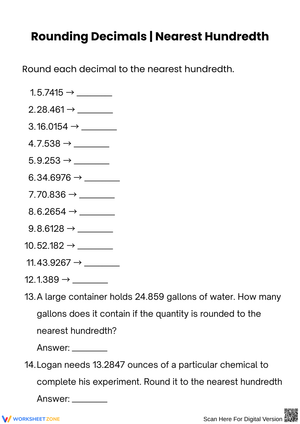
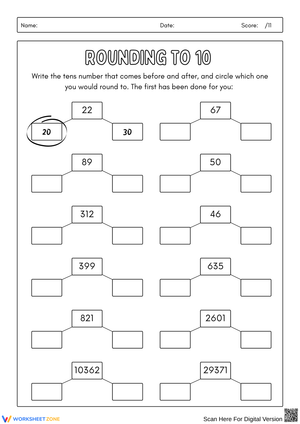
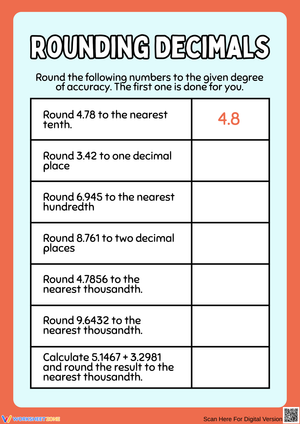
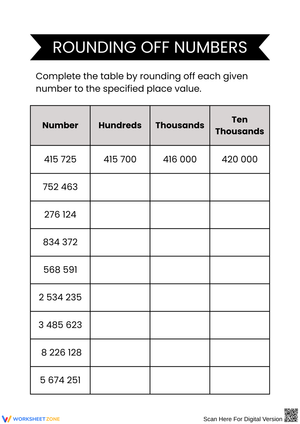
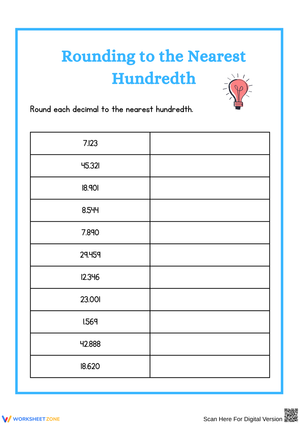
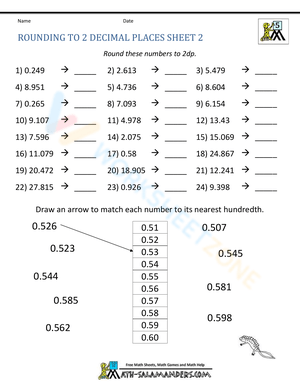
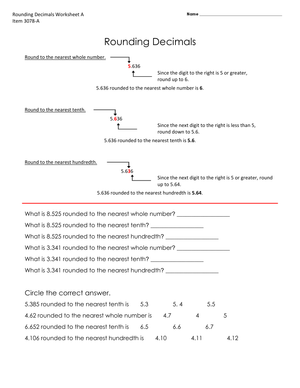
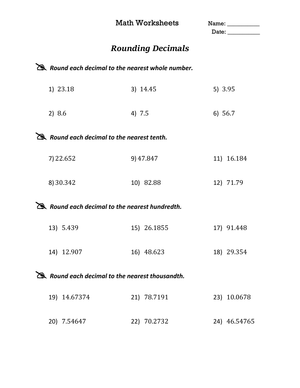
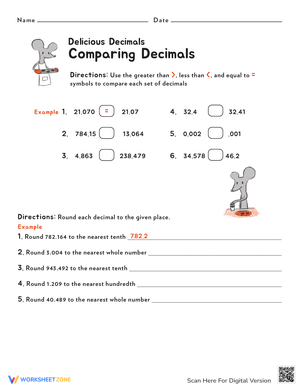
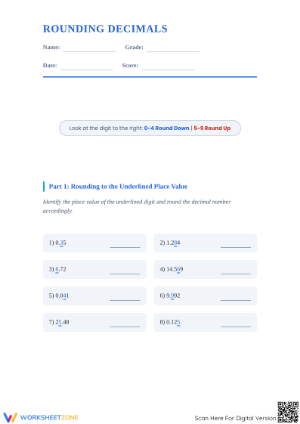
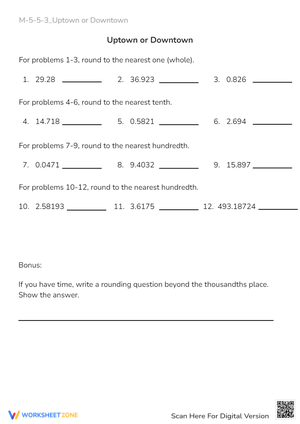
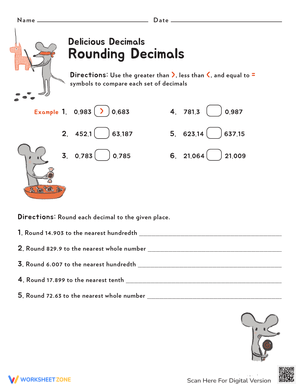
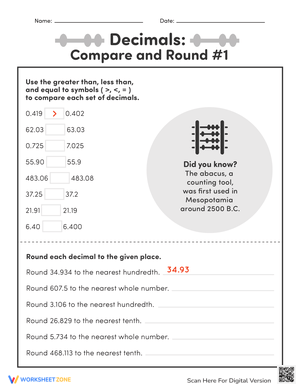
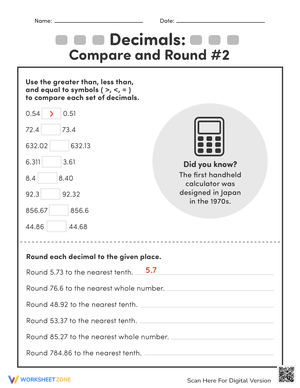
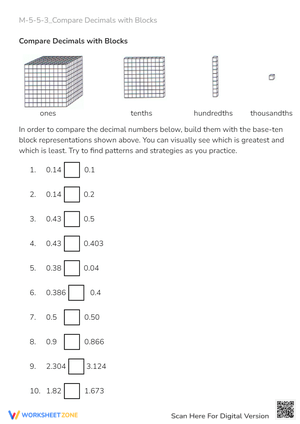
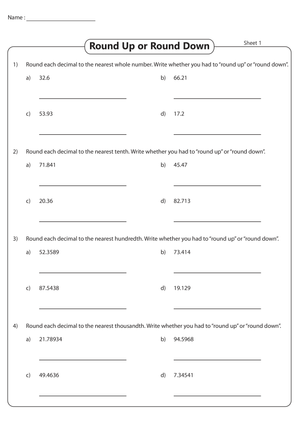
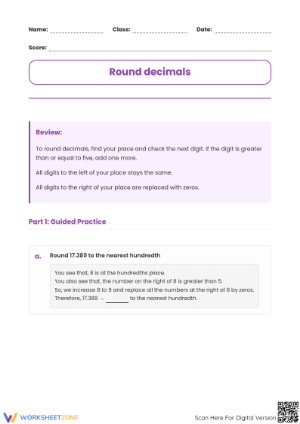
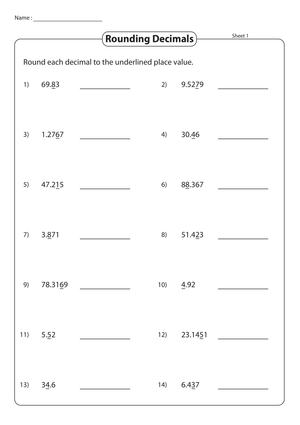
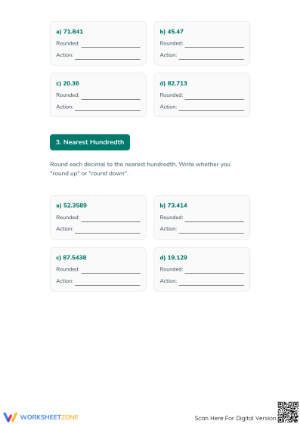
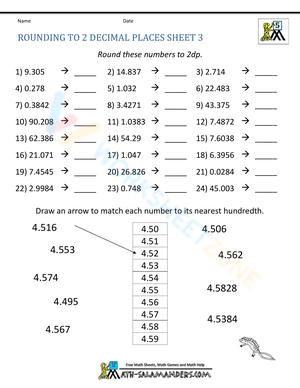
Rounding decimals worksheets give your students focused, repeatable practice on one of the harder place value skills in the upper-elementary sequence. Instead of a single mixed page, the strongest sets separate rounding to the nearest tenth, hundredth, and thousandth so you can match the sheet to where a group actually is. That separation matters because a student who reads the tenths place confidently can still stumble when the target moves two digits to the right.
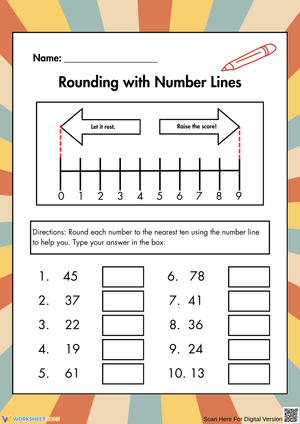
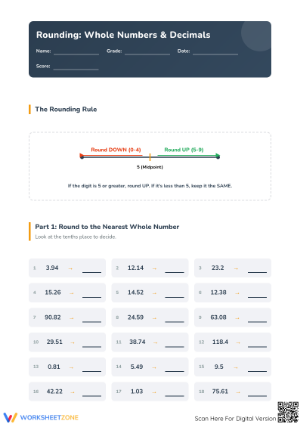
For a typical grade 5 classroom, these pages work as warm-ups, independent practice, small-group intervention, or a quick exit ticket. Because the numbers are short and the task is contained, you can grade a set in minutes and see exactly which reference digit a student misread. Pair the worksheets with a number line for learners who need to see which benchmark a decimal is closer to before they commit to an answer.
Where This Fits in the 5.NBT.A.4 Sequence
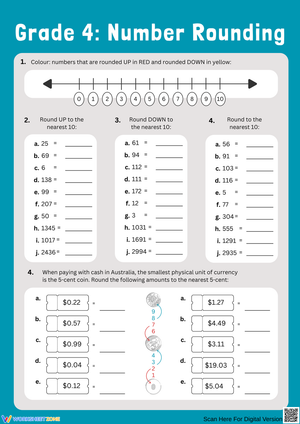
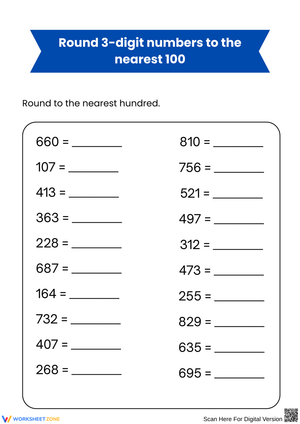
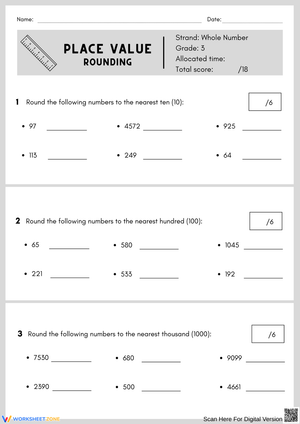
Rounding decimals is a grade 5 skill in the Number and Operations in Base Ten domain, and it builds directly on the whole-number rounding students met in grades 3 and 4. Most teachers introduce it after place value naming and comparing decimals, then use it as a bridge into decimal addition, subtraction, and estimation. Worksheets let you sequence that bridge deliberately: a review page on whole-number rounding, a tenths page, a hundredths page, and finally a mixed-place challenge.
According to the Common Core State Standards Initiative, standard 5.NBT.A.4 asks fifth graders to use place value understanding to round decimals to any place. It sits inside the Grade 5 Number and Operations in Base Ten domain, the same cluster where students first extend whole-number rounding to the tenths, hundredths, and thousandths places, connecting new work to skills they already own.
Differentiating Tenths, Hundredths, and Thousandths
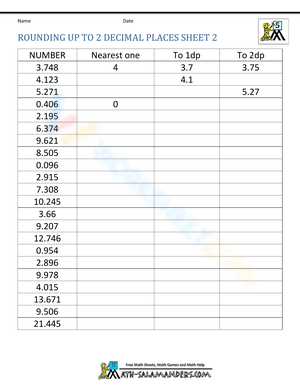
One of the biggest advantages of a worksheet collection is easy differentiation across a single standard. Your intervention group might spend three days rounding only to the nearest tenth, using shorter decimals and a number line at the top of each page. Your on-level group works tenths and hundredths together, and your enrichment group tackles thousandths and mixed prompts that ask them to round the same number to two different places.
This kind of within-class tiering keeps every student on 5.NBT.A.4 without leaving anyone behind or holding anyone back. Because each tier uses the same rule and the same layout, you can regroup students mid-unit without reteaching the format. A learner who masters tenths on Monday can slide into the hundredths page on Wednesday with no new directions.
Catching Common Student Errors
The two errors that show up most on decimal rounding pages are predictable, and that predictability is exactly what makes worksheets useful. First, students round based on the wrong reference digit, often reading the target place itself instead of the digit just to its right. Second, they truncate: they simply drop the trailing digits and call the result rounded, which produces a correct answer only when the reference digit happens to be a 4 or less. Because a worksheet freezes each attempt on paper, you can sort a stack in one pass and instantly tell truncation errors from reference-digit errors, then reteach the specific misstep instead of the whole skill.
Once you can name a student's error, the fix is targeted. Truncators need a quick reminder that rounding can move a digit up, so give them a page loaded with 5-through-9 reference digits. Reference-digit misreaders need highlighting practice: circle the target, box its right-hand neighbor, decide. A short, error-focused sheet beats a long mixed set for repairing a specific gap.
Real Classroom Contexts That Make It Stick
Rounding decimals stops feeling like a worksheet skill when you tie it to measurement, money, and data. Ask students to round a lab measurement to the nearest hundredth of a centimeter in science, round prices to the nearest tenth of a dollar when comparing unit costs, or round survey averages before graphing them. Bringing those contexts onto the page, or verbally right before it, gives the practice a reason to exist.
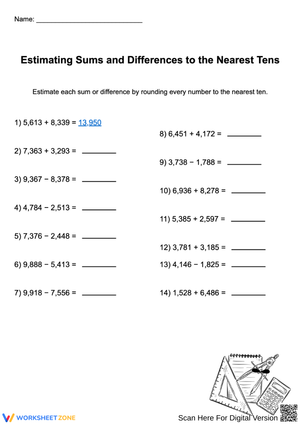
These connections also preview why rounding matters for estimation later in the year. When students round decimal factors before multiplying, they can judge whether a computed answer is reasonable. A worksheet that ends with one or two applied prompts, not just bare numbers, carries more instructional weight than a page of isolated drills.
Classroom Implementation
Start each rounding block with a five-minute warm-up worksheet before you move into the day's decimal operations lesson. Project one problem, model the underline-box-decide routine, then let students finish the page independently while you pull a small group. Use the results as a live formative check: a quick scan tells you who is ready to advance and who needs another day on the current place value.
For pacing, plan a short review sheet on whole-number rounding first, then one worksheet per place value across the week, and close with a mixed page as a pre-assessment before your unit test. Keep completed sheets in a folder so students can revisit them ahead of state math testing, when a fast rounding review pays off across many decimal items. When you differentiate, hand intervention students the number-line version and enrichment students the multi-place challenge, all pulled from the same standard.
Frequently Asked Questions
1. What grade level learns to round decimals under Common Core?
Rounding decimals to any place is a grade 5 skill under standard 5.NBT.A.4, though many grade 4 and grade 6 classrooms use the same worksheets for preview and review. The skill assumes students already round whole numbers, which they typically learn in grades 3 and 4.
2. How should teachers sequence rounding decimals practice?
Begin with a whole-number rounding review, then move through tenths, hundredths, and thousandths on separate pages before assigning a mixed-place worksheet. This order lets each place value build on the last and gives you clear checkpoints to regroup students within the unit.
3. What mistakes do worksheets help catch?
They surface the two classic errors: reading the wrong reference digit and truncating instead of rounding. Because each attempt is written down, you can sort a stack quickly, name the specific error, and assign a short targeted page rather than reteaching the entire skill.
4. Can these worksheets serve intervention and enrichment at once?
Yes. Give intervention groups shorter decimals with a number line and a single target place, while enrichment groups round longer decimals to multiple places on the same sheet. Both tiers stay on 5.NBT.A.4, so you can move students between groups without changing the format.













 Interactive Worksheet Maker
 Quiz Maker
 Word Search Maker
 Crossword Puzzle Maker
 Word Scramble Generator
 Sentence Scramble Generator
 Handwriting Worksheet Generator
 Name Tracing Generator
 Fill In The Blank Generator