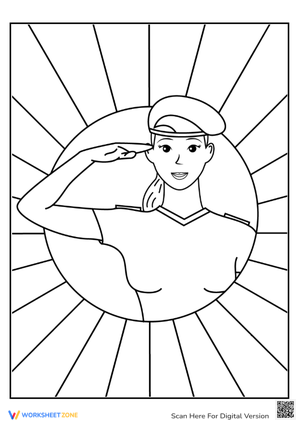
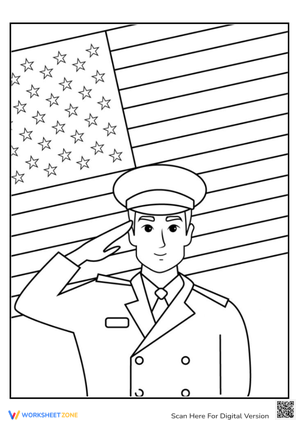
These veterans day printable worksheets give teachers a structured set of activities for the week surrounding November 11th — covering the history of the holiday, the five branches of the military, civic vocabulary, and guided letter-writing practice. The set works across grades 2–6 with adjustments, and the reading passages support read-aloud, partner reading, or independent work depending on the day's instructional goal. What teachers get is a ready-to-use collection that keeps the holiday's meaning front and center rather than letting it slide into decoration.
What's Inside the Set
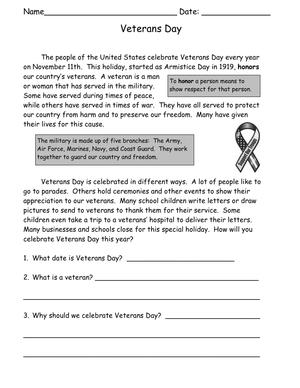
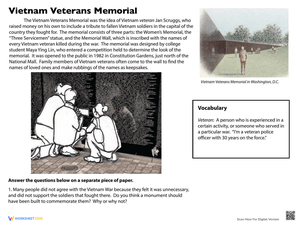
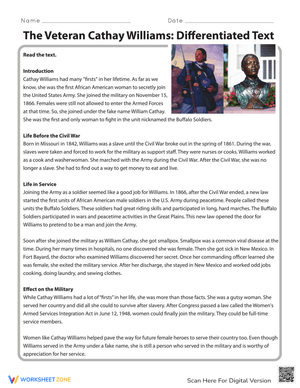
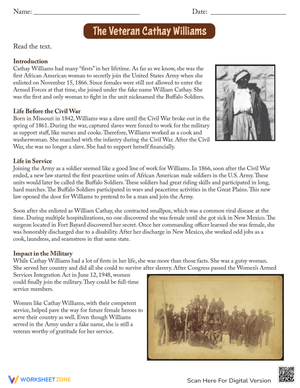
The reading comprehension worksheets within this veterans day printable worksheets collection center on two main topics: the origins of the holiday and the structure of the U.S. Armed Forces. Students read a short passage about Armistice Day — the November 11, 1918 ceasefire that ended World War I — and then trace how Congress renamed the holiday in 1954 to honor veterans of all conflicts, not only those who served during wartime. A second passage walks through the distinct missions of the Army, Navy, Air Force, Marine Corps, and Coast Guard, giving students concrete information to draw on when they write.
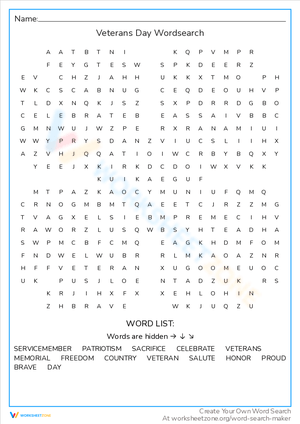
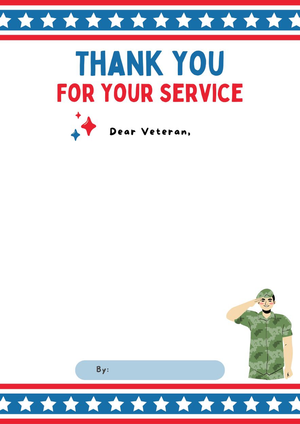
The vocabulary worksheets go further than word searches. Students match terms like armistice, honorable discharge, and active duty to plain-language definitions, then use each word in a sentence. The letter-writing worksheet includes a structured graphic organizer — an opening line, a body section with two prompted details, and a closing — so students produce a real letter rather than a list of vague compliments. The template is formatted to fold into a standard envelope without trimming, which matters when the letters actually go out.
Common Misconceptions to Watch For and Correct
The Veterans Day–Memorial Day distinction trips up most students below fifth grade, and a fair number above it. The typical error is not just swapping the two holidays — it runs deeper. Students write that Veterans Day "honors soldiers who died for our country" because that framing sounds serious and respectful, and because Memorial Day falls close enough in the school year that its meaning bleeds into November lessons. One reliable sign: a student who correctly defines Memorial Day on a September pre-assessment will revert to conflating the two by November if the distinction has not been revisited. The worksheets address this directly with a side-by-side comparison activity that asks students to sort statements into the correct column before writing their own definitions.
A second misconception involves the word veteran itself. Many students assume the term applies only to combat veterans — people deployed to active conflict zones. When they draft their thank-you letters, they address them specifically to "soldiers who fought in wars," inadvertently excluding peacetime service members. One classroom discussion before students open the letter worksheet corrects that framing before it gets committed to paper.
Building These Worksheets Into Your November Unit
The most effective approach starts two to three days before November 11th rather than on the holiday itself. Day one works well as vocabulary and historical background — students complete the Armistice Day passage and the branch-identification worksheet independently or with a partner. Day two is the comparison activity, which generates the kind of discussion that makes the letter-writing on day three land with more intention. If the school hosts an assembly or a visiting veteran on November 11th, students who have done this groundwork ask noticeably sharper questions than students who encountered the topic only that morning.
For teachers running station rotations, the worksheets divide cleanly: one group reads the military branches passage, one completes the vocabulary matching, and one drafts letters with the graphic organizer. The station that consistently runs longest is the letter draft — build in an extra four to five minutes there, especially in grades 3–4 where students need time to move from the organizer to the full draft. A real mailing destination announced before students begin raises writing quality noticeably; students write differently when they know a person will read it.
Adjusting the Work for a Range of Learners
For students still building reading fluency, the passages work as read-alouds followed by comprehension questions completed in writing. The vocabulary section can be completed as a class sort on the board before students work through the individual worksheet on their own. For advanced readers in grades 5–6, the reading comprehension worksheets pair well with a follow-up research task: students identify one veteran from their state's history and write a paragraph connecting that person's service to the holiday's purpose. That extension requires no additional materials — just brief modeling of what a credible source looks like.
The letter-writing worksheet is the most flexible piece in the set. Emerging writers can dictate while a partner or aide scribes, then copy the final version onto the template. Students who write fluently often push past the prompts — let them; the graphic organizer is a starting point, not a ceiling. One honest limitation: this format frustrates students who resist prompted writing and prefer open-ended tasks. For those students, offer the blank letter template without the organizer and have them self-monitor using a short checklist of required components.
Standard Alignment
The reading passages and comprehension questions align to CCSS.ELA-LITERACY.RI.3.3, which asks third graders to describe the connection between a series of historical events — specifically relevant when students trace the transition from Armistice Day to Veterans Day. The letter-writing component addresses CCSS.ELA-LITERACY.W.3.1 (opinion writing with supporting reasons) and W.4.4 (producing writing appropriate to task and audience). On the social studies side, the content maps to NCSS Standard V (Individuals, Groups, and Institutions) and the C3 Framework's D2.Civ.10, which focuses on civic participation and the responsibilities of citizenship — the conceptual foundation for why the country formally honors service members at all.
Frequently Asked Questions
Is the reading level consistent across all the worksheets?
The passages are written at approximately a late-second to early-third grade independent reading level, which makes them accessible for most students in grades 2–4 working on their own and for grades 5–6 as a quick informational read before deeper analysis. Each worksheet includes both literal recall questions and inferential prompts, so teachers in mixed-ability classrooms can assign different question sets to different students without preparing separate materials.
Can this set be used outside of November?
Using these veterans day printable worksheets outside the traditional window — say, as part of a broader American holidays unit in spring — works only if the historical framing is already established. The Armistice Day passage is most meaningful when students have some World War I context; without it, a brief background-building discussion before the worksheet is all that is needed.
What's the best way to get finished letters to actual veterans?
Coordinate with the school counselor or a local American Legion or VFW post before students begin drafting. Many posts run existing programs for receiving student mail and will confirm a mailing address ahead of time. VA medical centers also accept letters — the public affairs office at the nearest facility can provide the correct contact. Having a confirmed destination before day three of the unit makes the assignment feel real rather than performative, and the writing reflects that.
Do these worksheets replace a Veterans Day lesson, or supplement one?
They handle the instructional heavy lifting for the content portion of the lesson — historical background, vocabulary, comprehension, and structured writing. What they do not replace is the human element: a brief class discussion, a read-aloud of a veterans-themed picture book, or a few minutes for students to share whether family members have served. The veterans day printable worksheets carry the structured practice; the surrounding conversation is what makes the learning stick past November 12th.












 Interactive Worksheet Maker
 Quiz Maker
 Word Search Maker
 Crossword Puzzle Maker
 Word Scramble Generator
 Sentence Scramble Generator
 Handwriting Worksheet Generator
 Name Tracing Generator
 Fill In The Blank Generator