Thanksgiving Adjectives Worksheets With Holiday Words
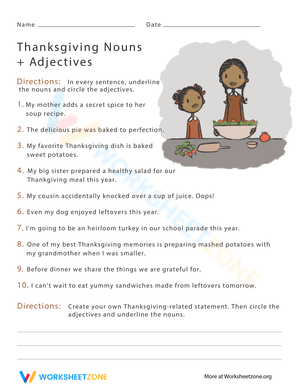
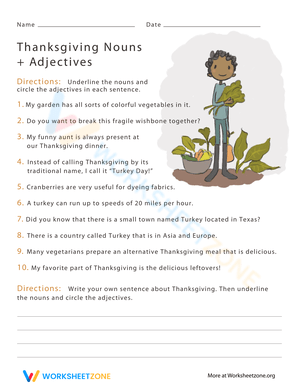
Thanksgiving adjectives worksheets give students a seasonal way to make their writing more descriptive, colorful, and specific. Instead of writing simple sentences like “The turkey is good” or “The pie is nice,” students can learn to use stronger words such as crispy, delicious, golden, grateful, cozy, festive, and generous. These activities help learners understand how adjectives add detail, emotion, and imagery to writing while keeping the lesson connected to a familiar holiday theme.
Adjectives are especially useful during Thanksgiving writing because the season is full of sensory details. Students can describe the smell of warm pie, the color of autumn leaves, the sound of a busy kitchen, or the feeling of gathering with family and friends. Thanksgiving adjectives worksheets may include word sorting, sentence expansion, adjective matching, fill-in-the-blank activities, and descriptive writing prompts. These tasks help students move from identifying adjectives to using them naturally in their own sentences.
A strong adjectives lesson can begin with a themed word bank. Students might group words by category, such as taste, color, feeling, size, texture, or personality. For example, words like sweet, buttery, crunchy, and savory can describe food, while thankful, joyful, kind, and peaceful can describe feelings or people. Teachers who want to build a larger seasonal vocabulary list can use Thanksgiving words to introduce students to more holiday-related terms before they begin writing.
Thanksgiving adjectives worksheets can also support sentence-building and grammar review. Students may start with a basic noun, such as “pumpkin,” “table,” or “parade,” then add one or more adjectives to create a more vivid phrase. A simple phrase like “the pie” can become “the warm pumpkin pie” or “the sweet, golden pie.” Once students understand how adjectives improve sentences, they can apply the same skill to paragraphs, stories, thank-you notes, and holiday reflections. For students ready to explore figurative language, Thanksgiving idioms worksheets can extend the lesson into expressions and deeper language use.
Whether used during grammar lessons, writing centers, holiday literacy activities, or homeschool practice, Thanksgiving adjectives worksheets make descriptive language easier to teach and more enjoyable to practice. They help students strengthen vocabulary, sentence fluency, grammar awareness, and creative writing skills. With the right prompts and examples, students can learn that adjectives do more than decorate a sentence; they help readers see, feel, taste, and imagine the scene more clearly.
Frequently Asked Questions
Question 1: What skills do Thanksgiving adjectives worksheets help students practice?
Thanksgiving adjectives worksheets help students practice identifying adjectives, choosing precise descriptive words, expanding sentences, and improving writing detail. Students learn how adjectives describe nouns by telling what kind, how many, which one, or what something is like. These worksheets also support vocabulary growth because students explore seasonal words related to food, feelings, family, fall, and celebration. Over time, this practice helps students write more expressive and interesting sentences.
Question 2: What grade levels can use Thanksgiving adjectives worksheets?
Thanksgiving adjectives worksheets can be useful for early elementary through upper elementary students, depending on the activity level. Younger students may work on matching adjectives to pictures or circling describing words in simple sentences. Older students can practice sentence expansion, adjective order, sensory writing, and paragraph development. Teachers can choose simpler or more advanced tasks based on each student’s grammar knowledge and writing ability.
Question 3: How can teachers use Thanksgiving adjectives worksheets in class?
Teachers can use Thanksgiving adjectives worksheets during grammar instruction, writing centers, morning work, small-group lessons, or seasonal literacy review. A lesson might begin with a class brainstorm of Thanksgiving nouns, followed by a list of adjectives that could describe each one. Students can then use the worksheet to build phrases, revise plain sentences, or write a short descriptive paragraph. This gives students both guided practice and a chance to apply adjectives in meaningful writing.
Question 4: How can students make their Thanksgiving writing more descriptive?
Students can make their Thanksgiving writing more descriptive by using adjectives that appeal to the senses and emotions. Instead of using general words like good, nice, or fun, they can choose more specific words such as warm, crunchy, colorful, thankful, cheerful, crowded, peaceful, or delicious. They can also describe what they see, hear, smell, taste, and feel during a Thanksgiving scene. This helps their writing become more vivid, personal, and engaging for readers.
Clear All