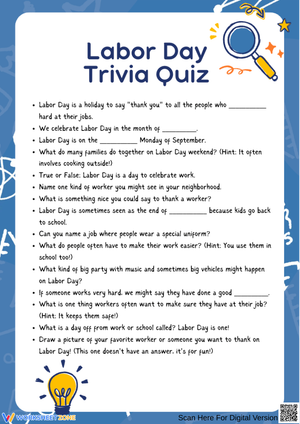
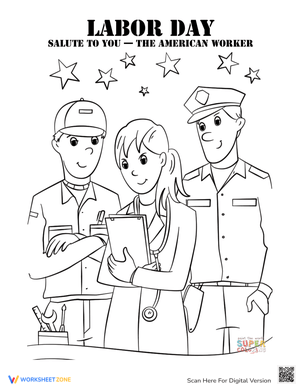
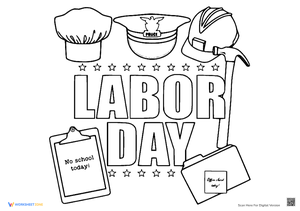
These labor day pdf worksheets give K–12 teachers a collection of classroom materials covering the American labor movement — from the 1882 Central Labor Union parade in New York City through the federal legislation President Grover Cleveland signed in 1894. Each worksheet addresses a specific concept or skill, so teachers can pull an individual piece for a 15-minute warm-up or sequence several across the first week of September for a short unit.
What Students Practice Across the Set
The worksheets span three broad content areas: historical chronology, civic and economic reasoning, and close reading with primary sources. Students work with timelines placing key events in sequence — the Pullman Strike, the formation of the American Federation of Labor, the passage of child labor laws. Separate worksheets focus on vocabulary drawn directly from historical documents: words like collective bargaining, arbitration, injunction, and strike appear in sentence contexts rather than in isolation. Reading comprehension worksheets pair short passages with text-dependent questions that ask students to cite evidence from the text, not recall what they already knew going in.
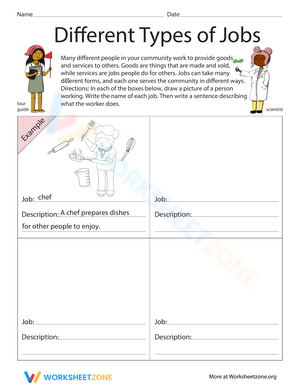
At grades K–3, the content centers on community helpers and the concept of work itself. Students sort workers by the tools they use, match job titles to workplace descriptions, and complete sentence frames about why different jobs matter to their neighborhood. These concrete tasks give younger learners a foundation for the more abstract labor-rights content they encounter in upper grades.
The Historical Record Behind Each Worksheet
The labor movement contains genuine historiographical disputes worth putting in front of students. The founding credit for Labor Day is actively contested — U.S. Department of Labor records have attributed the holiday's origin to both Peter J. McGuire of the Brotherhood of Carpenters and Joiners and to Matthew Maguire, secretary of the Central Labor Union of New York. One worksheet presents both accounts side by side and asks students to evaluate the evidence rather than accept a single official answer. That is not a trivial task: it models the source-triangulation that social studies standards require and that students rarely encounter with a topic as familiar as a federal holiday.
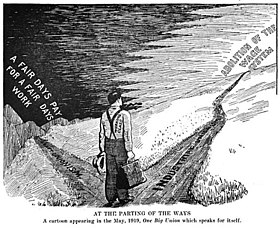
The Pullman Strike of 1894 gets its own worksheet. The context matters: Cleveland signed the Labor Day legislation in the immediate aftermath of violent federal intervention against striking railroad workers. The juxtaposition — honoring workers while deploying troops against them — gives middle and high school students something genuinely worth arguing about, and the worksheet asks them to do exactly that in a structured written response.
Frequent Student Errors Worth Watching For
The confusion between Labor Day, Memorial Day, and Veterans Day runs deeper than teachers usually expect. Students who correctly explain Veterans Day in November will still write "Labor Day honors soldiers who died in battle" on an activity the following September. The underlying problem is that all three holidays share surface features — flags, parades, national pride — so students collapse them into one undifferentiated category. A sorting worksheet that asks students to match holiday descriptions to their correct dates and purposes surfaces this before it gets embedded in long-term memory.
A second pattern appears around fifth and sixth grade: students reading about strikes and union organizing assume that factory owners and workers were equally represented in the historical sources they encounter. Worksheets that explicitly ask students to identify the author's perspective and name what perspective is absent catch this reasoning gap early. Left unaddressed, it produces flattened, both-sides-ish historical writing that looks balanced but isn't.
Building These Worksheets Into Your Week
The most natural placement is the Tuesday after Labor Day weekend. Monday is gone, Wednesday through Friday are when students settle back into routines, and that Tuesday often floats without direction — especially after a three-day break. Using one of the labor day pdf worksheets as bell work that Tuesday grounds students in content while the holiday is still recent. Most individual worksheets take 12–15 minutes for on-grade-level students working independently, which fits cleanly into the transition window before the main lesson begins.
For a longer unit, a station rotation structure works well. Groups of three or four students rotate every ten minutes through four stations:
- A chronological timeline covering key events from 1877 through 1938
- A vocabulary-in-context activity drawn from primary source documents
- The McGuire vs. Maguire primary source comparison with a structured written response
- A community helpers matching activity set to the appropriate grade level
This setup keeps all students active and lets the teacher pull a small group for direct instruction while the others work without support.
Adjusting the Worksheets Across Grade Levels
For students still building reading fluency, the passage-based worksheets work best when read aloud first — by the teacher or through partner reading — before students attempt the written questions. Reducing the question set to the three most concept-essential items, rather than assigning all seven, preserves the cognitive demand without making the reading load the main obstacle. The goal is to keep the historical reasoning accessible, not to lower the bar on the thinking.
At the high school level, teachers can extend any worksheet by pairing it with a contemporary source. A worksheet comparing 1900 factory conditions with modern OSHA standards becomes more substantive when students bring in a recent workplace safety news item alongside it. These labor day pdf worksheets include enough white space for annotation, margin notes, and brief counterarguments — a format that supports the extended written responses required in AP and dual-enrollment social studies courses.
Standard Alignment
The reading and source-analysis worksheets align to CCSS.ELA-LITERACY.RH.6-8.6 (identify aspects of a text that reveal an author's point of view) and CCSS.ELA-LITERACY.RH.6-8.9 (analyze the relationship between primary and secondary sources on the same topic). Elementary reading activities connect to CCSS.ELA-LITERACY.RI.4.3 (explain events in historical texts, drawing on specific details). In social studies, the content supports NCSS Thematic Standard III (People, Places, and Environments) and Standard V (Individuals, Groups, and Institutions). For teachers following the C3 Framework, the source-comparison worksheets address D2.His.5 (explain how and why perspectives have changed over time) and D2.Civ.2 (explain the origins, functions, and structure of government as they apply to workers' rights).
Frequently Asked Questions
Are these worksheets appropriate for elementary students who haven't learned about unions yet?
Yes. The K–3 materials approach the holiday through the lens of community helpers rather than labor organizing. Students don't need prior knowledge of unions or strikes to complete those activities — they work from the familiar premise that people do jobs that help others. The more historically complex labor day pdf worksheets in the set are intended for grades 4 and up, where students have enough context to reason about cause and effect in history.
Can individual worksheets be used without building a full unit around them?
Each worksheet stands on its own. A chronology activity or vocabulary worksheet works as a one-day lesson opener without requiring any additional materials before or after it. Teachers who want to build a longer unit can sequence three or four worksheets across the week, but there is no dependency between them — assigning one does not require teaching the others first.
How long do individual worksheets typically take to complete?
Most take 12–20 minutes for on-grade-level students working independently. The primary source comparison worksheet runs closer to 25 minutes when students write their own conclusions in the response section. Timeline and matching worksheets tend to finish in roughly 10 minutes, making them better suited for warm-up slots than for extended independent work periods.
What is the difference between U.S. Labor Day and International Workers' Day on May 1?
Both mark workers' contributions, but they have separate origins. The U.S. holiday dates to the 1882 Central Labor Union parade and was codified as a September federal holiday partly to distance it from the more radical associations of May Day following the 1886 Haymarket affair in Chicago. One worksheet in the set addresses this distinction briefly, pairing a short reading with a comparison chart — enough to introduce the contrast without pulling the lesson into full international labor history.












 Interactive Worksheet Maker
 Quiz Maker
 Word Search Maker
 Crossword Puzzle Maker
 Word Scramble Generator
 Sentence Scramble Generator
 Handwriting Worksheet Generator
 Name Tracing Generator
 Fill In The Blank Generator