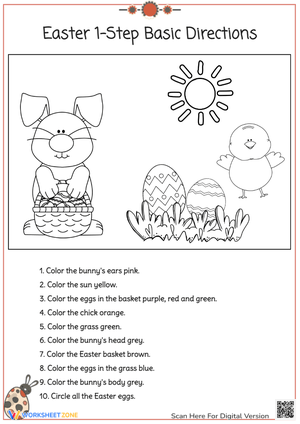
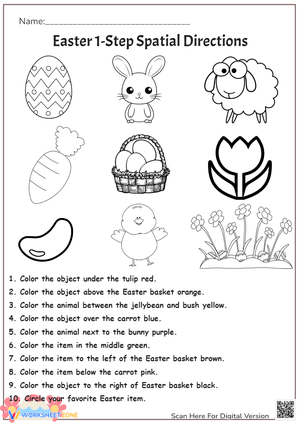
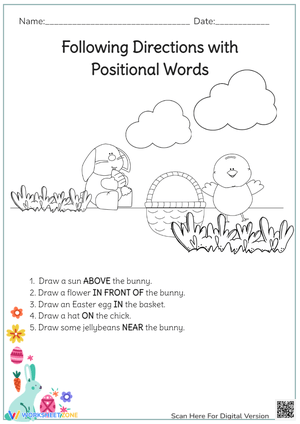
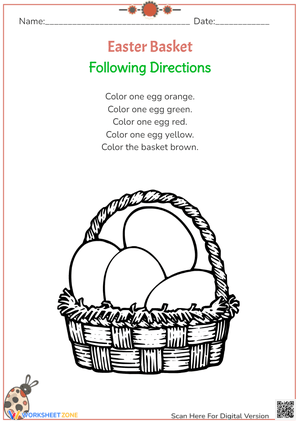
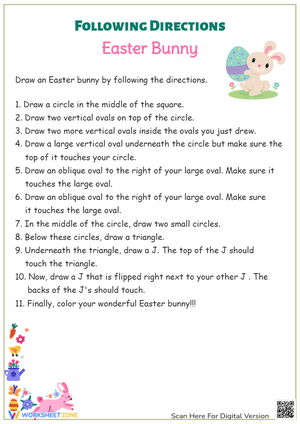
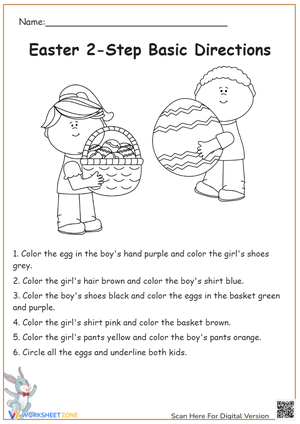
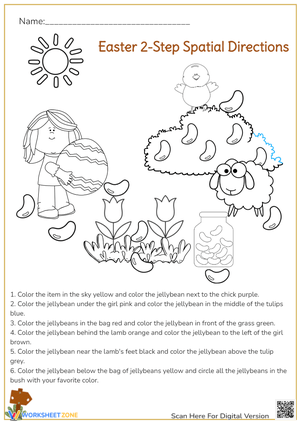
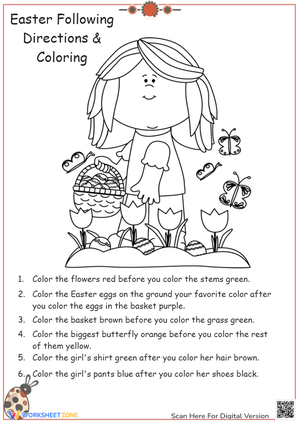
Easter following directions worksheets give teachers a focused tool for one of the most overlooked transitions in the school day: the quiet, independent work period. When students sit down and a worksheet lands on their desks, the instructions must be crystal clear, and the task must hold their attention long enough to matter. These printable resources combine seasonal Easter themes with structured listening exercises so that the moment class begins, students already know what is expected of them, and the room settles into productive work almost immediately.
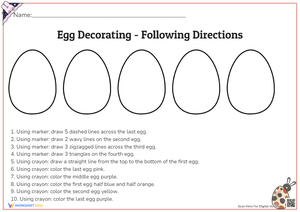
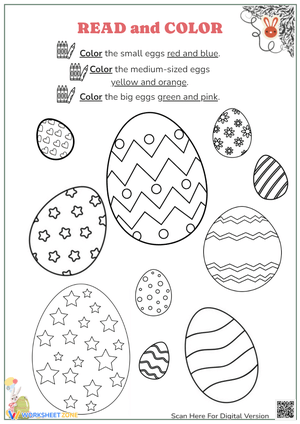
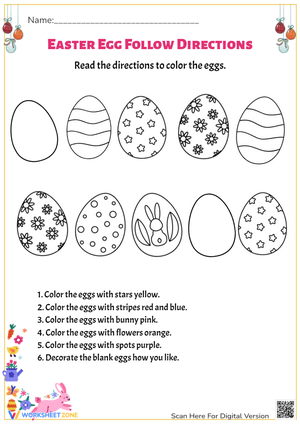
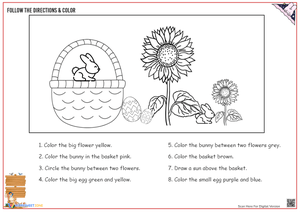
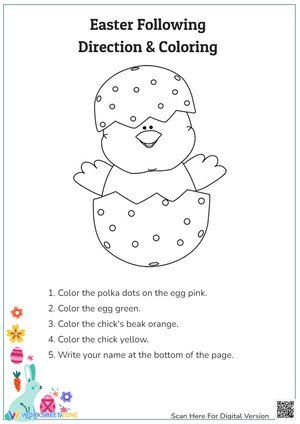
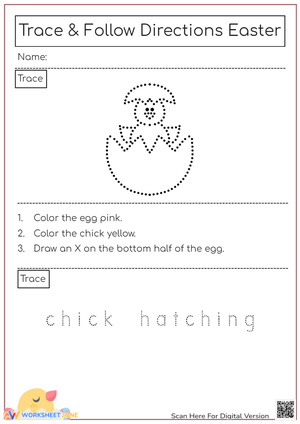
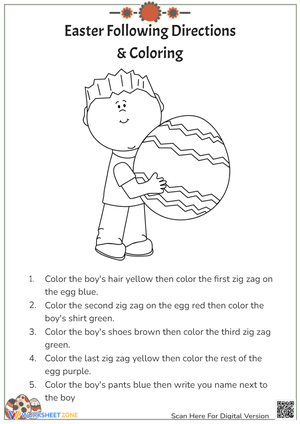
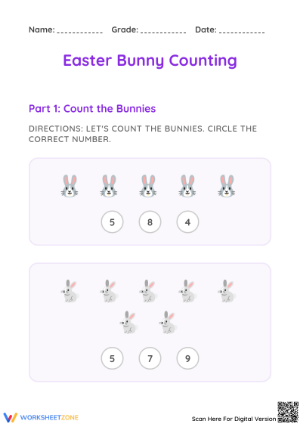
For station rotations, these worksheets function as a reliable independent center. A teacher can set up a seasonal directions station where students move through coloring a specific egg pattern, placing a bunny in the correct grid square, or connecting numbered chicks in the right order. Each step requires the student to read or listen and then act precisely. This kind of lesson plan structure trains students to process one instruction at a time rather than rushing ahead, a habit that pays dividends across every subject area and grade level throughout the school year.
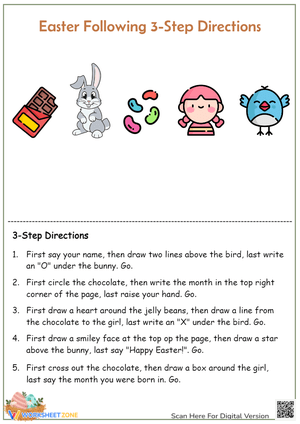
Used as a bell-ringer or morning warm-up, Easter following directions worksheets set the tone for the entire session. When students complete a clear, achievable directions task in the first five minutes, they enter the next activity with momentum and confidence. Worksheetzone designs these printables with varied difficulty levels, from single-step coloring prompts for kindergarten to multi-step spatial tasks for third grade, so teachers can match the PDF to exactly the right learner group without extra preparation time. For broader seasonal printables that complement this routine, the spring literacy activities for preschoolers resource offers additional warm-up ideas to build out your morning block.
Predictable routines reduce behavioral disruptions because students know the pattern and feel secure within it. Handing out the same format of task each week, dressed in different seasonal art, means students spend zero time wondering what to do and all of their energy on actually following the directions. Teachers who track completion rates often notice that once the routine is established, even students who previously struggled with independent work begin finishing tasks correctly. Parents supporting homework routines at home will also find these worksheets easy to use because the instructions are self-explanatory and require no additional materials beyond a pencil or crayons. Explore the full range of following directions worksheets on Worksheetzone to find printable options that extend this classroom routine across the whole year.
Consistent practice with structured directions builds the academic self-discipline that supports every future lesson. Students who master Easter following directions worksheets carry the listening habits they develop straight into math, science, and reading tasks, making the investment in this skill one of the highest-yield choices a teacher can make for their classroom.
Frequently Asked Questions
Question 1: What grade levels are Easter following directions worksheets suitable for?
These worksheets are designed for students in preschool through third grade. Single-step tasks work well for younger learners in kindergarten, while multi-step spatial and sequencing prompts challenge students in grades two and three. Teachers can select the difficulty level that best matches their current lesson plan and the skill level of each student group.
Question 2: How can teachers use these worksheets during station rotations?
Set up an independent directions center where students rotate in small groups. Each student receives a worksheet and completes the steps without teacher assistance. This trains independent listening skills, keeps other students engaged while the teacher works with a guided reading group, and provides a low-prep activity that fits neatly into any station rotation schedule.
Question 3: Can parents use Easter following directions worksheets at home?
Yes, parents will find these printable PDFs easy to use at home. The instructions are clear and self-contained, requiring only a pencil or crayons. They are a practical tool for reinforcing the classroom routine at home, helping children practice careful listening and sequential thinking in a relaxed setting that still mirrors the structure of their school environment.
Question 4: What skills do students develop by completing these worksheets?
Students practice listening comprehension, sequential thinking, fine motor coordination, and attention to detail. Following multi-step directions also builds working memory and self-regulation. These are foundational academic skills that teachers, parents, and students all benefit from developing early, as they directly support performance across reading, writing, and mathematics throughout the school year.












 Interactive Worksheet Maker
 Quiz Maker
 Word Search Maker
 Crossword Puzzle Maker
 Word Scramble Generator
 Sentence Scramble Generator
 Handwriting Worksheet Generator
 Name Tracing Generator
 Fill In The Blank Generator