Grade 7 CER practice that fits real reading instruction
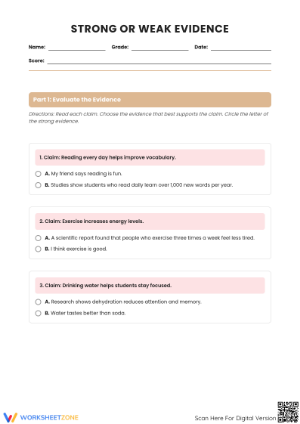
When teachers need focused argument-reading practice, claim evidence reasoning multiple choice pdf worksheets for 7th grade give students a manageable way to sort ideas inside a text before they move into longer written responses. On the Worksheetzone claim-evidence-reasoning Grade 7 worksheet page, the format is built for quick printing, short practice cycles, and clear answer checking, which makes it useful when you need reading analysis that can fit into a tight class block.
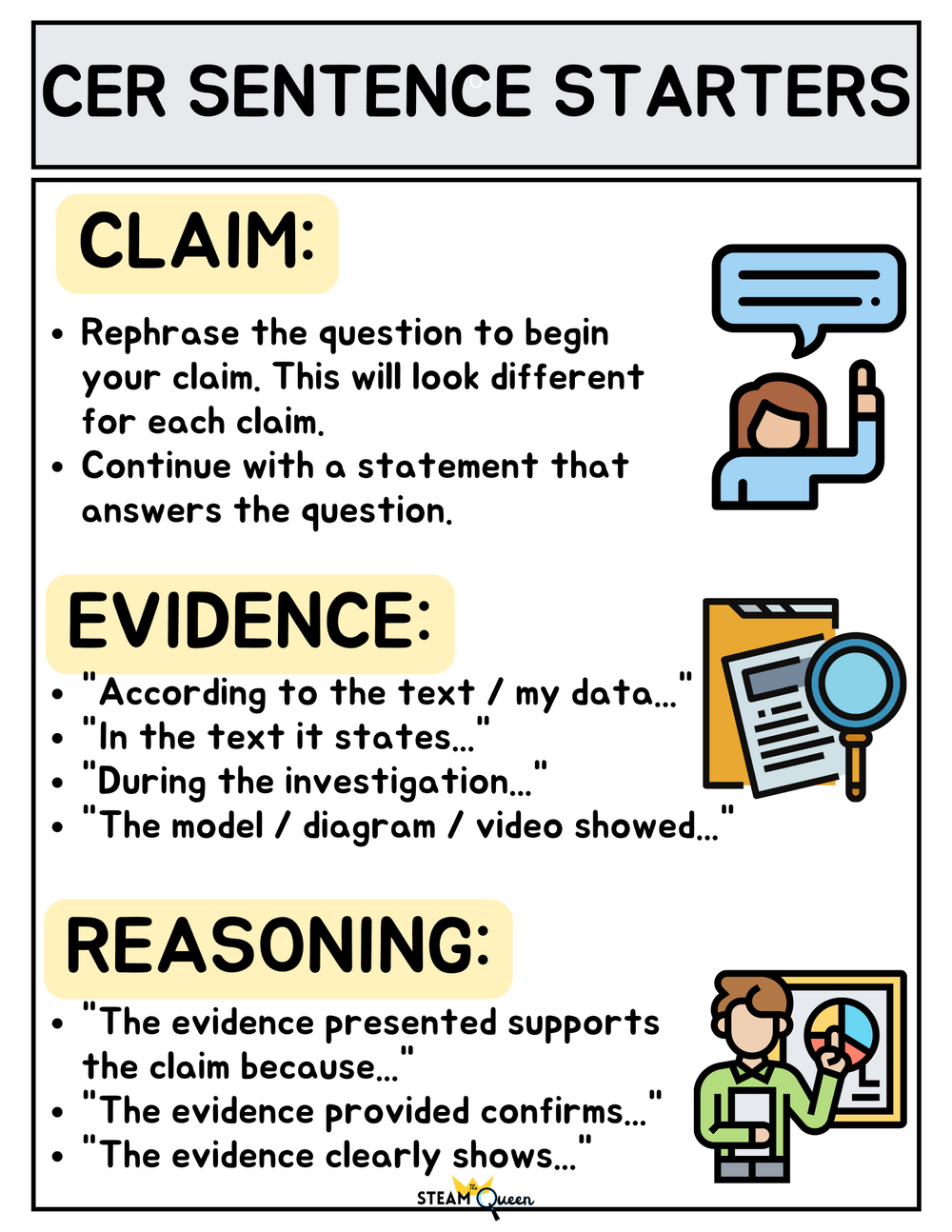
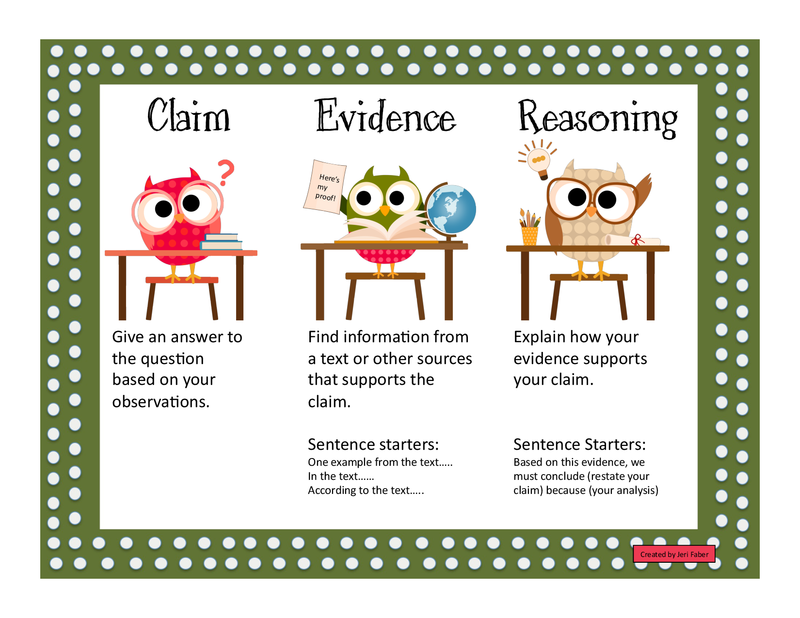
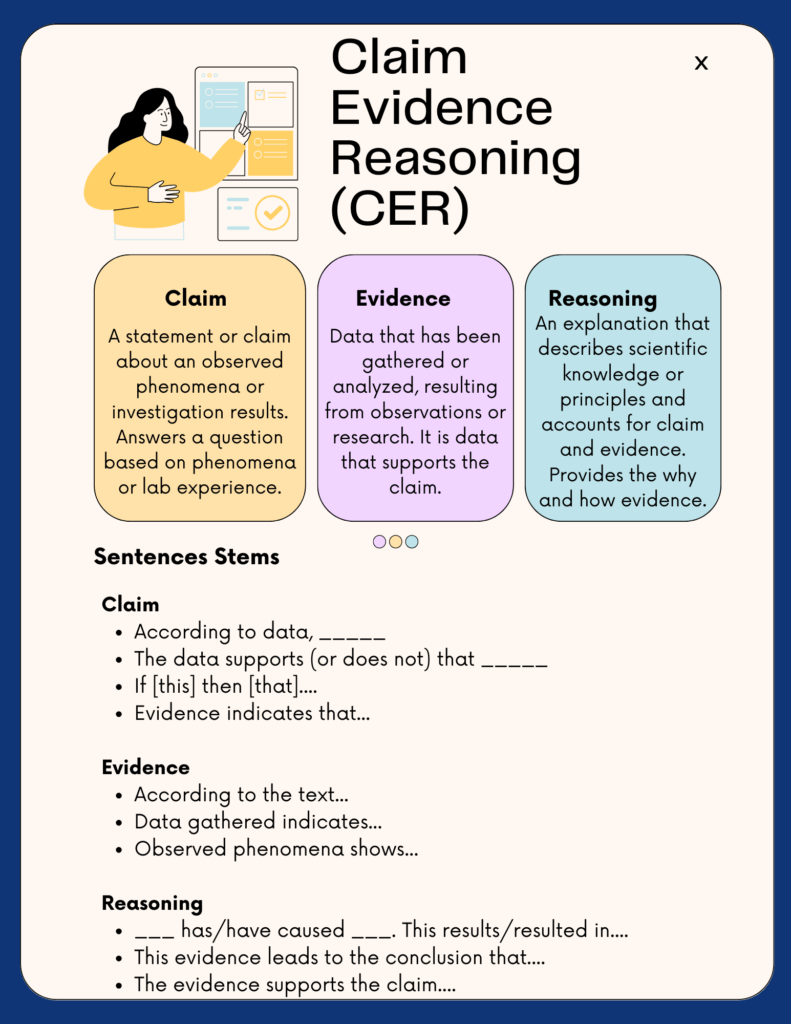
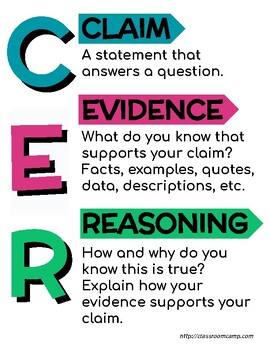
At Grade 7, students are expected to do more than spot a topic sentence or underline a detail. They need to tell the difference between the author’s claim, the evidence used to support that claim, and the reasoning that connects the two. A multiple-choice structure narrows the task just enough that students can rehearse those distinctions repeatedly, which is often what struggling readers need before they can explain CER thinking independently in discussion or writing.
Why this topic belongs in seventh-grade standards work
Claim-evidence-reasoning work is not an add-on skill at this grade level. It sits inside core informational reading and argument writing expectations. The Common Core ELA-Literacy RI.7 standards include RI.7.8, which asks students to trace and evaluate specific claims, reasoning, and evidence in a text. The Common Core ELA-Literacy W.7 standards also include W.7.1, which asks students to support claims with clear reasons and relevant evidence.
That connection matters for planning. A well-chosen CER worksheet does double duty because it prepares students to read arguments with more precision and gives them a model for building their own written claims later. Teachers can use the same practice set before a close reading lesson, during intervention, or ahead of an on-demand writing task without treating it as disconnected test prep.
In many Grade 7 classrooms, the main breakdown is not identifying evidence by itself but recognizing whether a detail actually proves the claim. That is why multiple-choice CER items can be more diagnostic than a simple highlight-the-evidence task. Distractors can reveal whether a student is confusing topic, proof, and explanation, which gives the teacher a sharper reteach target for the next mini-lesson.
What students actually practice with CER multiple-choice worksheets
The strongest worksheets do more than ask for definitions. They place students in short reading situations where they must evaluate relationships between ideas. In practice, that means students may be asked to identify the sentence that states a claim, select the detail that best supports it, or choose the explanation that shows why the evidence matters.
- Identifying the author’s or speaker’s central claim in a short passage
- Distinguishing relevant evidence from details that are interesting but off target
- Choosing reasoning that logically connects evidence back to the claim
- Tracing how an argument is built across several sentences
- Evaluating weak support or gaps in an argument before discussion or writing
For seventh graders, that sequence is especially useful because it lowers writing load while preserving cognitive demand. Students still have to think analytically, but the worksheet format lets them spend their effort on the relationship between ideas rather than on drafting full responses every time. That can be the right bridge for students who understand a text orally but struggle to show that understanding in writing.
Why printable PDF format works for daily instruction
Teachers usually choose PDFs because they are easy to print, share, and reuse. That practical advantage matters more than it sounds. A printable CER resource can become a bell ringer on Monday, a small-group reteach page on Tuesday, and an independent review sheet on Friday without any reformatting. If your team uses binders, substitute folders, or paper-based intervention packets, the PDF format keeps the routine simple.
Multiple-choice pages also support faster feedback cycles. Students can complete a short set in ten minutes, compare answers with partners, and justify their choices using the text. That creates a clean transition into discussion: instead of asking who got the right answer first, you can ask why one option names evidence while another only restates the topic. The worksheet becomes a conversation starter instead of a dead-end assignment.
Citation capsule: The Common Core ELA-Literacy RI.7 standards state that RI.7.8 asks students to trace and evaluate specific claims, reasoning, and evidence in a text. That single Grade 7 standard makes CER multiple-choice practice a direct fit for informational reading review, especially when teachers need short printable tasks tied to argument analysis.
Classroom Implementation
These worksheets are flexible enough to support several instructional formats without rewriting directions. In a whole-class lesson, you might assign four questions after a short article and use answer choices to surface misconceptions quickly. In a station rotation, one group can complete CER questions while another group works on vocabulary or annotation. For homework, the same page gives families a clear, finite task that students can finish independently.
They also work well for intervention because the teacher can narrow the focus. If students keep choosing broad statements instead of specific evidence, assign only the evidence items. If the issue is reasoning, ask students to defend why one explanation is stronger than another. That kind of targeted use keeps practice from becoming repetitive in the unhelpful sense.
- Use one or two items as a warm-up before close reading
- Add a short set to sub plans because directions are easy to follow
- Include pages in review packets before benchmark assessments
- Use answer discussions as a lead-in to argument paragraph writing
- Save selected items for exit tickets after an informational text lesson
For pacing, short sets usually work better than long packets. Seventh graders benefit when the teacher reviews one pattern at a time, such as evidence that is relevant but not sufficient, or reasoning that sounds polished but does not actually connect to the claim. The printable format makes that kind of selective use easy.
What teachers should look for in a strong Grade 7 CER worksheet
Not every claim-evidence-reasoning page serves the same purpose. The best Grade 7 multiple-choice worksheets keep the language accessible while asking students to make meaningful distinctions. If every wrong answer is obviously wrong, the worksheet will check compliance more than understanding. Better items include plausible distractors so students must read closely and think about why one response best fits the passage.
It also helps when the worksheet can support both reading and writing instruction. Since the Common Core ELA-Literacy W.7 standards include W.7.1, CER practice becomes more valuable when teachers can point from worksheet analysis to student composition. After students identify strong evidence in a reading task, they are better prepared to choose relevant support for their own claims.
Worksheetzone is especially useful when you want a resource that is straightforward to print and deploy. For teacher teams, that means less time spent rebuilding materials and more time spent deciding how the worksheet fits the week’s objective: introduction, guided practice, reteach, or review.
How this practice supports assessment readiness without narrowing instruction
Multiple-choice CER work can help students prepare for assessments, but its best use is diagnostic rather than purely procedural. A student who misses a claim question may be struggling with the text’s central idea. A student who misses an evidence question may understand the claim but not know how to verify it. A student who misses a reasoning question may need explicit modeling of how ideas connect. Those are different problems, and the answer pattern can help teachers separate them quickly.
That matters in Grade 7 because assessment preparation often turns abstract when students are told to “analyze the argument” without enough rehearsal. A printable worksheet gives repeated, low-prep opportunities to practice exactly that kind of analysis. Used well, it does not replace open-ended reading and writing. It strengthens them by making the underlying moves visible first.
Frequently Asked Questions
1. What is claim-evidence-reasoning for 7th grade ELA?
In Grade 7 ELA, claim-evidence-reasoning means students identify what an author argues, which details support that argument, and how those details connect back to the claim. It supports both informational reading analysis and argument writing.
2. How do multiple-choice CER worksheets help students prepare for assessments?
They let students practice tracing claims, evaluating evidence, and testing reasoning in a short format. Teachers can also use wrong-answer patterns to identify whether students need support with comprehension, evidence selection, or analytical explanation.
3. Are these Grade 7 CER worksheets printable as PDFs?
Yes. The value of the format is that teachers can print, share, and reuse the pages for warm-ups, stations, homework, sub plans, and review packets without changing the structure of the activity.
4. Which Grade 7 standards connect to claim, evidence, and reasoning practice?
Based on the listed source material, the clearest alignment is to the Common Core ELA-Literacy RI.7 standards, including RI.7.8, and the Common Core ELA-Literacy W.7 standards, including W.7.1. Together, those standards connect argument analysis in reading with supporting claims in writing.












 Interactive Worksheet Maker
 Quiz Maker
 Word Search Maker
 Crossword Puzzle Maker
 Word Scramble Generator
 Sentence Scramble Generator
 Handwriting Worksheet Generator
 Name Tracing Generator
 Fill In The Blank Generator