Teaching Presidential Duties with 4th Grade Roles of the President Printables
Fourth grade civics lessons work better when the president's roles are concrete
When teachers introduce the executive branch in grade 4, students usually understand that the president is important before they understand what the office actually does. That gap shows up fast in class discussions. Students may know the president signs bills or leads the country, but they often mix those ideas with the work of Congress or the courts. That is why 4th grade roles of the president printable worksheets are useful during a government unit. They narrow a big topic into a set of repeatable ideas students can sort, match, explain, and revisit.
At this grade level, the goal is not a law-school explanation of executive power. The goal is clarity. Students need plain language for roles such as chief executive, commander in chief, and head of state, along with examples they can recognize. A strong printable gives them that practice without requiring a long lecture every time. It also gives teachers visible evidence of who can tell the branches apart and who still needs support.
Students should learn a small set of president roles first
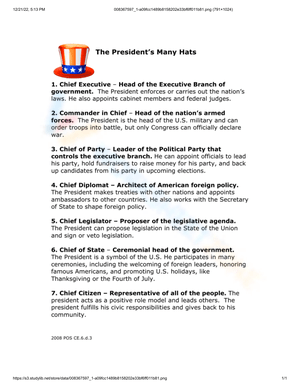
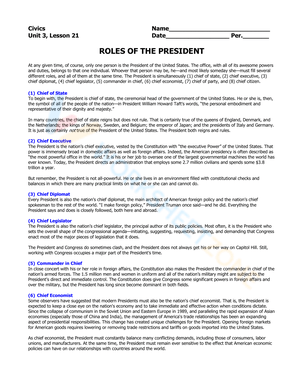
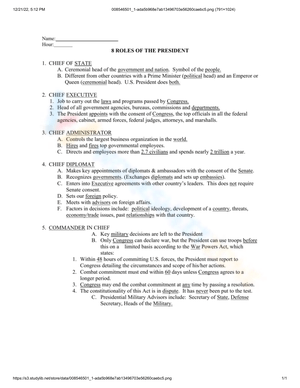
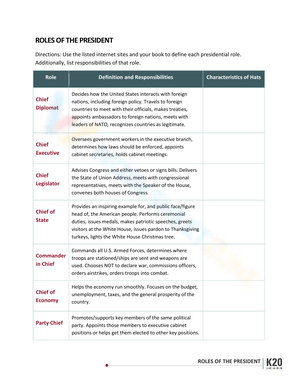
Most grade 4 classrooms do best when the first pass stays focused on three roles students can name and explain. Based on the White House overview of the executive branch and the government summary from USA Gov, the most accessible starting points are that the president leads the executive branch, serves as head of state, and acts as commander in chief of the armed forces. Those ideas are important because they connect directly to the visible duties students often hear about in the news or in textbooks.
- Chief executive: The president leads the executive branch and carries out laws passed by Congress.
- Head of state: The president represents the United States at ceremonies and official events.
- Commander in chief: The president leads the U.S. armed forces.
Once students have those labels, teachers can extend the lesson to signing bills, vetoing legislation, and explaining how the president works with the other branches. Start with the role name, connect it to one duty, then ask students to identify examples. Printable practice supports that progression because the same concept can appear in matching, sorting, and short-response formats across several pages.
Printable worksheets help students separate roles from powers and branches
One of the hardest parts of elementary civics is that students hear many government terms at once. President. Congress. Supreme Court. Law. Veto. Military. Election. Without structured review, those words blur together. Worksheets help because they slow the thinking down. A student has to decide whether a statement belongs to the president, another branch, or no branch at all. That decision-making is where the learning happens.
A good worksheet on this topic does more than ask students to recall a fact. It creates contrast. When students sort tasks such as makes laws, enforces laws, and interprets laws, they are building a mental map of government roles, not just memorizing vocabulary. In grade 4, that contrast is often more instructionally useful than adding extra presidential titles, because branch confusion is a more common barrier than lack of interest.
Teachers can use this idea in simple ways: a cut-and-paste branch sort, a role-to-duty match, or a two-column check that asks whether an action is a presidential role or a congressional role. Those tasks are brief, but they reveal misconceptions quickly. If a student places declares laws unconstitutional under the president, the teacher knows the issue is conceptual, not just vocabulary-based.
What the best worksheet tasks look like in a grade 4 social studies unit
The strongest classroom pages are usually the least flashy. They focus on one thinking move at a time so teachers can see what students understand. For roles of the president practice, several task types work especially well in grade 4.
- Vocabulary review: Students match role names with kid-friendly definitions.
- Role-to-duty matching: Students pair labels such as commander in chief with actions such as leading the military.
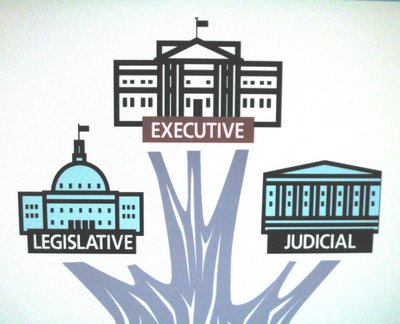
- Branch comparison: Students sort duties into executive, legislative, and judicial groups.
- Short reading checks: Students read a brief paragraph about the presidency and answer two or three questions.
- Scenario cards: Students decide which presidential role fits a simple example, such as greeting a foreign leader or signing a bill.
These formats are flexible because they work before, during, or after direct instruction. They also make differentiation easier. One group can work on vocabulary and pictures, while another completes a paragraph response explaining why a duty belongs to the executive branch.
Here is a citation capsule teachers can quote when framing the lesson: The White House explains that the president leads the executive branch, while USAGov notes that this branch carries out and enforces laws. For grade 4 civics, that pairing matters because students need one clear distinction: Congress makes laws, and the president helps put them into action.
Classroom Implementation
In practice, these pages work best when they are tied to a short, explicit lesson rather than handed out cold. A fast teacher model makes a difference. Read one example aloud, name the role, explain the duty, and think out loud about why it fits. Then let students try a similar item independently. That routine keeps the worksheet aligned to instruction instead of turning it into busywork.
Teachers can place 4th grade roles of the president printable worksheets into several common classroom routines:
- Whole-class launch: Use one matching page after introducing the executive branch.
- Partner practice: Have students explain why each duty belongs to the president before writing the answer.
- Centers: Add a sorting activity to a civics station during a branches-of-government unit.
- Sub plans: Choose a short reading passage with response questions that can stand on its own.
- Homework review: Send one page home after students have already practiced the vocabulary in class.
- Exit checks: Use three quick items to see whether students can distinguish role, duty, and branch.
Small adjustments can make the same resource work for different learners. Students who need support may benefit from a word bank or picture cues. Students ready for more can write a sentence that explains how the president's role differs from the job of Congress or the Supreme Court.
Why concrete examples make presidential roles easier to remember
Fourth graders usually retain civics concepts better when the role is attached to an example they can picture. Abstract labels on their own do not always stick. The phrase head of state can feel distant until students connect it to welcoming leaders, appearing at ceremonies, or representing the country in public events. Commander in chief becomes clearer when students understand that the president leads the military, even though everyday military work is carried out by others.
iCivics has long presented presidential roles through role labels and visual summaries, and that approach fits elementary classrooms because it reduces overload. Students do not need every nuance at once. They need a stable anchor: name the role, connect it to a recognizable action, and compare it with another branch. Once that anchor is in place, teachers can ask deeper questions, such as why the president cannot make laws alone or how a veto affects the lawmaking process.
Frequently Asked Questions
1. What roles of the president should 4th graders learn first?
Start with the roles students can connect to clear duties: chief executive, head of state, and commander in chief. Those roles match the basic executive branch overview students need before moving into more detailed discussions of vetoes, laws, and checks and balances.
2. How can teachers explain the executive branch in simple terms?
A clear starting point is that Congress makes laws, the president leads the executive branch, and the executive branch carries out those laws. That sentence gives students a simple contrast they can apply during matching and sorting activities.
3. How do printable worksheets help with civics review and assessment?
They give students repeated practice with vocabulary, examples, and branch comparisons while giving teachers fast evidence of understanding. A short printable can show whether students recognize a role, connect it to the right duty, and keep it separate from the work of other branches.
4. What worksheet activities work best for teaching presidential duties?
Role-to-duty matching, branch sorts, short reading checks, and scenario questions are usually the most effective. They keep the task age-appropriate and make it easier for teachers to spot whether a student is confused about vocabulary, examples, or the structure of government itself.
Clear All