Emotional Intelligence Worksheets PDF for 4th Grade
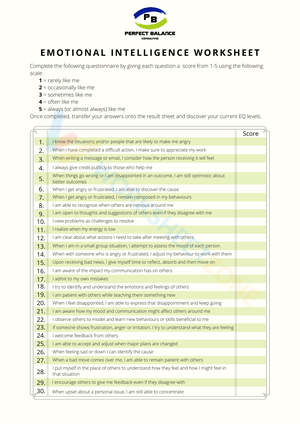
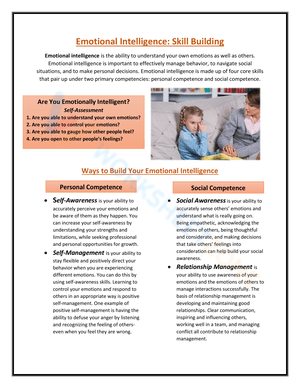
These emotional intelligence worksheets pdf for 4th grade arrive at a developmental moment worth understanding: by age nine and ten, peer relationships have shifted from casual parallel play to social hierarchies where exclusion can be deliberate and reputation begins to feel high-stakes. The set covers all five CASEL competency areas—self-awareness, self-management, social awareness, relationship skills, and responsible decision-making—through formats that combine individual reflection, scenario-based analysis, and structured written practice.
The Specific Skills Targeted
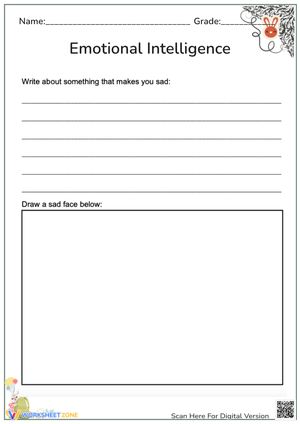
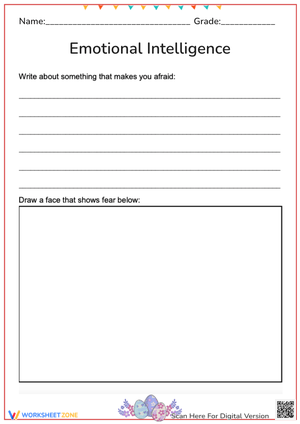
The core work begins with emotion vocabulary, which is a genuine gap at this grade level. Most fourth graders operate with a working emotional lexicon of fewer than a dozen words—happy, sad, mad, scared, bored—and that limitation actively prevents them from communicating clearly with peers and adults. Each worksheet in this section uses emotion wheels, sorting activities, and fill-in prompts to push students toward more precise language: disappointed rather than sad, anxious rather than scared, envious rather than just feeling "weird" about a friend's success.
Self-management worksheets introduce the Stop-Think-Act sequence as a concrete pause strategy for impulse control. Students practice applying the sequence to written scenarios first—which matters because they need to rehearse the pattern when they are calm, not in the middle of a conflict. Empathy mapping activities ask students to trace what a character in a scenario is thinking, feeling, seeing, and needing, with the explicit instruction not to describe what they themselves would feel. That distinction is where much of the real learning happens.
Conflict resolution worksheets center on I-statements, giving students a sentence structure for expressing a feeling without assigning blame. Responsible decision-making worksheets walk through a problem-solving sequence: name the situation, generate multiple options, weigh the consequences of each, then choose a path. For fourth graders whose first instinct in problem-solving is often "tell the teacher," these steps build the habit of independent resolution.
Student Errors Worth Anticipating Before the Lesson
The I-statement error is the most common and the most important to address directly: students write "I feel like you are trying to leave me out" and believe they have followed the format correctly. The phrase "feel like" has saturated fourth-grade speech as an emotional construction, but it precedes a judgment, not a named feeling. The correct form—"I feel excluded when..."—names an emotion rather than describing someone else's behavior. Showing both versions side by side and asking which one a friend would rather receive makes the distinction concrete and memorable.
Empathy mapping surfaces a separate problem. Asked to describe what a character is feeling in a scenario, many students describe what they would feel—which is projection, not perspective-taking. The worksheet catches this when a student's response only makes sense if they have placed themselves in the character's situation rather than imagining the character's distinct inner experience. Addressing it in written feedback rather than just marking it wrong turns it into a real conversation about what empathy actually requires.
On responsible decision-making worksheets, a consistent pattern appears in the brainstorming step: solutions skew punitive. "Tell a teacher and get them in trouble." "Never talk to them again." These aren't always wrong, but they reflect conflict instincts built around enforcement rather than repair. Asking students whether a given solution fixes the rule violation or fixes the relationship—and whether both matter—is a productive discussion these worksheets naturally set up.
Fitting These Worksheets Into Your Teaching Week
The most natural home is the ten to fifteen minutes following morning meeting, before the academic block begins. A class that has just done a check-in about how everyone is feeling is already primed to channel that energy into structured reflection. The other placement that works consistently well is re-entry from lunch recess, which is reliably when peer conflicts arrive at the classroom door:
- After morning meeting: Emotion vocabulary and self-awareness worksheets pair cleanly with a check-in routine and set a deliberate social tone before academics begin.
- Re-entry from lunch recess: A short self-reflection worksheet at this transition gives dysregulated students a structured way to process what happened outside while creating a calm re-entry ritual for the whole class.
- Advisory or SEL block: Empathy mapping and conflict resolution worksheets work well here, especially when followed by partner debrief before whole-group discussion.
For discussion-based delivery of the emotional intelligence worksheets pdf for 4th grade, the sequence that keeps quieter students from being talked over is: individual written response first, peer dialogue second, whole-group share third. Private reflection before public discussion gives students time to form views they're actually willing to defend—rather than adopting the first opinion they hear.
Standard Alignment
The emotional intelligence worksheets pdf for 4th grade in this set align with the CASEL framework's five core competencies, which underpin state SEL standards in more than thirty states. Teachers in Illinois can cross-reference directly with ISBE Social/Emotional Learning Standards Goals 1–3; Washington teachers with OSPI's K–12 SEL Standards; New York teachers with the NYS SEL Benchmarks. At the fourth-grade instructional level specifically, CASEL's self-awareness and self-management competencies represent what developmental researchers identify as a critical window for building emotion regulation habits before the social pressures of middle school intensify. For teachers in states without standalone SEL standards, discussion-preparation activities cross-reference with CCSS.ELA-LITERACY.SL.4.1 (collaborative discussion), and scenario-response writing connects to CCSS.ELA-LITERACY.W.4.3 (narrative writing).
Adjusting the Set for a Range of Learners
Students who struggle with written fluency can respond verbally to the same prompts—circling or marking on the worksheet to complete the thinking step, then dictating an explanation to a partner or aide. Printed sentence frames alongside open prompts give students who freeze at a blank line a starting structure without doing the cognitive work for them. For ELL students, pairing emotion vocabulary activities with illustrated word cards keeps the focus on the emotional distinction rather than on language decoding.
Students who need additional challenge benefit from an extension that works naturally with any emotional intelligence worksheets pdf for 4th grade in this collection: after identifying what a character feels and why, ask them to trace that feeling back to an underlying need or value. A character who feels angry about being left out has an unmet need for belonging. That added layer moves the skill from recognition to genuine social analysis, and it bridges naturally into the relationship skills worksheets later in the sequence. For students receiving support from a school counselor, these worksheets give the teacher and counselor a shared reference point—and the completed written responses show where a student's emotional reasoning currently sits in a way that a brief check-in conversation rarely does.
Frequently Asked Questions
Can these worksheets be used as a standalone SEL unit, or do they need a broader curriculum behind them?
Both approaches work. The CASEL competency structure gives the set a logical progression—self-awareness before self-management, both before social awareness—so using the worksheets in order produces a coherent unit across several weeks. But individual worksheets also drop into an existing SEL curriculum cleanly. A conflict resolution worksheet works as a targeted follow-up after a specific classroom incident without requiring the full sequence first.
How do I handle a student who shuts down during emotional reflection activities?
Fourth graders who write one-word answers or go quiet during self-reflection prompts are usually communicating one of two things: the topic feels too personal, or they're worried about peer judgment. Saying explicitly before the activity that there are no right or wrong feelings—only honest ones—reduces the second concern. For students who find open-ended emotion prompts activating, a multiple-choice or checkbox version of the same activity lowers the exposure while preserving the skill practice.
What's the best way to track student growth on these skills over time?
Direct observation is the most reliable indicator—are students using I-statements during actual peer conflicts? Are they pausing before reacting, at least sometimes? The completed worksheets serve as a secondary record: keeping each student's reflections in a folder from September through May shows visible changes in emotion vocabulary range, self-awareness depth, and solution quality on responsible decision-making prompts. That folder is also concrete material for a parent-teacher conference conversation about social and emotional development that goes well beyond behavioral anecdotes.
Clear All