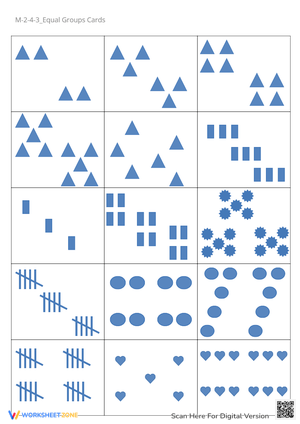
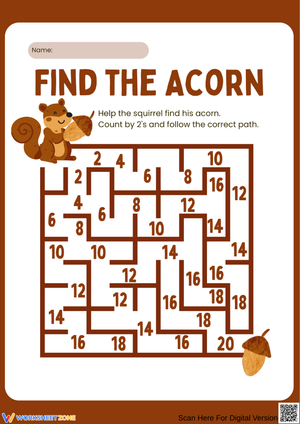
When second grade students work through multiplication skip counting worksheets for 2nd grade, they are not just completing exercises - they are building the number sense that underpins all future arithmetic. Skip counting by twos, fives, and tens forms the conceptual bridge between addition and multiplication, and the ability to move fluently along that bridge determines how quickly a student masters multiplication tables in subsequent grades. Every problem on these pages is structured to reveal whether a student has internalized the pattern or is still relying on rote recall.
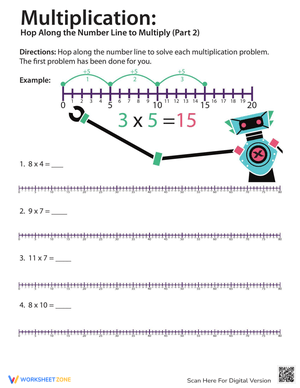
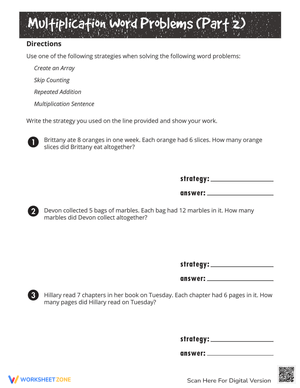
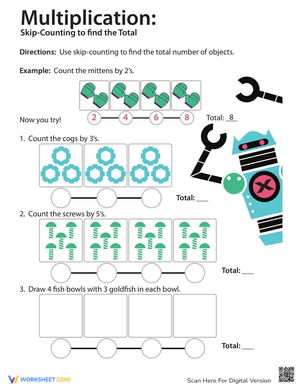
These worksheets are built around a clear progression that moves from single-interval counting sequences to applied multiplication tasks. In the first stage, students complete number lines and fill-in-the-blank sequences to confirm pattern recognition. As they advance, they translate those patterns directly into multiplication sentences, so the connection between repeated addition and multiplication becomes automatic rather than abstract. Teachers can track exactly where each student stalls by examining which problem types produce hesitation.
At home, parents can use these pages to reinforce what is being taught in the classroom without guessing at what format the school uses. The layout of each sheet mirrors the instructional models common in second grade math curricula, so students recognize the structure immediately and can work with minimal supervision. For families using homeschooling routines, the built-in answer progression allows a parent to assess confidence and accuracy at a glance. Explore additional strategies in our guide on engaging math activities for 2nd graders to complement worksheet practice with hands-on learning.
Each PDF is optimized for standard letter-size printing with clean black-and-white layouts that are easy to read and cost-efficient to reproduce in large quantities. The problems are organized so that difficulty increases gradually within each sheet, making it straightforward to assign partial sections to students who need a lighter load or extend the challenge for those who are ready for more. Worksheetzone provides these resources to help teachers build a data-informed picture of each student's multiplication readiness. You can also pair these sheets with targeted skip counting by 2 practice pages to reinforce the foundational patterns that make multiplication intuitive.
The cumulative effect of consistent practice with multiplication skip counting worksheets for 2nd grade is a student who approaches multiplication with confidence rather than anxiety. When the skip counting patterns become second nature, students can focus their cognitive effort on problem-solving rather than computation, which is the foundation for succeeding in third grade math and beyond.
Frequently Asked Questions
Question 1: How does skip counting connect to multiplication for second graders?
Skip counting is the direct precursor to multiplication because it teaches students that multiplication is repeated addition. When a student counts by fours - 4, 8, 12, 16 - they are performing the same operation as 4x1, 4x2, 4x3, 4x4. These worksheets make that connection explicit by pairing skip counting sequences with the corresponding multiplication sentences, helping students see both representations at once.
Question 2: What multiplication tables are covered in these second grade worksheets?
These worksheets focus primarily on the multiplication tables most aligned with the second grade curriculum, including skip counting by 2s, 5s, and 10s. Some pages extend into 3s and 4s to challenge students who have mastered the foundational tables. The structured sequence ensures students build fluency incrementally rather than attempting every table simultaneously, which supports long-term retention and reduces cognitive overload.
Question 3: Can these worksheets be used for small group instruction or math stations?
Yes. The self-contained format of each worksheet makes them ideal for math stations, pull-out groups, and partner practice. Each page is designed so students can begin working with minimal teacher direction, which allows instructors to assist other groups simultaneously. The consistent layout also helps students navigate independently without needing repeated explanations of directions during station time.
Question 4: How should teachers assess student progress using these worksheets?
Teachers can use completion accuracy and the types of errors students make as diagnostic data. Systematic errors - such as always missing a specific counting interval - indicate a gap in number pattern recognition. Random errors often point to rushing rather than conceptual misunderstanding. Reviewing completed sheets alongside brief verbal questioning gives teachers a clear picture of whether the student has genuine fluency with multiplication skip counting.












 Interactive Worksheet Maker
 Quiz Maker
 Word Search Maker
 Crossword Puzzle Maker
 Word Scramble Generator
 Sentence Scramble Generator
 Handwriting Worksheet Generator
 Name Tracing Generator
 Fill In The Blank Generator