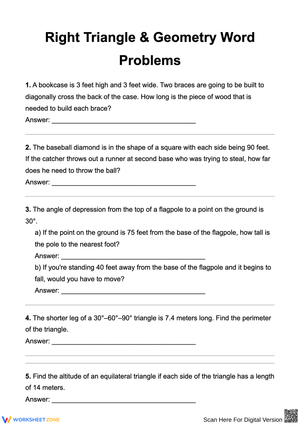
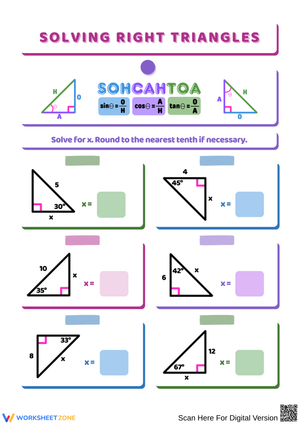
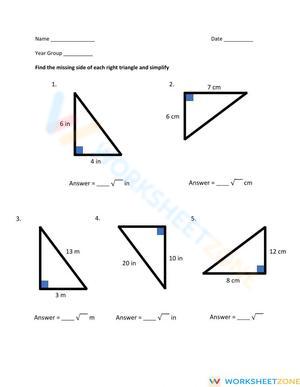
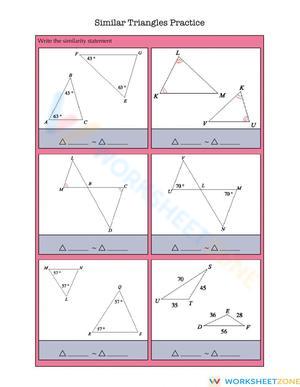
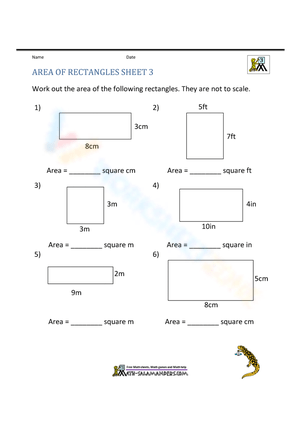
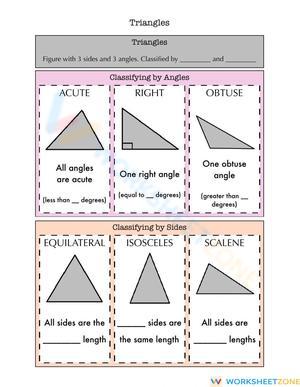
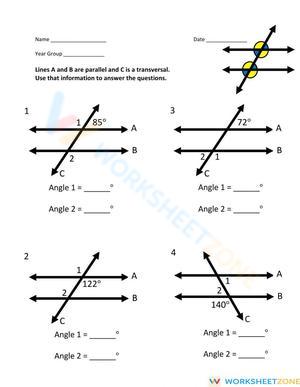
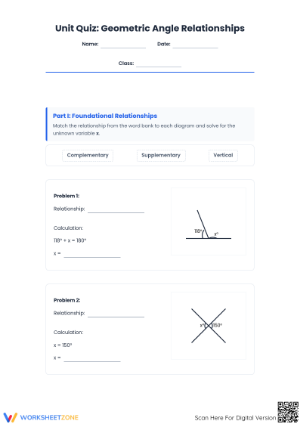
These 11th grade geometry worksheets cover the full arc of high school geometry content that juniors encounter — circle theorems, coordinate proofs, conic sections, formal two-column proofs, three-dimensional measurement, and trigonometric applications — in a format teachers can assign directly without modification. Each worksheet targets a specific skill cluster, so teachers can pull exactly what a current unit requires rather than sorting through a mixed packet. The set spans procedural fluency and multi-step reasoning, which is the combination students need heading into standardized testing and upper-level coursework.
What Each Worksheet Builds
The seven content areas below reflect what junior-level geometry instruction actually demands. Each requires students to draw on multiple skills simultaneously — algebraic manipulation, spatial reasoning, and formal logic often appear in the same problem.
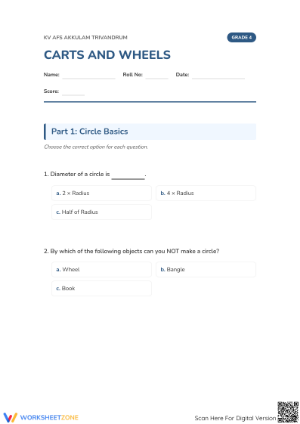
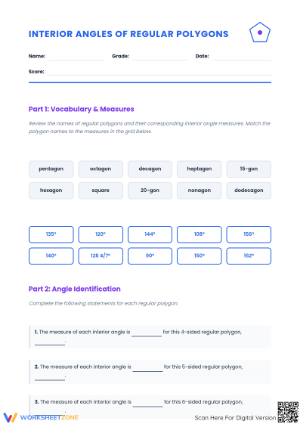
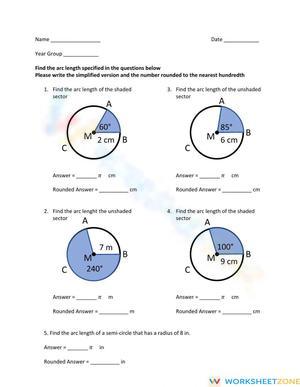
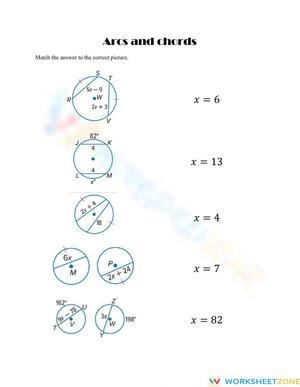
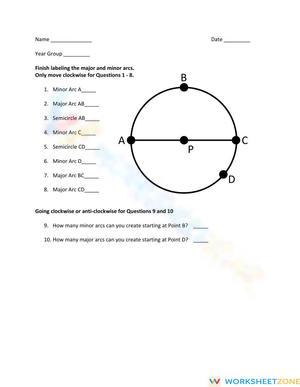
- Circle theorems and arc relationships: Inscribed angles, central angles, arc length, and sector area problems set in multi-step contexts. Students also write and interpret equations of circles and use them to solve placement and distance problems.
- Coordinate geometry proofs: Using slope, distance, and midpoint formulas to prove properties of triangles and quadrilaterals on a coordinate grid. These problems make the connection between algebraic formulas and geometric properties explicit and testable.
- Conic sections: Writing equations of circles and parabolas in standard form, identifying the vertex, focus, and directrix, and moving between algebraic and graphical representations.
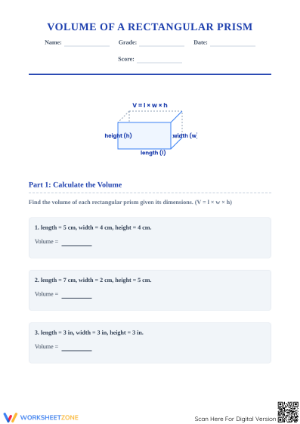
- Three-dimensional figures: Surface area and volume of prisms, pyramids, cylinders, cones, and spheres — including composite solids and real-world density applications where students set up and solve the full problem.
- Transformations: Rigid motions and dilations, compositions of transformations, and the effect of each on congruence and similarity. Students describe transformations using both coordinate rules and geometric language.
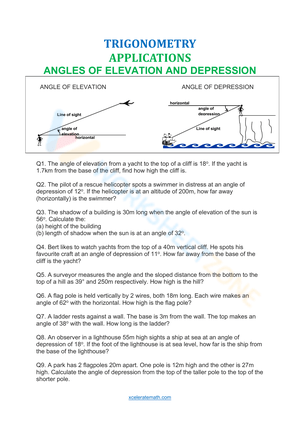
- Laws of Sines and Cosines: Applying both laws to non-right triangles in real-world contexts, including problems where students must first decide which law applies — a step that trips up more students than the calculation itself.
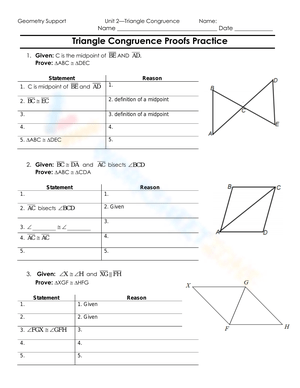
- Formal geometric proofs: Two-column and paragraph proofs built around congruence, similarity, and properties of parallel lines. Students construct the full logical chain rather than filling in pre-labeled blanks.
Student Error Patterns Worth Watching Closely
The inscribed angle theorem generates a consistent and predictable error. Students who correctly label a central angle of 80° and its corresponding arc will still write the inscribed angle as 80° — equal to the arc rather than half of it. The theorem gets stated correctly on homework but abandoned inside a multi-step problem where the inscribed angle is embedded in a larger figure. Catching that specific error, rather than just marking the answer wrong, lets teachers address the conceptual gap rather than attribute it to carelessness.
Coordinate proofs surface a different problem: arguments that feel complete to the student but are actually half-finished. A junior will compute slope correctly for both pairs of opposite sides, confirm they match, and declare the quadrilateral a parallelogram — without ever checking that the sides are equal in length. They have proven parallel, not congruent, and don't know the difference in that moment. The Law of Sines ambiguous case produces a similar truncation error: students find the acute-angle solution and stop, missing the second valid triangle where the missing angle is obtuse — which is precisely the version the SAT includes as a distractor. Conic sections add one more reliable stumble: students who correctly write (x − 3)² + (y + 2)² = 25 on a review problem will write = 5 on the next one, substituting the radius for the radius squared when the numbers feel less familiar.
Standard Alignment
The worksheets map to the Common Core State Standards — High School Geometry domain, organized across six content clusters. Circle theorem worksheets address HSG.C.A.2 and HSG.C.A.3, covering inscribed angles and their relationship to arcs and chords. Coordinate proof worksheets target HSG.GPE.B.4, which requires students to use coordinates to prove geometric theorems algebraically — a standard that sits at the intersection of Algebra and Geometry and often receives insufficient dedicated practice time. Trigonometric application worksheets address HSG.SRT.D.10 and D.11, extending the Laws of Sines and Cosines beyond the right-triangle work students encountered in earlier courses. Volume and surface area problems fall under HSG.GMD.A.3. Because these 11th grade geometry worksheets are organized by standard cluster, teachers can assign them alongside specific instructional units rather than using the set as undifferentiated end-of-year review.
Fitting These Worksheets Into the Lesson Week
Two or three problems from a proof worksheet work well as an opening task — something students begin while attendance is handled and the room settles. The proof format requires active writing rather than passive scanning, so students engage quickly. After direct instruction on a new concept, a full worksheet provides the structured independent practice that lets teachers circulate and observe exactly where students are stalling before the next day's lesson. That observation is more diagnostic than any exit ticket, because teachers can see the work mid-process rather than just the final answer.
One instructional move that consistently improves student work on coordinate proofs: ask students to sketch and label the figure on a coordinate grid before writing a single line of the formal argument. Students who draw the quadrilateral, mark parallel sides with tick marks, and shade congruent segments make significantly fewer algebraic errors in the proof because the visual organization reduces the mental load of tracking multiple relationships at once. The 11th grade geometry worksheets in the coordinate proof section include a grid space for exactly this reason. For SAT and ACT preparation, pulling four to six problems each from the circle, coordinate geometry, and volume worksheets and assembling them into a timed mixed set gives juniors the varied problem-type exposure they encounter on test day.
Adjusting the Set for a Range of Student Readiness
Not every junior arrives with equally solid geometry foundations. A student who never fully internalized triangle congruence criteria will struggle with the two-column proof worksheets here — not because the new content is too hard, but because the earlier groundwork is missing. For those students, assigning a triangle congruence review worksheet before the formal proof work gives them the missing piece without derailing the lesson for the rest of the class. The step-by-step format in the proof worksheets — where the given information is listed and space is structured for each logical step — gives students a clear entry point and reduces the paralysis that comes from facing a blank page.
Students who are ahead of grade level benefit most from the multi-step problems in the trigonometry and conic sections worksheets, where the path to an answer is not immediately obvious and requires a strategic decision before any calculation begins. Those problems also serve as preparation for competitive math assessments. For students in the middle, pairing procedural practice on one worksheet with a short application problem from a related worksheet — done in the same class period — builds the connection between calculation and meaning that standardized tests specifically target.
Frequently Asked Questions
What geometry topics are typically taught in 11th grade?
Junior-year geometry instruction usually covers circle theorems, coordinate geometry proofs, conic sections, surface area and volume of three-dimensional figures, transformations, and trigonometric applications including the Laws of Sines and Cosines. Students are also expected to write formal proofs and apply geometric reasoning to real-world modeling problems. The exact sequence depends on whether students are in a standalone geometry course or an integrated math pathway.
How do these differ from 9th or 10th grade geometry materials?
Earlier high school geometry focuses on foundational angle relationships, introductory proofs, and first exposure to congruence and similarity. The 11th grade geometry worksheets in this set increase complexity by requiring algebraic integration in proofs, extending trigonometry into non-right triangle contexts, and introducing conic sections and solid geometry applications that demand multi-step reasoning. Problems regularly ask students to choose an approach before applying it — a qualitatively different demand from problems where the procedure is obvious from the setup.
Can these worksheets support SAT and ACT preparation for juniors?
Yes. Geometry accounts for a substantial portion of both the SAT Math section and the ACT Mathematics test. Worksheets focused on coordinate geometry, circle properties, and volume directly overlap with tested content. Using them as timed practice in the weeks before testing builds both accuracy and problem-solving speed, and the multi-step format mirrors the complexity level students encounter on the actual assessments — particularly the problems that require choosing between multiple valid strategies.