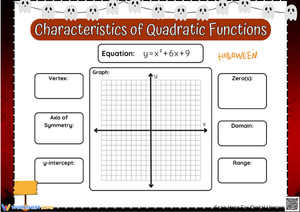
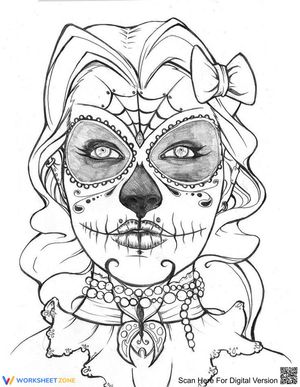
Drawing and painting pdf worksheets for 11th grade give art teachers structured exercises for the period when students are expected to move from technically competent to deliberately intentional — when the work has to reflect a coherent artistic voice, not just prove a student can handle a brush or a graphite pencil. This set addresses value rendering, color mixing, figure drawing, formal analysis, and portfolio planning, built for the real pressures eleventh graders face: AP review, portfolio submissions to college programs, and the shift from guided instruction toward independent studio practice.
What the Set Covers
Each worksheet targets a single technical or conceptual skill rather than stacking multiple objectives into one exercise. The set spans five core areas:
- Advanced value and shading — Students work through controlled gradients, map light logic across curved and irregular surfaces, and apply cross-hatching and stippling with varied graphite grades and vine charcoal. Specific texture exercises move from soft fabric folds to the reflective surface of glass to rough bark — each requiring a different approach to edge and value range.
- Color theory past the basics — Exercises address color temperature, glazing and scumbling with acrylics, and building palettes matched to reference images. The critical shift here is from mixing complementary pairs to matching specific hues, which is where real color judgment develops.
- Figure drawing and anatomy — Structural breakdowns use geometric underlays to establish proportion before students render form. Separate studies address hands, feet, and facial features. Foreshortening exercises require students to draw limbs receding toward the viewer rather than defaulting to profile views.
- Art criticism and formal analysis — Each worksheet walks students through description, formal analysis, interpretation, and evaluation. The written component builds the articulation skills that college portfolio statements require — not as an add-on, but as a parallel discipline.
- Conceptual and portfolio planning — Brainstorming sheets and iterative sketch prompts help students develop work around a personal theme. Thematic cohesion separates a strong portfolio from a collection of unrelated finished pieces, and these exercises push students toward that coherence before they pick up a brush.
Frequent Student Errors Worth Watching For
In value work, the most persistent error is not a gradient that's too light or too dark — it's one that skips the middle range entirely, jumping from highlight to shadow without the transitional halftones that actually produce the illusion of three-dimensional form. Students who can draw a clean ten-step value scale will still flatten a sphere because they rush through the midtones. The shading worksheets force sustained attention in that zone by building exercises that cannot be completed without it.
Color mixing is where eleventh graders lose the most ground. The typical mistake is reaching for white to lighten a hue, which produces chalky, low-chroma passages that flatten a painting, or reaching for black to darken, which muddies the shadow. Students usually know they shouldn't — they've heard it in lecture. Under time pressure at the easel, they do it anyway. The color theory exercises set specific mixing targets that white and black can't hit, which makes the better approach necessary rather than optional.
Figure drawing errors at this level concentrate around foreshortening avoidance. Students unconsciously reangle a pose so a limb is no longer coming toward the viewer, because they haven't yet built trust in the compressed elliptical shapes that represent foreshortened forms. The anatomy worksheets return to this problem repeatedly until the ellipse reads correctly — which requires building confidence as much as building technique.
Building These Worksheets Into Your Week
The value and shading exercises work as focused class openers — the first eight to ten minutes before students move into open studio time. They're short enough to feel low-stakes and long enough to generate real practice. Color theory exercises run better as station work, where students can spread out swatches and reference images without worrying about contaminating a canvas in progress.
The conceptual planning worksheets belong earlier in a unit than most teachers initially place them. Running a brainstorming sheet before students touch a surface forces them to articulate a theme in words first, which catches vague concepts before they become vague paintings. During individual critiques, the completed worksheet gives the teacher something concrete to reference: does the finished piece reflect what the student said it was about?
The art criticism worksheets work well as homework following a museum visit or a documentary screening, and they also function as strong exit tasks after in-class discussions about a specific movement. Students have to convert a group conversation into a written individual analysis — a skill that doesn't develop through discussion alone.
A method that works particularly well for advanced value work: have students complete a shading exercise using a medium other than the one they're planning to use for their main project. A student working toward a charcoal piece completes the worksheet in ballpoint pen; a student building an acrylic painting works through it with diluted ink. Separating the value practice from the familiar tool forces them to think about light logic as a concept, not as a byproduct of a medium's blending behavior.
Standard Alignment
These drawing and painting pdf worksheets for 11th grade align with the National Core Arts Standards at the high school proficient and accomplished levels. The value, shading, and figure drawing exercises connect to VA:Cr2.1.Ia, which asks students to investigate multiple approaches and work through sustained problem-solving when creating artwork. Art criticism worksheets address VA:Re7.2.Ia and VA:Re8.1.Ia, which cover analyzing and interpreting artworks using formal and contextual evidence. For teachers documenting against VA:Cr1.2.Ia — which requires evidence of sustained inquiry rather than polished outcomes alone — the conceptual planning worksheets provide exactly that documentation across a unit or semester.
Adjusting These Worksheets for Different Student Levels
Drawing and painting pdf worksheets for 11th grade hold a structural range that serves students across ability levels without requiring separate materials for each tier. Students who are still building observational confidence can work through the figure drawing worksheets with a geometric underlay printed beneath — they establish the proportional structure first, then build rendered form on top. The observational challenge stays; the proportional guesswork is removed.
Students working at an AP or pre-portfolio level can push further with the same worksheets: drawing from life rather than from a provided reference, replacing the guided color mixing targets with a self-directed palette built around a painting they're currently developing, or using the formal analysis template to evaluate their own work rather than a historical piece. The structure stays fixed; what students bring to it scales with their level.
Students who struggle with the written components in the art criticism worksheets — and at this level, that's often students who are genuinely strong visual thinkers — benefit from completing the analysis and interpretation steps verbally in a teacher conference and then transcribing their own words. The written language should clarify thinking, not replace it with a separate obstacle.
Frequently Asked Questions
Do these worksheets interrupt open studio time, or can they be integrated without breaking creative momentum?
Used at the right moments, they don't interrupt anything. The skill-building exercises — value, color mixing, anatomy — belong at the front of a class period or as station work separate from a project in progress. The conceptual planning worksheets actually support studio time by helping students arrive at the canvas with more defined intent. Drawing and painting pdf worksheets for 11th grade function as preparation for creative work, not as interruptions to it.
Can these be used in an AP Art and Design course?
Yes. The formal analysis and conceptual planning worksheets align with the sustained inquiry and portfolio documentation that AP Art and Design requires. The value and color exercises address the technical quality that reviewers look for in the Sustained Investigation section. Teachers in AP courses often use these during early unit work, before students have committed to the medium and theme they'll carry through the full portfolio.
Are the art criticism worksheets accessible to students who haven't formally studied art history?
They are. The formal analysis template begins with visual description — line, shape, value, color, texture — before asking students to interpret or place a work in historical context. A student who has never studied Impressionism can still complete a meaningful analysis of an Impressionist painting using what they observe directly. The historical layer deepens when teachers add context; it isn't a prerequisite for a productive session with the worksheet.