Music Printable Worksheets for 10th Grade
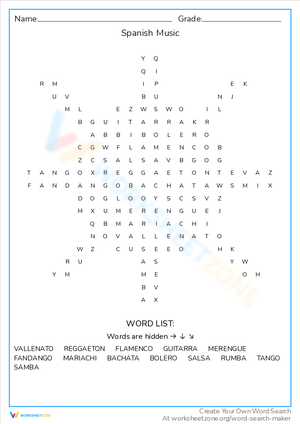
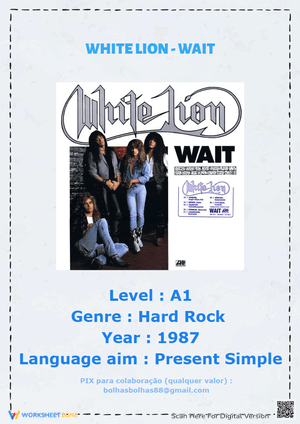
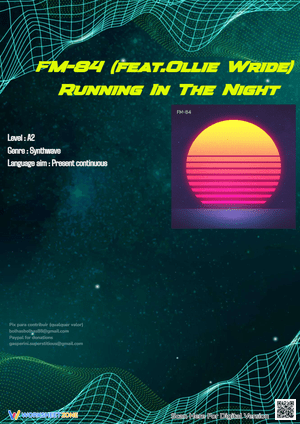
Music printable worksheets for 10th grade give teachers a written layer of evidence inside a course where performance, listening, and live discussion dominate the grade book. At this level, students are building analytical vocabulary that connects music theory, historical context, and listening response — and a focused worksheet captures that thinking in a form that a rehearsal or class conversation alone rarely does.
The Specific Skills These Worksheets Target
Each worksheet addresses one clear musical skill rather than grouping several concepts into a broad review. That narrow focus matters at the high school level, where a student going deep on interval identification benefits more than a student skimming six topics across a single handout. The set covers the skill areas that 10th grade music instruction most commonly requires:
- Music theory: note values, meter, rhythmic counting, key signatures, intervals, dynamics, articulation, tempo markings, and formal structures including binary, ternary, and rondo.
- Listening analysis: guided prompts asking students to identify instrumentation, texture, form, and expressive decisions — with space to cite specific moments from the passage rather than describe general impressions.
- Music history and style: composer profiles, style-period comparisons, and short reading-response tasks that connect musical features to cultural or historical context.
- Performance reflection: rehearsal self-assessment and post-concert written response structured around specific musical goals rather than open-ended impressions.
- Vocabulary in use: activities that require students to apply terminology inside analytical sentences rather than match definitions in isolation.
The listening-response worksheets are written with open enough prompts that the same page works with orchestral music, jazz, film scores, or world music traditions — a practical advantage when teachers use music printable worksheets for 10th grade across several units in the same year without reprinting new formats each time.
Mistakes Students Make That These Worksheets Help You Catch
The most consistent pattern in 10th grade music writing is the mood-first response: students write "it sounded intense" or "it felt happy" and stop there. The listening-analysis worksheets address this directly by requiring students to name a specific musical element — key, tempo, texture, or articulation — that supports the mood they identified. Getting a student to write "the driving rhythm in the bass line and the brass stabs in the upper register created urgency" instead of "it sounded fast and loud" is a meaningful step in music literacy, and the worksheet makes that standard visible from the first time students use it.
A second pattern involves meter and syncopation. Many 10th graders can write "4/4 time" correctly but cannot explain where the primary metric accents fall or why a syncopated rhythm sounds displaced from the beat. Worksheets that ask students to mark beat placement on a notated line — rather than simply label the time signature — expose this gap immediately. A third recurring error appears in interval identification: students who correctly name a major third in an ascending context will often misidentify the same interval descending in a melodic line, calling it a minor third. Including both directions in practice examples catches this before it becomes a test-day surprise.
How to Build These Worksheets Into Your Lesson Plans
The most productive placement is immediately after instruction, not at the end of the period. If the first fifteen minutes of class introduce compound meter, the worksheet comes next — while the concept is still active — rather than as a closing task when attention is already drifting toward the bell. That timing shifts the activity from a record-keeping exercise to genuine formative practice, and it gives teachers something concrete to scan before students leave.
For ensemble classes, keep worksheets short. A three-question reflection sheet after a thirty-minute rehearsal block takes five minutes and yields specific written evidence of what individual students noticed about the ensemble's progress. For general music or theory sections, a worksheet can anchor the middle of class after a listening example or mini-lesson, creating a clear transition between input and application. The single-concept theory pages — a rhythm-correction prompt, a dynamics identification exercise — work especially well as bell ringers. They set academic focus in the first eight minutes before the period fully begins, and they take almost no explanation to launch.
Standard Alignment
These worksheets connect most directly to the 2014 National Core Arts Standards at the proficient level, which governs 10th grade music instruction in states that have adopted those standards. Responding anchor standards MU:Re7.1 (analyzing how structure and context shape musical response) and MU:Re8.1 (supporting interpretations using named musical elements and expressive qualities) map onto the listening-analysis and reflection worksheets. The theory and notation worksheets support Performing standard MU:Pr4.2, which requires students to read and interpret standard notation and expressive markings in context. One practical note: the Core Arts Standards are written in grade bands rather than single years, so teachers apply proficient-level descriptors across both 9th and 10th grade — these worksheets are written with that two-year span in mind, which is also why the theory coverage extends from basic meter review through formal analysis.
Differentiating the Worksheets Across Mixed Ability Groups
This matters especially with music printable worksheets for 10th grade because high school music courses regularly include students at similar stages of aural development but at very different reading and writing levels. A student who struggles with expository writing can still identify a modulation or recognize a textural shift; the structured version of each worksheet — with sentence starters and a vocabulary bank — gives that student a way to record the right musical observation without the writing demand blocking the thinking. The open-response version, without those supports, is appropriate for students who are ready to construct their own analytical sentences.
For students who finish early or need more challenge, the open-response pages can be extended by asking them to compare two excerpts instead of analyzing one, or to write a second paragraph defending their initial interpretation against an alternative reading. For students who need more context before beginning, pairing the worksheet with a brief labeled diagram of musical form or a short glossary of the five or six terms most relevant to that activity removes vocabulary uncertainty without simplifying the musical task itself.
Frequently Asked Questions
Do these worksheets work for choir and band, or only general music?
The listening-response and reflection worksheets fit ensemble classes well because the prompts stay rooted in musical elements rather than requiring instrument-specific knowledge. A rehearsal reflection page asking students to name one section that improved, one technical issue that remains, and one concrete strategy for the next rehearsal works equally in choir, band, or orchestra. Theory and notation worksheets are most relevant to courses where reading music is an explicit part of the curriculum.
What makes these a reliable choice for substitute plans?
Each worksheet has short, self-contained directions and no requirement for live instruments. The listening-response pages work well if classroom audio is available, but every worksheet in the set functions independently when technology is unavailable. A music history reading-response page or a vocabulary-in-context exercise gives a substitute clear structure without requiring musical expertise to manage the class. These are the pages worth printing a class set of in advance and storing in a folder labeled for emergency use.
How does grading work efficiently with a set this size?
Because each worksheet targets a single concept, grading moves quickly. A listening-response page with three structured prompts takes under a minute per student to scan for evidence quality. For theory and notation worksheets, an answer key with acceptable response variations handles most of the marking. Teachers who rely on music printable worksheets for 10th grade as a formative tool often mark them with a complete/incomplete stamp and return them with one written comment rather than a numerical score — that keeps the feedback cycle moving and prevents the worksheets from feeling like additional testing rather than learning practice.
Clear All