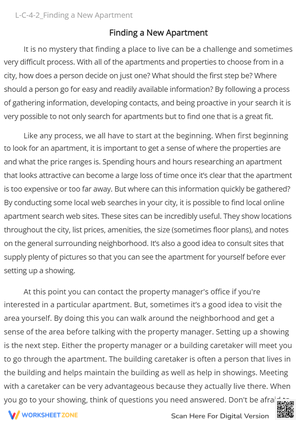
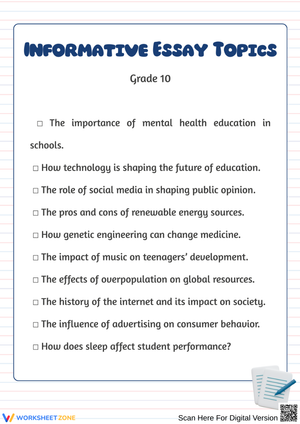
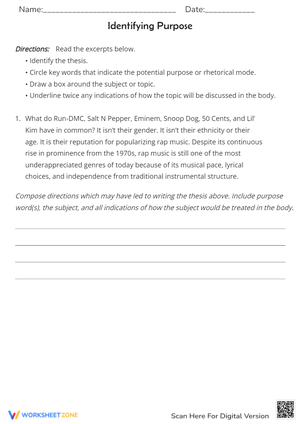
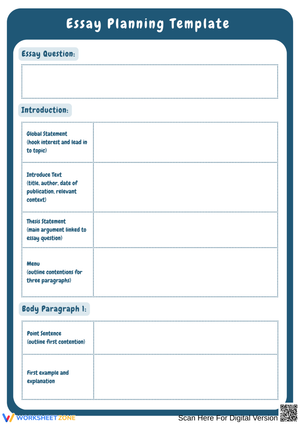
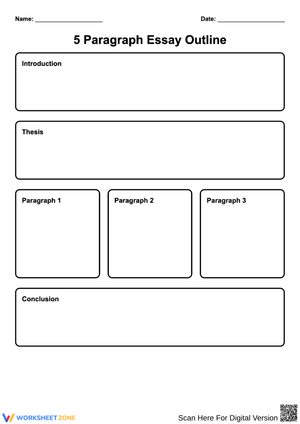
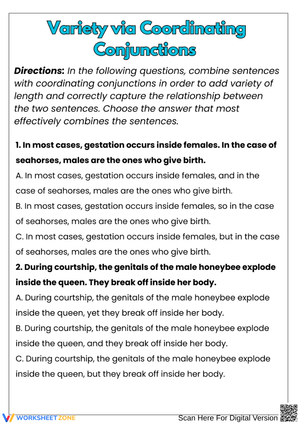
These 10th grade organization and structure worksheets give teachers a set of targeted, printable resources for the point in a writing unit when students have ideas on paper but no real architecture holding them together. Each worksheet isolates a specific structural skill — thesis placement, topic sentence construction, evidence sequencing, or transitional logic — so teachers can address the exact breakdown appearing in student drafts rather than re-teaching the entire writing process.
The Specific Skills Each Worksheet Targets
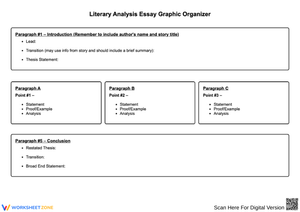
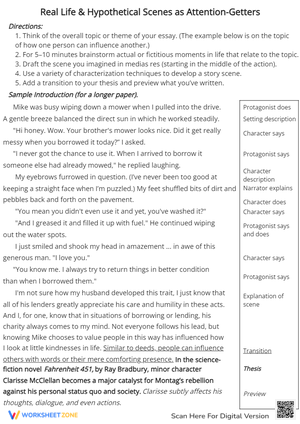
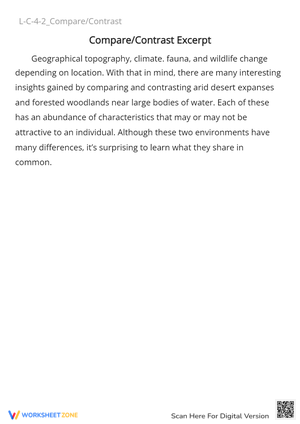
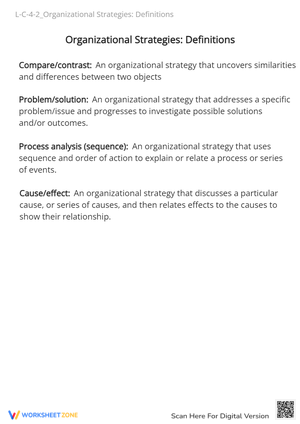
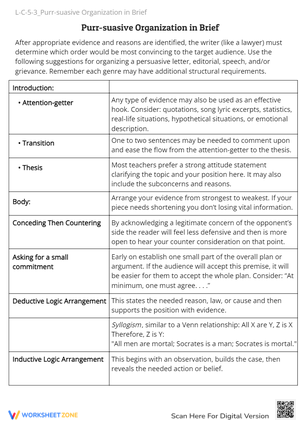
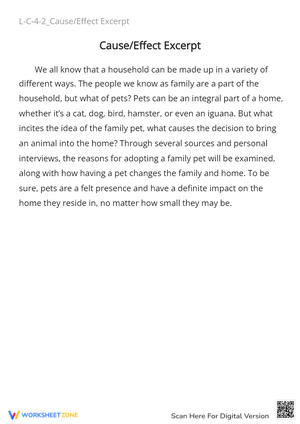
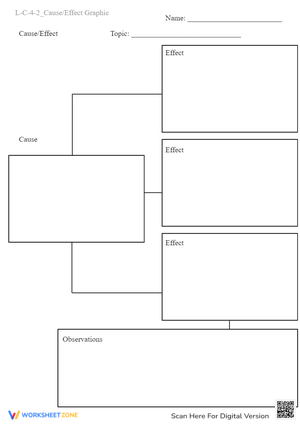
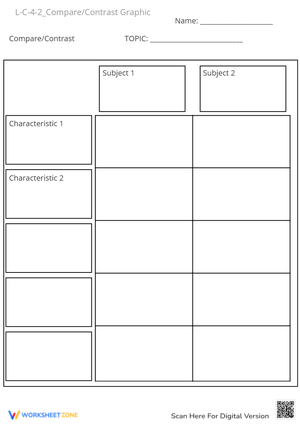
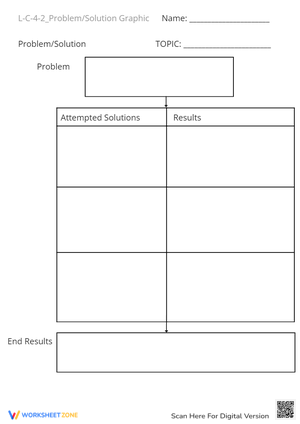
The set covers the structural elements that matter most in Grade 10 argumentative and analytical writing. Students work through exercises on thesis placement — including how positioning a thesis at the end of an introduction, rather than the beginning, shifts the essay's rhetorical posture from declarative to investigative. Separate worksheets address topic sentence construction, moving students away from label sentences like "The next point concerns imagery" toward topic sentences that make a mini-argument and signal their connection to the central claim. The 10th grade organization and structure worksheets also includes organizational pattern work, where students identify whether a passage uses cause-effect, compare-contrast, or problem-solution structure and then apply each pattern to their own evidence sets.
- Claim-Evidence-Reasoning annotation: Students mark existing paragraphs to locate where CER breaks down, then rewrite the weak section — most often the reasoning step, where Grade 10 writers most frequently cut short.
- Transition logic: Students choose between options that carry different relational meanings — "consequently" versus "similarly," for instance — and explain in writing why the relationship between ideas determines the choice.
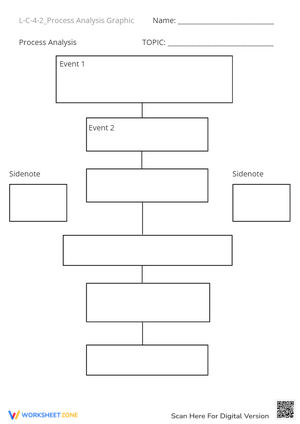
- Reverse outlining: Students map the actual structure of a completed draft, noting what each paragraph claims and how its evidence connects to the thesis, to find logical gaps and repeated arguments.
- Paragraph sequencing: Students reorder scrambled body paragraphs using only internal evidence — topic sentences, transitions, and closing sentences — building awareness of how sequence itself signals logical relationship to a reader.
How to Build These Worksheets Into Your Writing Unit
The most productive placement for most of these worksheets is the revision phase, not pre-writing. When students are revising a first draft, structural analysis has something real to attach to. Handing a student the reverse outlining worksheet after their first draft is complete — before any direct feedback from you — and asking them to trace what they actually argued, paragraph by paragraph, generates more genuine self-awareness than any amount of front-loaded instruction.
That said, the organizational pattern and CER worksheets from this 10th grade organization and structure worksheets work well as brief practice immediately before you assign a major writing prompt. Ten minutes at the start of class — analyzing a short passage from a mentor text, identifying its structure, then discussing what would break if two paragraphs were swapped — primes students to think architecturally when they sit down to write. The transition logic worksheet pairs naturally with peer review: each student marks every transition in a classmate's draft and annotates whether the chosen word accurately signals the relationship it claims to signal. Twelve minutes, concrete task, specific feedback — the combination most open-ended peer review fails to produce.
Mistakes Students Make That These Worksheets Help Surface
The most persistent structural problem in Grade 10 writing is not missing evidence — it's evidence that sits unanalyzed. A student quotes a passage, then moves directly to the next quotation, leaving the reader to infer how either quote supports the thesis. One worksheet is built specifically around this "data dump" pattern: students receive a paragraph containing three stacked quotes and must write the analytical sentences that should follow each one before they can proceed. The exercise reveals immediately which students understand that evidence requires interpretation and which ones believe it speaks for itself.
Two other errors appear in nearly every batch of drafts. Students routinely select transition words that describe a relationship that doesn't exist in their text — writing "however" between two sentences that are actually parallel in meaning is the clearest example. A worksheet that asks students to justify their transition choice in writing, rather than simply fill in a blank, surfaces this confusion within minutes. The second error: students treat the counterclaim as an obligation to discharge rather than an argument to integrate. They insert a single sentence of acknowledgment near the end of the essay with no structural tie back to the thesis. The worksheets address this directly by having students map where the counterclaim sits in their outline and trace its logical path to the central claim.
Adjusting the Worksheets Across Different Levels of Writers
Students still building paragraph-level coherence benefit most from the CER annotation exercises, where the structure is already present in existing text and they are locating where it breaks down. This demands less than generating structure independently — it develops the vocabulary of structure before students apply it in their own writing. Pre-written examples also reduce the anxiety that blank-page exercises create for students who struggle to produce sentences under time pressure.
Advanced writers can extend the paragraph sequencing exercise by writing a brief rationale after reordering: naming which structural principle guided their sequence and what would break if two paragraphs were swapped. That metacognitive layer — articulating the principle rather than just enacting it — is where strong writers begin to develop genuine editorial judgment about their own work.
Standard Alignment
This set addresses CCSS.ELA-LITERACY.W.9-10.2.A, which requires students to organize complex ideas and information to make important connections and distinctions. In practice, this is the standard teachers encounter every time a student submits an essay where paragraphs could be reshuffled without changing the argument — because no logical architecture makes the sequence necessary. The paragraph sequencing and reverse outlining worksheets directly build the awareness that standard demands. The 10th grade organization and structure worksheets also covers CCSS.ELA-LITERACY.W.9-10.1.B, which addresses developing claims and counterclaims with textual evidence and sound reasoning — skills made visible in the CER annotation and transition logic exercises, where breakdowns in reasoning surface at the sentence level rather than only in a final essay grade.
Frequently Asked Questions
Do these worksheets apply to informational writing units as well as argument essays?
Yes. The organizational pattern exercises — cause-effect, compare-contrast, problem-solution — apply directly to informational and explanatory writing. The CER annotation worksheets map onto any genre where a claim is supported by evidence, whether that evidence comes from literature, primary sources, or data. The reverse outlining template is genre-neutral: it asks students to describe what each paragraph is doing structurally, which works for a research report as readily as a literary analysis.
How much class time does the reverse outlining worksheet actually take?
For a four- to five-paragraph draft, individual work takes about 20–25 minutes. Pair work typically runs 12–15 minutes and produces sharper observations — students catch structural gaps in a partner's draft that they would rationalize away in their own. If class time is tight, assign it between drafts as homework and open the next session with a brief share-out. Students who do the work honestly arrive with a clearer picture of what their revision actually needs to accomplish.
Can these worksheets function as formative assessment tools?
Several worksheets generate useful diagnostic data. The transition logic exercise in particular shows where a student's understanding of argument structure breaks down — a student who consistently chooses contrast transitions for parallel ideas has a different conceptual gap than one who defaults to additive transitions everywhere out of habit. Collecting completed worksheets before a major essay gives you specific, actionable diagnostic information without waiting for the final draft to tell you what went wrong.












 Interactive Worksheet Maker
 Quiz Maker
 Word Search Maker
 Crossword Puzzle Maker
 Word Scramble Generator
 Sentence Scramble Generator
 Handwriting Worksheet Generator
 Name Tracing Generator
 Fill In The Blank Generator