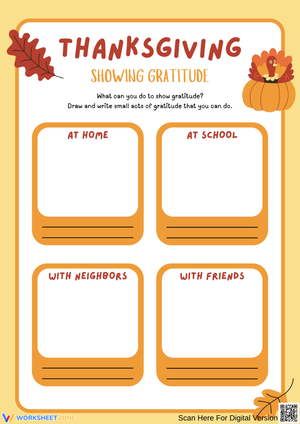
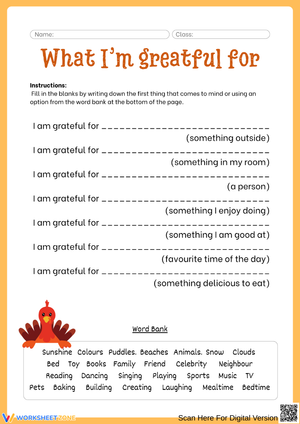
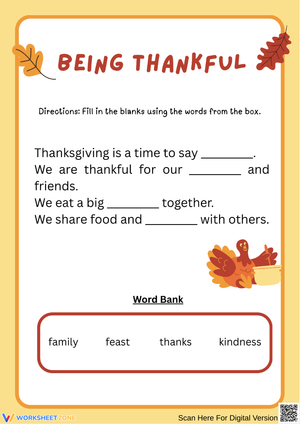
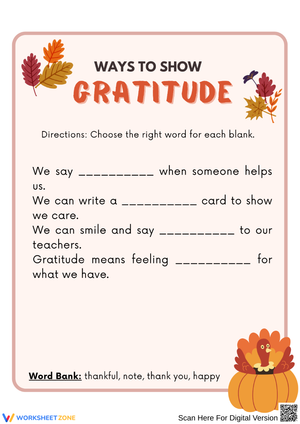
These community culture pdf worksheets for 1st grade give teachers a practical foothold in one of early elementary social studies' most abstract units: helping six- and seven-year-olds see themselves as participants in a community larger than their own household. Each worksheet addresses a single, discrete topic — family traditions, shared celebrations, community symbols, the languages people speak at home — so the set works equally well as a sequenced unit or as standalone pieces dropped into an existing schedule.
The Specific Skills These Worksheets Build
The content spans the core strands of community and culture study at Grade 1: drawing and labeling a family tradition, sorting community helpers by the kinds of needs they address, matching cultural symbols to their meanings, and comparing two families' celebration practices side by side. That comparison task appears on multiple worksheets because the work it demands — noticing what is the same and what is different between my family's Lunar New Year table and the family in the story's Diwali spread — requires observation and early perspective-taking at the same time.
- Interview templates students take home to record a family member's account of a heritage food or seasonal ritual
- Symbol identification tasks where students mark what a national flag, a landmark, or a piece of traditional clothing stands for, not just what it looks like
- A language diversity activity matching words for "hello" or "thank you" across three or four languages tied to home languages actually present in the class
- Celebrations-by-season sorting, where students place community events on a simple calendar grid and note what each one marks
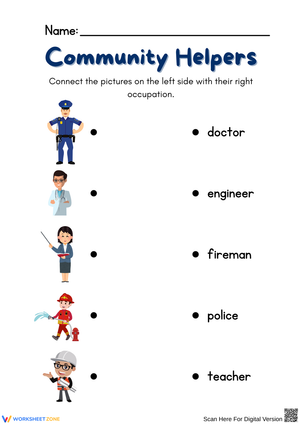
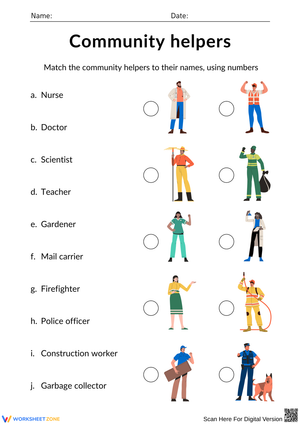
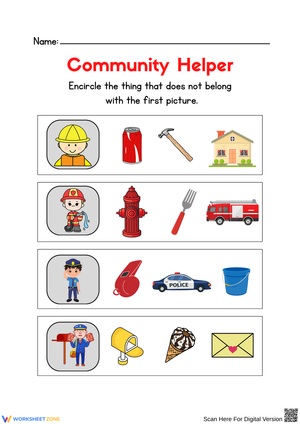
- Community helper worksheets that ask not just "what does this person do?" but "what shared community value does that job reflect?"
Student Mistakes Worth Anticipating in These Activities
The most consistent confusion across all of these topics is that young students equate "culture" with "other people." Ask a first grader what their family's culture is and you will regularly hear "we don't have one." In their working model, culture belongs to someone visibly different — it's what the family in the read-aloud does, not what happens in their own kitchen. On any worksheet that asks students to name or draw a family tradition, this belief produces blank spaces or the written phrase "normal stuff." The most effective response is not a correction but an exemplar: when the teacher models the task using a specific personal detail — the exact dish their grandmother made at New Year's, the particular song always sung on a certain evening — students immediately recognize equivalent moments in their own lives and the resistance dissolves.
A second pattern appears on symbol-based worksheets. Students will carefully color in a flag or a piece of traditional clothing and stop there, skipping the "what does this represent?" prompt as though it were optional. The concept that an object carries meaning beyond its appearance is genuinely new at this developmental stage. A two-minute pre-task conversation — asking the class what the school mascot means, or why the fire drill bell sounds different from the lunch bell — activates symbolic thinking and transfers directly to the cultural tasks that follow.
Working These Worksheets Into Your Week
The interview-style worksheets — especially those that send students home to ask a family member about a tradition or a heritage food — work best when assigned on a Thursday so families have the weekend to talk. Students return Monday with answers that are often richer and more specific than anything they could produce from memory alone, and Monday's share-out becomes its own community-building moment. The community culture pdf worksheets for 1st grade that focus on symbols and celebrations fit naturally into the 15 to 20 minutes before a read-aloud: introduce the cultural context through the picture book, then have students complete the corresponding worksheet independently while the story's details are still fresh.
A Culture Wall amplifies nearly every worksheet in the set. Once students complete a heritage or tradition activity, post their work at student eye level around the room. Students spend transition time — waiting for dismissal, lining up after lunch — walking the wall and noticing connections to classmates' responses. It converts a single paper task into an ongoing reference point for the rest of the unit and makes the abstract concept of community visible in the physical space of the classroom.
Standard Alignment
These worksheets address NCSS Thematic Standard I: Culture, which expects early elementary students to explore how people from diverse backgrounds contribute to a shared community and to recognize the role that traditions, symbols, and language play in transmitting culture across generations. At Grade 1, this standard sits directly inside the Expanding Environments sequence — students have just finished work on self and family and are now extending outward to neighborhood and community, which is precisely where community culture pdf worksheets for 1st grade land in a well-sequenced curriculum calendar. Several activities also support foundational ELA standards by embedding print work — labeling, short-answer responses, sentence completion — inside a social studies context, making the literacy practice purposeful rather than isolated from content.
Adapting These Worksheets for the Full Range of First Graders
For students still building writing stamina, the drawing components carry the full cognitive weight of the task: a child who draws a detailed holiday table and labels it with two words has demonstrated genuine content understanding. Short-answer prompts are designed to accept one to three words as a complete response for students who need that entry point. For students ready for more, the follow-up prompt "why does your family do this?" pushes from description into explanation — a meaningful increase in thinking without requiring a different worksheet. Students who finish early can compare their work with a partner's and identify one similarity and one difference, which returns the activity to its core purpose. When distributing community culture pdf worksheets for 1st grade to a mixed-ability class, consider adding a sentence frame at the bottom of interview templates — "My family celebrates ___ because ___" — for students who find a fully open prompt overwhelming but do not need the task simplified in any other way.
Frequently Asked Questions
How do I define "culture" in terms a six-year-old will actually understand?
The most grounded working definition for this age: culture is the special way a group of people does things together — what they eat, what they celebrate, what stories they tell, and what language they use to tell them. Anchor the definition immediately in the student's own experience. "Your family has a culture. Let's figure out what's in it." When students hear culture defined as something they already possess rather than something other families have, the concept becomes accessible rather than foreign.
Can these worksheets be sent home as family connection activities?
The interview templates are built for exactly that purpose. Students take the worksheet home, hold a short conversation with a parent or grandparent, and return with recorded responses. Families — particularly those whose home language differs from English — often appreciate being asked directly about their traditions rather than seeing their community represented by a generic textbook image. A brief note home with the first such worksheet, explaining that all traditions are welcome and there are no wrong answers, removes the hesitation some families feel about sharing practices that differ from what they assume the school expects.
Do these worksheets work for English Language Learners?
The drawing-centered worksheets are strong entry points for ELL students because they do not require English production to demonstrate content understanding. The language diversity activity — matching greetings across multiple languages — actively positions multilingual students as the ones with relevant knowledge to share, which shifts the usual classroom dynamic in a productive direction. For students at early stages of English acquisition, pairing a worksheet with a bilingual partner or accepting home-language responses keeps the cultural content accessible while the English develops at its own pace.