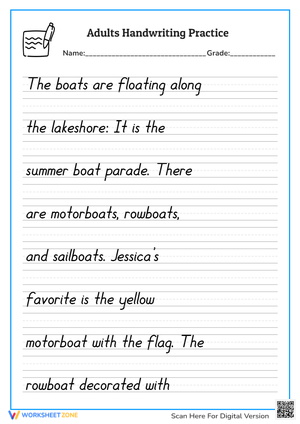
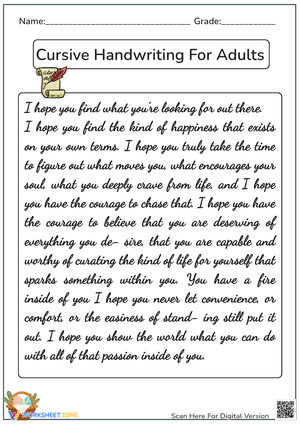
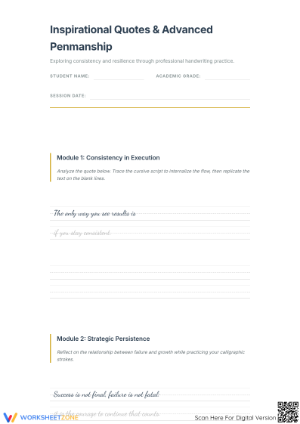
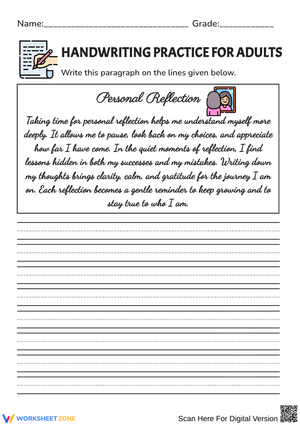
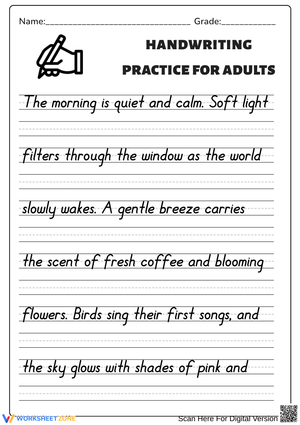
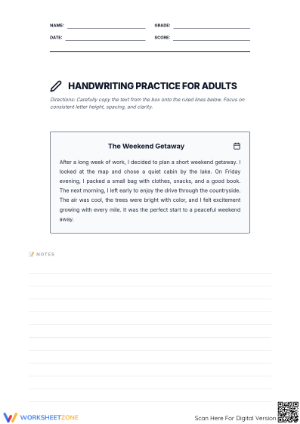
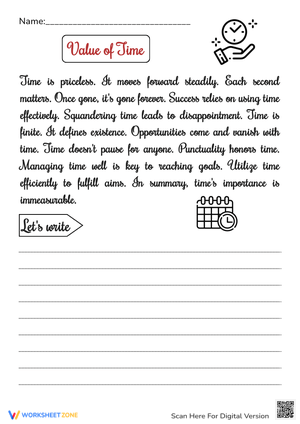
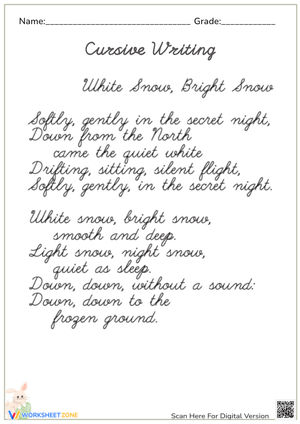
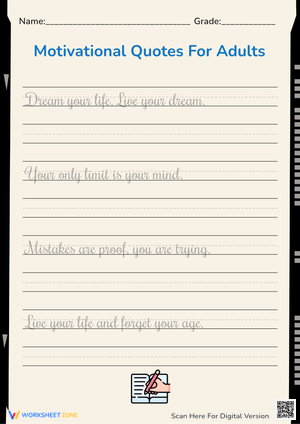
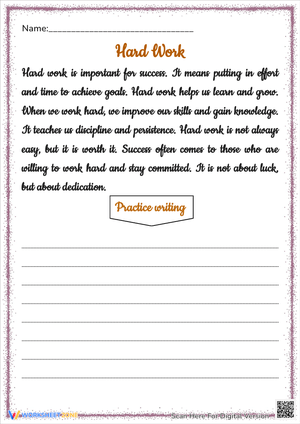
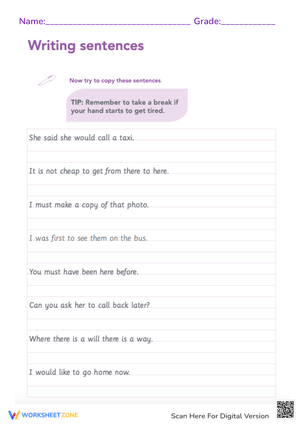
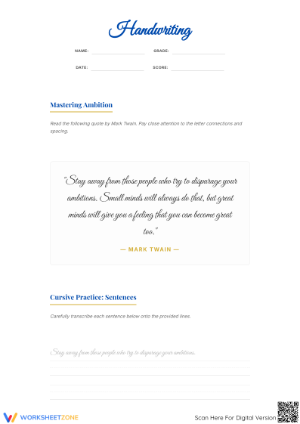
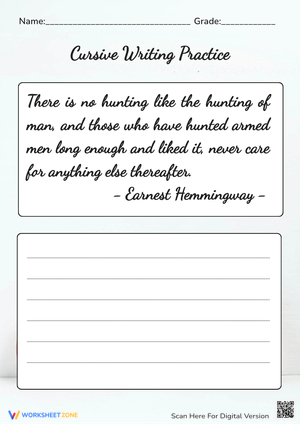
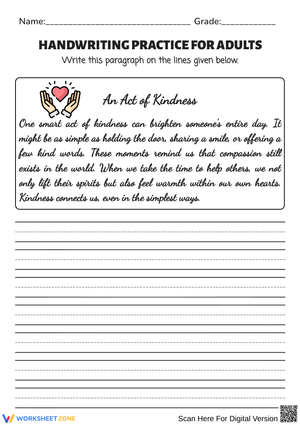
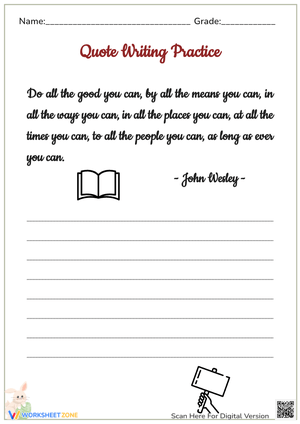
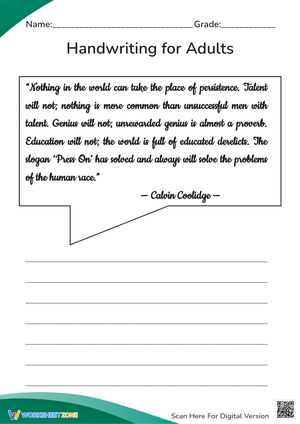
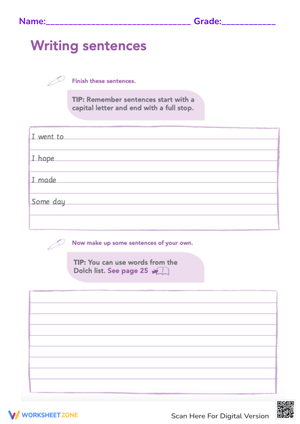
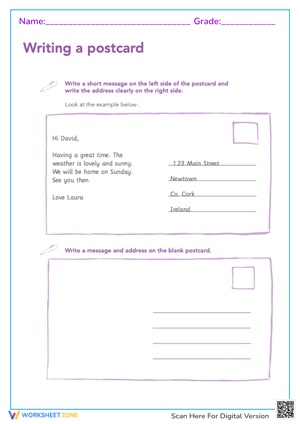
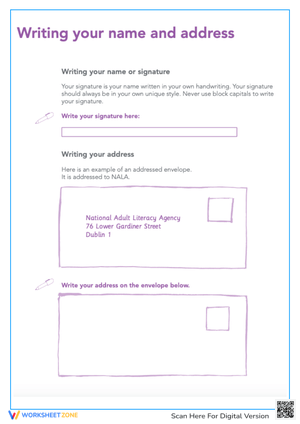
These college handwriting for adults worksheets printable give instructors in bridge programs, adult education courses, and developmental writing classes a set of practice materials calibrated to where adult learners actually are — not to where a seven-year-old starts. The practice passages draw from academic vocabulary: historical quotations, short-answer sentence frames, and word lists from standardized test prep. Each worksheet targets a specific mechanical variable — baseline consistency, x-height uniformity, or letter-to-letter spacing — rather than asking students to produce a full page of undifferentiated repetition.
The Specific Skills Each Worksheet Targets
The set moves through the mechanics of legible handwriting in a sequence that matches the way adult muscle memory actually deteriorates. Most adults do not struggle with letter recognition; they struggle with the ratio of letters to one another — the relative heights and widths that make a word visually coherent under time pressure. The worksheets address:
- X-height control — keeping lowercase letters like a, c, and e consistently between the baseline and midline, a discipline that disappears quickly when writing drops to once or twice a week
- Ascender and descender proportion — the distance that letters like b, d, p, and g extend above or below the x-height, which many adult writers have compressed into near-uniformity over years of disuse
- Pen-lift frequency — exercises that train students to reduce unnecessary lifts in print and to evaluate where connecting strokes in cursive genuinely save time
- Slant consistency — holding a constant angle across a full sentence, not just within a single word
- Word spacing under speed pressure — the most frequent complaint instructors hear from graders and note-sharing partners: words running together the moment the writer accelerates
Each worksheet closes with a short timed-writing section — one or two sentences students copy at their natural speed, then compare against their slow-practice version from the same worksheet. That comparison moment is where most adult learners first see, concretely, what happens to their handwriting under time pressure.
Frequent Student Errors Worth Watching for Before You Hand These Out
The error pattern that appears most reliably across adult learners is not what instructors expect. Students who have clearly thought about neatness will produce careful, well-formed individual letters during tracing — but the spacing collapses the moment they shift to copying from memory. A student who writes a proportionally correct lowercase a in isolation will compress it to half the height when it falls in the middle of a word written quickly. This is a speed-pressure failure, not a letter-formation failure, and practice that addresses only formation without building in timed copying does not resolve it.
The second pattern: adults who grip the pen too tightly to compensate for lost fine motor fluency. By mid-worksheet, their descenders start drifting rightward — a symptom of wrist tension, not poor letter knowledge. A reliable early intervention is to have students do ten slow, deliberate wrist circles before beginning a timed section, then observe whether their grip pressure drops on its own. In most cases it does, and the descender drift corrects itself without any additional instruction.
Fitting These Worksheets Into an Adult Education Schedule
Adult education programs rarely carve out full class periods for penmanship. These worksheets work best as the opening fifteen minutes of a session — a warm-up that simultaneously serves as skill practice when the material is academic rather than arbitrary. A worksheet built around GRE-vocabulary sentences or primary-source quotations means the session reinforces subject content and motor skill at the same time, which makes the time easier to justify in a packed curriculum.
For instructors in college bridge programs, the timed-writing section pairs naturally with test-preparation discussions. Have students compare the readability of their timed sample against their careful sample from the same worksheet, then ask them to articulate what that gap means in a blue-book exam. That conversation — about what pressure does to legibility — is often the most motivating moment in the unit. College handwriting for adults worksheets printable that feature academic vocabulary make it easier to hold that conversation using content students are already studying, rather than invented practice sentences that feel disconnected from their actual coursework.
Why Spaced Practice Outperforms Long Single Sessions for Adult Penmanship
A child learning to write is building a motor pattern from scratch. An adult is overwriting one that is often twenty or thirty years old and deeply automatic. That distinction determines how practice should be structured. Short, daily sessions outperform long weekly blocks because they interrupt the existing habit more frequently, without giving it time to reassert itself between repetitions. Fifteen deliberate minutes a day produces measurably different results after three weeks than a single ninety-minute session on Fridays, even when the total time invested is identical.
The rhythmic writing technique — moving at a steady, counted tempo rather than varying speed from letter to letter — helps adult learners override the habit of rushing through familiar shapes and decelerating on unfamiliar ones. When pace is constant, the hand stops anticipating and starts executing, which is the condition that allows a new motor pattern to begin taking hold. Some instructors use a small desk metronome during guided practice; others simply count strokes aloud. Either approach works, and either can be introduced during the timed-writing section of each worksheet without requiring additional class time.
Adjusting the Set for a Range of Adult Learner Starting Points
In most adult education classrooms, the starting-point range is wide. One student may produce readable, consistent print but have completely lost cursive fluency. Another writes in an idiosyncratic joined style that is fast for them but illegible to anyone else. A third may have a grip injury or hand tremor that requires accommodation. These worksheets address that range through the internal structure of each worksheet rather than through separate versions for separate levels.
- Students who need the most support benefit most from the slow-practice columns, where guidelines are tighter and word length is shorter. Have those students focus on columns one and two before attempting the full-line copy section.
- Students who already write legibly but want to build speed should spend most of their time on the timed-writing sections and skip the tracing columns entirely. Speed at the cost of legibility is the real exam risk for this group, and the side-by-side comparison makes that risk visible without requiring a separate diagnostic.
- For students with physical constraints, the worksheets work equally well as dictation exercises: a partner reads the passage aloud while the student writes, removing the visual tracking demand and isolating the motor skill.
College handwriting for adults worksheets printable also translate naturally into one-to-one tutoring contexts, where an instructor can annotate directly on the student's completed worksheet and return it as a marked model for the following session's practice.
Standard Alignment
These worksheets align with the College and Career Readiness Standards for Adult Education (CCRS) — specifically the Language strand expectations calling for demonstrated command of the conventions of standard English in written communication. While the CCRS does not isolate handwriting as a separate standard at the postsecondary level, programs preparing students for timed writing assessments treat mechanical fluency as a prerequisite: students who cannot maintain legibility at exam speed are effectively blocked from demonstrating the content knowledge the standards require. Programs operating within the CASAS adult student assessment framework will find these worksheets directly useful in addressing writing fluency indicators within the Life and Work writing domain, particularly at the Levels C and D range where functional writing tasks are assessed.
Frequently Asked Questions
How quickly do adult learners typically see improvement?
Most students notice meaningful changes in legibility within three to four weeks of daily fifteen-minute practice. The more important milestone — legibility that holds up at exam speed, not just during careful slow writing — generally takes two to three months of consistent application. That gap between "looks better when I slow down" and "stays readable when I write fast" is the real target, and it takes longer to close than most students initially expect.
Should students focus on print or cursive?
It depends on what they are trying to accomplish. Cursive is faster for most people once the letter connections are fluent, because the pen stays on the paper and fewer decisions interrupt the stroke. Print is clearer for anyone reading the document afterward — a grader, a collaborator, an employer reviewing a handwritten application form. Many adult learners settle on a joined-print style, connecting only the most natural letter pairs, which delivers most of the speed benefit without requiring fluency in a complete cursive alphabet.
Does handwriting practice support academic memory and content retention?
The research on this is consistent enough to be worth acting on in the classroom: writing by hand activates more of the encoding process than typing, because the writer must summarize and phrase ideas rather than transcribe verbatim. College handwriting for adults worksheets printable that use academic content — historical passages, vocabulary in context, short-answer sentence frames — turn practice time into double-duty study: the student reinforces subject knowledge while building motor fluency at the same time.
What if a student's difficulty is grip-related rather than letter-formation-related?
Grip issues are common and worth addressing before working through letter-formation exercises. If a student reports hand fatigue within the first few minutes of writing, have them try a triangular grip aid or switch to a broader-barreled pen. A medium-point gel pen requires less pressure to produce a clean line than most ballpoints, and that reduction in pressure directly decreases the wrist tension that drives both descender drift and word-spacing collapse during longer writing tasks.












 Interactive Worksheet Maker
 Quiz Maker
 Word Search Maker
 Crossword Puzzle Maker
 Word Scramble Generator
 Sentence Scramble Generator
 Handwriting Worksheet Generator
 Name Tracing Generator
 Fill In The Blank Generator