


























1 / 3
0
Views
0
Downloads

0.0
0
Save
0 Likes
Share
Worksheet for Ohm's Law and Resistance
0 Views
0 Downloads
Paste this activity's link or code into your existing LMS (Google Classroom, Canvas, Teams, Schoology, Moodle, etc.).
Students can open and work on the activity right away, with no student login required.
You'll still be able to track student progress and results from your teacher account.
Information
Description
What It Is:
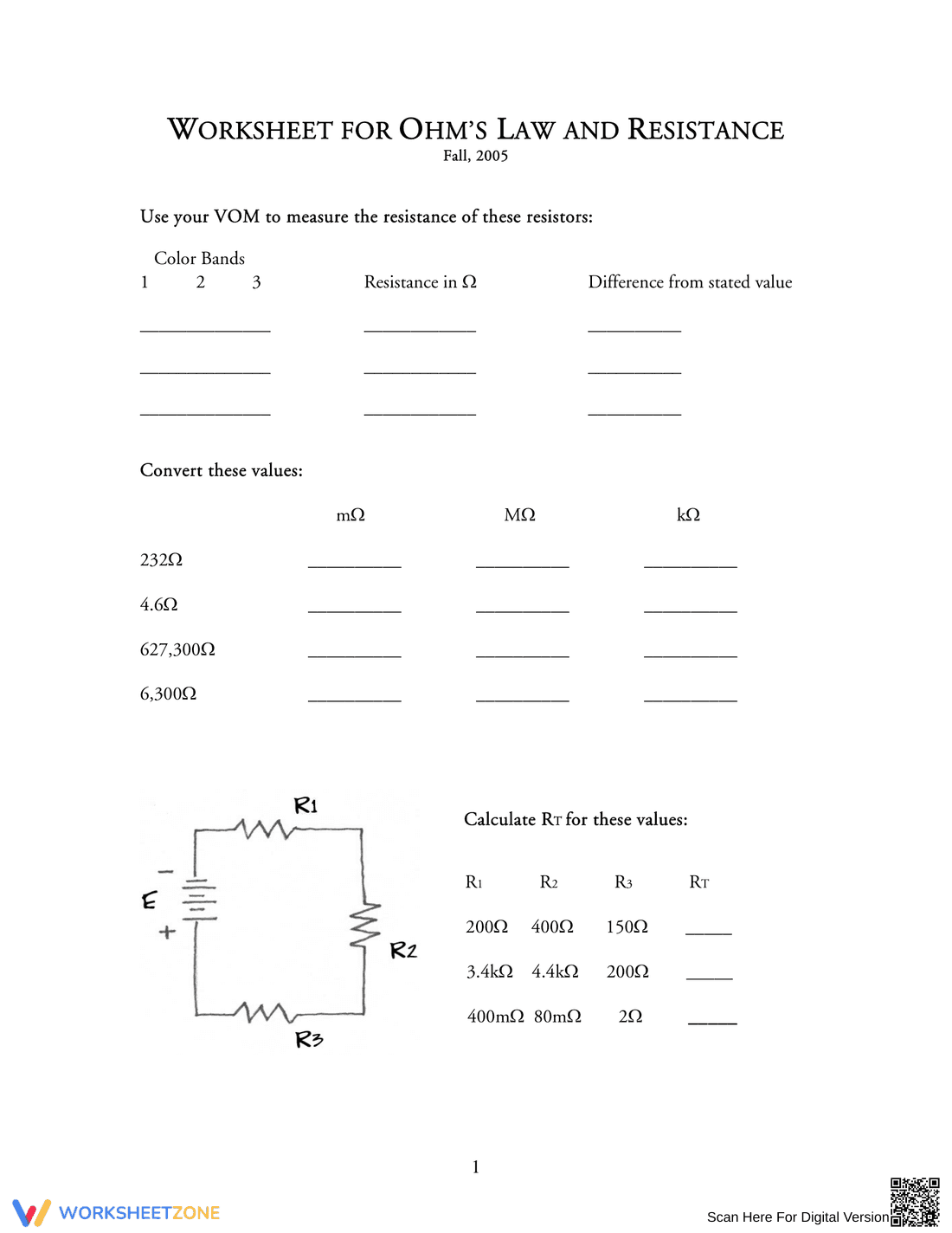
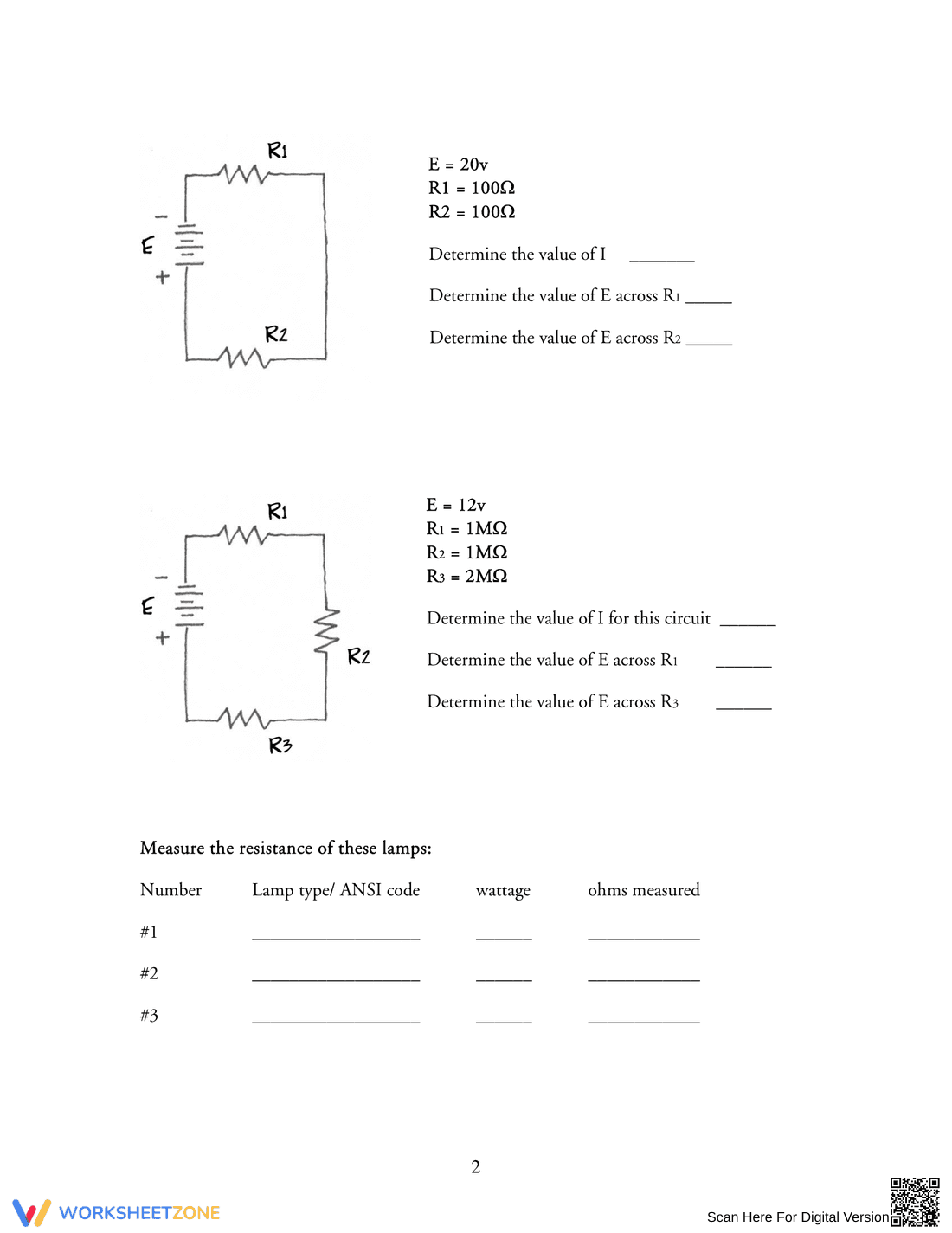
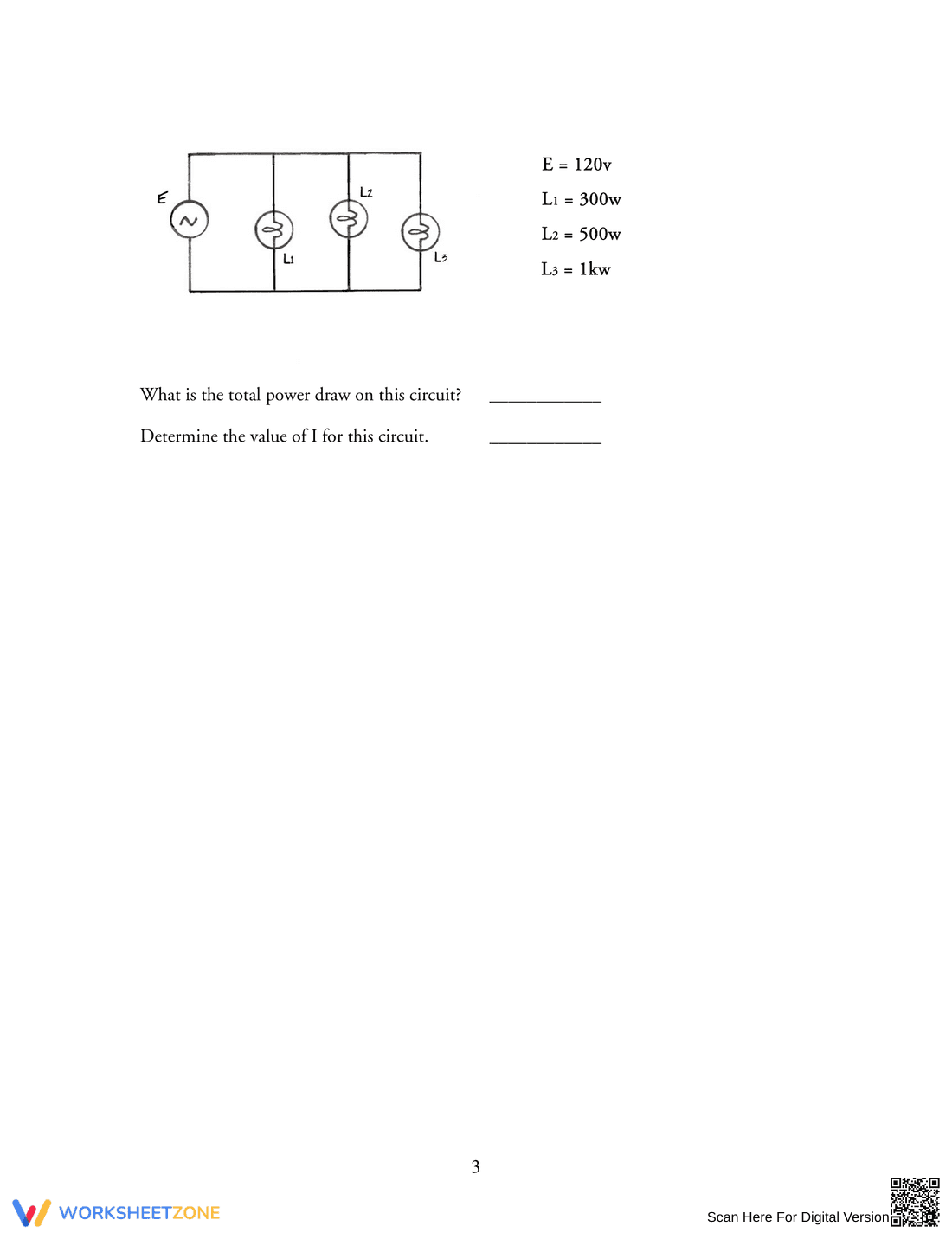
This is a worksheet focused on Ohm's Law and resistance calculations. It includes sections for determining resistance based on color bands, converting resistance values between different units (Ω, mΩ, MΩ, kΩ), calculating total resistance (Rt) in a series circuit diagram, and finding the difference from a stated value.
Grade Level Suitability:
This worksheet is suitable for high school physics or introductory electronics courses, specifically grades 9-12. It requires knowledge of basic circuit concepts, Ohm's Law, and unit conversions, which are typically covered in these grades.
Why Use It:
This worksheet provides practice in applying Ohm's Law and understanding resistance in circuits. It helps students develop skills in reading resistor color codes, converting units of resistance, and calculating total resistance in a series circuit, reinforcing their understanding of fundamental electrical concepts.
How to Use It:
Students should use the worksheet to practice resistance calculations. First, they can use a VOM (Volt-Ohm Meter) to measure resistors. Then, they can convert resistance values to different units, calculate the total resistance for given resistor values in a series circuit and find the difference from a stated value. Students should show their work and use appropriate units.
Target Users:
The target users are high school students studying physics or electronics, as well as introductory electronics students in vocational or technical schools. Anyone learning about basic electrical circuits and Ohm's Law can benefit from this worksheet.
This is a worksheet focused on Ohm's Law and resistance calculations. It includes sections for determining resistance based on color bands, converting resistance values between different units (Ω, mΩ, MΩ, kΩ), calculating total resistance (Rt) in a series circuit diagram, and finding the difference from a stated value.
Grade Level Suitability:
This worksheet is suitable for high school physics or introductory electronics courses, specifically grades 9-12. It requires knowledge of basic circuit concepts, Ohm's Law, and unit conversions, which are typically covered in these grades.
Why Use It:
This worksheet provides practice in applying Ohm's Law and understanding resistance in circuits. It helps students develop skills in reading resistor color codes, converting units of resistance, and calculating total resistance in a series circuit, reinforcing their understanding of fundamental electrical concepts.
How to Use It:
Students should use the worksheet to practice resistance calculations. First, they can use a VOM (Volt-Ohm Meter) to measure resistors. Then, they can convert resistance values to different units, calculate the total resistance for given resistor values in a series circuit and find the difference from a stated value. Students should show their work and use appropriate units.
Target Users:
The target users are high school students studying physics or electronics, as well as introductory electronics students in vocational or technical schools. Anyone learning about basic electrical circuits and Ohm's Law can benefit from this worksheet.


