


























Views
Downloads

Printable Word Shapes 6 Worksheet | Kindergarten ELA Ready
Paste this activity's link or code into your existing LMS (Google Classroom, Canvas, Teams, Schoology, Moodle, etc.).
Students can open and work on the activity right away, with no student login required.
You'll still be able to track student progress and results from your teacher account.
This Kindergarten sight words worksheet uses visual configuration to build reading fluency and orthographic mapping. By matching high-frequency words to their unique "shapes" including ascenders, descenders, and small letters, students develop a deep cognitive connection between the word's appearance and its spelling. This resource provides immediate, focused practice for early readers in any literacy environment.
At a Glance
- Grade: Kindergarten · Subject: English Language Arts
- Standard:
CCSS.ELA-LITERACY.RF.K.3.C— Read common high-frequency words by sight (e.g., the, of, to, you, she, my)- Skill Focus: Sight word recognition and word shape mapping
- Format: 3 pages · 16 problems · Answer key included · PDF
- Best For: Early literacy centers and morning work
- Time: 15–20 minutes
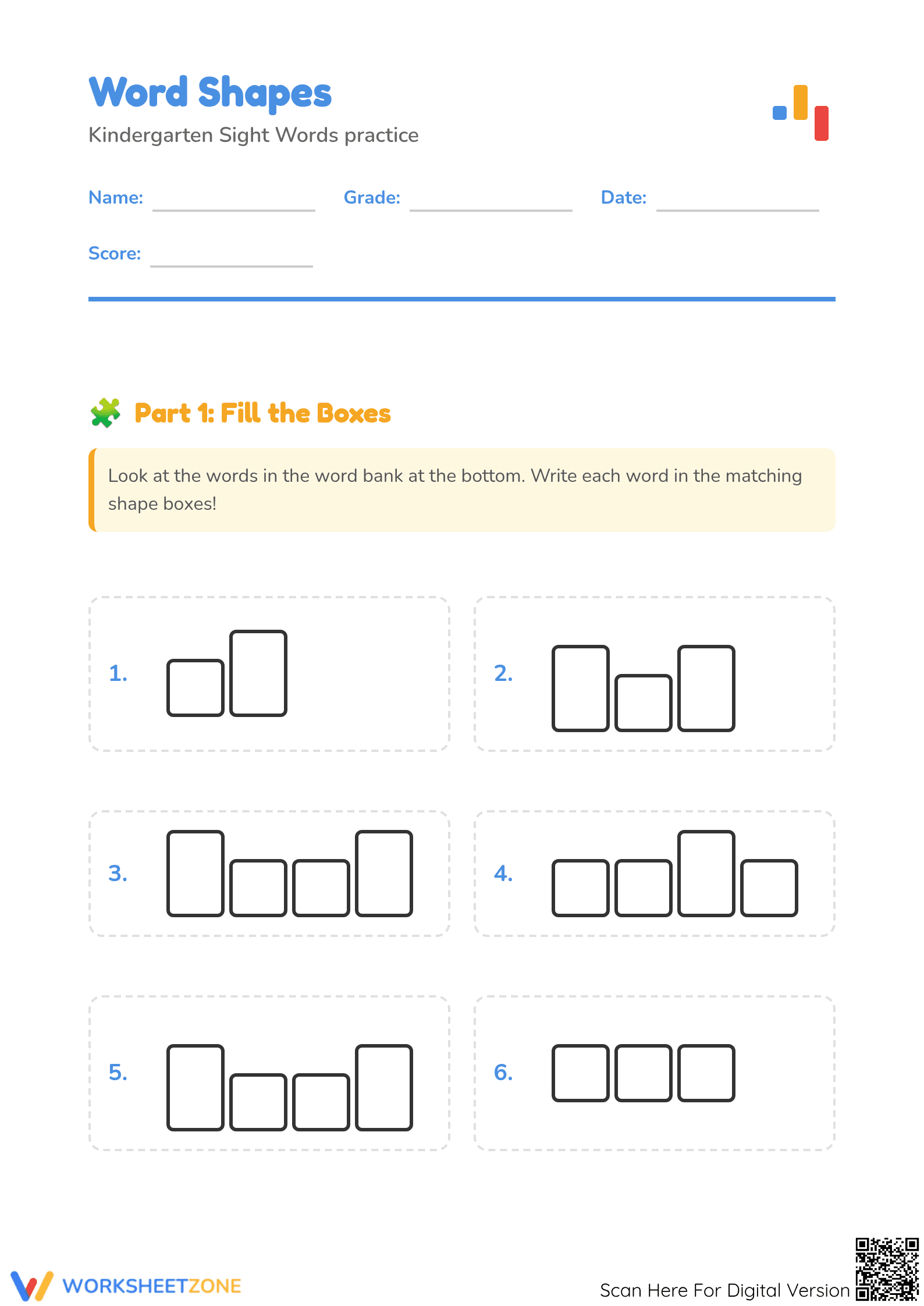
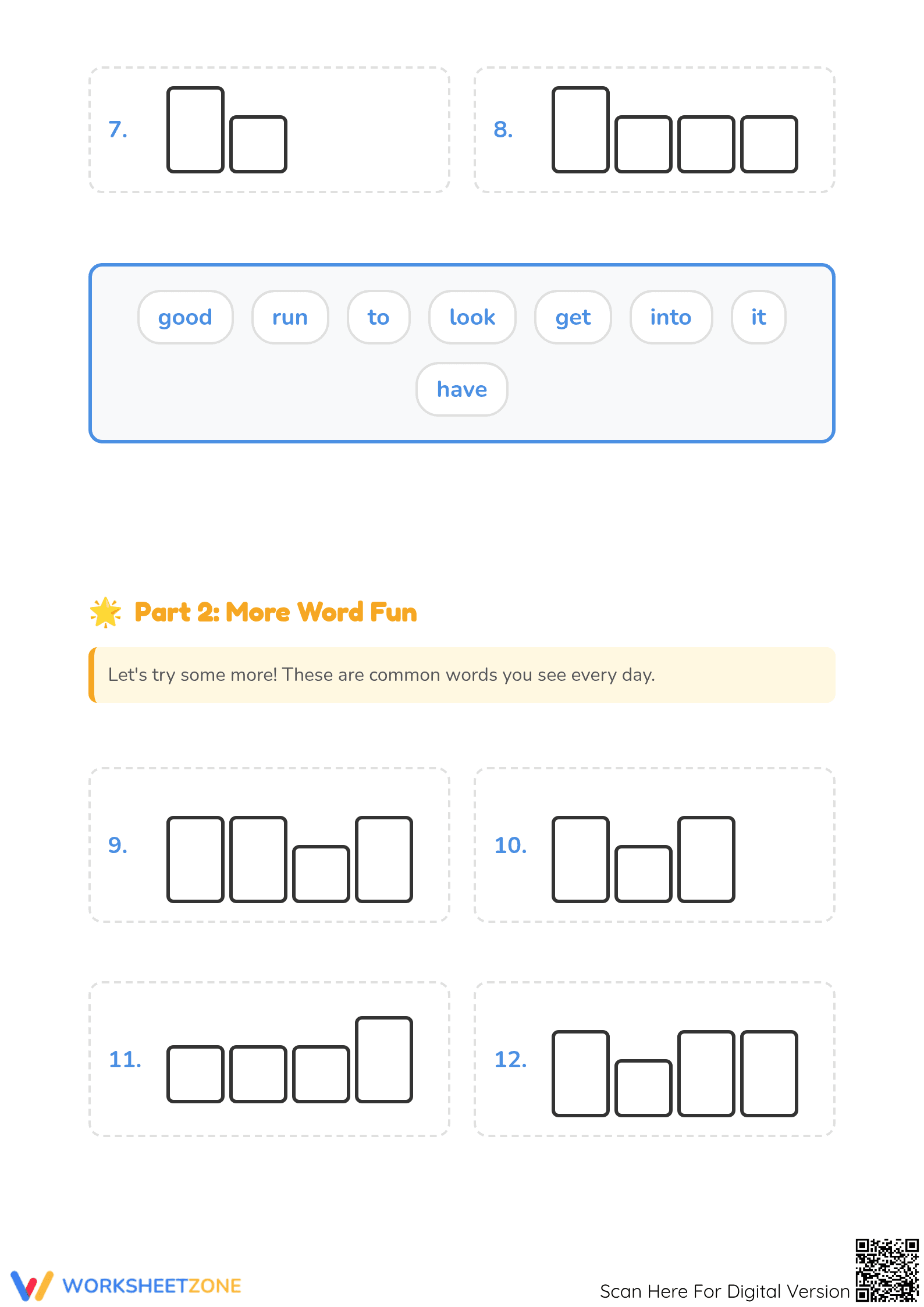
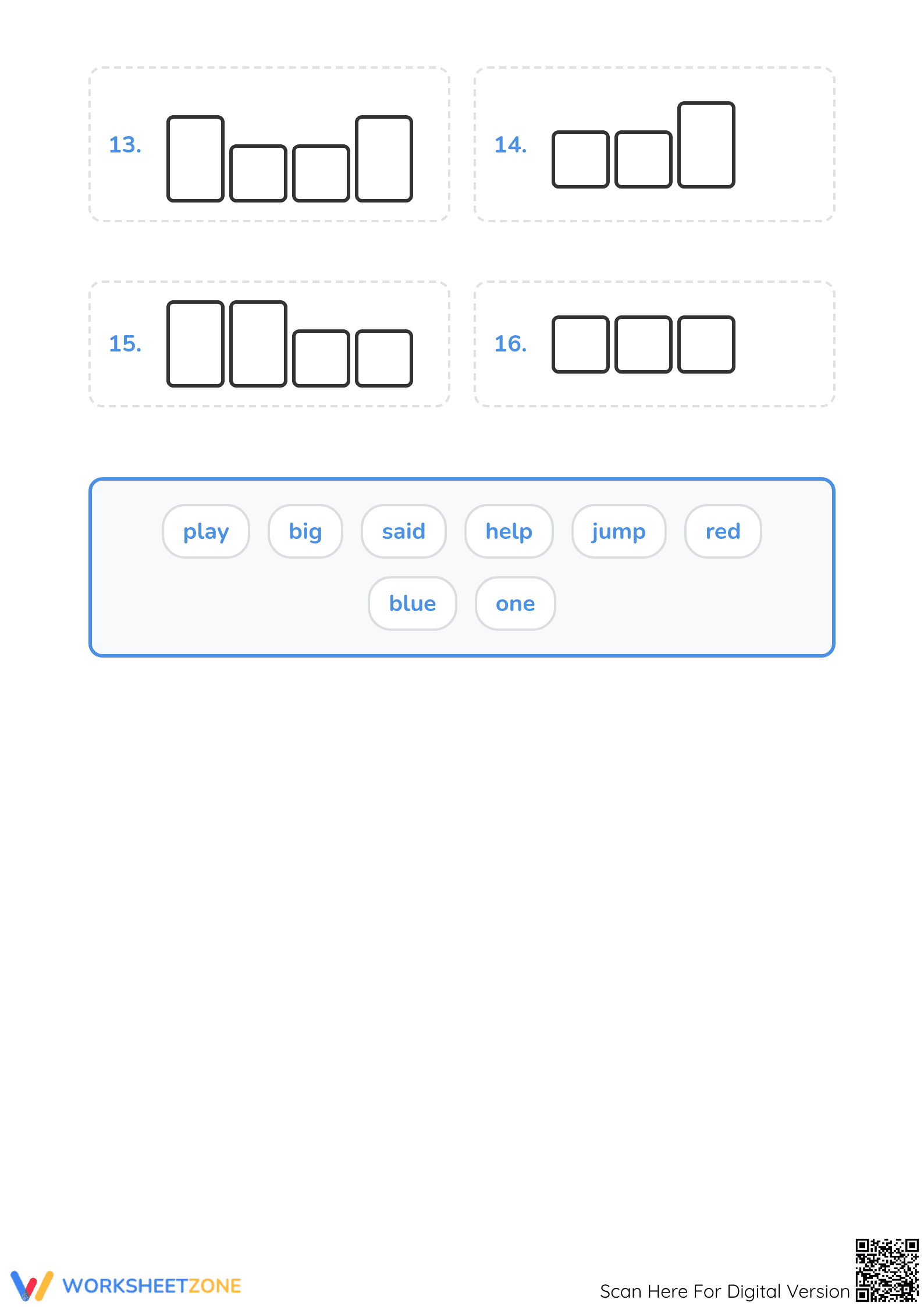
This three-page PDF packet features 16 structured word-shape puzzles divided into manageable sections. Each page includes a clear word bank containing essential kindergarten sight words like "good," "into," "jump," and "blue." The layout uses bold, clean lines for the shape boxes, helping students distinguish between tall letters such as h and l and letters with tails like j and p. A full answer key is included for rapid grading.
The design of Word Shapes 6 emphasizes a zero-prep teacher experience through a three-step workflow. First, print the 3-page file to the printer in seconds. Second, distribute the sheets for individual or small group work with no additional instructions required. Third, review student progress using the included answer key to verify work in under a minute. Total teacher preparation time is less than two minutes, making this an ideal "grab-and-go" resource for busy classrooms or unexpected substitute teacher plans.
The primary alignment is CCSS.ELA-LITERACY.RF.K.3.C, which requires students to read common high-frequency words by sight. This worksheet supports this goal by forcing students to analyze the structural components of common words. Additionally, it supports early spelling skills as students replicate word forms from the bank. Both standard codes can be copied directly into lesson plans, IEP goals, or district curriculum mapping tools to ensure instructional accountability.
Use this worksheet as a morning warm-up activity to settle students as they arrive. The visual nature of the task allows for independent work while the teacher handles daily administrative tasks. Alternatively, employ it as a formative assessment after introducing a new set of sight words; observe whether students recognize the difference between "look" and "jump" based on the box heights. The expected completion time range for the full set is 15-20 minutes.
This resource is designed for Kindergarten students but is also highly appropriate for Preschoolers ready for early literacy or First Graders requiring remedial fluency support. It pairs naturally with sight word flashcards or a classroom word wall, allowing students to cross-reference their work as they complete the matching tasks. The clear formatting ensures that students with diverse needs can focus on the core literacy task without visual clutter.
Word Shapes 6 leverages the research-based strategy of orthographic mapping. According to Fisher & Frey (2014), instructional materials that focus on the visual configuration and structural components of words help students build more robust mental representations of high-frequency vocabulary. This worksheet specifically addresses CCSS.ELA-LITERACY.RF.K.3.C by providing 16 opportunities for students to match visual "word shapes" to their corresponding orthographic forms. By requiring students to discriminate between ascenders, descenders, and neutral characters, the activity prevents guessing based on initial letters alone. This approach aligns with NAEP findings suggesting that early intervention with high-frequency word recognition is a primary predictor of later reading comprehension levels. The self-contained word banks and clear formatting ensure that the resource remains accessible for independent practice in various classroom settings, providing teachers with a reliable tool for building foundational literacy skills.


