


























Views
Downloads
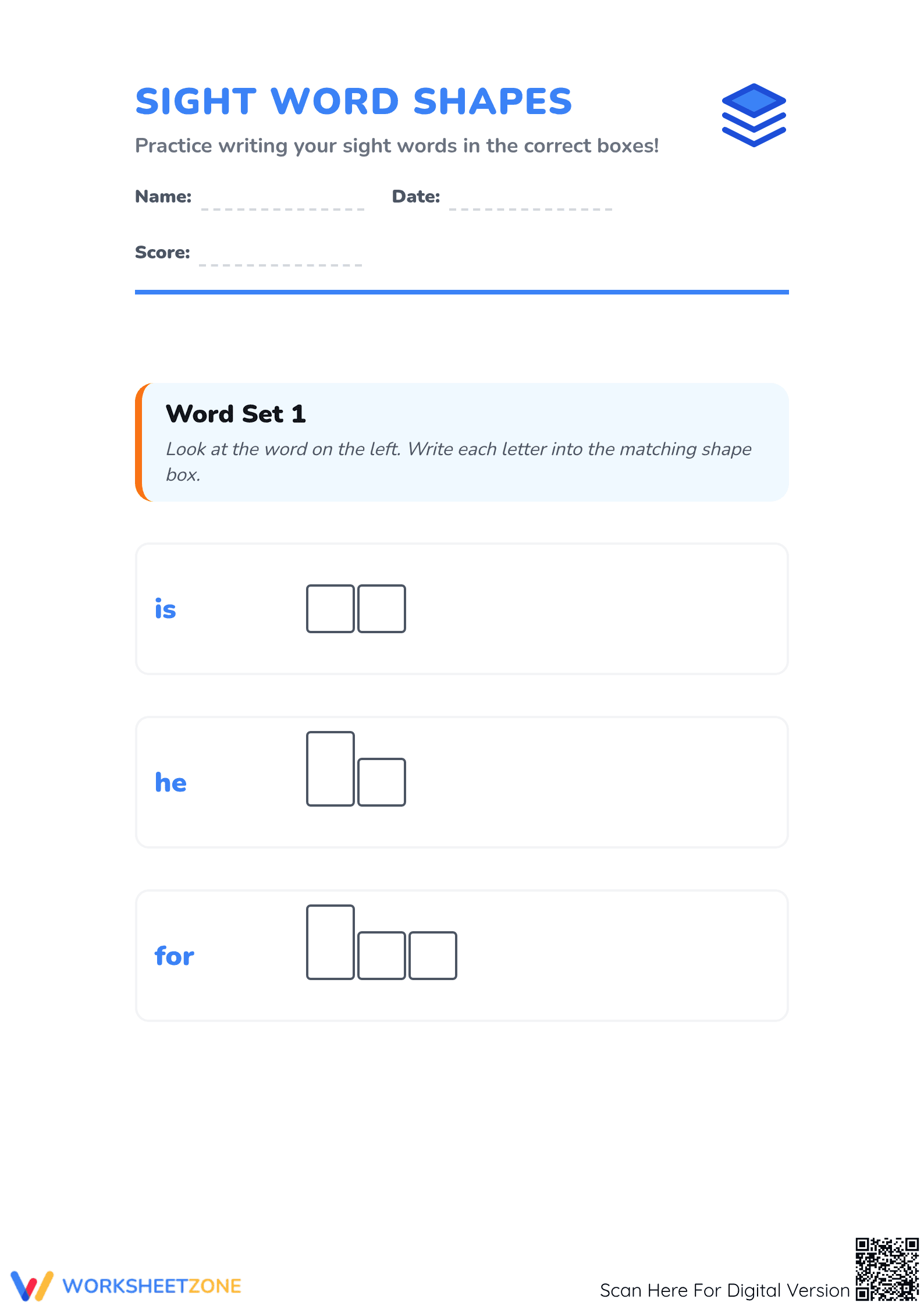
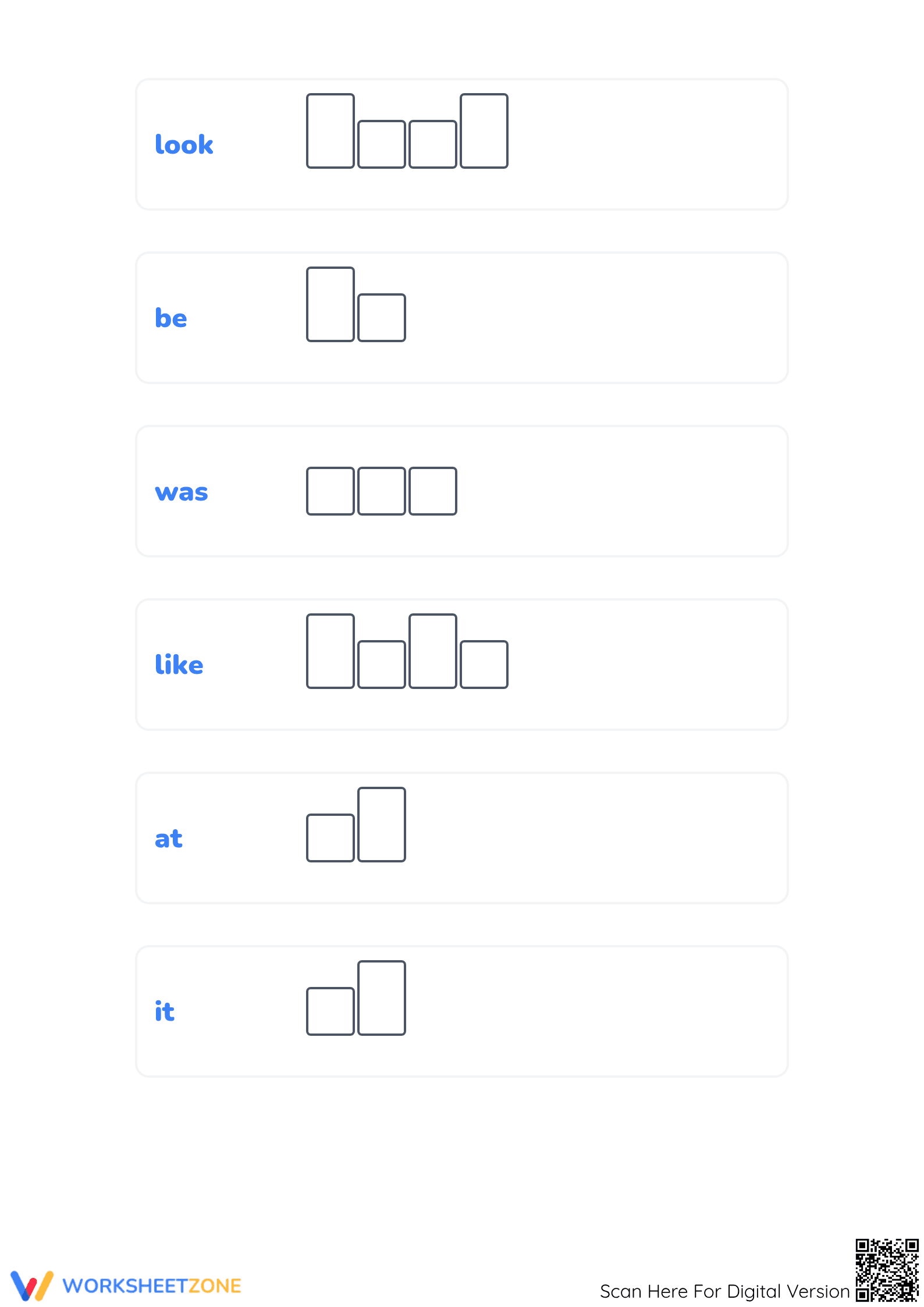
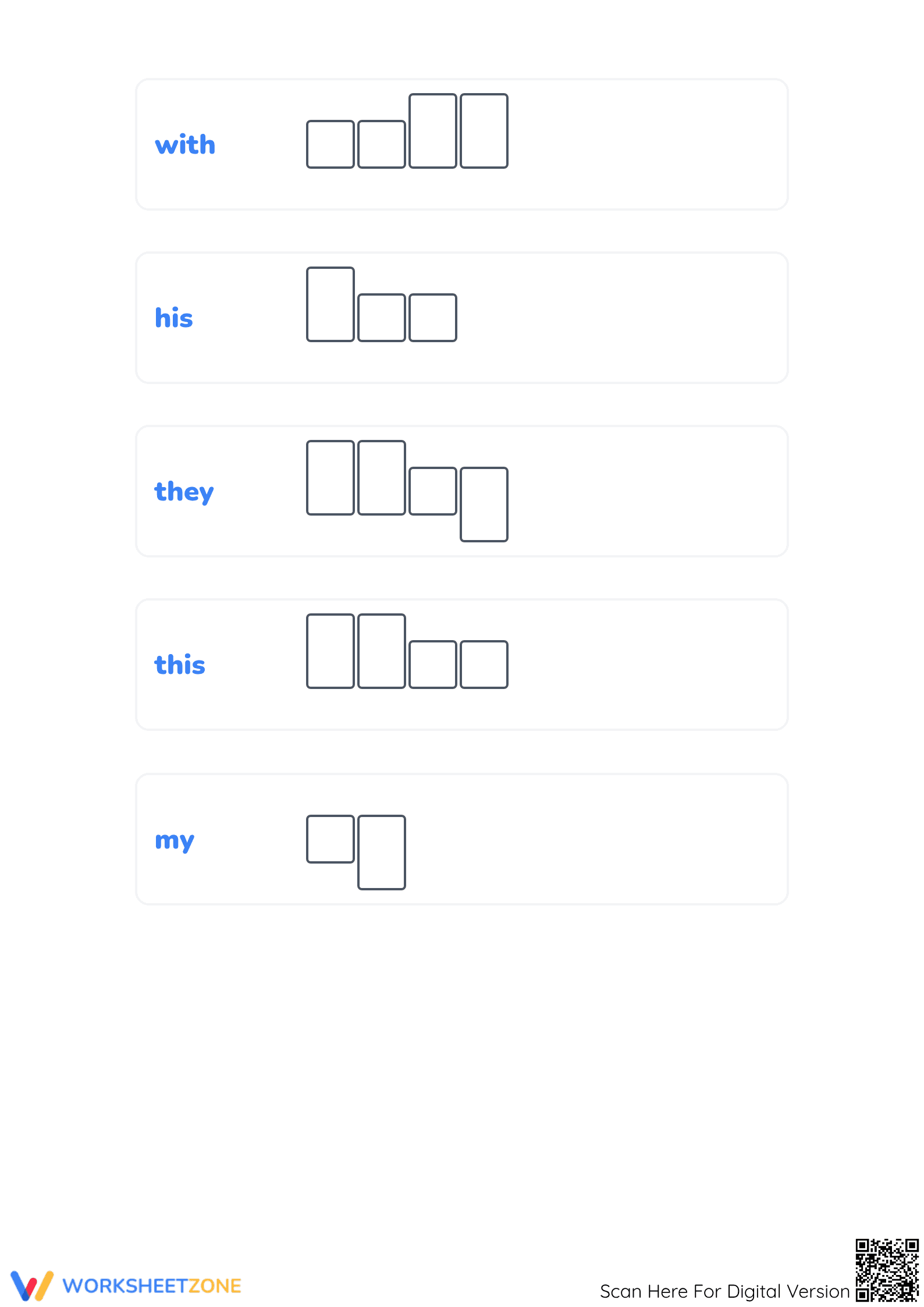
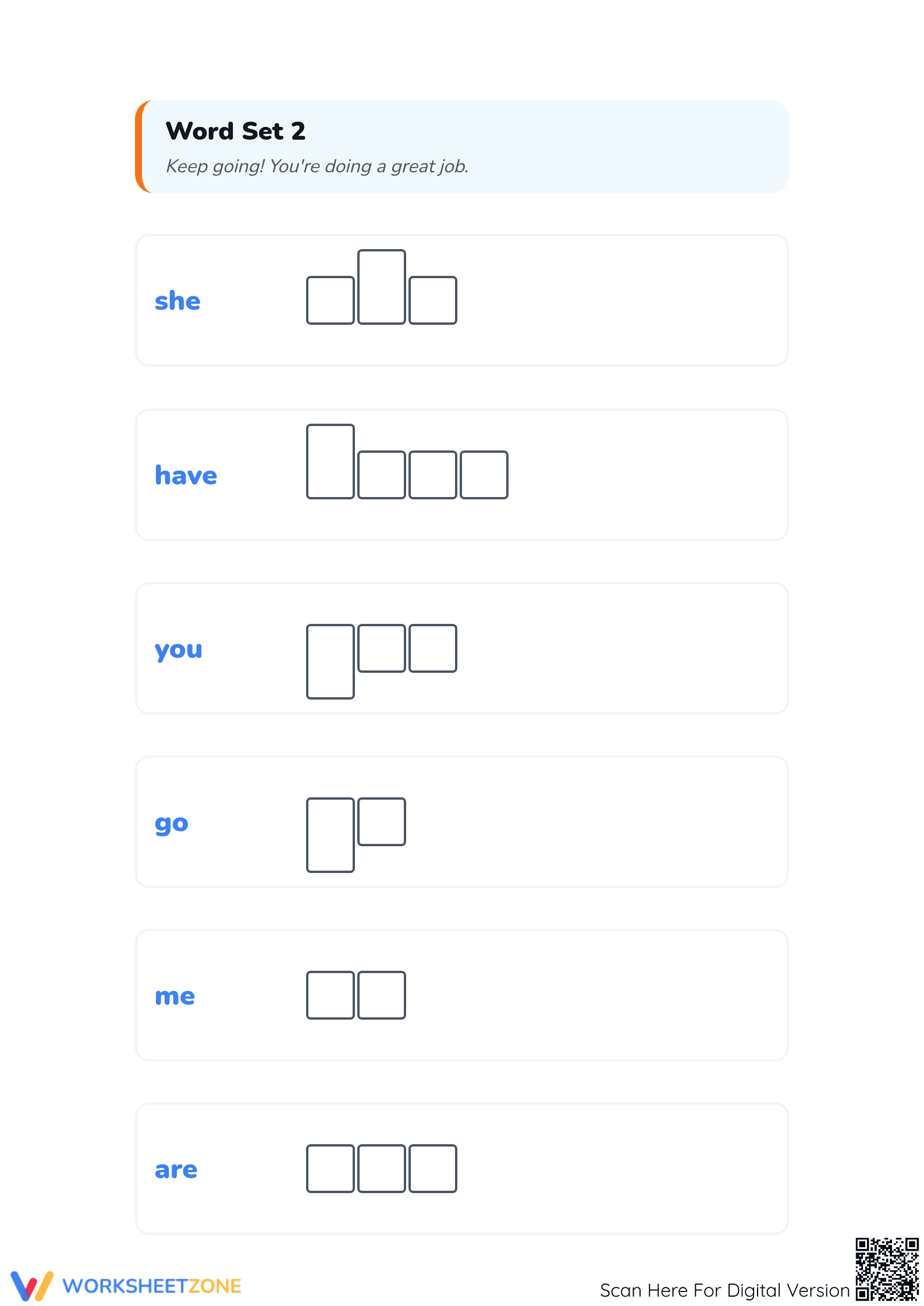
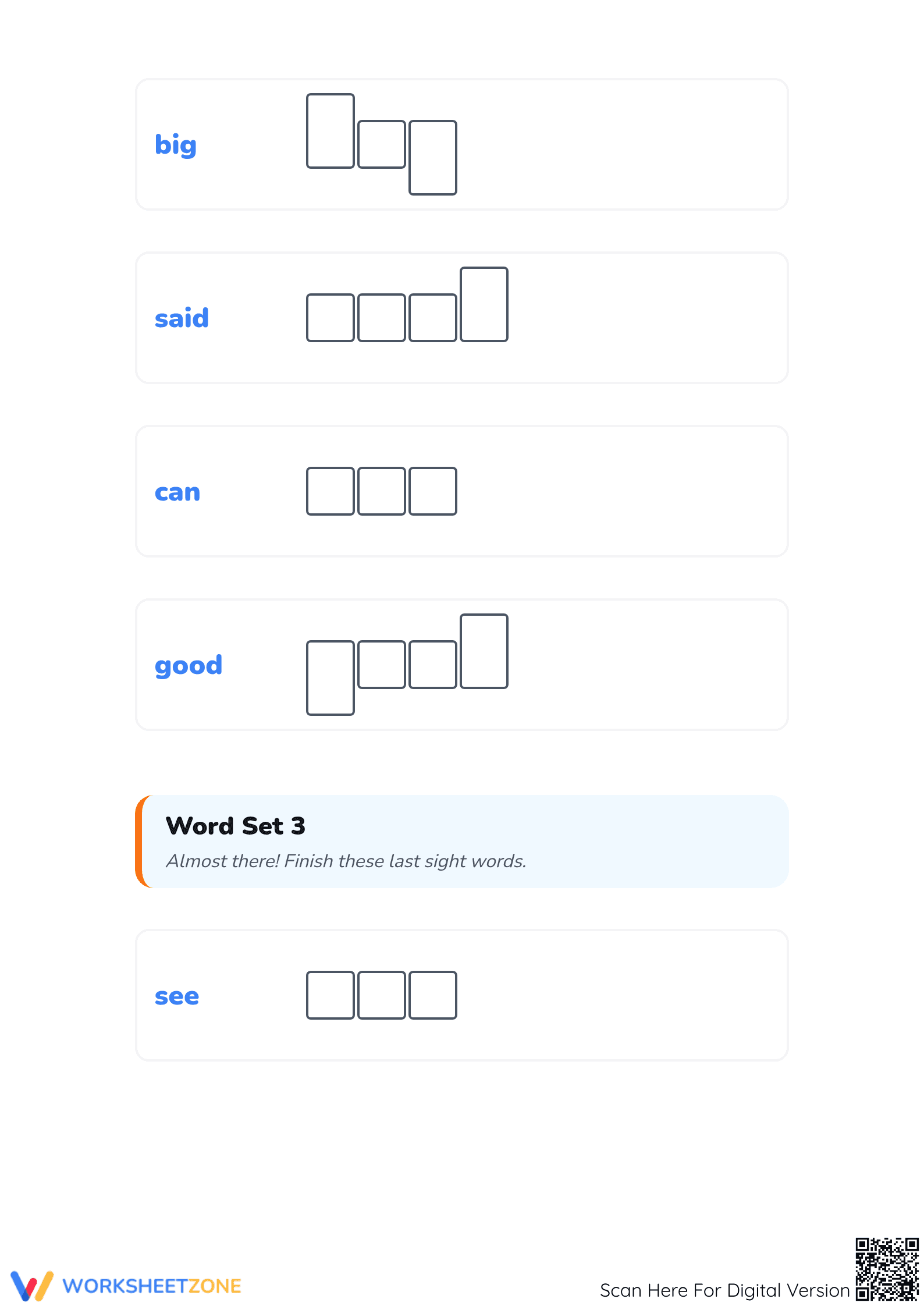

Printable Word Shapes 2 Worksheet | Grade K Sight Words
Paste this activity's link or code into your existing LMS (Google Classroom, Canvas, Teams, Schoology, Moodle, etc.).
Students can open and work on the activity right away, with no student login required.
You'll still be able to track student progress and results from your teacher account.
This Kindergarten sight word shapes worksheet helps early learners build foundational reading skills through visual configuration and writing. By mapping letters into specific shape boxes, students develop orthographic mapping abilities necessary for rapid word recognition. This resource ensures that high-frequency words are mastered accurately while providing a clear student outcome of increased reading fluency.
At a Glance
- Grade: Kindergarten · Subject: English Language Arts (ELA)
- Standard:
CCSS.ELA-LITERACY.RF.K.3.C— Read common high-frequency words by sight- Skill Focus: Sight word recognition and writing
- Format: 5 pages · 25 problems · Answer key included · PDF
- Best For: Independent literacy centers and homework
- Time: 15–20 minutes
Inside this comprehensive 5-page PDF packet, you will find three distinct word sets featuring 25 essential sight words. Each page displays high-frequency words on the left with corresponding letter-shape boxes on the right. Tall letters, short letters, and letters that hang below the line are visually distinguished to support visual processing. A full answer key is provided for quick review.
The zero-prep workflow for this resource is designed for busy educators. First, print the 5-page PDF packet (30 seconds). Second, distribute the worksheets to students during your literacy block or as a transition activity (1 minute). Third, review the completed word shapes using the included answer key or have students self-check their work (1 minute). Total preparation time is under two minutes, making it an ideal choice for emergency sub plans.
This worksheet aligns primarily with CCSS.ELA-LITERACY.RF.K.3.C, which requires students to read common high-frequency words by sight. By engaging with the physical shape of the words, students strengthen their memory for these non-phonetic or irregular forms. This standard code can be copied directly into lesson plans, IEP goals, or district curriculum mapping tools to document targeted literacy instruction across the grade level.
Use this worksheet as a warm-up activity during small-group reading instruction to prime students for the words they will encounter in leveled texts. Alternatively, assign it as a formative assessment after introducing new sight words to observe if students can accurately distinguish between similar word configurations. Monitor for students who struggle with letter height or placement as an indicator for further intervention during your next phonics session.
This resource is perfect for Kindergarten students and Preschoolers ready for early literacy exposure. It is particularly beneficial for visual learners who thrive on seeing the spatial boundaries of words. Use it alongside a classroom word wall or sight word anchor charts to provide a consistent environment for practicing these essential building blocks of reading and writing. It serves as a reliable pairing for any direct instruction lesson on high-frequency vocabulary.
According to Fisher & Frey (2014), the use of visual scaffolds like word shape boxes supports the development of orthographic mapping in young readers. This Grade K worksheet facilitates the mastery of CCSS.ELA-LITERACY.RF.K.3.C by requiring students to analyze the physical structure of 25 high-frequency words. Research indicates that when students move beyond simple rote memorization to active configuration tasks, their ability to retrieve these words during fluent reading increases significantly. This resource bridges the gap between seeing a word and knowing it by sight through structured, repetitive practice. By integrating writing with visual recognition, the worksheet addresses multiple learning modalities simultaneously. Educators can rely on this printable tool to provide consistent, evidence-based practice that fits easily into any balanced literacy framework or intervention schedule. This standalone summary confirms the worksheet's utility in building the rapid word recognition skills necessary for later reading comprehension.


