


























Views
Downloads
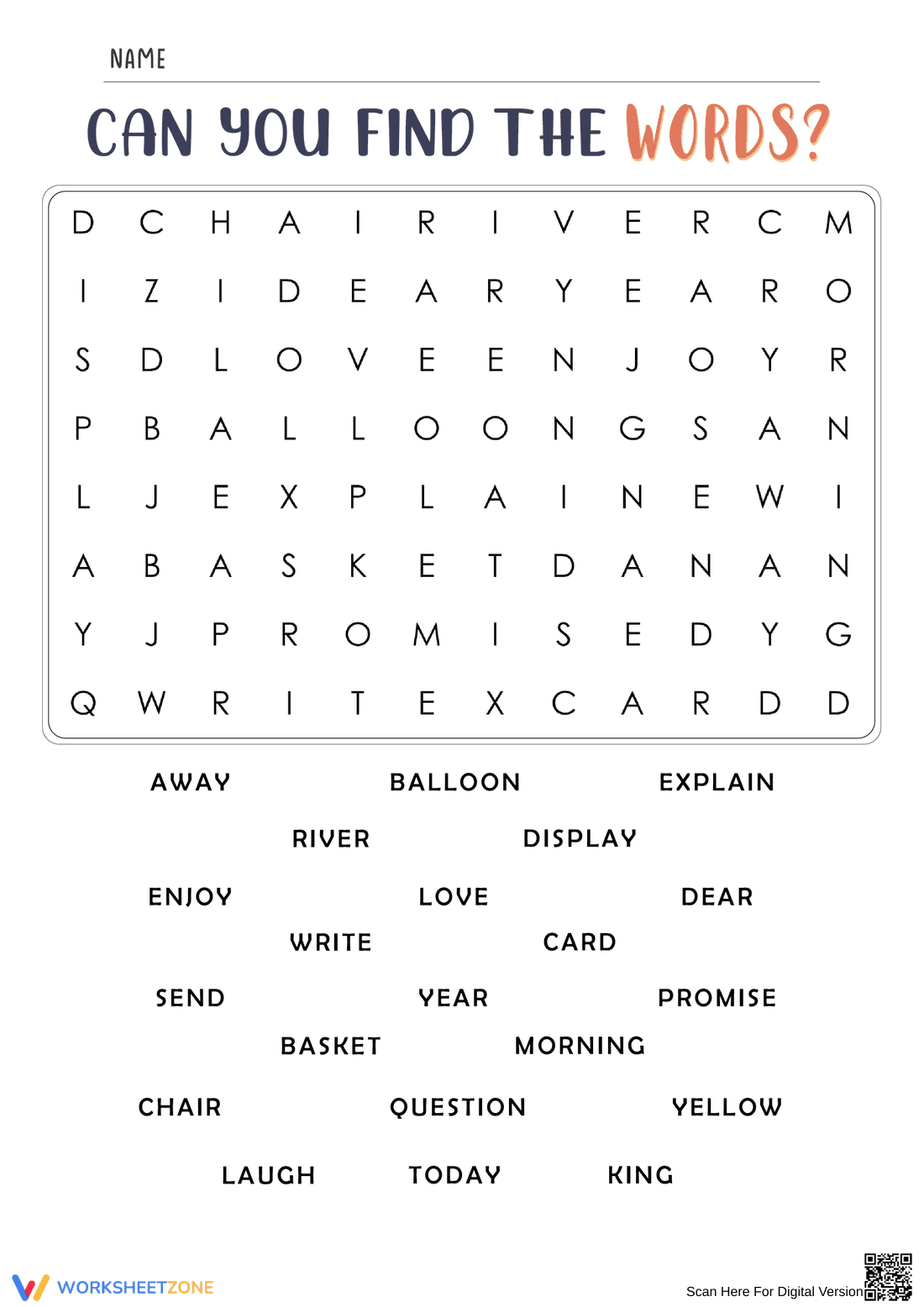

Grade 2 Word Search — Printable No-Prep Worksheet
Paste this activity's link or code into your existing LMS (Google Classroom, Canvas, Teams, Schoology, Moodle, etc.).
Students can open and work on the activity right away, with no student login required.
You'll still be able to track student progress and results from your teacher account.
Grade 2 students build vocabulary. Worksheet gives 21 grade-level words. Students scan letter grid. Students find target words. Students circle words. Activity strengthens visual tracking. Activity builds word familiarity. Direct practice yields reading fluency. Task requires focus. Students match word bank to grid. Repetition locks spelling patterns. This worksheet provides an engaging way to reinforce spelling. It helps students recognize common spelling patterns.
At a Glance
- Grade: 2 · Subject: ELA
- Standard:
CCSS.ELA-LITERACY.L.2.2— Spell grade-appropriate words correctly- Skill Focus: Vocabulary and Spelling
- Format: 1 page · 21 problems · Answer key included · PDF
- Best For: Independent practice
- Time: 10–15 minutes
Worksheet contains 1 puzzle page. Grid holds 21 hidden words. Word bank sits below grid. Words include nouns. Words include verbs. Examples: "balloon," "river," "laugh." Clean layout prevents visual overload. Answer key provides quick grading. Format stays simple. The selected words align with second-grade reading expectations. This ensures students practice relevant vocabulary.
- Print (1 min): Send PDF to printer.
- Distribute (1 min): Hand out papers.
- Review (3 min): Check answers using key.
Total teacher prep time stays under 2 minutes. Format requires zero setup. Use for emergency sub plans. Use for morning work.
Primary standard CCSS.ELA-LITERACY.L.2.2 requires students demonstrate command of standard English spelling conventions. Activity reinforces correct letter sequencing. Activity targets 21 words. Supporting standard CCSS.ELA-LITERACY.RF.2.3 builds word analysis skills. Both standard codes can be copied directly into lesson plans, IEP goals, or district curriculum mapping tools.
Use during morning work. Task provides quiet transition. Assign after direct phonics instruction. Task provides independent reinforcement. Observe students during task. If student struggles, check visual tracking skills. Expected completion time ranges 10 to 15 minutes.
Primary population includes Grade 2 general education students. Differentiate for below-level readers. Highlight first letters in grid. Pair resource with weekly spelling lists. Pair resource with vocabulary anchor charts. For advanced students, challenge them to write sentences using the words they find. This extends the learning experience.
Standard CCSS.ELA-LITERACY.L.2.2 targets spelling grade-appropriate words correctly. Word searches build visual memory. Students hold correct spelling in working memory. Students scan distractors. Research from RAND AIRS 2024 indicates repeated visual exposure improves orthographic mapping. Orthographic mapping allows automatic word recognition. Puzzle format lowers affective filter. Students view task as game. Task increases time on task. Sustained attention builds spelling accuracy. Teachers use format. Format provides necessary repetition. Format avoids drill fatigue. Direct alignment ensures academic value. Regular practice supports broader literacy goals. Students transition from phonetic decoding. Students reach whole-word recognition. Shift increases reading speed. Shift increases comprehension. Integrating puzzles provides consistent assessment. Educators track completion speed. Speed gauges vocabulary automaticity. Consistent use builds student confidence. Confidence improves overall reading outcomes. By incorporating these puzzles into the weekly routine, teachers can support spelling mastery. The activity serves as a valuable tool for early literacy development.


