


























Views
Downloads

Afrikaans Word Search | Grade 2 Essential Worksheet
Paste this activity's link or code into your existing LMS (Google Classroom, Canvas, Teams, Schoology, Moodle, etc.).
Students can open and work on the activity right away, with no student login required.
You'll still be able to track student progress and results from your teacher account.
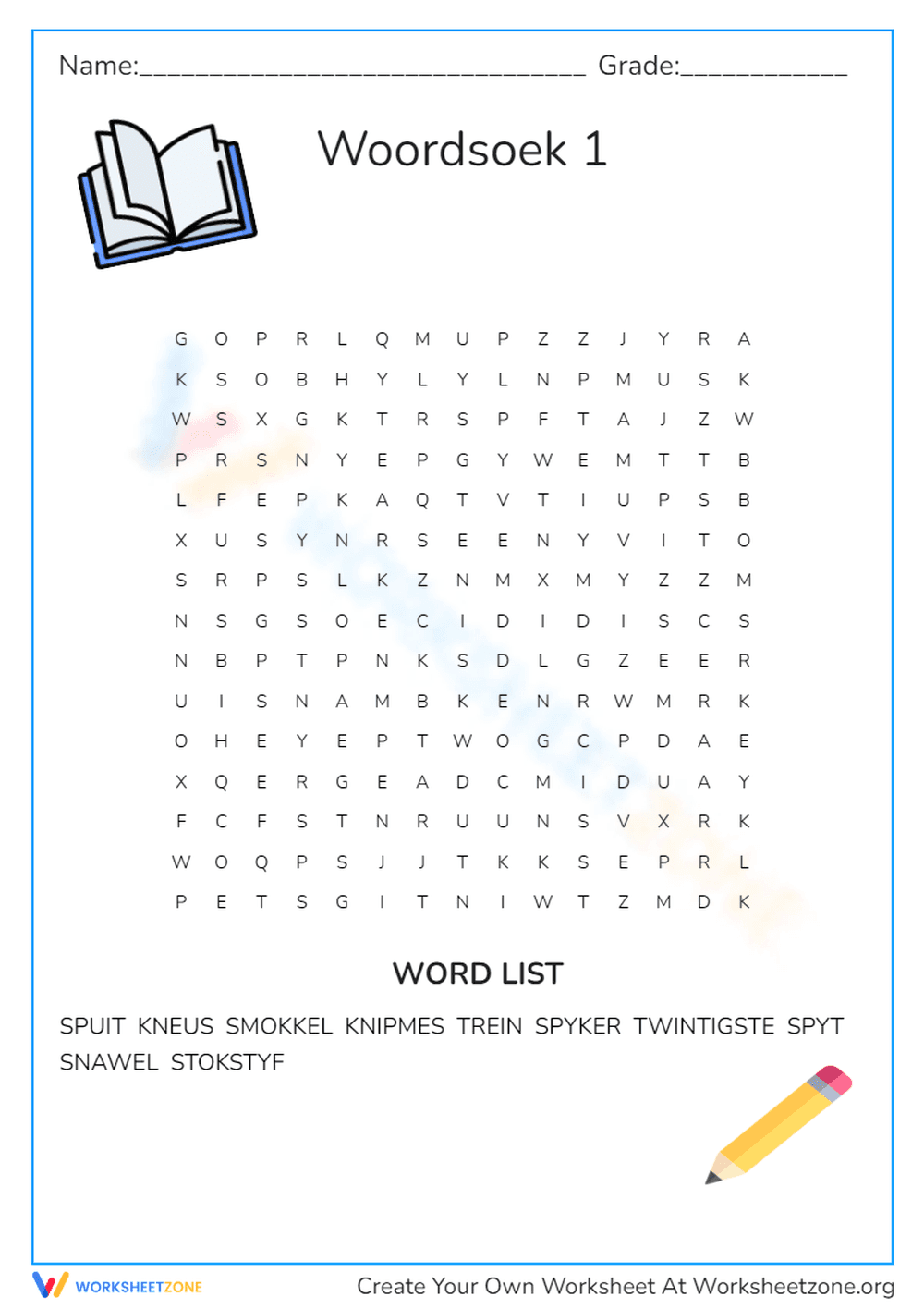
This Grade 2 Afrikaans Woordsoek worksheet provides a focused environment for students to identify and spell ten specific vocabulary words. By engaging with the word search format, learners strengthen their visual scanning abilities and reinforce their orthographic knowledge of Afrikaans letter patterns. It is an effective tool for building foundational literacy in a second language or primary Afrikaans setting.
At a Glance
- Grade: 2 · Subject: Afrikaans
- Standard:
CCSS.ELA-LITERACY.L.2.2— Demonstrate command of the conventions of standard spelling and word recognition.- Skill Focus: Afrikaans Vocabulary & Spelling
- Format: 1 page · 10 problems · Answer key included · PDF
- Best For: Early finishers and vocabulary reinforcement
- Time: 10–15 minutes
This single-page PDF features a clear, high-contrast letter grid designed for second-grade eyes. Below the grid, a word list contains 10 Afrikaans terms including "spuit," "trein," and "twintigste." The layout includes designated spaces for student names and grades, ensuring easy organization for the teacher. The clean design minimizes visual distractions, allowing students to focus entirely on the letter-matching task.
This resource is designed for immediate implementation with a total teacher prep time of under 2 minutes. First, print the required number of copies for your group. Second, distribute the sheets during transition periods or as a dedicated spelling center activity. Finally, review the found words as a class to practice pronunciation. Its self-explanatory nature makes it an ideal candidate for emergency sub plans.
The primary standard addressed is CCSS.ELA-LITERACY.L.2.2, which focuses on demonstrating command of the conventions of standard spelling. While applied here to Afrikaans, the cognitive task of identifying correct letter sequences and matching them to a provided list directly supports foundational literacy goals. This standard code can be copied directly into lesson plans, IEP goals, or district curriculum mapping tools.
Use this worksheet as a formative assessment during a unit on Afrikaans phonics or as a quiet morning work activity. Teachers should observe whether students are scanning systematically (row by row) or randomly, as this provides insight into their visual processing development. The expected completion time is 10 to 15 minutes, making it a perfect buffer activity between core instructional blocks.
This resource is tailored for Grade 2 students, whether they are native Afrikaans speakers or learning it as an additional language. It provides excellent support for students who benefit from visual anchors when learning new vocabulary. Pair this worksheet with a thematic Afrikaans reading passage or an anchor chart featuring these specific "sp-" and "kn-" blend words for a comprehensive lesson.
Research by Fisher & Frey (2014) emphasizes the importance of word-study activities that encourage students to look closely at the internal structure of words. This Woordsoek worksheet facilitates that close look by requiring students to distinguish between similar letter clusters in a dense grid. By identifying words like "knipmes" and "smokkel," students reinforce their mental lexicon and improve their spelling accuracy through repetitive visual exposure. The use of word searches in primary education serves as a low-stakes entry point for vocabulary acquisition, reducing anxiety while increasing engagement with the target language. This specific Grade 2 resource aligns with the CCSS.ELA-LITERACY.L.2.2 standard by requiring precise letter-to-letter matching, a precursor to fluent reading and writing. Such activities are essential components of a balanced literacy program that values both direct instruction and independent practice.


