


























Views
Downloads

Grade 1 Animal Needs — Printable No-Prep Worksheet
Paste this activity's link or code into your existing LMS (Google Classroom, Canvas, Teams, Schoology, Moodle, etc.).
Students can open and work on the activity right away, with no student login required.
You'll still be able to track student progress and results from your teacher account.
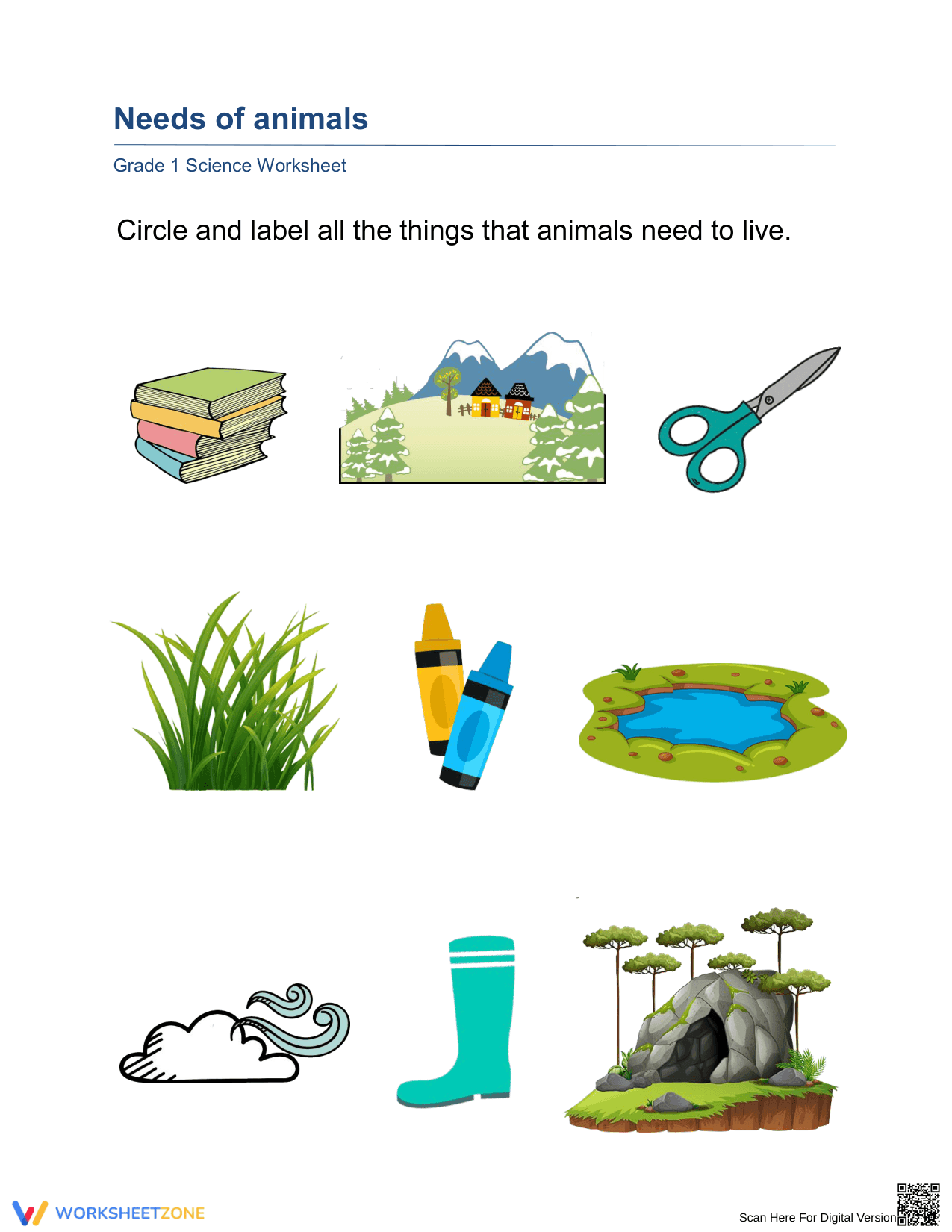
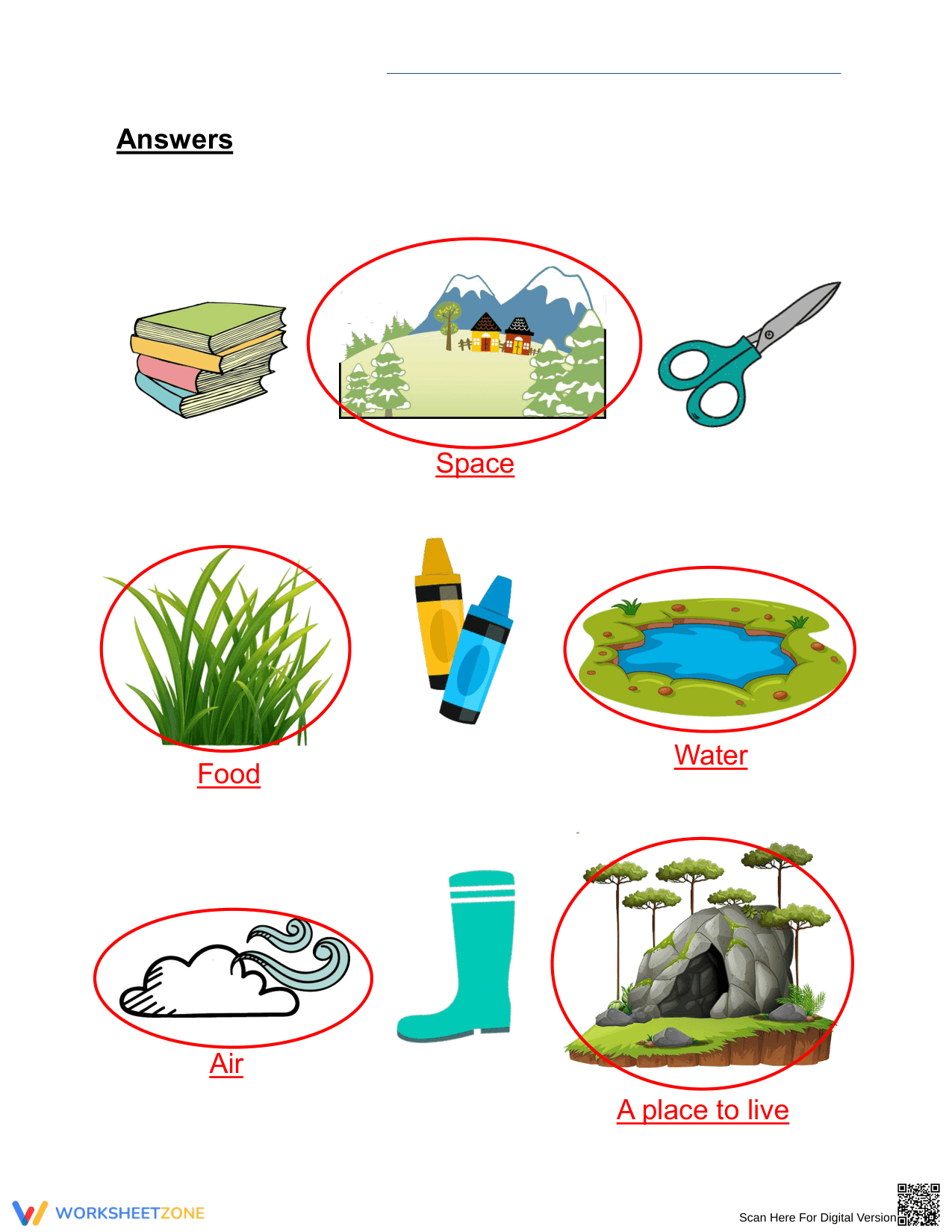
This Grade 1 science worksheet helps students identify the fundamental requirements for animal survival by distinguishing between needs and non-essential items. Students analyze nine diverse illustrations to determine which provide the energy, hydration, air, or protection required for living things to thrive in their natural environments and ecosystems.
At a Glance
- Grade: Grade 1 · Subject: Living Things
- Standard:
1-LS1-1— Identify the basic needs of animals including food, water, air, and shelter- Skill Focus: Animal survival requirements
- Format: 1 page · 9 problems · Answer key included · PDF
- Best For: Zero-prep science centers or homework assignments
- Time: 10–15 minutes
Inside this single-page PDF, you will find nine clear, colorful illustrations representing both essential needs and unrelated objects. Students are tasked with circling the correct items—such as water, food, and shelter—and labeling them, which reinforces both scientific categorization and early literacy. A complete answer key is provided for rapid grading and student self-correction.
Zero-Prep Workflow
The zero-prep workflow for this resource is designed for maximum teacher efficiency. First, print the single-page document in under 30 seconds. Second, distribute it to students with basic instructions to circle and label, taking about 1 minute of transition time. Finally, review the completed worksheets using the included key in less than 1 minute per class set. This makes it ideal for substitute plans or end-of-unit review.
Standards Alignment
Aligned to `1-LS1-1`, this resource focuses on how animals meet their needs for survival. By identifying external requirements like food and water, students build the foundational knowledge necessary for later studies of animal structures and habitats. Both standard codes can be copied directly into lesson plans, IEP goals, or district curriculum mapping tools.
How to Use It
Use this worksheet as a formative assessment after a direct instruction lesson on living versus non-living things. Observe if students can distinguish between "wants" (like toys or books) and "needs" (like air and grass). It also works well as a morning work activity to activate prior knowledge before starting a new unit on zoology or life sciences.
Who It's For
This activity is tailored for first-grade learners but is also appropriate for kindergarten enrichment or second-grade review. It supports English Language Learners through visual cues and labeling practice. It pairs naturally with a classroom read-aloud about animal habitats or a nature walk to observe local wildlife in the schoolyard environment.
According to recent findings in the RAND AIRS 2024 report, high-quality supplemental materials that emphasize categorization and visual literacy are critical for early childhood science development. This worksheet addresses standard 1-LS1-1 by requiring students to identify the basic requirements for animal life, specifically food, water, air, and shelter. By engaging with discrete visual examples, Grade 1 students develop the observational skills necessary to understand biological patterns and environmental dependencies. Research indicates that structured, single-page activities with clear outcomes reduce cognitive load for young learners while allowing teachers to quickly identify gaps in conceptual understanding. This resource provides the necessary scaffolding for students to master the vocabulary of living things while building a foundation for more complex ecological concepts. Educators can rely on this vetted science resource to ensure alignment with national standards while maintaining a high level of student engagement through targeted, evidence-based instructional design and visual support.


