


























Views
Plays

Essential ICT & Computer Science Quiz | Grades 6-8
Paste this activity's link or code into your existing LMS (Google Classroom, Canvas, Teams, Schoology, Moodle, etc.).
Students can open and work on the activity right away, with no student login required.
You'll still be able to track student progress and results from your teacher account.
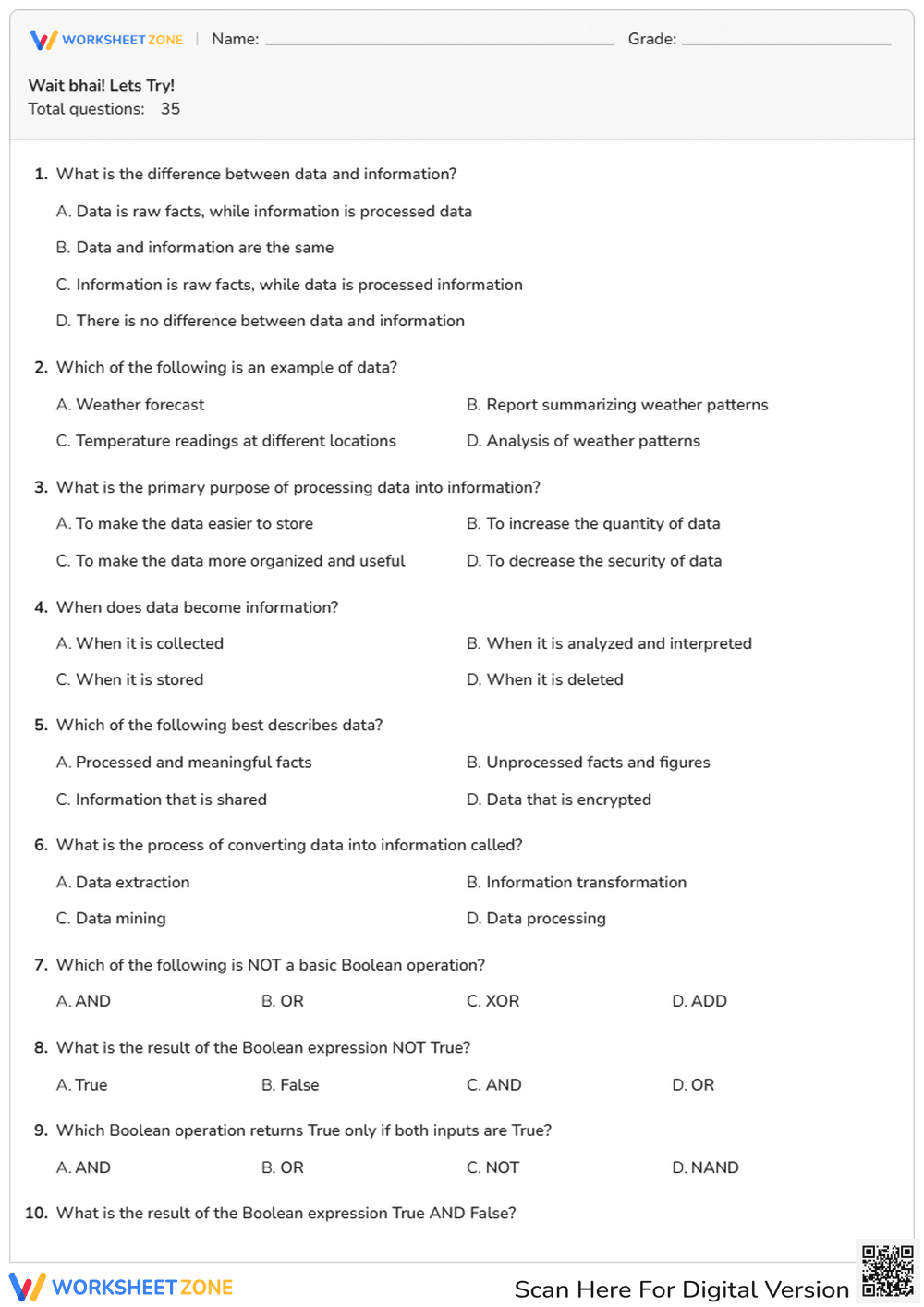
This comprehensive middle school ICT assessment provides a rigorous evaluation of student understanding regarding computer architecture, data processing, and logical operations. By challenging students to distinguish between raw data and processed information, the worksheet ensures they grasp the foundational mechanics of modern computing before moving into advanced programming or networking topics.
At a Glance
- Grade: 6-8 · Subject: ICT / Computer Science
- Standard:
CSTA 2-CS-02— Design projects that combine hardware and software components to collect and exchange data- Skill Focus: Hardware, OS, and Boolean Logic
- Format: 4 pages · 35 problems · Answer key included · PDF
- Best For: End-of-unit assessment or emergency sub plans
- Time: 40–50 minutes
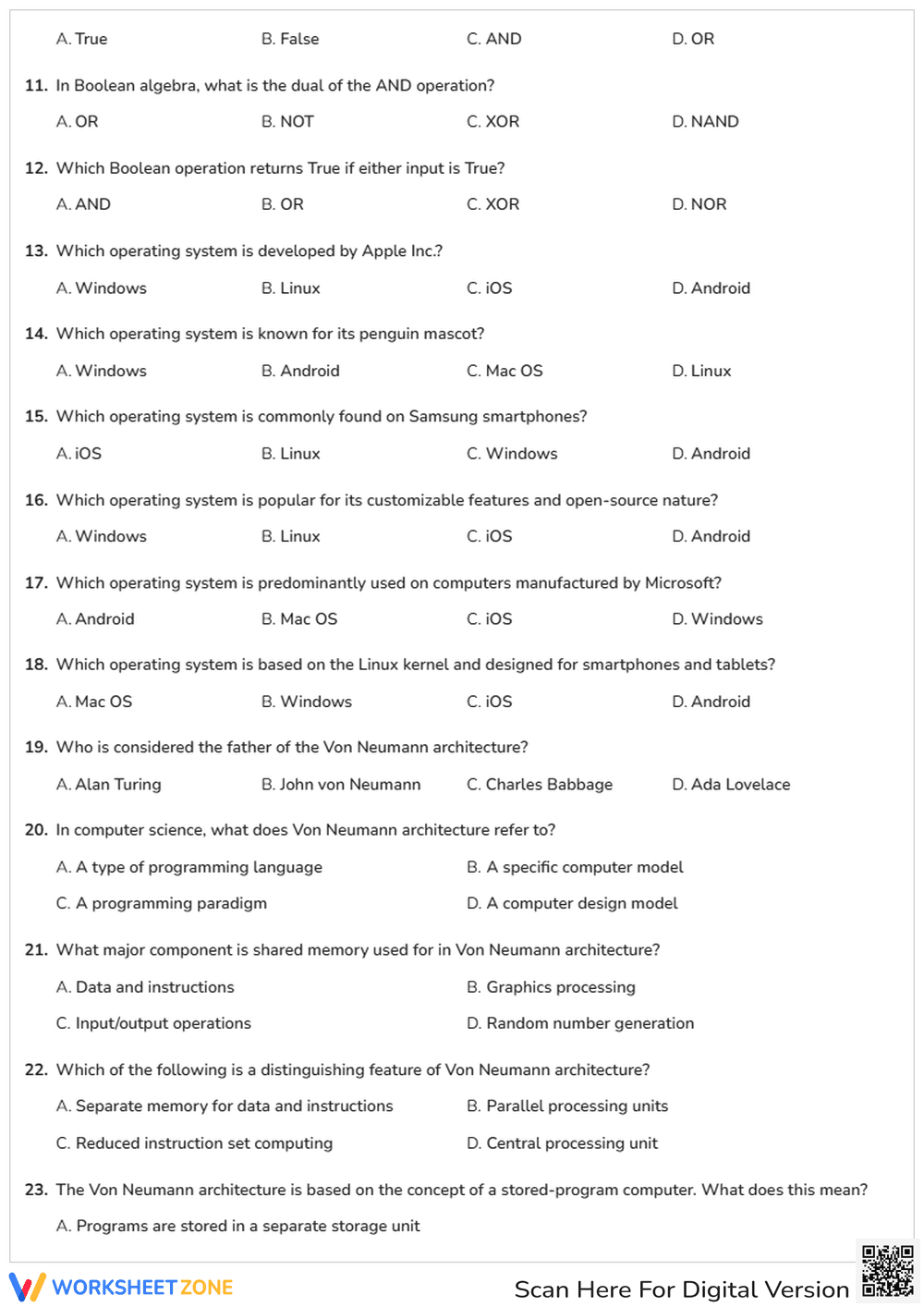
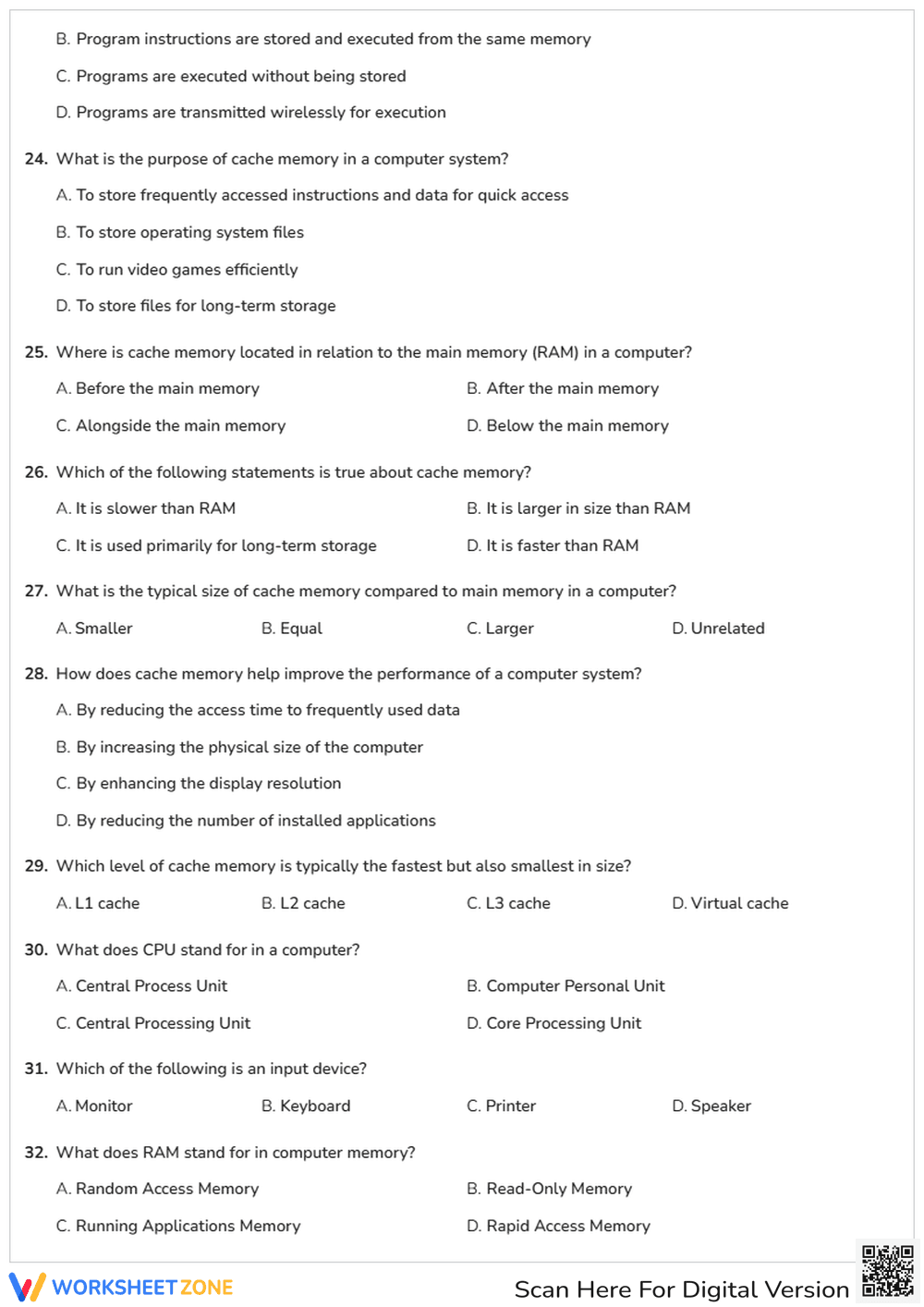
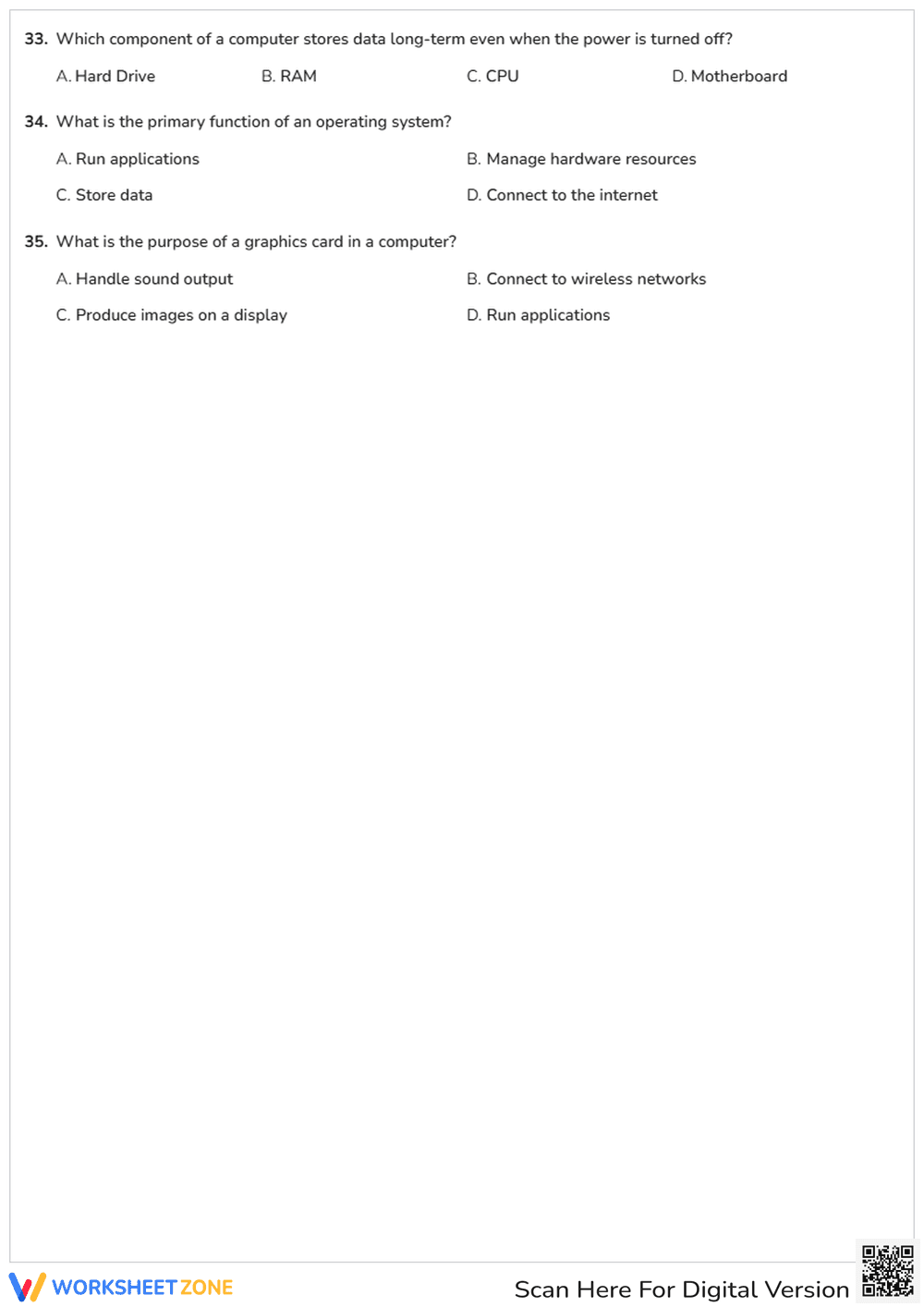
The worksheet contains 35 carefully crafted multiple-choice questions spread across four pages. It features a clean, distraction-free layout that focuses on technical accuracy. The content is divided into logical clusters, including the difference between data and information, Boolean algebraic operations (AND, OR, NOT), operating system characteristics, and the specifics of Von Neumann architecture and cache memory levels.
Zero-Prep Workflow
- Print (1 minute): Generate the 4-page PDF and print class sets. The high-contrast text ensures clear legibility even on standard school copiers.
- Distribute (1 minute): Hand out the packets as a quiet-work activity. The self-explanatory nature of the multiple-choice format requires no introductory lecture.
- Review (5 minutes): Use the included answer key for rapid grading or conduct a peer-review session to discuss the logic behind Boolean operations.
This resource is aligned to CSTA 2-CS-02, focusing on how hardware and software components interact to process data. It also supports CCSS.ELA-LITERACY.RST.6-8.4 by requiring students to determine the meaning of symbols and key technical terms. Both standard codes can be copied directly into lesson plans, IEP goals, or district curriculum mapping tools.
For best results, use this worksheet as a summative assessment following a unit on computer hardware. It also serves as an excellent diagnostic tool at the start of an 8th-grade ICT course to gauge retention from previous years. Teachers should observe student progress on the Boolean logic section (Questions 7-12) to identify if further direct instruction on truth tables is required. Expected completion time is 45 minutes.
This resource is designed for general education middle school students and introductory high school computer science tracks. It pairs naturally with an anchor chart on the Von Neumann model or a direct instruction lesson on memory hierarchy. The structured format provides necessary support for students who benefit from clear, objective questioning styles.
Research by Fisher & Frey (2014) emphasizes that structured independent practice is vital for the retrieval of technical vocabulary in STEM subjects. This 35-question assessment utilizes the retrieval practice effect to solidify student understanding of the CSTA 2-CS-02 standard, specifically regarding the interaction between CPU architecture and data processing. By isolating technical concepts like cache memory levels and Boolean duals, the worksheet prevents cognitive overload while ensuring a broad survey of the ICT domain. According to recent ScienceDirect TpT Analysis, high-volume multiple-choice sets provide the most reliable data for formative tracking in middle school technology modules. This resource offers a standardized approach to measuring mastery in computer science fundamentals, providing teachers with clear evidence of student proficiency in identifying hardware functions and logical processing steps within a modern computing environment.


