


























Views
Downloads
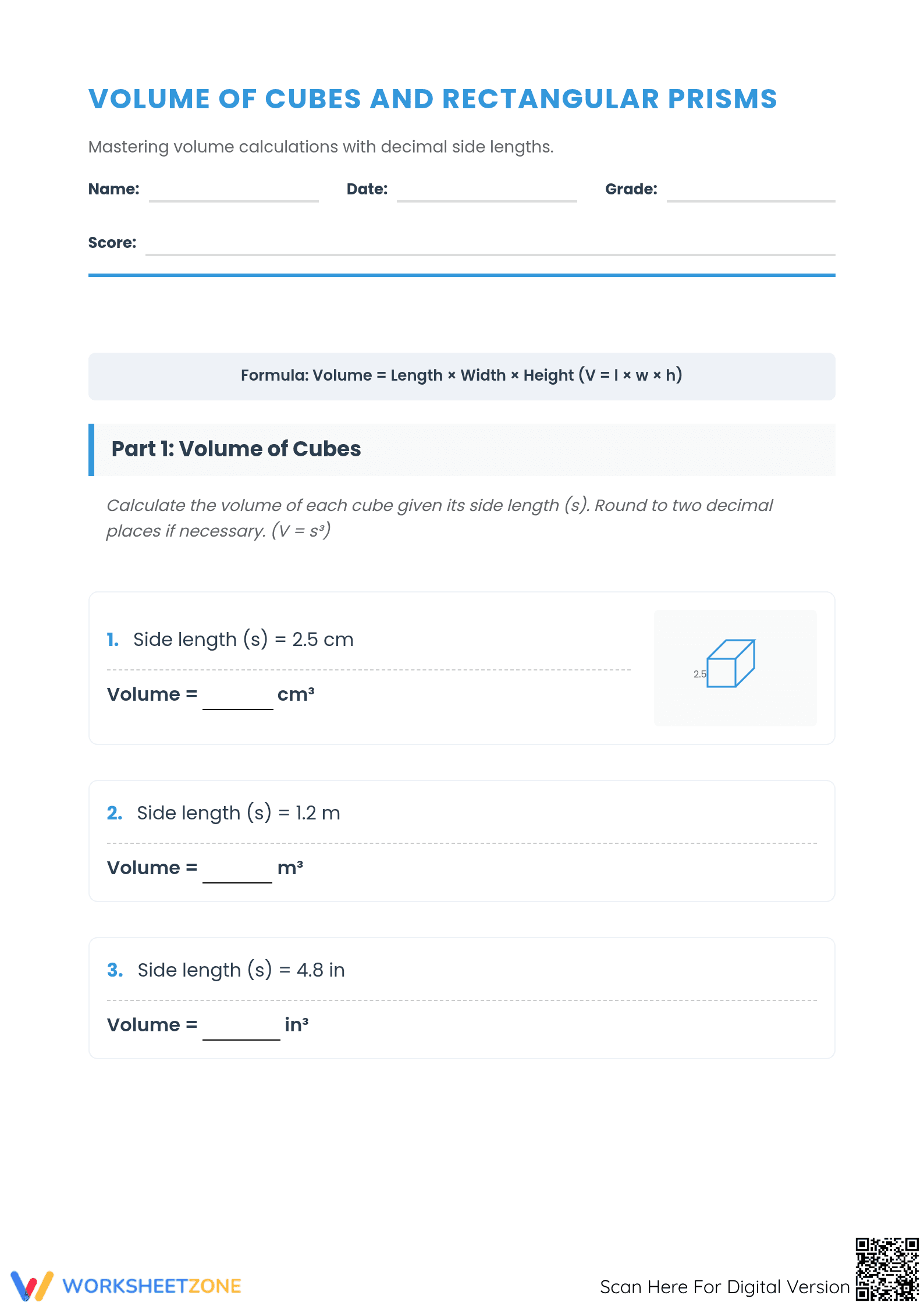
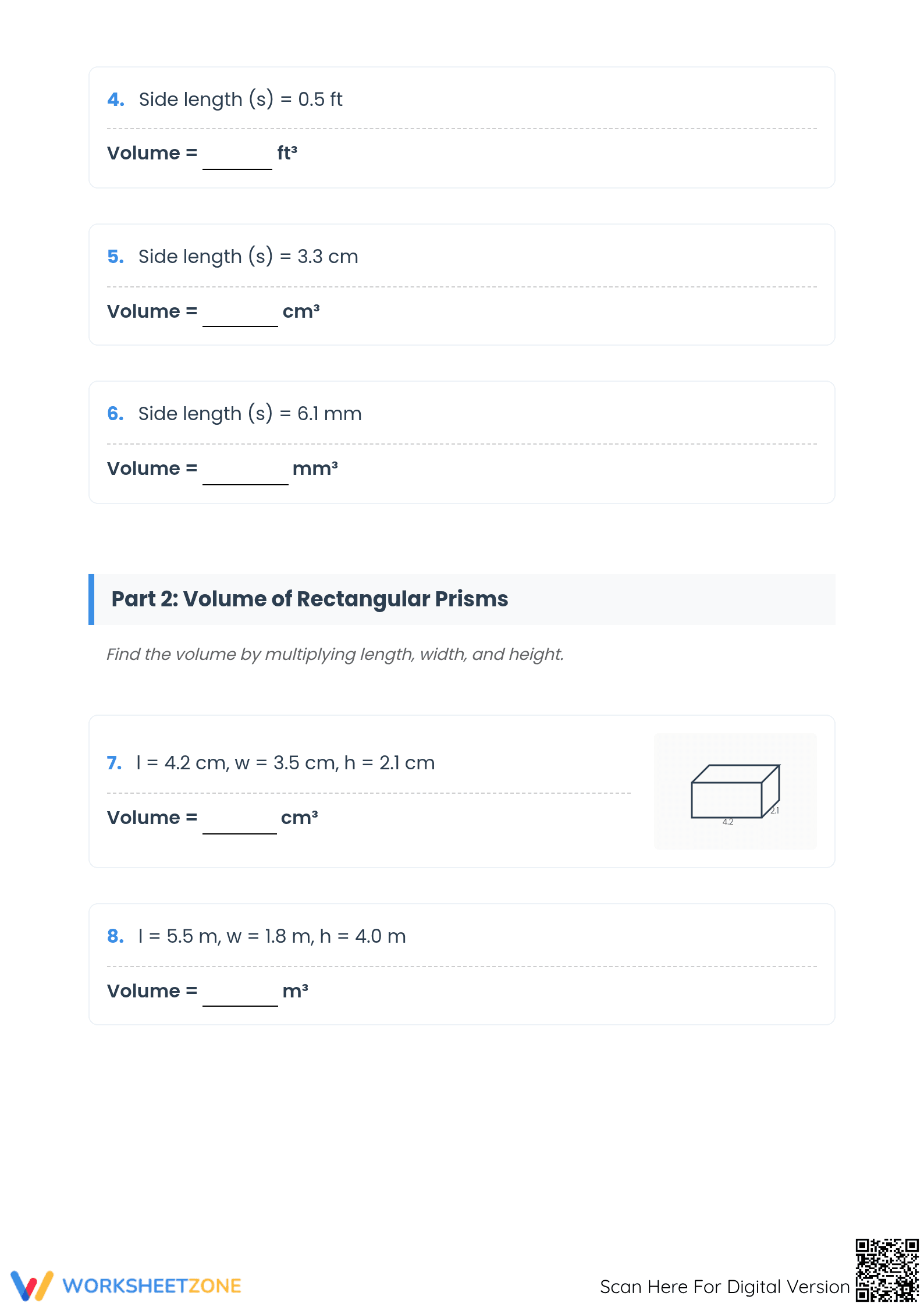
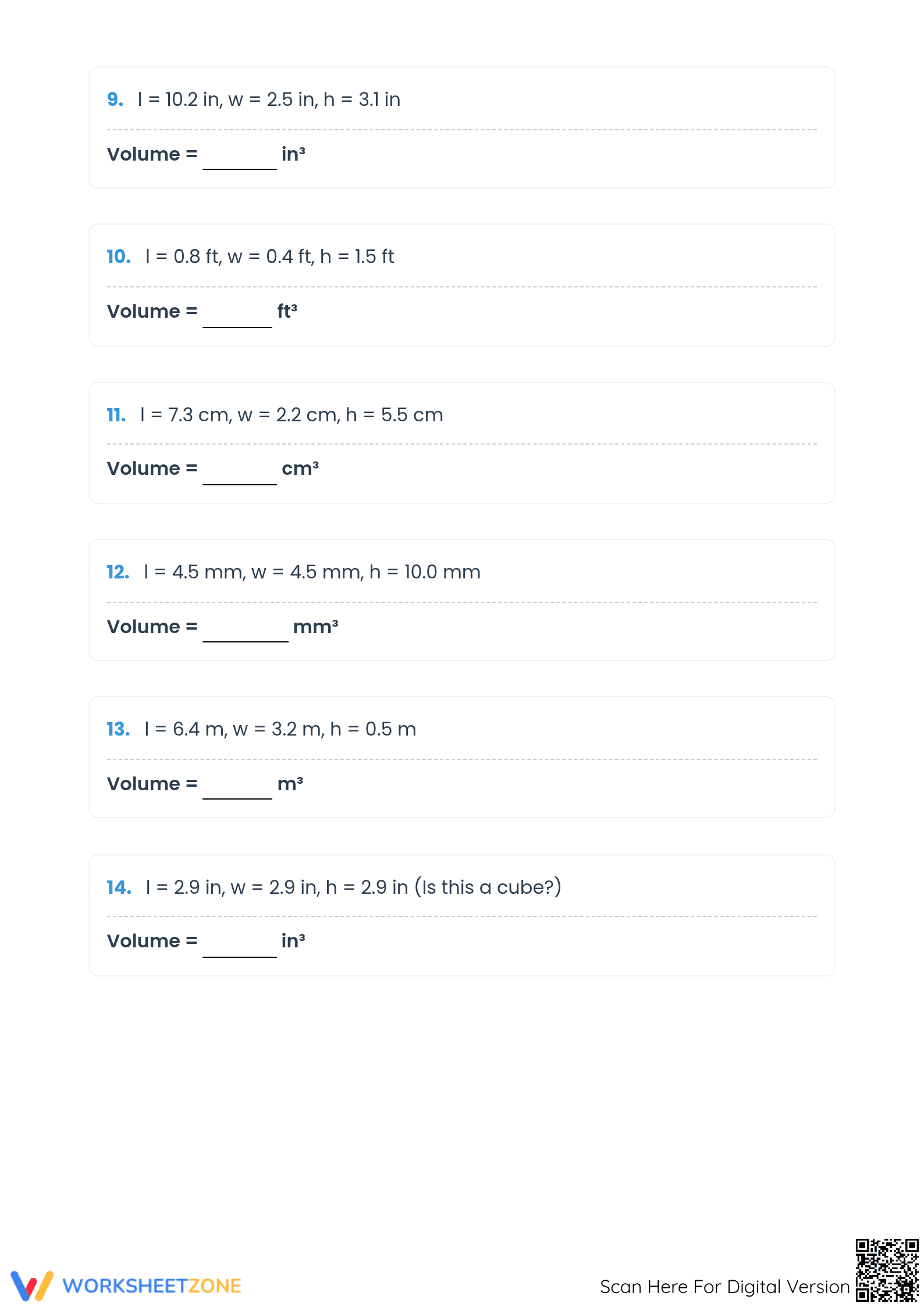
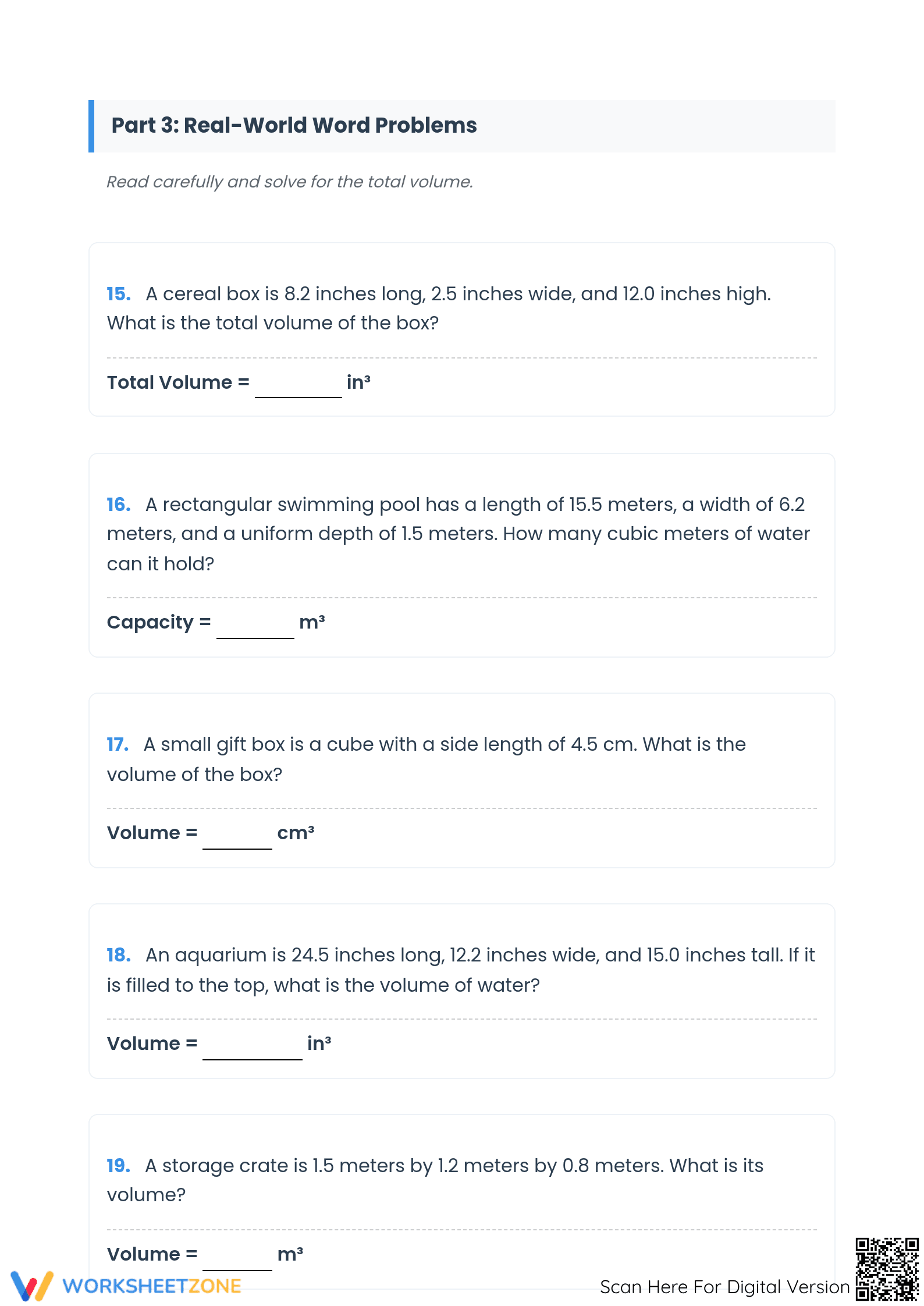
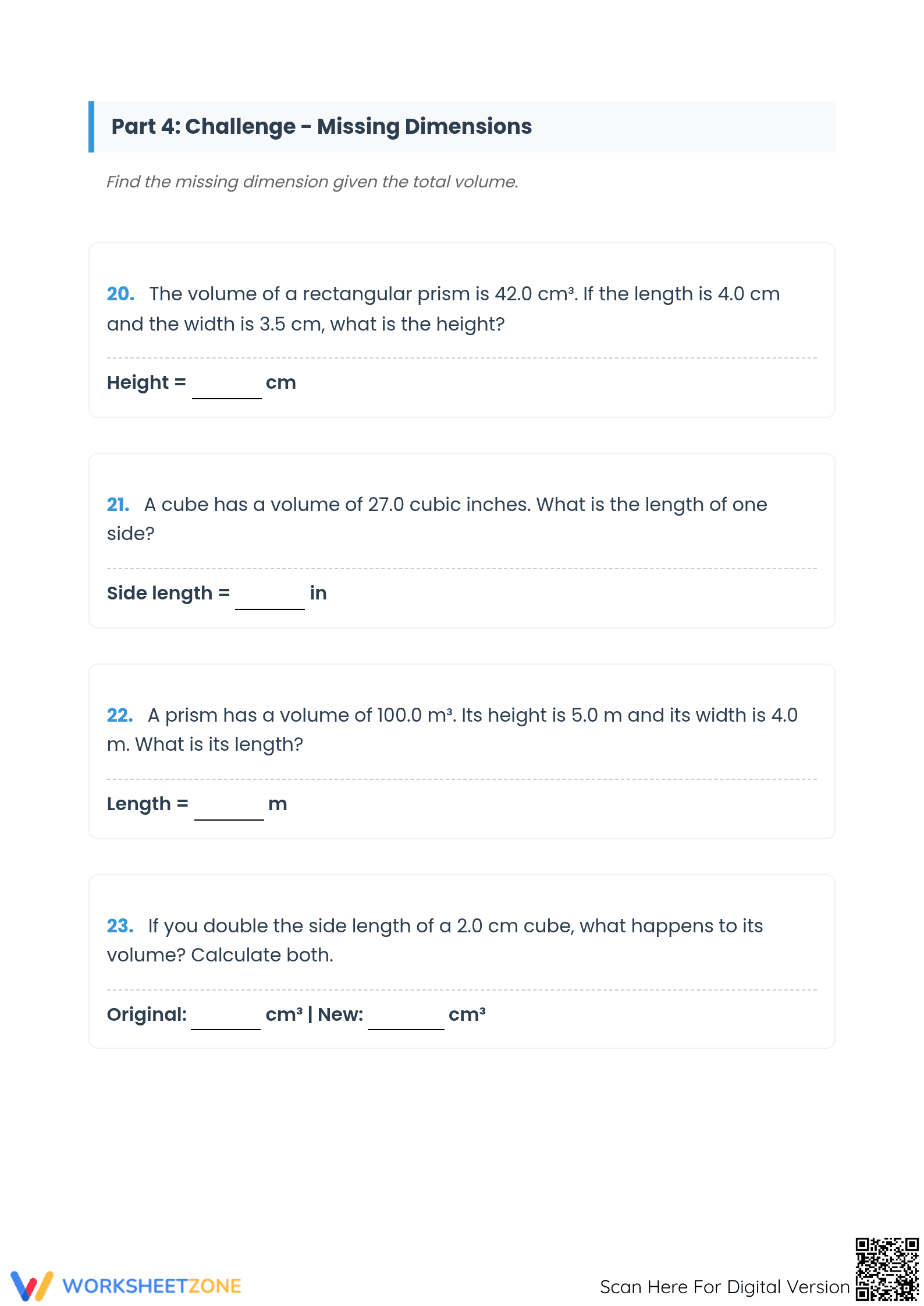

Printable Volume of Prisms Worksheet | Grade 5 Math
Paste this activity's link or code into your existing LMS (Google Classroom, Canvas, Teams, Schoology, Moodle, etc.).
Students can open and work on the activity right away, with no student login required.
You'll still be able to track student progress and results from your teacher account.
Mastering Volume with Decimals
This essential worksheet provides focused practice for Grade 5 students on calculating the volume of cubes and rectangular prisms, specifically incorporating decimal side lengths. Students will apply the standard volume formula (V = l × w × h) to 20 distinct problems, building both procedural fluency and conceptual understanding. This resource bridges the gap between whole-number volume and more advanced geometric calculations, preparing learners for middle school math challenges.
At a Glance
- Grade: 5 · Subject: Math
- Standard:
CCSS.MATH.CONTENT.5.MD.C.5— Relate volume to the operations of multiplication and addition and solve real-world problems.- Skill Focus: Volume of cubes and rectangular prisms with decimal side lengths
- Format: 5 pages · 20 problems · Answer key included · PDF
- Best For: Independent practice, homework, or unit review
- Time: 25–40 minutes
What's Inside
This five-page PDF contains a comprehensive set of 20 practice problems for calculating volume. The first four pages each feature four unique rectangular prisms with decimal dimensions, requiring careful application of the volume formula. The clean, uncluttered layout ensures students can focus on the calculations. The final page provides a complete answer key with the correct volume for every problem, allowing for efficient self-assessment or teacher grading.
Skill Progression
The worksheet is designed to reinforce a core mathematical skill through repetition and slight variation, following a gradual release model.
- Guided Practice: The initial problems can be completed as a whole group, with the teacher modeling how to multiply three decimal numbers to find the volume and correctly label the units.
- Supported Practice: Students can then work in pairs on the next set of problems, discussing their strategies for organizing the multi-step multiplication and placing the decimal point in the final answer.
- Independent Practice: The majority of the 20 problems are intended for independent work, allowing students to solidify their understanding and build confidence. This structure ensures students move from initial instruction to self-sufficient mastery.
Standards Alignment
This worksheet is directly aligned with the core concepts of the Common Core State Standard for Grade 5 Measurement and Data. The primary standard addressed is CCSS.MATH.CONTENT.5.MD.C.5, which requires students to relate volume to multiplication and solve real-world and mathematical problems involving volume. While the standard focuses on whole-number side lengths, this resource extends the concept to decimal values, providing a crucial challenge for on-level and advanced learners. Both standard codes can be copied directly into lesson plans, IEP goals, or district curriculum mapping tools.
How to Use It
This versatile resource can be implemented in several ways. Use it as a homework assignment after a direct instruction lesson on the volume formula to provide necessary reinforcement. Alternatively, it serves as an excellent in-class independent practice activity while the teacher works with a small group. For formative assessment, walk the room while students work and observe their multiplication strategies; note if they are correctly aligning decimal places in their products. Most students will complete the 20 problems in approximately 25 to 40 minutes.
Who It's For
This worksheet is ideal for 5th-grade students who have already been introduced to the concept of volume and the formula V = l × w × h. It is particularly useful for those ready to move beyond whole numbers and apply their decimal multiplication skills in a geometric context. To support struggling learners, pair this worksheet with a visual anchor chart that clearly labels the length, width, and height of a prism and shows a worked example of the formula.


