


























Views
Downloads

Grade 3 Data Sorting — Printable No-Prep Worksheet
Paste this activity's link or code into your existing LMS (Google Classroom, Canvas, Teams, Schoology, Moodle, etc.).
Students can open and work on the activity right away, with no student login required.
You'll still be able to track student progress and results from your teacher account.
Master Data Sorting with a Zero-Prep Worksheet
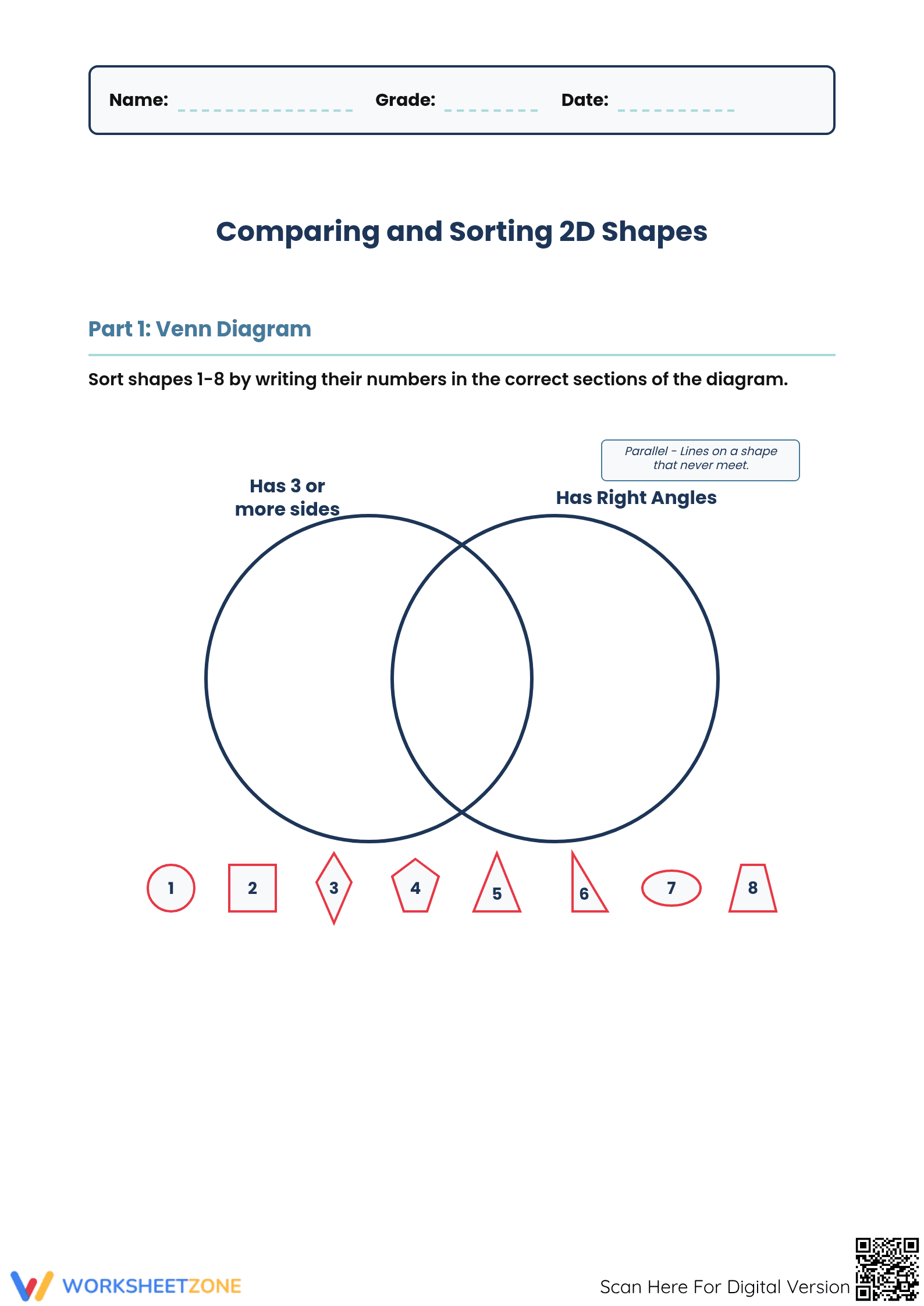
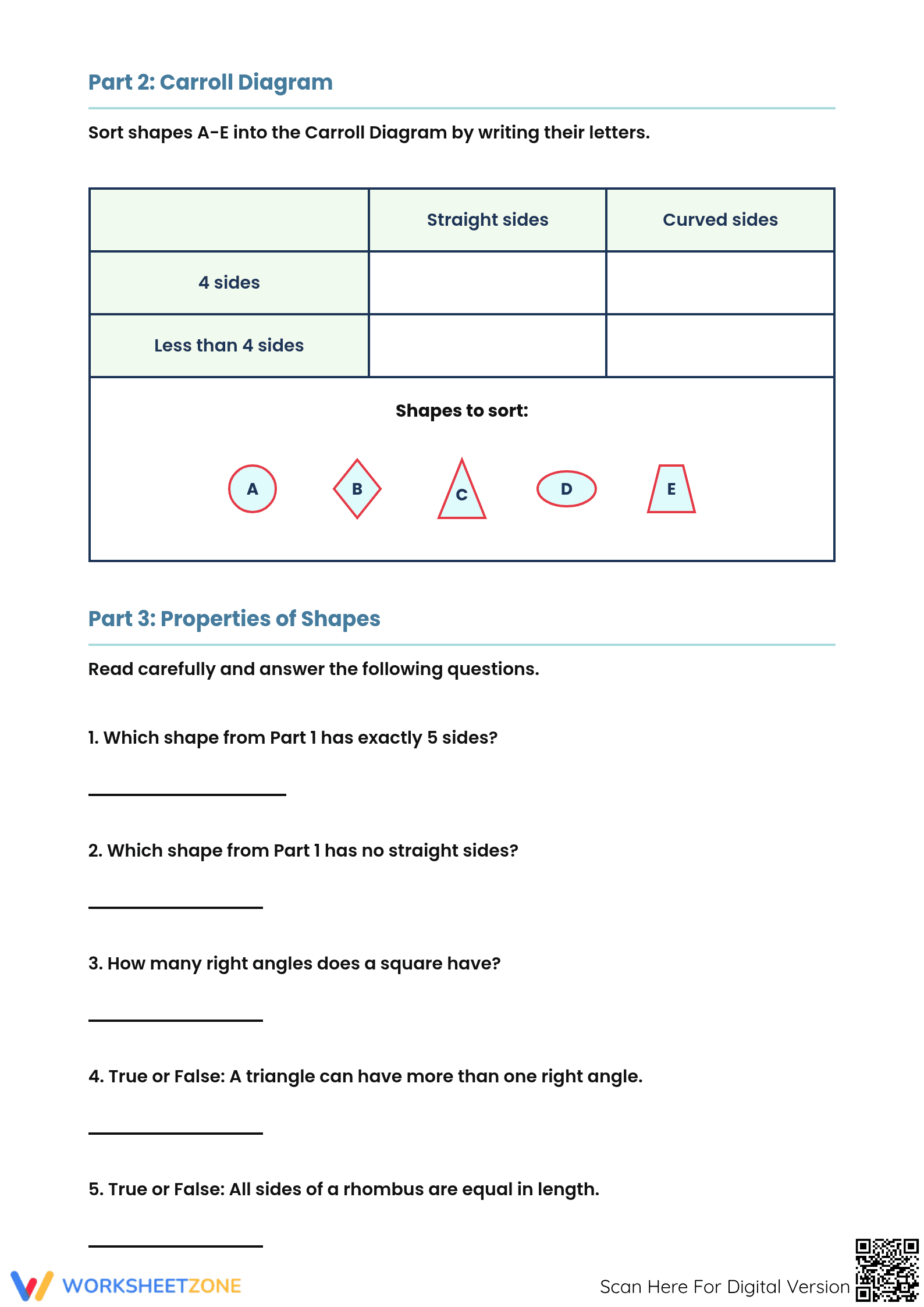
This Grade 3 math worksheet provides targeted practice in organizing data using Venn and Carroll diagrams. Students will sort numbers, shapes, and other items based on given attributes, strengthening their foundational data analysis and logical reasoning skills. It’s an effective resource for introducing or reinforcing classification concepts in a clear, structured format.
At a Glance
- Grade: 3 · Subject: Math
- Standard:
CCSS.MATH.CONTENT.3.G.A.1— Understand that shapes may share attributes that define a larger category.- Skill Focus: Sorting Data with Venn & Carroll Diagrams
- Format: 3 pages · 6 problems · Answer key included · PDF
- Best For: Independent practice, math centers, or formative assessment
- Time: 25–35 minutes
What's Inside
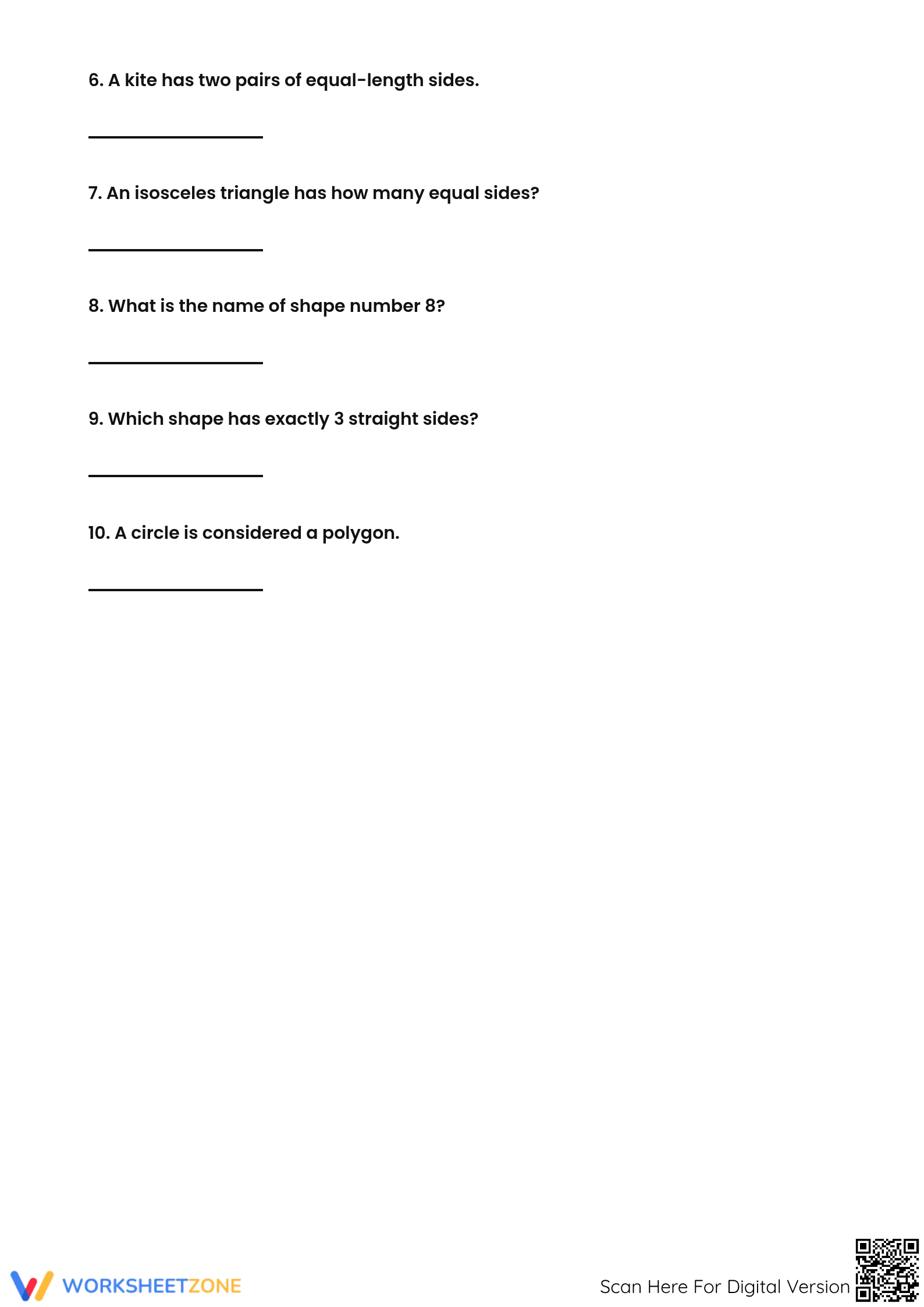
This three-page resource contains six distinct tasks that guide students through using Venn and Carroll diagrams. The problems progress from sorting numbers and shapes into pre-made diagrams to analyzing data within a completed diagram and finally creating their own. A complete, easy-to-follow answer key is included for all pages, facilitating quick review.
A Zero-Prep Workflow for Your Classroom
Designed for the busy classroom, this worksheet follows a simple three-step, zero-prep workflow.
- Print (1 minute): The entire packet, including the three student pages and the answer key, prints cleanly in under a minute.
- Distribute (1 minute): Hand out the pages for immediate student engagement. The clear instructions require no lengthy teacher explanation.
- Review (5 minutes): Use the provided answer key to quickly check student work or facilitate a peer-review session.
Total teacher prep time is under 2 minutes, making this an ideal resource for a substitute plan, a last-minute activity, or a seamless transition into a data lesson.
Standards Alignment for Lesson Planning
This worksheet is directly aligned with CCSS.MATH.CONTENT.3.G.A.1, which requires students to understand that shapes in different categories can share attributes, and that these shared attributes can define a larger category. While the standard focuses on geometry, its core principle of classification is the foundation of data sorting addressed in this resource. This connection helps students apply logical rules across different mathematical domains. Both standard codes can be copied directly into lesson plans, IEP goals, or district curriculum mapping tools.
How to Use It in Your Classroom
This versatile worksheet can be used after direct instruction on data classification to provide crucial independent practice. Assign it as a math center activity where students can work collaboratively to sort the items. For formative assessment, observe how students handle items that belong in overlapping sections of the Venn diagram; this reveals their grasp of 'and' logic. Most students will complete the worksheet in 25 to 35 minutes.
Who It's For
This resource is designed for Grade 3 students beginning their exploration of data handling. It's also suitable for Grade 4 students needing a review of classification principles. The clear visual structure supports English language learners and students with processing challenges. Pair this worksheet with a hands-on activity using attribute blocks or sorting cards to create a tangible connection to the concepts.
This worksheet offers focused practice on data classification, a key component of mathematical reasoning aligned with CCSS.MATH.CONTENT.3.G.A.1. By asking students to sort items using Venn and Carroll diagrams, it builds a foundation for more complex data analysis. Research emphasizes the importance of early data literacy; the RAND AIRS 2024 report highlights that proficiency with data representation in elementary grades is a strong predictor of later success in STEM fields. This resource directly addresses that need by translating the abstract skill of classification into a concrete, visual task. The 6 distinct problems offer structured engagement, moving students from basic sorting to creating their own diagrams. This approach ensures students develop a flexible understanding of how to organize information, a critical skill for interpreting the data-rich world around them and a prerequisite for advanced statistical concepts.


