


























Views
Downloads

Printable Vegetable Counting Worksheet | Grade K Math
Paste this activity's link or code into your existing LMS (Google Classroom, Canvas, Teams, Schoology, Moodle, etc.).
Students can open and work on the activity right away, with no student login required.
You'll still be able to track student progress and results from your teacher account.
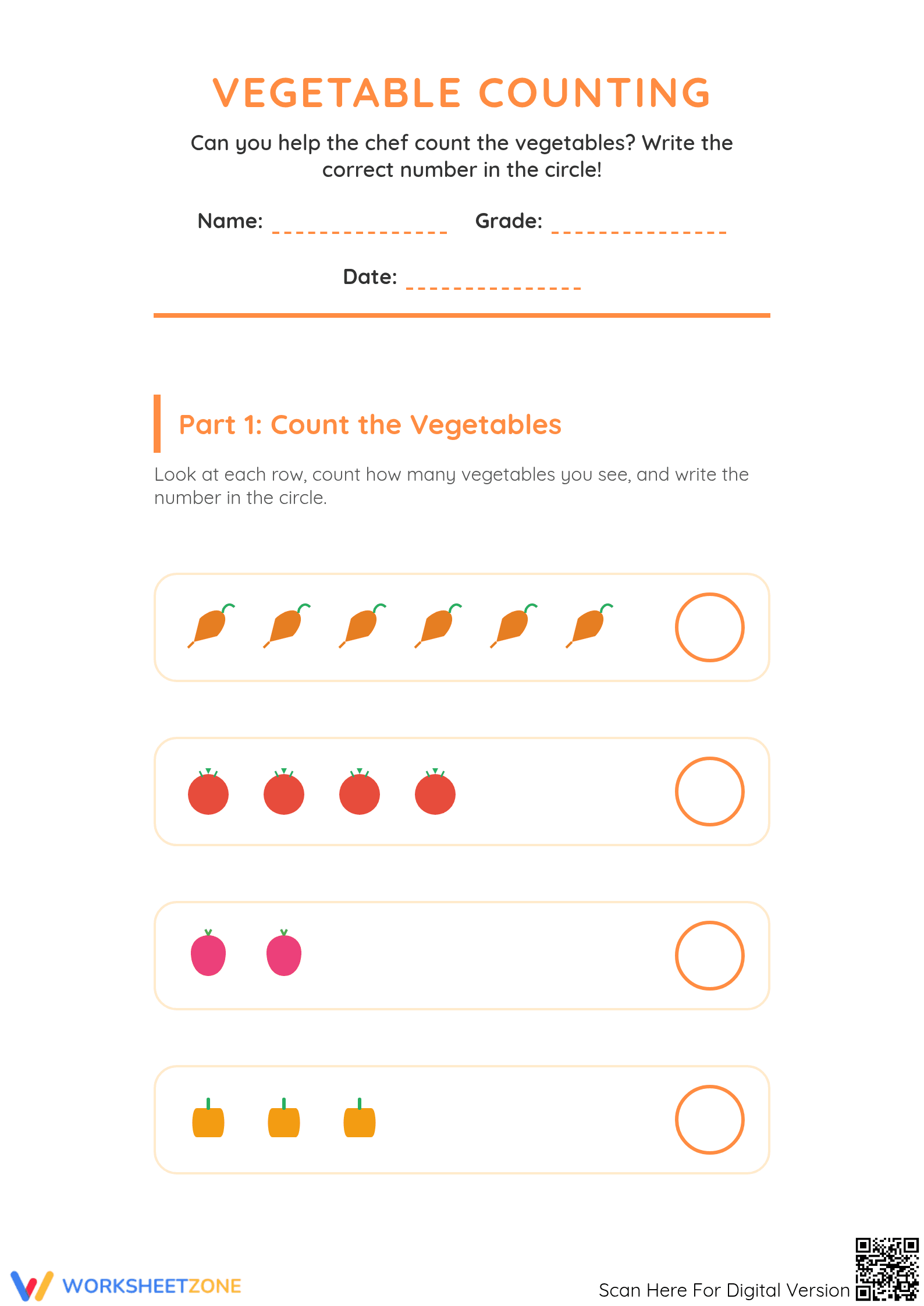
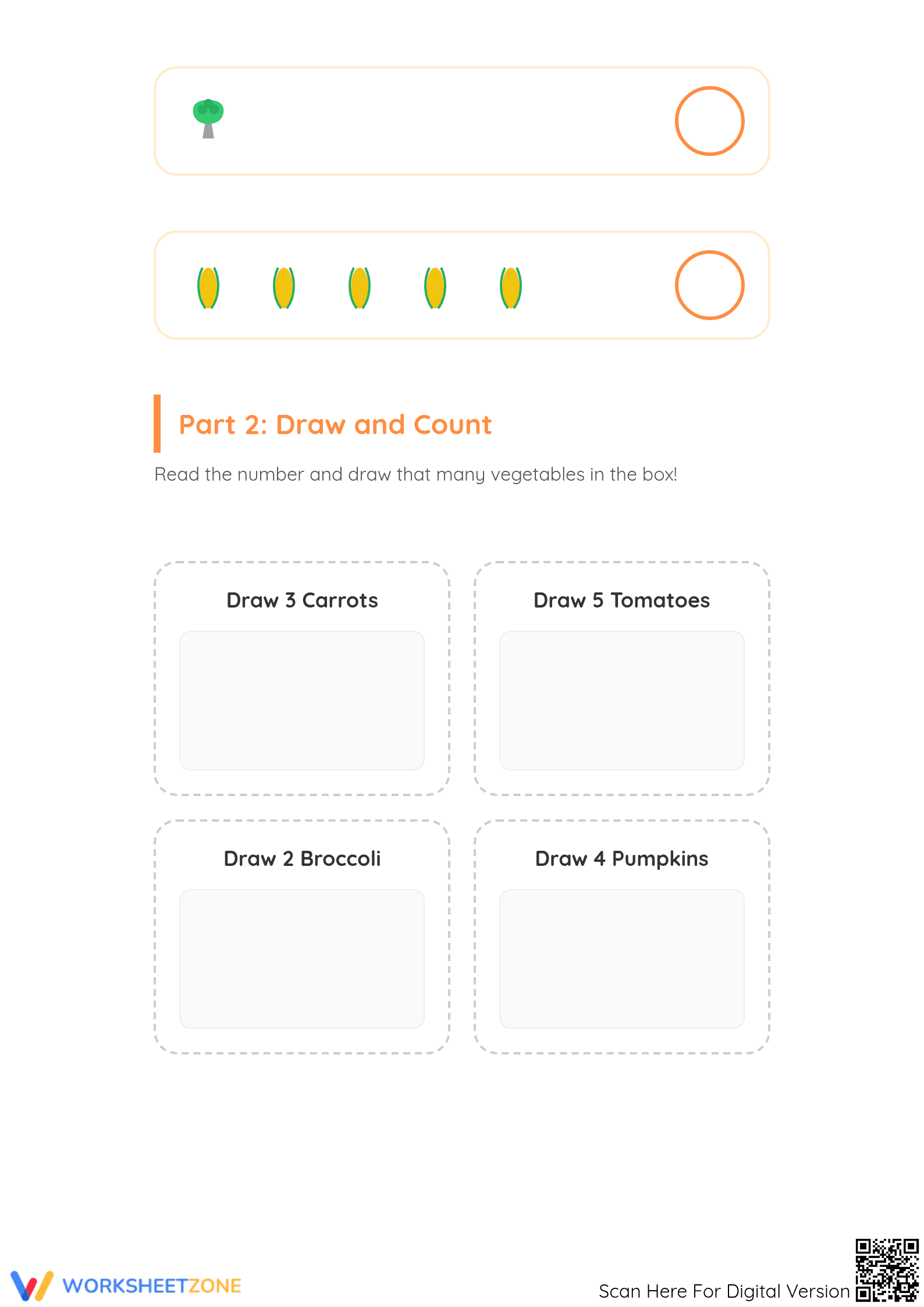
This Kindergarten vegetable counting worksheet helps young learners master one-to-one correspondence and cardinal numbers through engaging visual tasks. Students count colorful garden vegetables in rows and represent specific quantities through drawing, ensuring they understand the relationship between numbers and physical sets. This resource provides an immediate student outcome of counting proficiency.
At a Glance
- Grade: K · Subject: Math
- Standard:
CCSS.MATH.CONTENT.K.CC.B.5— Count to answer how many questions about things in a line- Skill Focus: Cardinality and One-to-One Correspondence
- Format: 2 pages · 10 problems · Answer key included · PDF
- Best For: Independent math centers or morning work
- Time: 15–20 minutes
This comprehensive two-page PDF includes two distinct instructional sections designed to reinforce numerical fluency. Part one features six counting rows where students identify quantities of carrots, tomatoes, and other vegetables. Part two shifts to active production, requiring students to draw specific amounts in designated boxes. A complete answer key is provided to facilitate rapid grading or self-correction.
Zero-Prep Workflow
The zero-prep design allows teachers to implement this lesson in under two minutes. Simply print the two-page document, distribute it to the class, and provide a few moments for students to gather their pencils and crayons. Because the instructions are visually supported, this resource is an ideal candidate for emergency sub plans or quiet-time transitions where teacher intervention must be minimized.
Standards Alignment
The primary focus is `CCSS.MATH.CONTENT.K.CC.B.5`, which requires students to "count to answer 'how many?' questions about as many as 20 things arranged in a line." By asking students to count rows of vegetables and then draw their own sets, the worksheet also supports `CCSS.MATH.CONTENT.K.CC.B.4`. Both standard codes can be copied directly into lesson plans, IEP goals, or district curriculum mapping tools.
How to Use It
Use this worksheet as a formative assessment during a unit on counting to observe how students track objects. For example, during direct instruction, teachers can watch for the "touch and count" method. It also serves as an excellent follow-up activity after a hands-on counting lesson using manipulatives. Expected completion time ranges from 15 to 20 minutes depending on fine motor speed.
Who It's For
This resource is tailored for Kindergarten students developing early numeracy skills and English Language Learners who benefit from the clear visual vocabulary of common vegetables. It pairs naturally with a counting passage or a classroom anchor chart displaying numbers one through ten. The simple layout accommodates students who need clear, uncluttered pages for better focus.
This educational resource aligns with established pedagogical frameworks for early childhood mathematics, specifically targeting the development of cardinality and one-to-one correspondence. According to a RAND AIRS 2024 analysis, structured visual counting tasks are essential for bridging the gap between abstract numeral recognition and concrete quantity understanding in the primary grades. By utilizing the CCSS.MATH.CONTENT.K.CC.B.5 standard, this worksheet ensures that students move beyond rote counting to meaningful quantification. The integration of drawing tasks further reinforces the concept that numbers represent specific sets of objects, a foundational skill identified by the ScienceDirect TpT Analysis as a reliable predictor of later mathematical success. This printable tool provides the necessary repetition for students to achieve mastery in counting objects up to ten, making it a highly reliable addition to any Kindergarten curriculum focused on standards-based instruction, data-driven outcomes, and measurable student progress throughout the academic year.


