


























1 / 2
0
Views
0
Downloads

0.0
0
Save
0 Likes
Share
Understanding Seed Dispersal Types
0 Views
0 Downloads
Paste this activity's link or code into your existing LMS (Google Classroom, Canvas, Teams, Schoology, Moodle, etc.).
Students can open and work on the activity right away, with no student login required.
You'll still be able to track student progress and results from your teacher account.
Information
Description
What It Is:
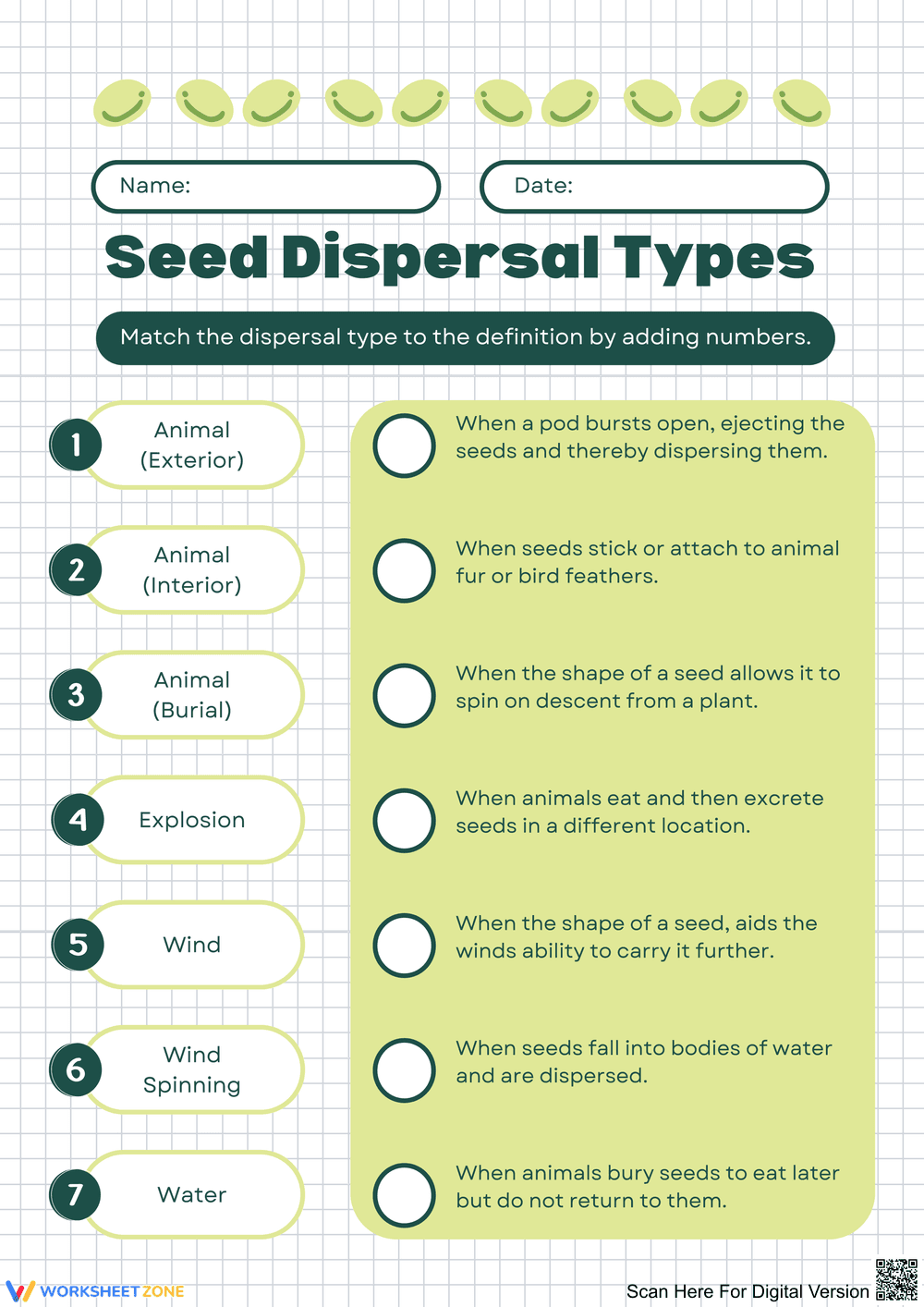
This worksheet features activities that involve matching various seed dispersal methods to their definitions. It includes visuals to aid understanding and engage students in learning about the natural world.
Why Use It:
It supports learning by helping students understand botany concepts, encouraging them to think critically about plant reproduction and ecology.
How to Use It:
• Read through each seed dispersal method.
• Match the method to its corresponding definition by writing numbers.
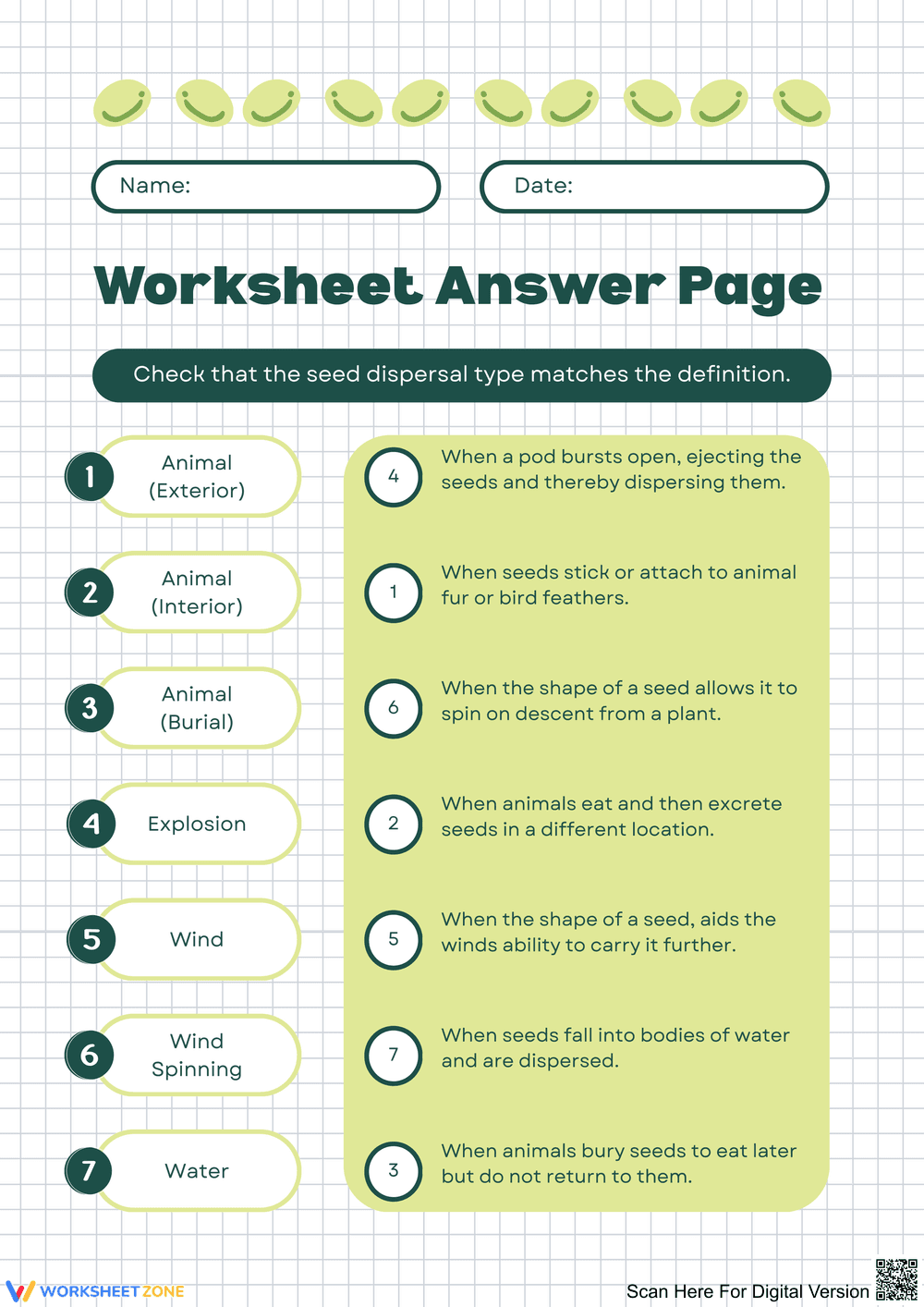
• Review the answers to reinforce learning.
Grade Suitability:
Best for Grade 4 - Grade 5.
• Younger kids focus area: Basic plant biology
• Older students focus area: Ecological systems and interactions
Target Users:
This worksheet is for teachers looking to enhance students' understanding of plant biology, as well as parents assisting with home learning activities.
This worksheet features activities that involve matching various seed dispersal methods to their definitions. It includes visuals to aid understanding and engage students in learning about the natural world.
Why Use It:
It supports learning by helping students understand botany concepts, encouraging them to think critically about plant reproduction and ecology.
How to Use It:
• Read through each seed dispersal method.
• Match the method to its corresponding definition by writing numbers.
• Review the answers to reinforce learning.
Grade Suitability:
Best for Grade 4 - Grade 5.
• Younger kids focus area: Basic plant biology
• Older students focus area: Ecological systems and interactions
Target Users:
This worksheet is for teachers looking to enhance students' understanding of plant biology, as well as parents assisting with home learning activities.


