


























0
Views
0
Downloads

0.0
0
Save
0 Likes
Identifying And Categorizing Types Of Animals
0 Views
0 Downloads
Paste this activity's link or code into your existing LMS (Google Classroom, Canvas, Teams, Schoology, Moodle, etc.).
Students can open and work on the activity right away, with no student login required.
You'll still be able to track student progress and results from your teacher account.
Information
Description
What It Is:
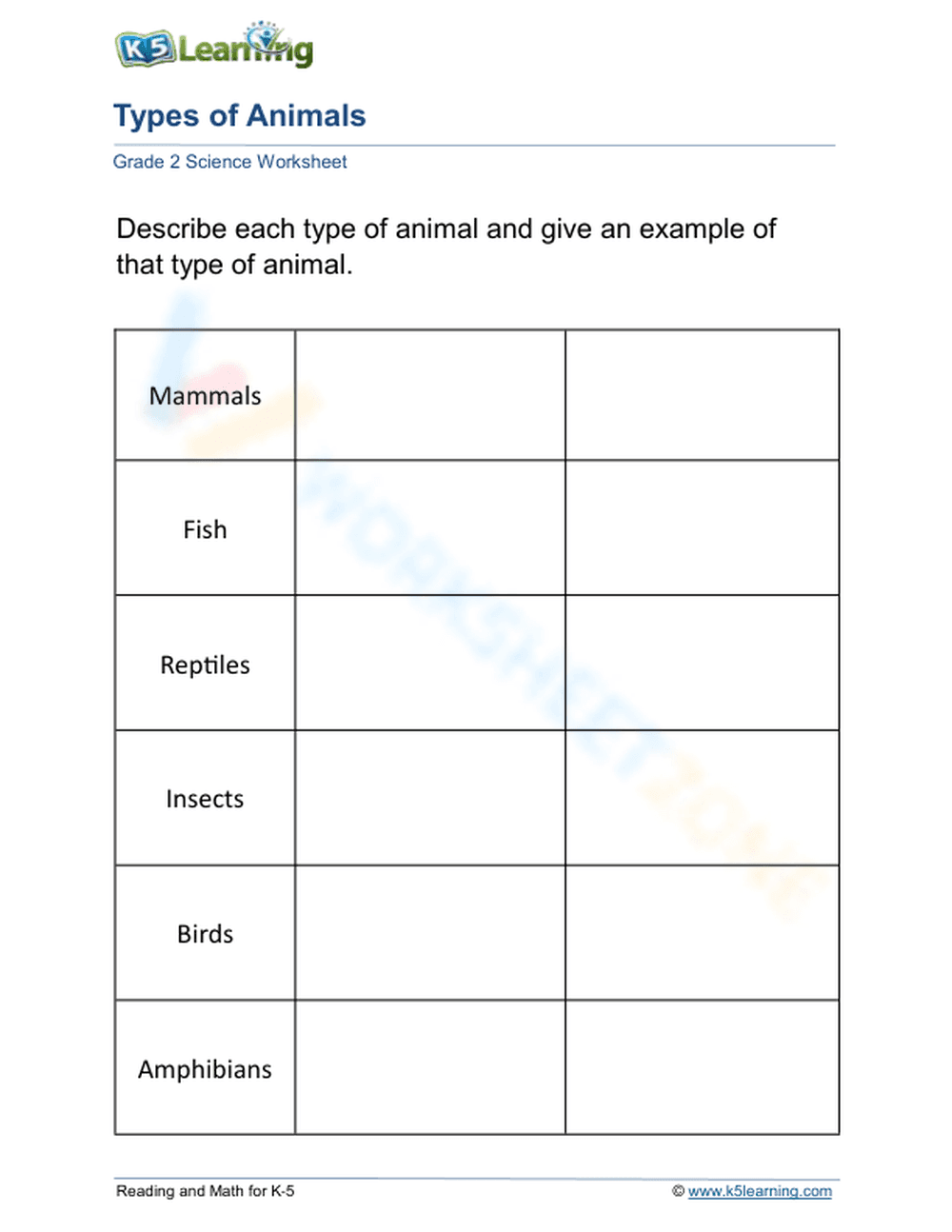
This educational worksheet provides a structured table for students to explore the diverse world of animals. It lists six key categories—mammals, fish, reptiles, insects, birds, and amphibians—and prompts learners to define their characteristics and provide specific examples.
Why Use It:
This activity supports scientific inquiry and helps children develop a deeper understanding of biological classification. It improves writing skills and vocabulary as students explain the traits that make each animal group unique.
How to Use It:
• Introduce the six animal classifications to the class using a textbook or supplemental video.
• Have students fill out the middle column by listing key physical features like body covering, habitat, or how they breathe.
• Encourage students to think of unique animal examples beyond common pets to complete the final column.
Grade Suitability:
Best for Grade 2 and Grade 3.
• Younger kids focus area: Identifying basic animal examples and simple physical traits.
• Older students focus area: Writing detailed descriptions of physiological and biological characteristics.
Target Users:
This resource is perfect for elementary science teachers, homeschooling parents, and students practicing their classification skills.
This educational worksheet provides a structured table for students to explore the diverse world of animals. It lists six key categories—mammals, fish, reptiles, insects, birds, and amphibians—and prompts learners to define their characteristics and provide specific examples.
Why Use It:
This activity supports scientific inquiry and helps children develop a deeper understanding of biological classification. It improves writing skills and vocabulary as students explain the traits that make each animal group unique.
How to Use It:
• Introduce the six animal classifications to the class using a textbook or supplemental video.
• Have students fill out the middle column by listing key physical features like body covering, habitat, or how they breathe.
• Encourage students to think of unique animal examples beyond common pets to complete the final column.
Grade Suitability:
Best for Grade 2 and Grade 3.
• Younger kids focus area: Identifying basic animal examples and simple physical traits.
• Older students focus area: Writing detailed descriptions of physiological and biological characteristics.
Target Users:
This resource is perfect for elementary science teachers, homeschooling parents, and students practicing their classification skills.


