


























1 / 5
0
Views
0
Downloads


Save
0 Likes
Triangle Inequality Theorem Practice
0 Views
0 Downloads
Paste this activity's link or code into your existing LMS (Google Classroom, Canvas, Teams, Schoology, Moodle, etc.).
Students can open and work on the activity right away, with no student login required.
You'll still be able to track student progress and results from your teacher account.
Information
Description
What It Is:
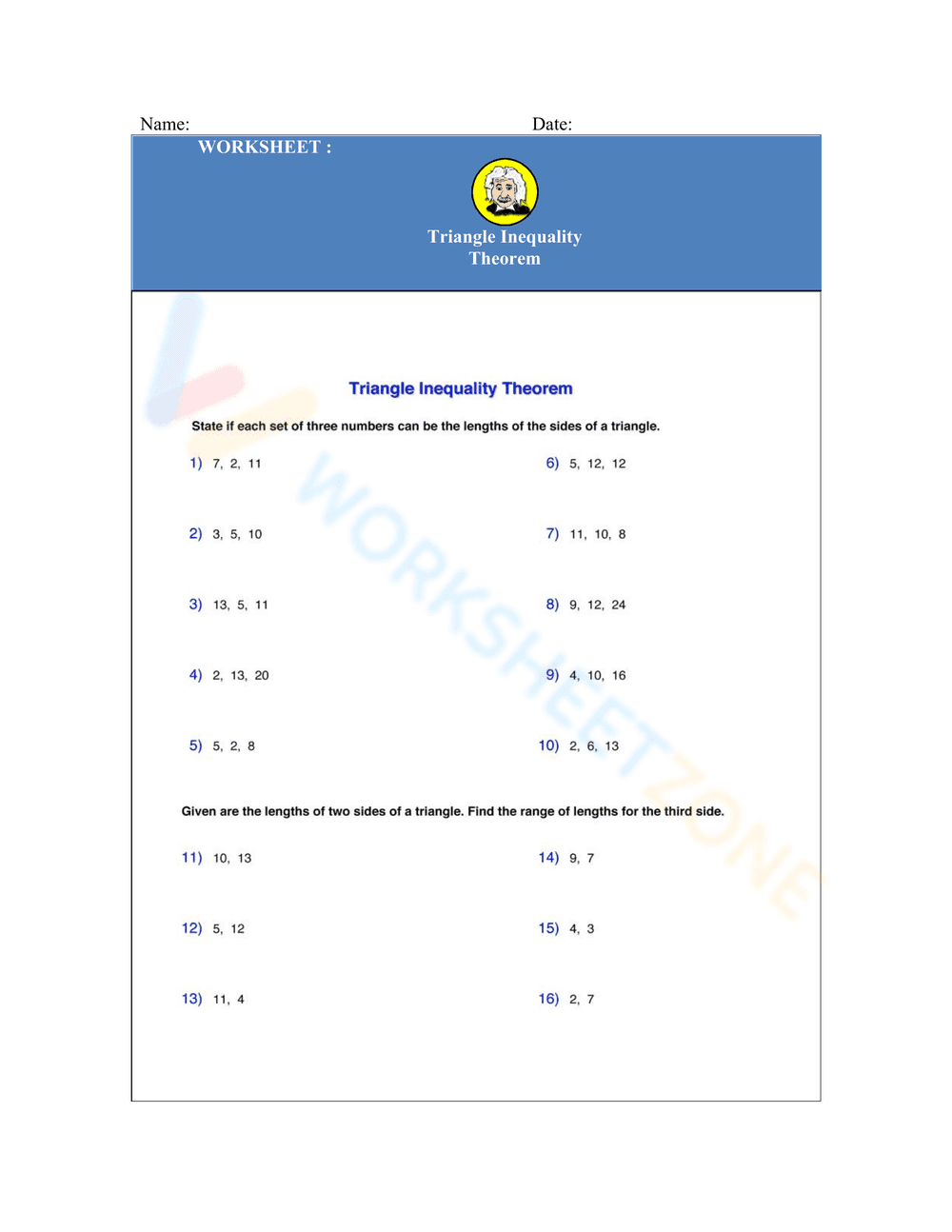
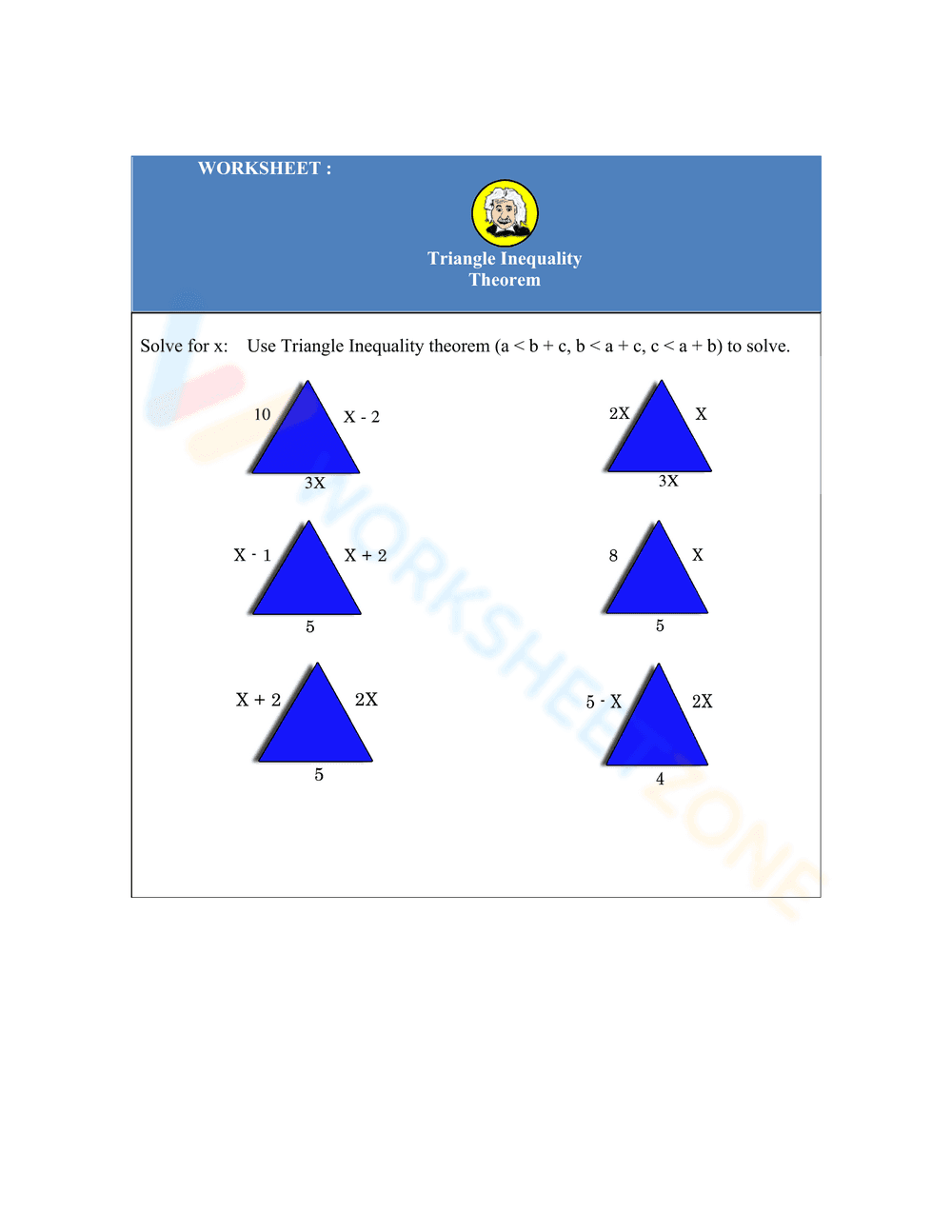
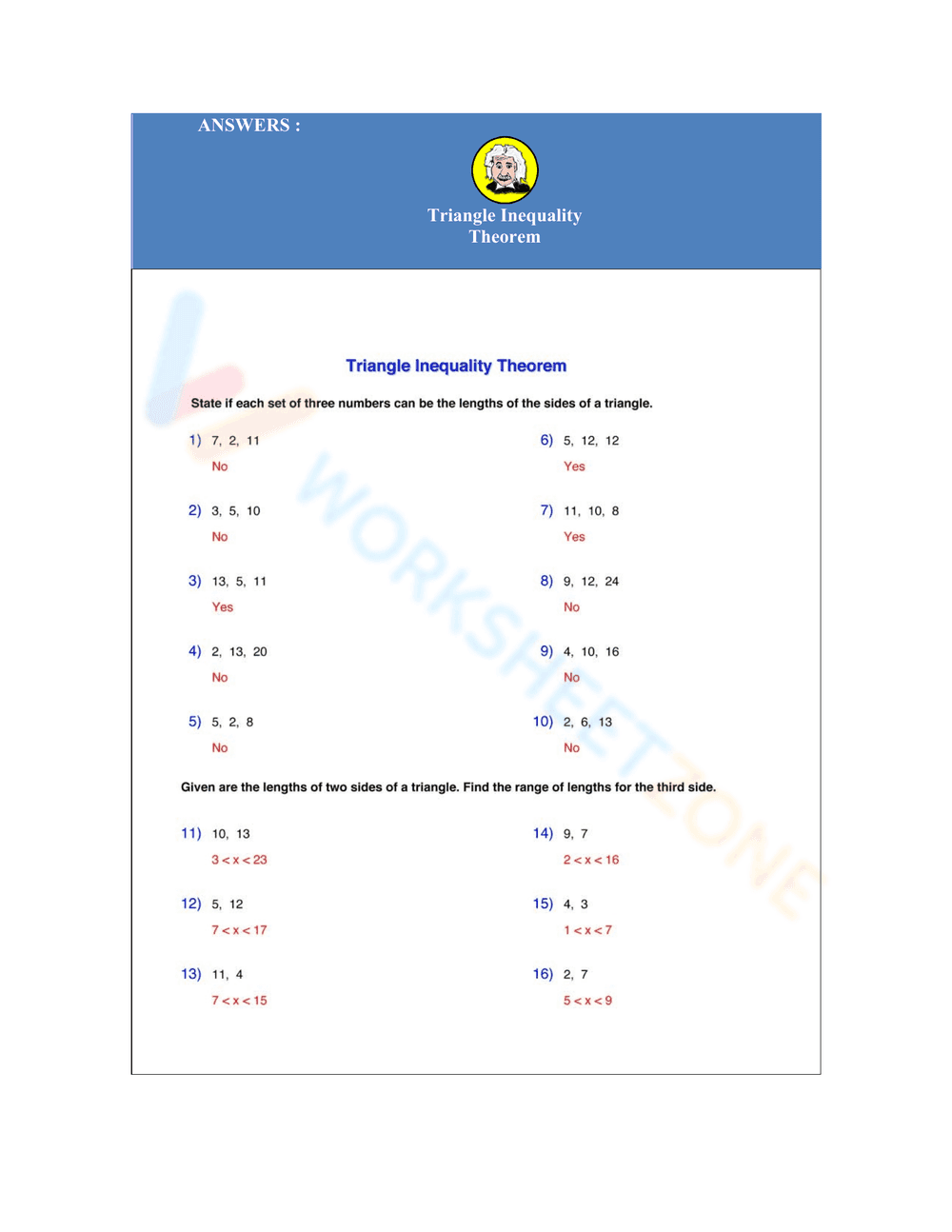
This is an educational worksheet focused on the Triangle Inequality Theorem. It presents two types of problems: The first section asks students to determine if a given set of three numbers could represent the lengths of the sides of a triangle. The second section provides the lengths of two sides of a triangle and asks students to find the range of possible lengths for the third side. There are 16 problems in total. A space for the student's name and date is provided at the top.
Grade Level Suitability:
This worksheet is suitable for grades 7-9, specifically targeting middle school and early high school geometry students. It requires understanding of basic arithmetic and the application of the Triangle Inequality Theorem, which is typically introduced in these grade levels.
Why Use It:
This worksheet provides practice in applying the Triangle Inequality Theorem. It helps students develop their problem-solving skills, reinforce their understanding of geometric principles, and improve their ability to determine valid triangle side lengths.
How to Use It:
Students should first review the Triangle Inequality Theorem. Then, they should work through each problem, showing their work as needed. For problems 1-10, they need to verify if the sum of any two sides is greater than the third side. For problems 11-16, they need to calculate the minimum and maximum possible lengths for the third side.
Target Users:
The target users are middle school and early high school students learning about geometry, specifically the Triangle Inequality Theorem. It is also suitable for teachers looking for supplemental material to reinforce this concept or for homeschooling parents teaching geometry.
This is an educational worksheet focused on the Triangle Inequality Theorem. It presents two types of problems: The first section asks students to determine if a given set of three numbers could represent the lengths of the sides of a triangle. The second section provides the lengths of two sides of a triangle and asks students to find the range of possible lengths for the third side. There are 16 problems in total. A space for the student's name and date is provided at the top.
Grade Level Suitability:
This worksheet is suitable for grades 7-9, specifically targeting middle school and early high school geometry students. It requires understanding of basic arithmetic and the application of the Triangle Inequality Theorem, which is typically introduced in these grade levels.
Why Use It:
This worksheet provides practice in applying the Triangle Inequality Theorem. It helps students develop their problem-solving skills, reinforce their understanding of geometric principles, and improve their ability to determine valid triangle side lengths.
How to Use It:
Students should first review the Triangle Inequality Theorem. Then, they should work through each problem, showing their work as needed. For problems 1-10, they need to verify if the sum of any two sides is greater than the third side. For problems 11-16, they need to calculate the minimum and maximum possible lengths for the third side.
Target Users:
The target users are middle school and early high school students learning about geometry, specifically the Triangle Inequality Theorem. It is also suitable for teachers looking for supplemental material to reinforce this concept or for homeschooling parents teaching geometry.


