


























Views
Downloads
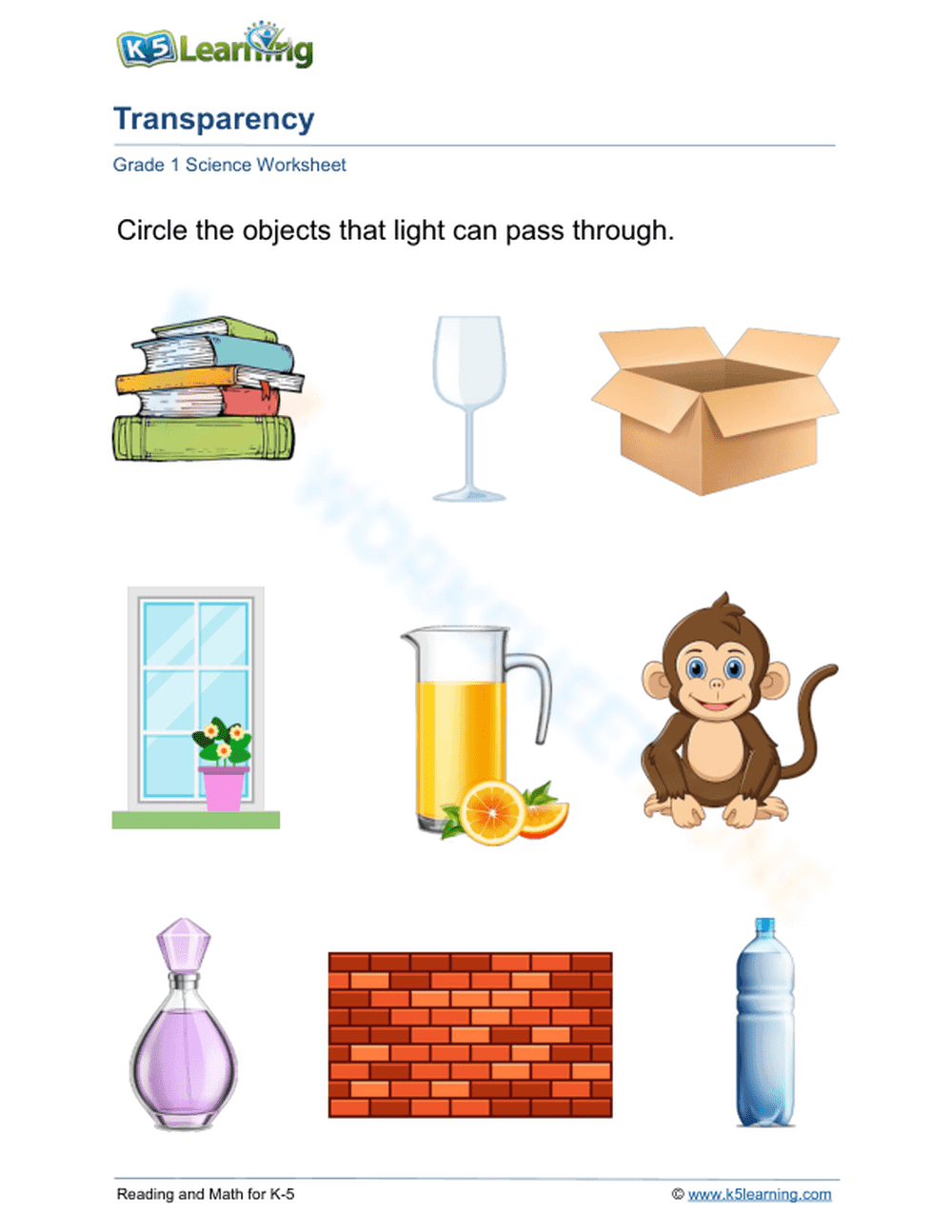

Grade 1 Light & Transparency — Printable No-Prep Worksheet
Paste this activity's link or code into your existing LMS (Google Classroom, Canvas, Teams, Schoology, Moodle, etc.).
Students can open and work on the activity right away, with no student login required.
You'll still be able to track student progress and results from your teacher account.
At a Glance
- Grade: 1 · Subject: Science
- Standard:
1-PS4-3— Investigate the effect of different materials on a light beam.- Skill Focus: Transparency and properties of light
- Format: 1 page · 9 problems · No answer key · PDF
- Best For: Introduction, practice, or science centers
- Time: 5–10 minutes
What's Inside
This single-page PDF features one clear task: students are asked to circle the transparent objects from a set of nine illustrations. The worksheet is designed with clear graphics and simple instructions, making it accessible for first graders to complete independently. No answer key is provided with this resource.
A Zero-Prep Workflow
Designed for the busy classroom, this worksheet follows a simple, three-step workflow:
- Print: Instantly print the single-page PDF. Total prep time is under one minute.
- Distribute: Hand out the worksheet for an individual science center activity, a quick warm-up, or a take-home assignment.
- Review: Quickly review the answers as a class by discussing which objects are transparent, translucent, or opaque. This resource is perfect for substitute plans or days when you need a reliable, no-fuss science activity.
Standards Alignment
This worksheet directly supports Next Generation Science Standard 1-PS4-3, which requires students to "Plan and conduct an investigation to determine the effect of placing objects made with different materials in the path of a beam of light." While this is a simplified paper-based task, it builds the observational skills necessary for that hands-on investigation. This standard code can be copied directly into lesson plans or district curriculum mapping tools.
How to Use It
Use this worksheet before a hands-on light experiment to introduce the concept of transparency. Students can complete it in about 5-10 minutes. For a formative assessment, observe which objects students circle and listen to their reasoning during a follow-up discussion. It also serves as an excellent "Do Now" activity to activate prior knowledge at the start of a physical science unit.
Who It's For
This resource is ideal for first-grade students being introduced to the properties of materials and light. The clear visual layout supports all learners, including English Language Learners and students with visual processing needs. Pair this worksheet with a simple anchor chart showing examples of transparent, translucent, and opaque objects to reinforce the vocabulary.
This Grade 1 science activity provides focused practice on NGSS standard 1-PS4-3, helping students build a foundational understanding of how different materials interact with light. By identifying transparent objects, learners develop key observational skills that are precursors to scientific investigation. According to the NAEP, early exposure to core science concepts in elementary school is critical for building long-term scientific literacy. This worksheet offers a practical, entry-level task where students classify materials based on a physical property (transparency), a skill that underpins more complex scientific reasoning. The simple, visual format ensures the cognitive load is focused on the scientific concept itself, providing an accessible entry point for all young learners to engage with physical science principles.


