


























Views
Downloads
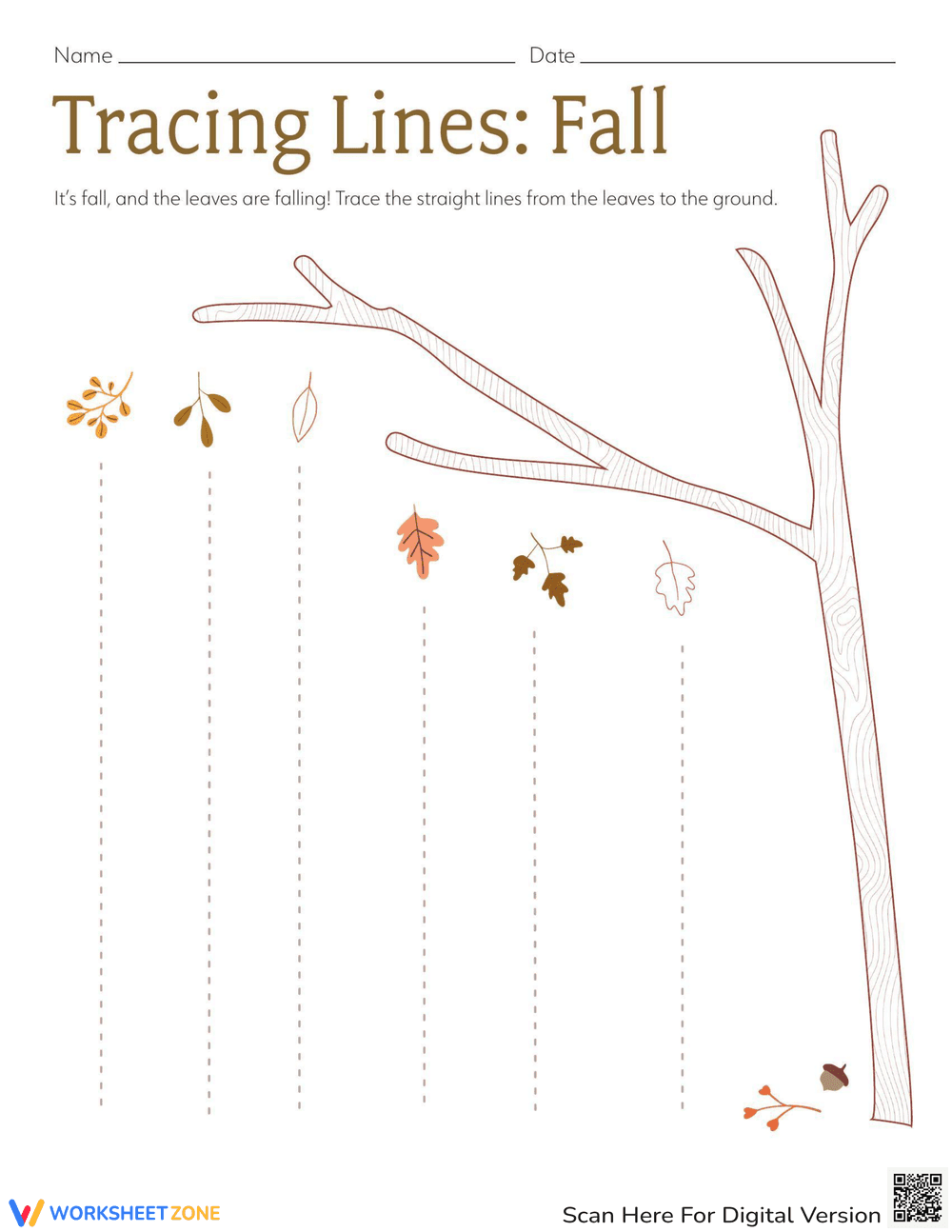

Kindergarten Fall Tracing — Printable No-Prep Worksheet
Paste this activity's link or code into your existing LMS (Google Classroom, Canvas, Teams, Schoology, Moodle, etc.).
Students can open and work on the activity right away, with no student login required.
You'll still be able to track student progress and results from your teacher account.
This printable fall line tracing worksheet helps early learners develop essential pre-writing skills by tracing vertical lines from falling leaves to the ground. By practicing pencil control and grip, preschool and kindergarten students build the foundational fine motor strength necessary for letter formation. This seasonal activity turns basic motor practice into an engaging autumn-themed exercise.
At a Glance
- Grade: Preschool, Kindergarten · Subject: Early Literacy
- Standard:
CCSS.ELA-LITERACY.L.K.1.A— Print many upper- and lowercase letters using proper pencil grip- Skill Focus: Fine motor control and vertical line tracing
- Format: 1 page · 6 problems · Answer key not required · PDF
- Best For: Morning work or independent fine motor practice
- Time: 5–10 minutes
This resource features a single-page layout containing six distinct vertical dashed lines. Each line starts beneath a unique autumn leaf and extends down to the ground near a bare tree branch. The clean, minimalist design minimizes visual distractions, allowing young learners to focus entirely on their pencil path. The worksheet includes clear, simple instructions that teachers or parents can read aloud to guide students.
This resource is designed for immediate classroom deployment with zero advance preparation. Teachers can implement this activity using a simple three-step workflow:
- Print (1 minute): Print the single-page PDF directly. No cutting or sorting needed.
- Distribute (1 minute): Hand out sheets with pencils or crayons to students.
- Review (1 minute): Observe pencil grip and line accuracy, providing immediate verbal feedback.
Total teacher prep time is under 2 minutes, making this worksheet ideal for emergency sub plans or transition periods.
This activity aligns with standard `CCSS.ELA-LITERACY.L.K.1.A`, which focuses on printing letters and establishing proper pencil grip. Tracing vertical lines builds the muscle memory and spatial awareness required for vertical letter strokes. It also supports early print concepts by reinforcing top-to-bottom directionality. Both standard codes can be copied directly into lesson plans, IEP goals, or district curriculum mapping tools.
Use this worksheet during the transition after morning circle time to settle students. Alternatively, introduce it during direct instruction on pencil grip, using the leaf-to-ground metaphor. As a formative assessment, observe whether students trace from top to bottom, noting who requires extra physical scaffolding. Students typically complete the six tracing paths within 5 to 10 minutes.
This worksheet is designed for preschool and kindergarten students developing early writing mechanics. It serves as an intervention tool for occupational therapy or students needing extra fine motor support. For advanced learners, extend the activity by asking them to color the leaves. Pair this worksheet with a read-aloud book about autumn leaves to create a cohesive thematic lesson.
Early childhood writing development relies heavily on motor control. According to research analyzed in the ScienceDirect TpT Analysis, structured tracing activities provide the scaffolding to transition students from gross motor movements to refined fine motor control. By focusing on vertical lines, this worksheet targets the specific directional strokes required for early letter formation. Practicing these strokes helps students meet the expectations of `CCSS.ELA-LITERACY.L.K.1.A` by building hand strength and pencil control before formal handwriting instruction begins. Teachers can integrate this resource into early literacy centers, knowing that repetitive tracing practice correlates with improved print legibility and writing stamina in later grades. This evidence-based approach ensures that simple seasonal activities contribute to long-term academic readiness.


