


























Views
Downloads

Essential Tracing Curved Lines Worksheet for Preschool
Paste this activity's link or code into your existing LMS (Google Classroom, Canvas, Teams, Schoology, Moodle, etc.).
Students can open and work on the activity right away, with no student login required.
You'll still be able to track student progress and results from your teacher account.
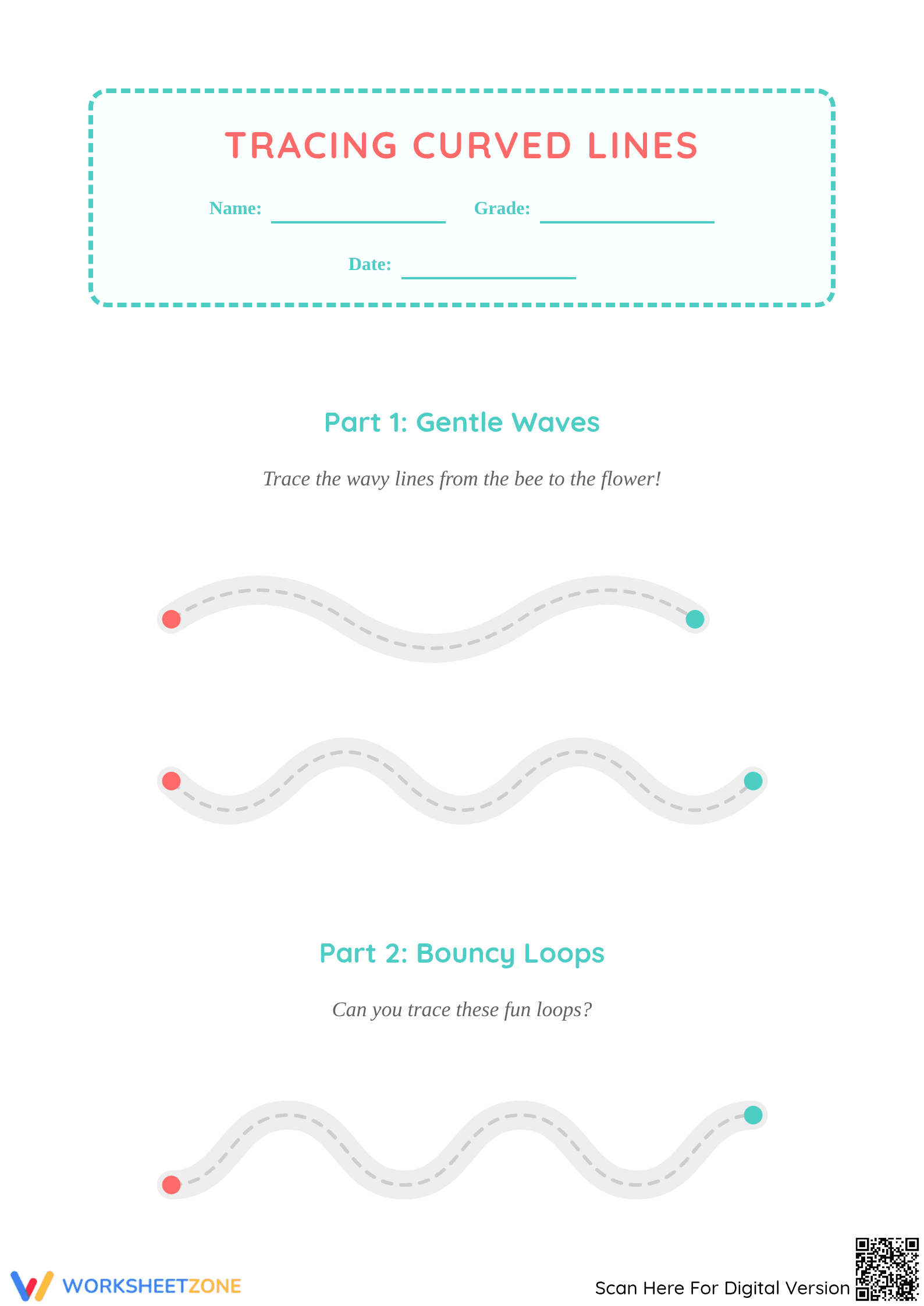
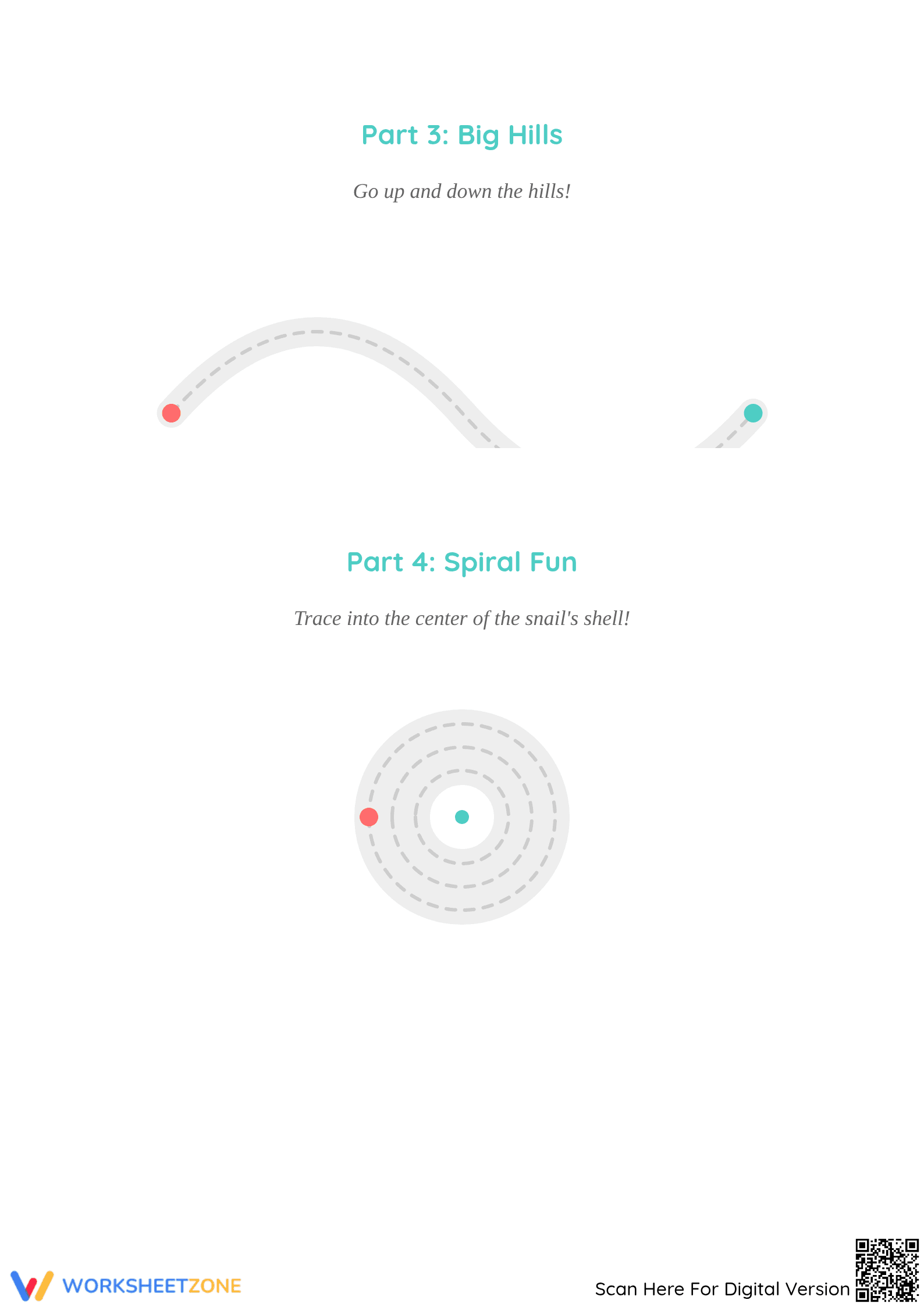
This preschool pre-writing worksheet helps young learners develop essential fine motor control by tracing various curved patterns. Students improve hand-eye coordination as they navigate gentle waves, bouncy loops, steep hills, and intricate spirals. This foundational activity prepares children for the complex motions required for future letter formation and drawing.
At a Glance
- Grade: Preschool · Subject: Early Literacy
- Standard:
L.K.1.A— Demonstrate command of the conventions of standard English grammar and usage when writing- Skill Focus: Fine motor control and pre-writing tracing
- Format: 2 pages · 5 problems · Answer key included · PDF
- Best For: Daily fine motor practice and centers
- Time: 10–15 minutes
This two-page PDF features five distinct tracing challenges designed for early learners. It includes gentle waves, bouncy loops, large hills, and a spiral shell task. The layout provides ample white space to prevent visual overwhelm, and the starting and ending points are clearly marked with colored dots to guide the child's pencil stroke from left to right across the page.
The workflow for this resource is designed for maximum teacher efficiency. First, print the two-page document (30 seconds). Next, distribute the sheets with crayons or pencils to students (1 minute). Finally, review the completed curves to identify any students needing additional hand-over-hand support (30 seconds). Total prep time is under two minutes, making it an ideal choice for sub plans or morning work.
The primary alignment is to L.K.1.A, which focuses on the command of English grammar and usage when writing, specifically foundational letter formation. While preschoolers are not yet writing full letters, the curved motions in this worksheet map directly to the strokes used in lowercase 'c', 'o', 'u', and 's'. This standard code can be copied directly into lesson plans, IEP goals, or district curriculum mapping tools.
Use this worksheet during morning arrival to settle students into a focused task. Teachers can also utilize it as a formative assessment tool by observing a student's grip and the steadiness of their line. If a child struggles with the smaller loops, try having them trace the lines with their finger first to build muscle memory before using a writing utensil.
This resource is designed for preschool and pre-k students who are beginning to develop pincer grasp and pencil control. It serves as a bridge between scribbling and intentional drawing. It pairs naturally with a bee and flower or pond themed lesson, providing a thematic connection to the visual cues provided on the page.
According to the NAEP framework for early literacy, the development of fine motor skills through tracing is a critical precursor to academic writing success. This L.K.1.A aligned resource focuses on the specific muscle groups used in curved line production, a skill that Fisher & Frey (2014) identify as essential for the gradual release of responsibility in the writing process. By providing structured, low-stakes practice with waves and spirals, teachers ensure that students are not cognitively overloaded when they begin formal letter instruction. This worksheet's design follows best practices for early childhood education, emphasizing the physical mechanics of penmanship. Research from the RAND AIRS 2024 report highlights that consistent, brief practice with pre-writing shapes leads to higher rates of letter recognition and formation accuracy in kindergarten. Teachers can confidently integrate this printable as a foundational element of their early childhood ELA curriculum.


