


























Views
Downloads
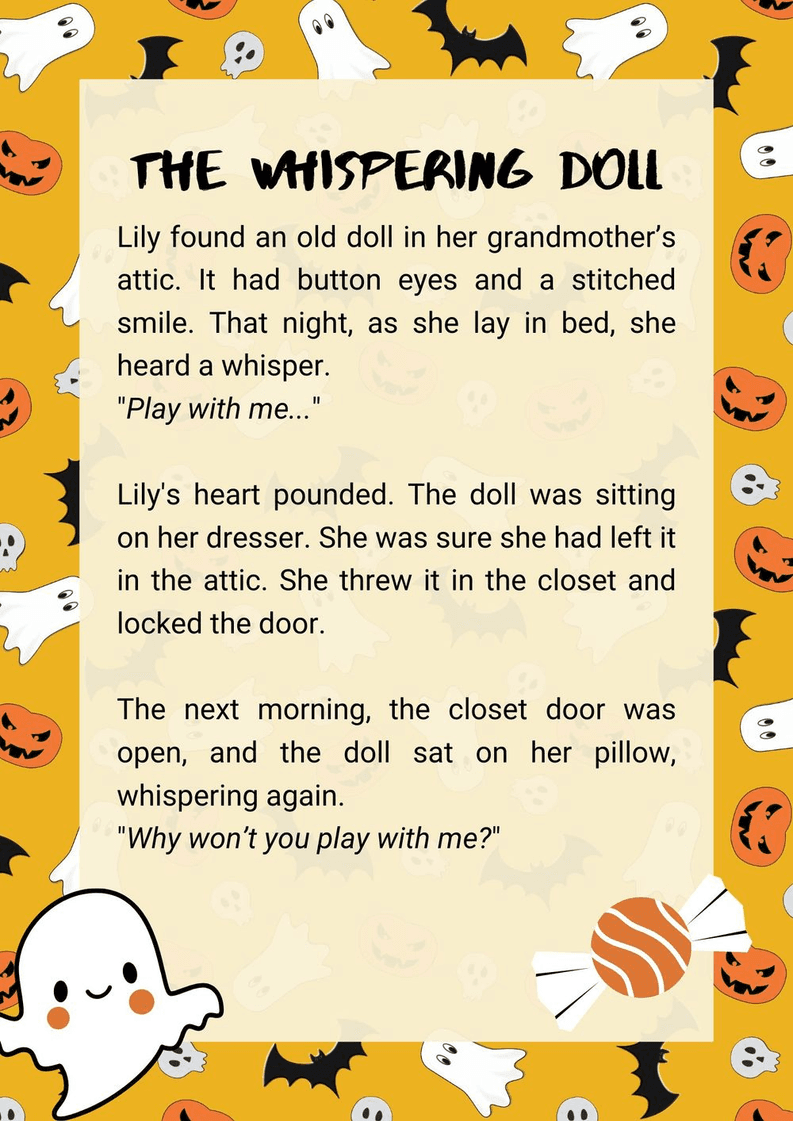

Printable Scary Story Reading Worksheet | Grade 5-6
Paste this activity's link or code into your existing LMS (Google Classroom, Canvas, Teams, Schoology, Moodle, etc.).
Students can open and work on the activity right away, with no student login required.
You'll still be able to track student progress and results from your teacher account.
This Grade 5 and 6 reading comprehension worksheet uses a spooky short story to build critical analysis skills. Students read the engaging narrative and answer text-dependent questions to demonstrate their understanding of key details, character motivations, and plot development. It provides immediate, focused practice to improve reading fluency and literal comprehension.
At a Glance
- Grade: Grade 5 · Grade 6 · Subject: ELA
- Standard:
CCSS.ELA-LITERACY.RL.5.1— Quote accurately from a text when explaining what the text says explicitly- Skill Focus: Reading Comprehension & Text Evidence
- Format: 2 pages · 5 problems · Answer key included · PDF
- Best For: Independent reading practice or sub plans
- Time: 20–30 minutes
This resource contains a complete two-page packet featuring the spooky short story "The Whispering Doll" alongside five targeted comprehension questions. The text is designed with clear, readable typography and engaging Halloween-themed illustrations to maintain student interest. The accompanying question set includes both multiple-choice and short-answer prompts that require students to return to the text for evidence. A comprehensive answer key is provided to facilitate quick grading or student self-assessment.
This resource is designed for immediate classroom deployment with a total teacher preparation time of under two minutes. First, print the double-sided worksheet for your class. Second, distribute the pages to students for independent work, partner reading, or a quiet substitute teacher activity. Third, review the answers using the included key for rapid grading or whole-class feedback.
This activity aligns directly with the Common Core State Standard CCSS.ELA-LITERACY.RL.5.1, which requires students to quote accurately from a text when explaining what the text says explicitly. It also supports CCSS.ELA-LITERACY.RL.6.1 by encouraging students to cite textual evidence. Both standard codes can be copied directly into lesson plans, IEP goals, or district curriculum mapping tools.
Use this worksheet as a formative assessment during your unit on story elements. Administer it after direct instruction on finding text evidence to gauge mastery within a 20 to 30 minute window. Alternatively, use it as a low-prep substitute lesson plan. While students work, observe if they refer back to the passage to locate specific details before writing their answers.
This resource is ideal for fifth and sixth-grade students who need practice extracting details from literary texts. It serves general education classrooms, English language learners, and special education students working on IEP reading goals. Pair this worksheet with a graphic organizer for story mapping or an anchor chart detailing how to cite text evidence.
This reading comprehension resource aligns with the instructional frameworks outlined by Fisher & Frey (2014) regarding the gradual release of responsibility. By engaging with a structured short story and targeted questions, students apply close reading strategies to extract text evidence independently. Research indicates that structured, text-dependent questions significantly improve literal comprehension and critical thinking skills in upper elementary and middle school students. The inclusion of a clear answer key supports immediate feedback loops, which are critical for reinforcing correct reading behaviors and addressing student misconceptions. Teachers can confidently integrate this worksheet into their ELA curriculum, knowing it meets rigorous standards for text-based analysis. The alignment to standard code CCSS.ELA-LITERACY.RL.5.1 ensures that students practice the exact skills required for state assessments, bridging the gap between guided reading practice and independent mastery.


