


























Views
Downloads
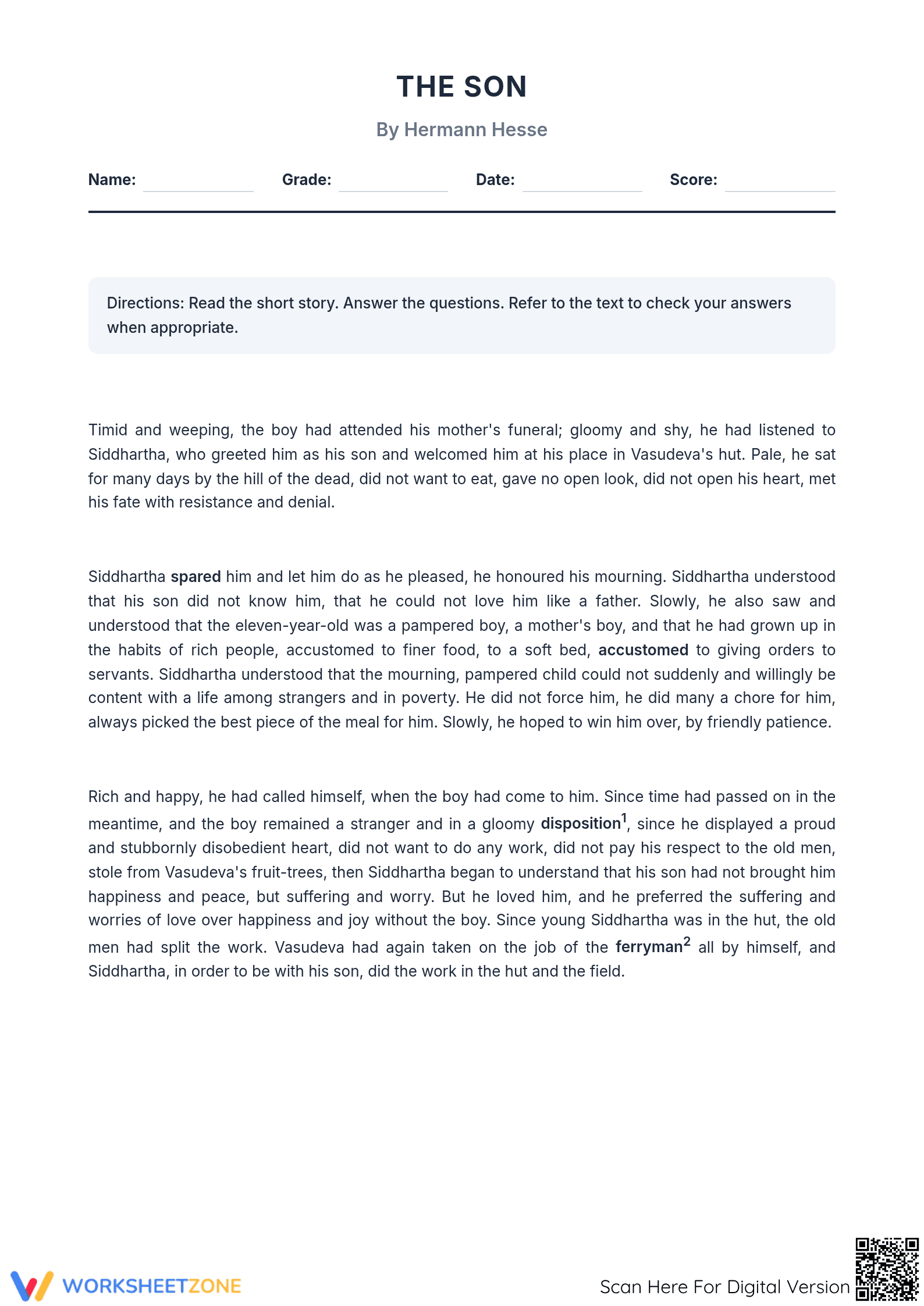
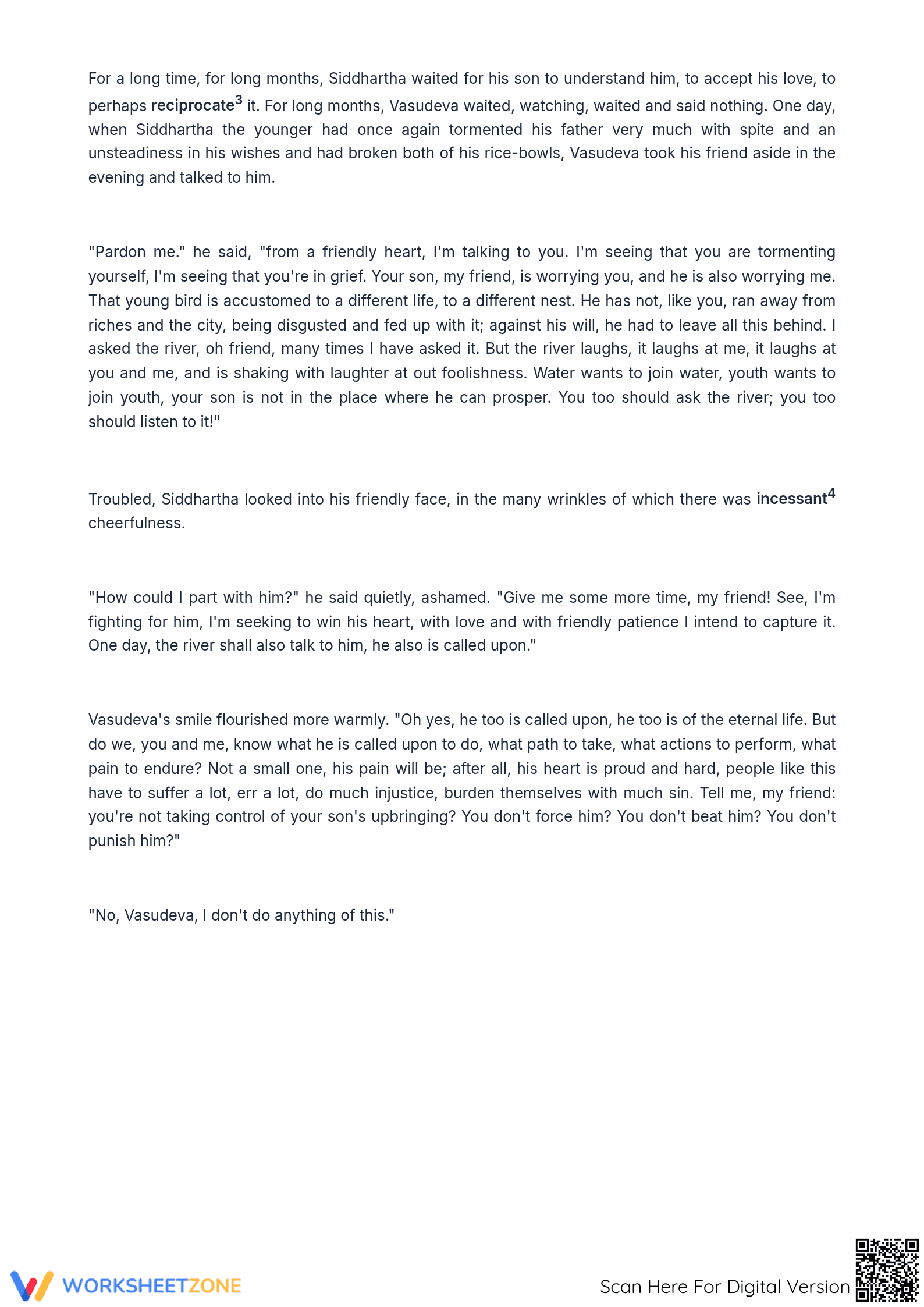

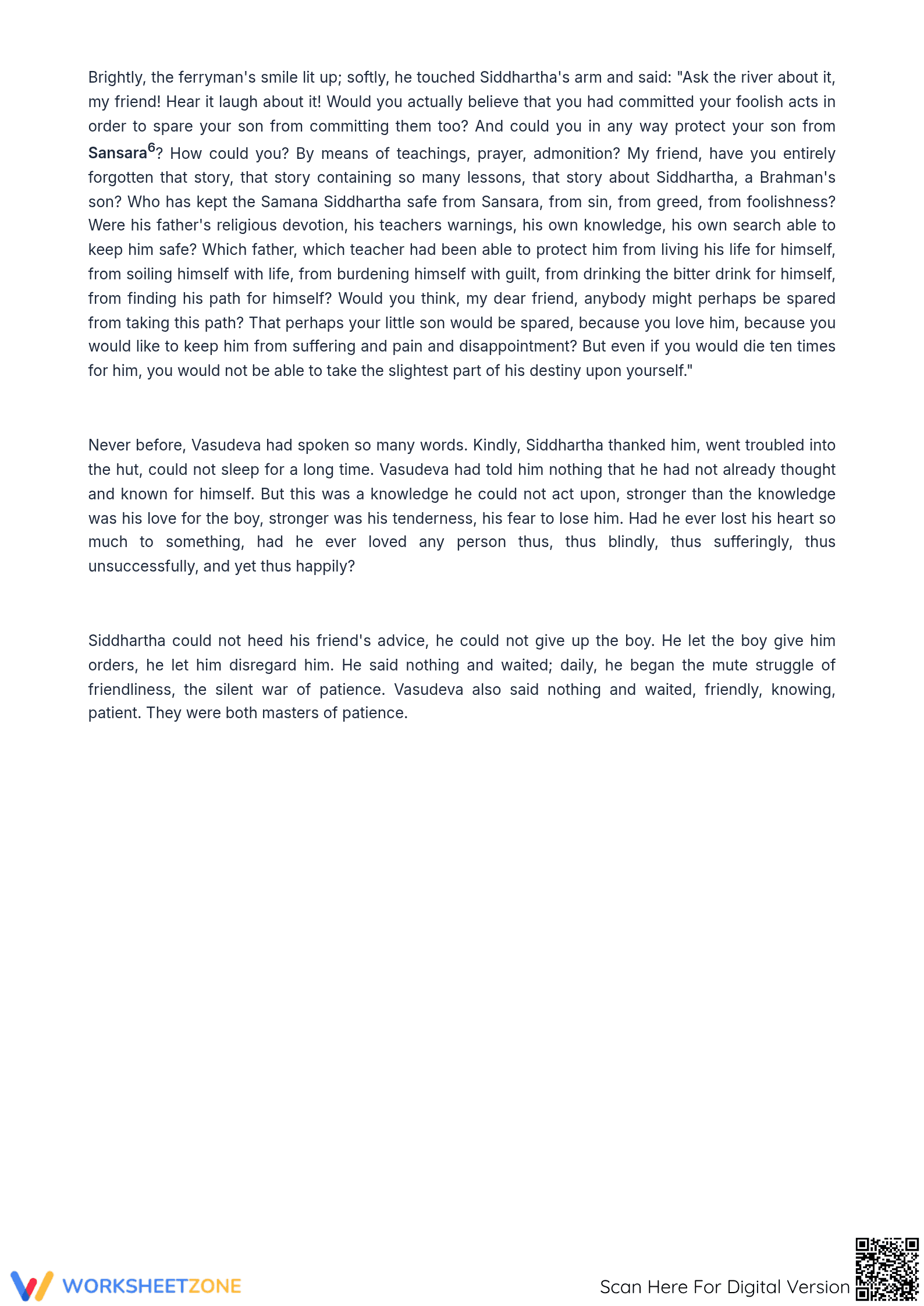


The Son by Hermann Hesse Worksheet | Grade 8 Essential
Paste this activity's link or code into your existing LMS (Google Classroom, Canvas, Teams, Schoology, Moodle, etc.).
Students can open and work on the activity right away, with no student login required.
You'll still be able to track student progress and results from your teacher account.
This Grade 8 literary analysis worksheet centers on an excerpt from Hermann Hesse’s masterpiece, focusing on the complex emotional landscape between a father and his estranged child. Students engage with high-level prose to identify how specific dialogue and internal monologues reveal character motivations and propel the narrative toward its emotional climax. It provides a rigorous yet accessible framework for exploring universal themes of parenthood and patience.
At a Glance
- Grade: 8 · Subject: English Language Arts
- Standard:
CCSS.ELA-LITERACY.RL.8.3— Analyze how dialogue or incidents reveal character aspects or provoke decisions- Skill Focus: Character Analysis & Theme
- Format: 5 pages · 12 problems · Answer key included · PDF
- Best For: Deep literary analysis and sub plans
- Time: 45–60 minutes
What’s Inside: This comprehensive 5-page packet features the full text of the story with integrated vocabulary footnotes to support comprehension of Tier 3 words like "Sansara" and "exuberant." Following the text is a series of 12 structured tasks, including text-dependent questions and a dedicated notes section for student annotations. A complete answer key is provided to facilitate quick grading or student self-correction.
Zero-Prep Workflow
This resource is designed for immediate classroom implementation with minimal teacher oversight. The workflow is streamlined into three efficient steps: Print the 5-page PDF (1 minute), Distribute to students for independent or paired reading (1 minute), and Review the evidence-based responses using the provided key (10 minutes). With a total teacher prep time of under 2 minutes, this packet serves as an ideal high-quality sub plan or a ready-to-go assessment for a world literature unit.
Standards Alignment
The primary focus is `CCSS.ELA-LITERACY.RL.8.3`: Analyze how particular lines of dialogue or incidents in a story or drama propel the action, reveal aspects of a character, or provoke a decision. Students must specifically examine the interactions between Siddhartha and Vasudeva to understand the conflicting philosophies of parenting presented in the text. Both standard codes can be copied directly into lesson plans, IEP goals, or district curriculum mapping tools.
How to Use It
This worksheet is best utilized during the "You Do" phase of a gradual release model, following a direct instruction lesson on characterization or theme. It can also function as a summative assessment after a broader study of 20th-century literature. For a formative assessment observation, monitor how students interpret the metaphor of the "river" in the dialogue on page 2. Expected completion time ranges from 45 to 60 minutes depending on reading speed.
Who It's For
This resource is tailored for 8th-grade ELA students but is highly effective for advanced 7th graders or high school students requiring remediation in literary analysis. The inclusion of vocabulary scaffolds makes it accessible for English Language Learners (ELLs) and students with IEPs. It pairs naturally with an anchor chart on character traits or a direct instruction lesson on the Hero's Journey.
Research by Fisher & Frey (2014) emphasizes that close reading of complex texts, supported by intentional scaffolding like the vocabulary footnotes found in this resource, is critical for developing adolescent literacy. By engaging with the standard CCSS.ELA-LITERACY.RL.8.3, students move beyond surface-level plot summary to analyze the psychological underpinnings of character development. This worksheet provides the necessary structure for students to practice identifying how a character's internal conflict is mirrored in their external dialogue. According to the NAEP framework, the ability to infer character motivation from subtle textual cues is a hallmark of proficient reading at the middle school level. This packet ensures that students are not just reading for information, but are performing the high-level cognitive work required for college and career readiness in the humanities.


