




























Views
Downloads


Life Cycle of Stars Essential Worksheet | Grade 9-12

Paste this activity's link or code into your existing LMS (Google Classroom, Canvas, Teams, Schoology, Moodle, etc.).
Students can open and work on the activity right away, with no student login required.
You'll still be able to track student progress and results from your teacher account.
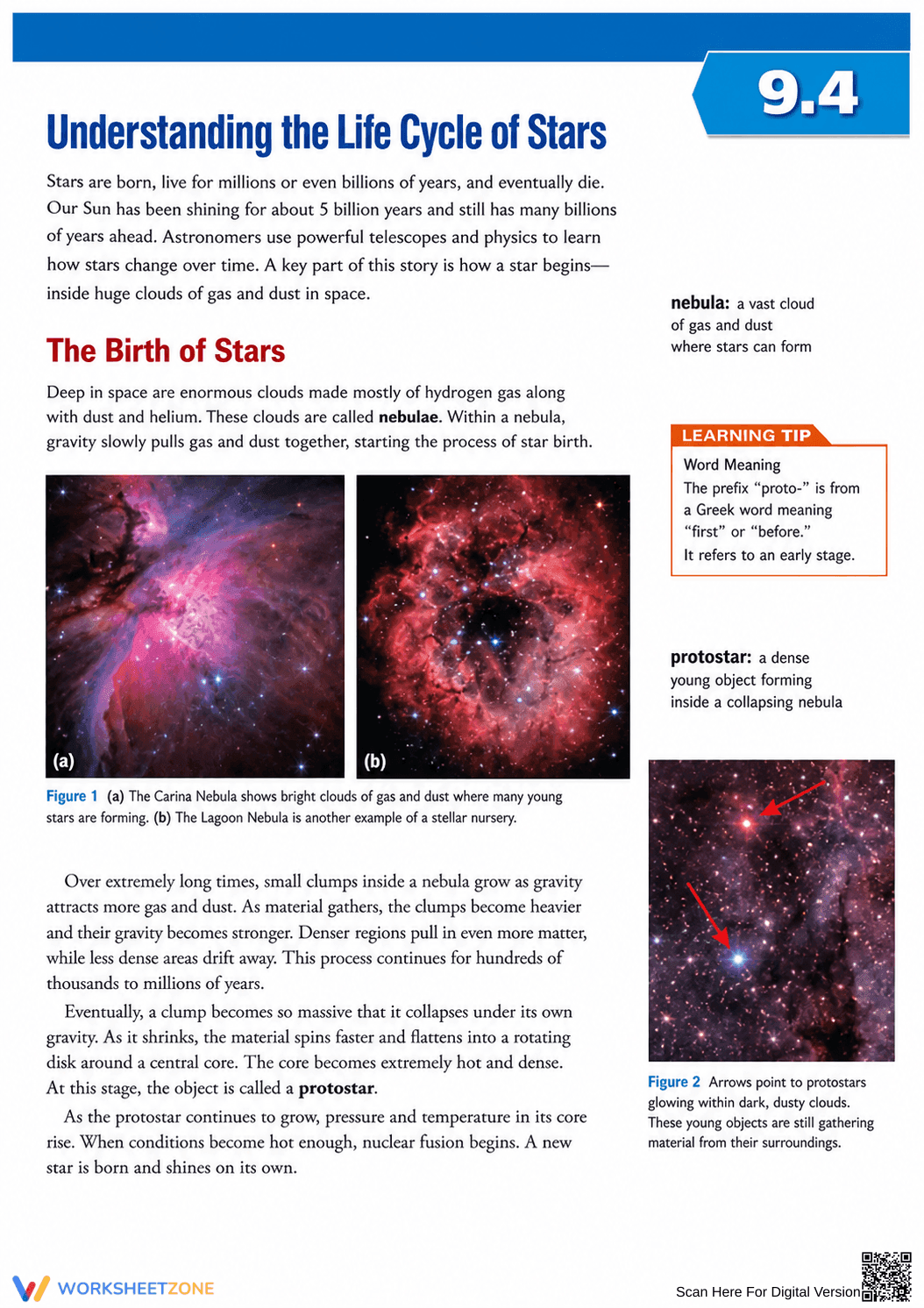
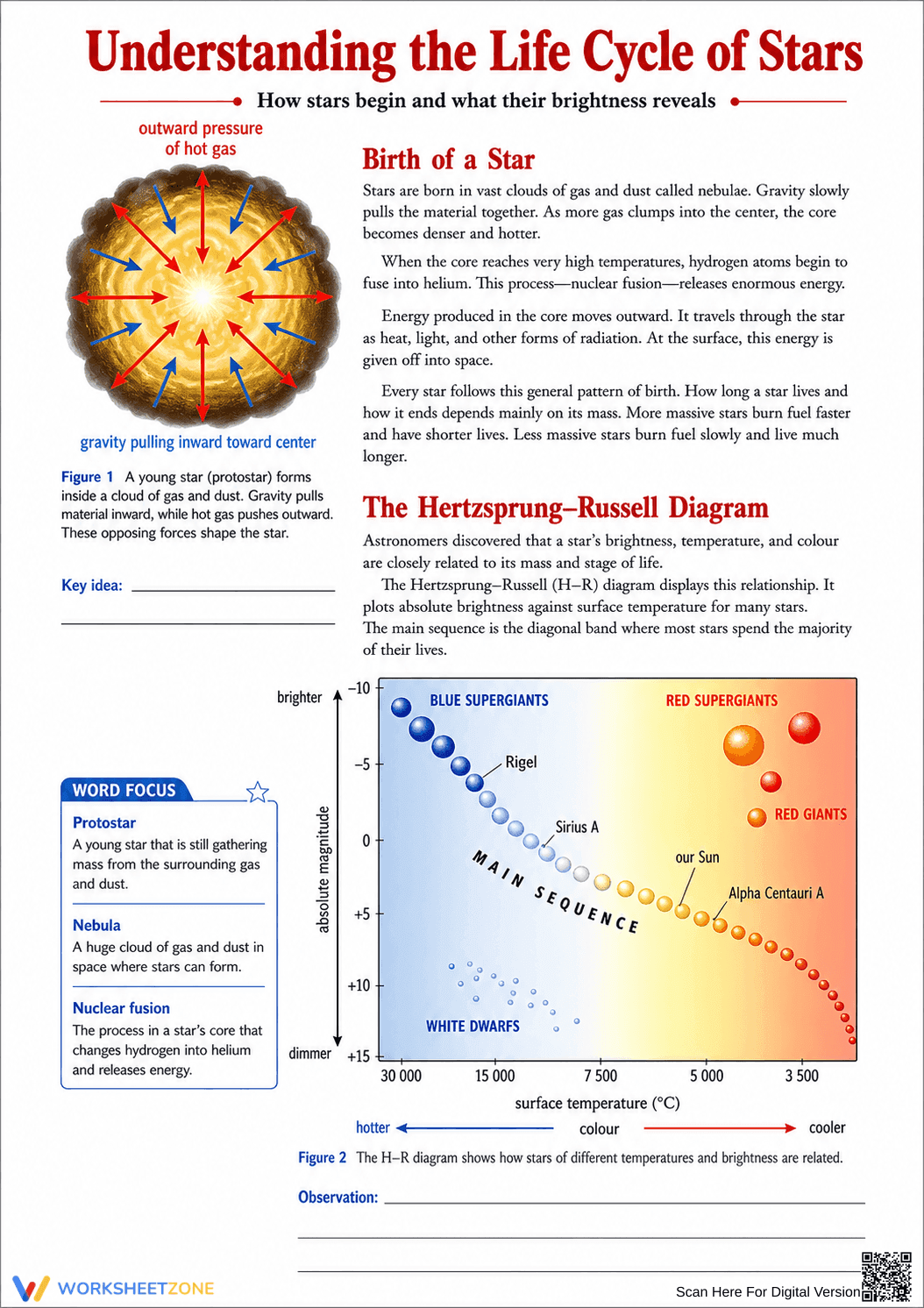
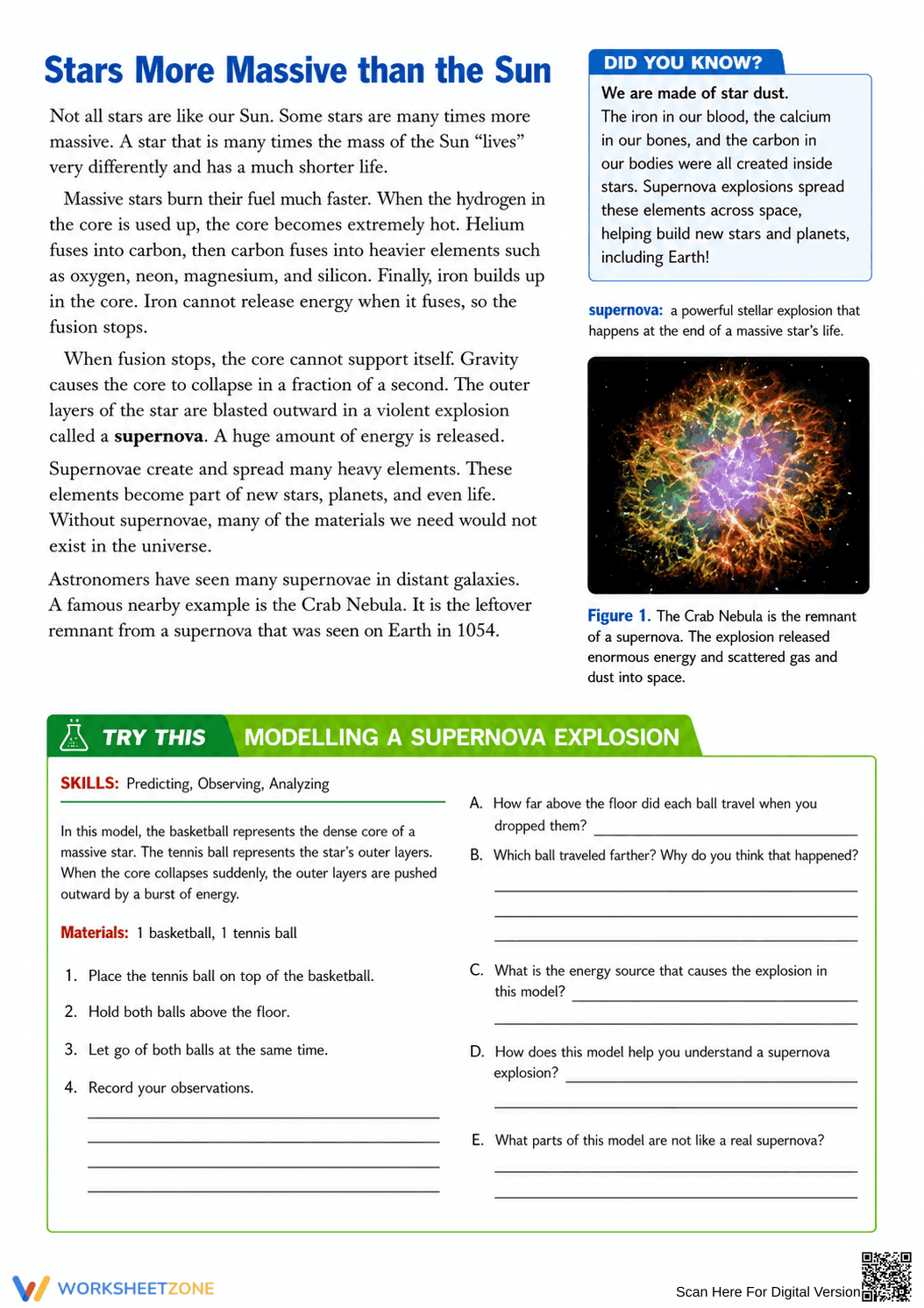
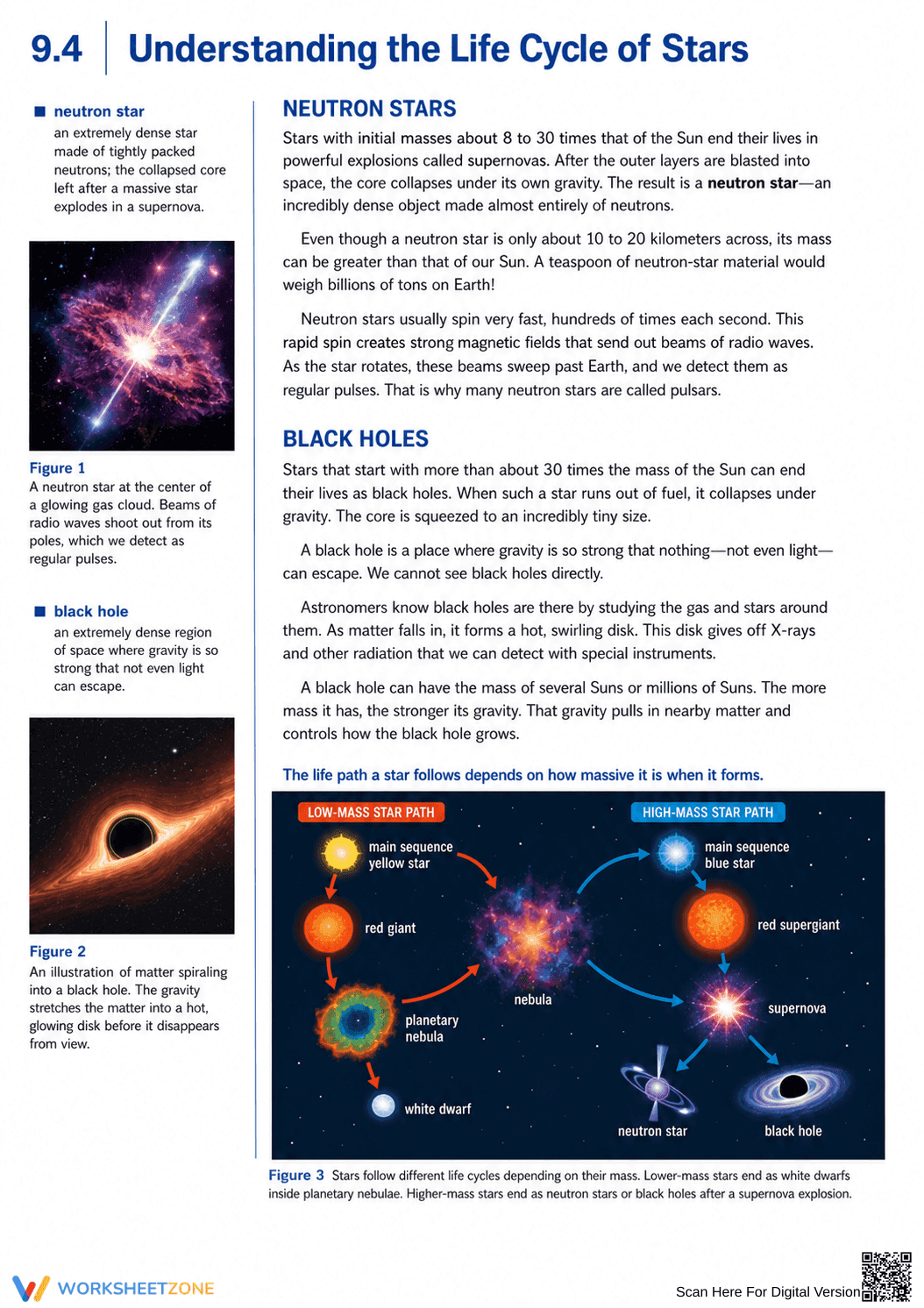
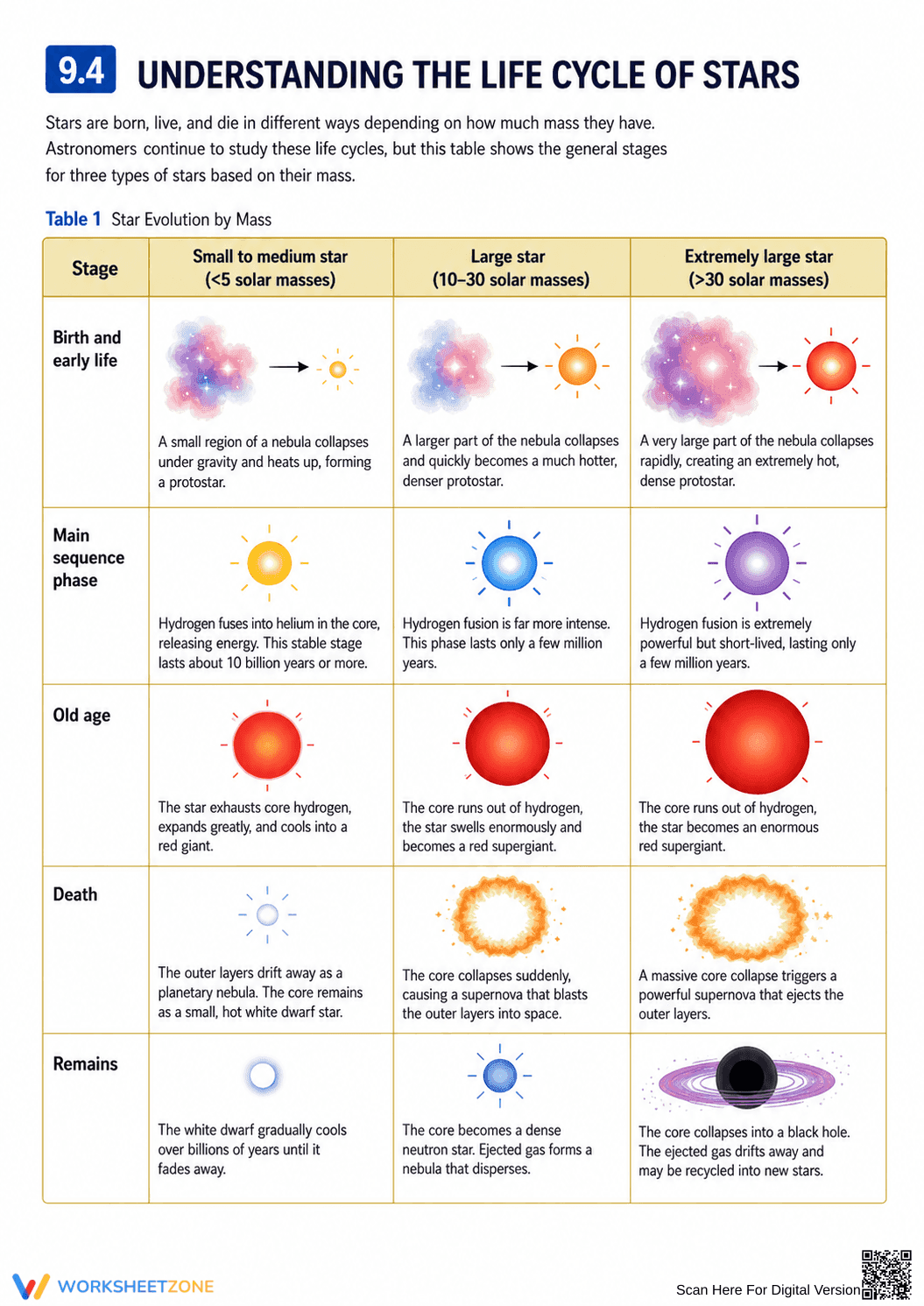
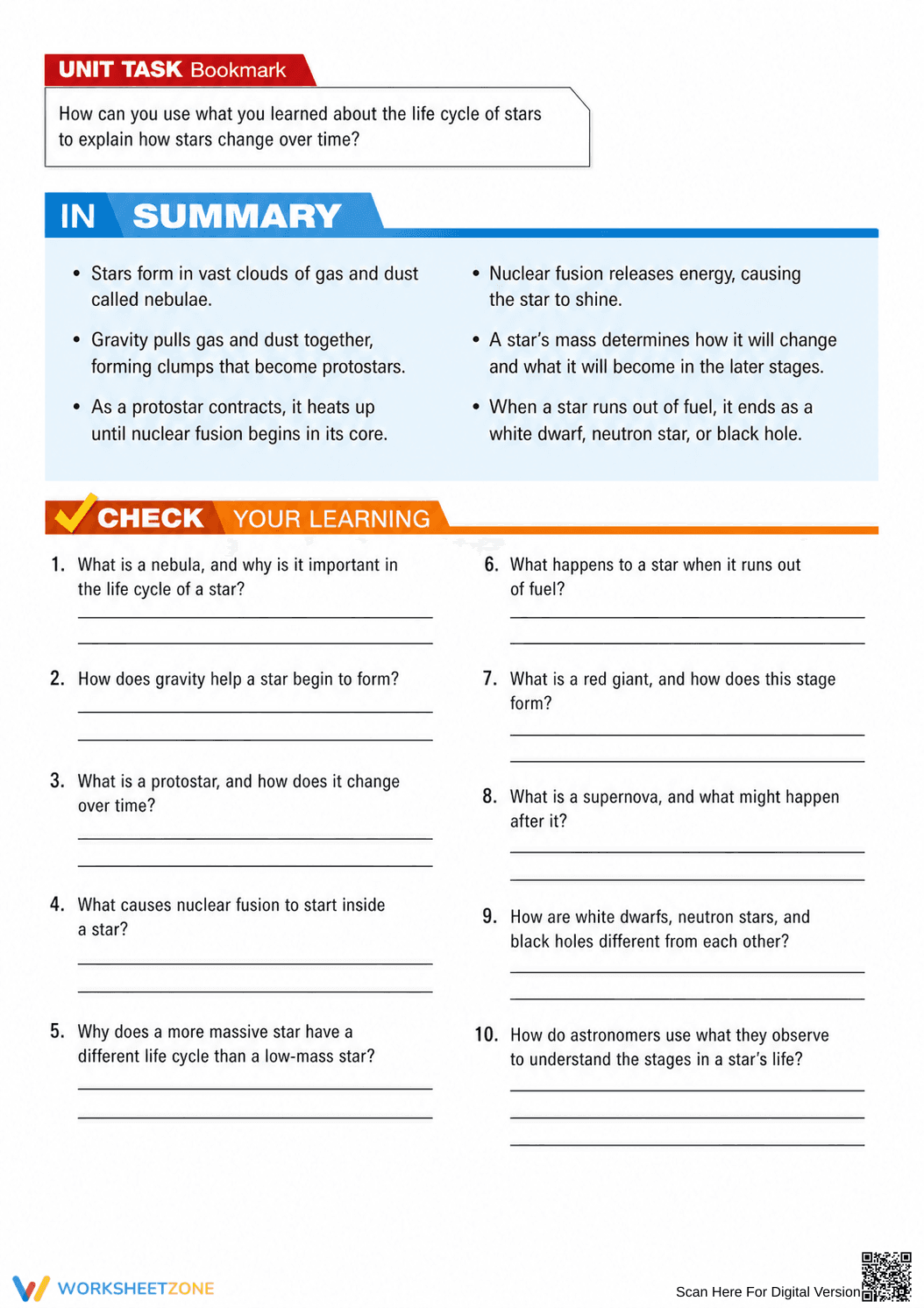
This comprehensive science worksheet guides students through the complex stages of stellar evolution, from initial nebular collapse to the formation of black holes. By analyzing the Hertzsprung-Russell diagram and modeling supernova explosions, learners develop a deep understanding of how mass dictates a star's ultimate fate and the chemical enrichment of the universe.
At a Glance
- Grade: 9-12 · Subject: Earth & Space Science
- Standard:
HS-ESS1-3— Communicate scientific ideas about the way stars produce elements over their life cycle- Skill Focus: Stellar Evolution & H-R Diagram Analysis
- Format: 8 pages · 18 problems · Answer key included · PDF
- Best For: High school astronomy or earth science units
- Time: 45–60 minutes
What's Inside
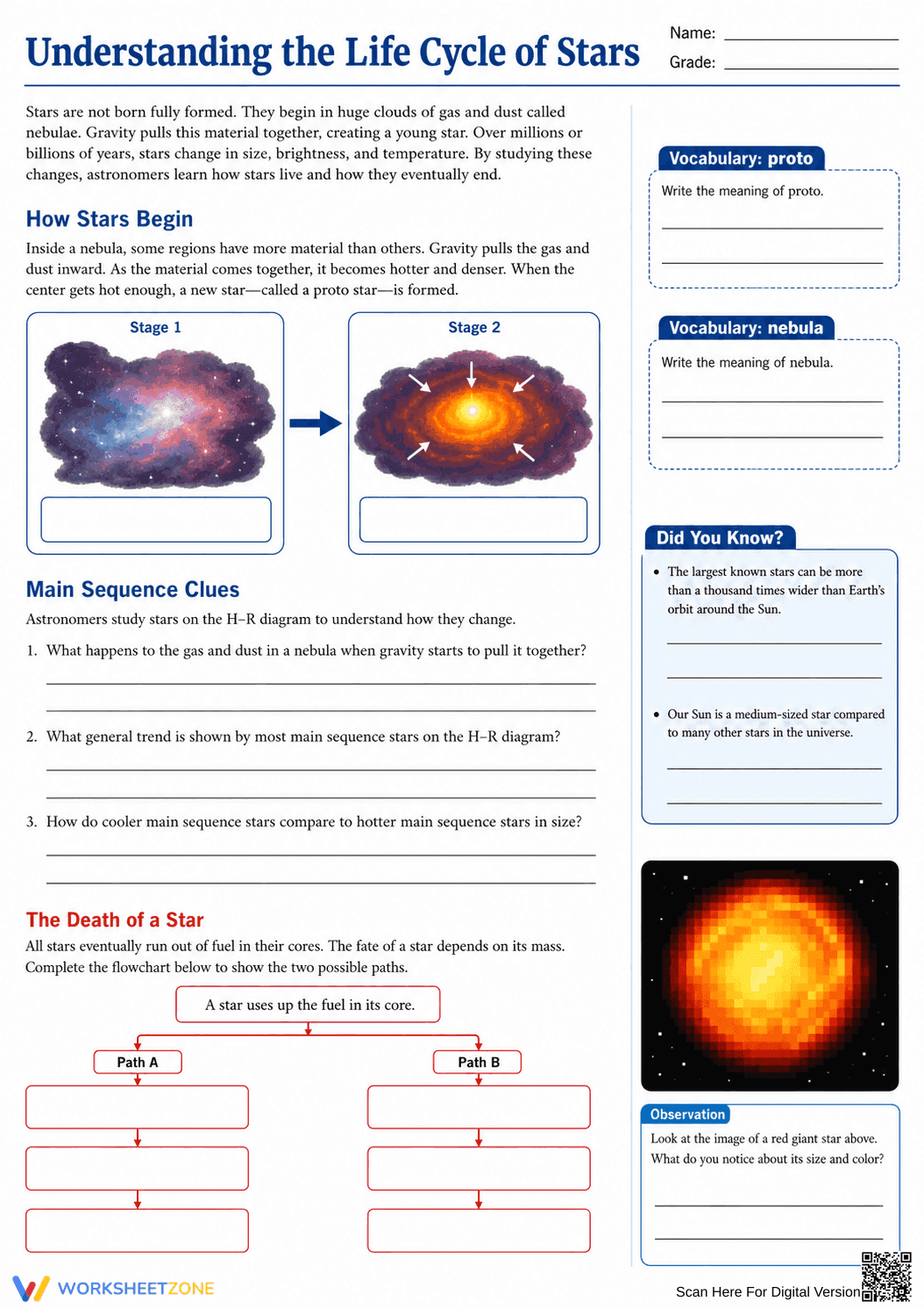
This 8-page instructional packet features detailed reading passages, annotated diagrams of the H-R relationship, and vocabulary focus boxes for terms like "protostar." It includes a hands-on modeling activity to simulate supernova energy release, alongside structured flowcharts that track the divergent paths of low-mass and high-mass stars.
Zero-Prep Workflow
The resource is designed for immediate implementation with a three-step workflow. First, print the 8-page PDF (30 seconds). Second, distribute the packet as a self-contained guided inquiry lesson (1 minute). Third, review the completed flowcharts using the included answer key (5 minutes). Total teacher preparation time is under 2 minutes.
Standards Alignment
This worksheet is primarily aligned with `HS-ESS1-3`: "Communicate scientific ideas about the way stars, over their life cycle, produce elements." It also supports HS-ESS1-1 by explaining the role of nuclear fusion in star formation. Both standard codes can be copied directly into lesson plans, IEP goals, or district curriculum mapping tools.
How to Use It
Use this packet during the "Explain" phase of a 5E instructional model to formalize student understanding of stellar life cycles after an initial observation of nebulae images. It also serves as an excellent formative assessment tool; teachers should observe how students categorize the "Path A" vs. "Path B" flowchart to identify misconceptions about stellar mass.
Who It's For
This resource is tailored for high school students in Earth Science or Astronomy courses, including those requiring visual scaffolds like labeled diagrams and word banks. It pairs naturally with a digital planetarium simulation or a direct instruction lecture on the lifecycle of our own Sun.
The HS-ESS1-3 standard requires students to synthesize complex information regarding the life cycle of stars and the resulting nucleosynthesis of heavy elements. This worksheet facilitates this by providing a structured progression from basic star birth to terminal stages like supernovae and neutron stars. According to the RAND AIRS 2024 report on science literacy, high-quality instructional materials that integrate visual models with text-based evidence significantly improve student retention of abstract astronomical concepts. By utilizing the Hertzsprung-Russell diagram as a central analytical tool, this resource ensures students can relate a star's observable properties—such as temperature and luminosity—to its internal physical processes. This alignment with evidence-based practices supports the development of scientific communication skills essential for college and career readiness in STEM fields. The inclusion of a hands-on modeling component further reinforces the physical mechanics of stellar collapse, bridging the gap between theoretical physics and observable cosmic phenomena.


