


























Views
Downloads

RI.9-10.1 Test: Essential Units 7 & 8 ELA — Grade 9 Aligned
Paste this activity's link or code into your existing LMS (Google Classroom, Canvas, Teams, Schoology, Moodle, etc.).
Students can open and work on the activity right away, with no student login required.
You'll still be able to track student progress and results from your teacher account.
This High School ELA progress test evaluates proficiency across reading comprehension, vocabulary, grammar, and functional writing. As a summative assessment for Units 7 and 8, it provides an 80-mark framework for measuring mastery. Students engage with diverse tasks ranging from evidence-based reading to complex grammatical applications, ensuring a thorough check of acquired knowledge.
At a Glance
- Grade: Grade 9 · Subject: English Language Arts
- Standard:
RI.9-10.1— Cite strong and thorough textual evidence to support analysis of informational texts- Skill Focus: Reading, Grammar, Vocab, & Writing
- Format: 4 pages · 73 tasks · Answer key included · PDF
- Best For: Summative assessment and semester tracking
- Time: 45–60 minutes
What's Inside
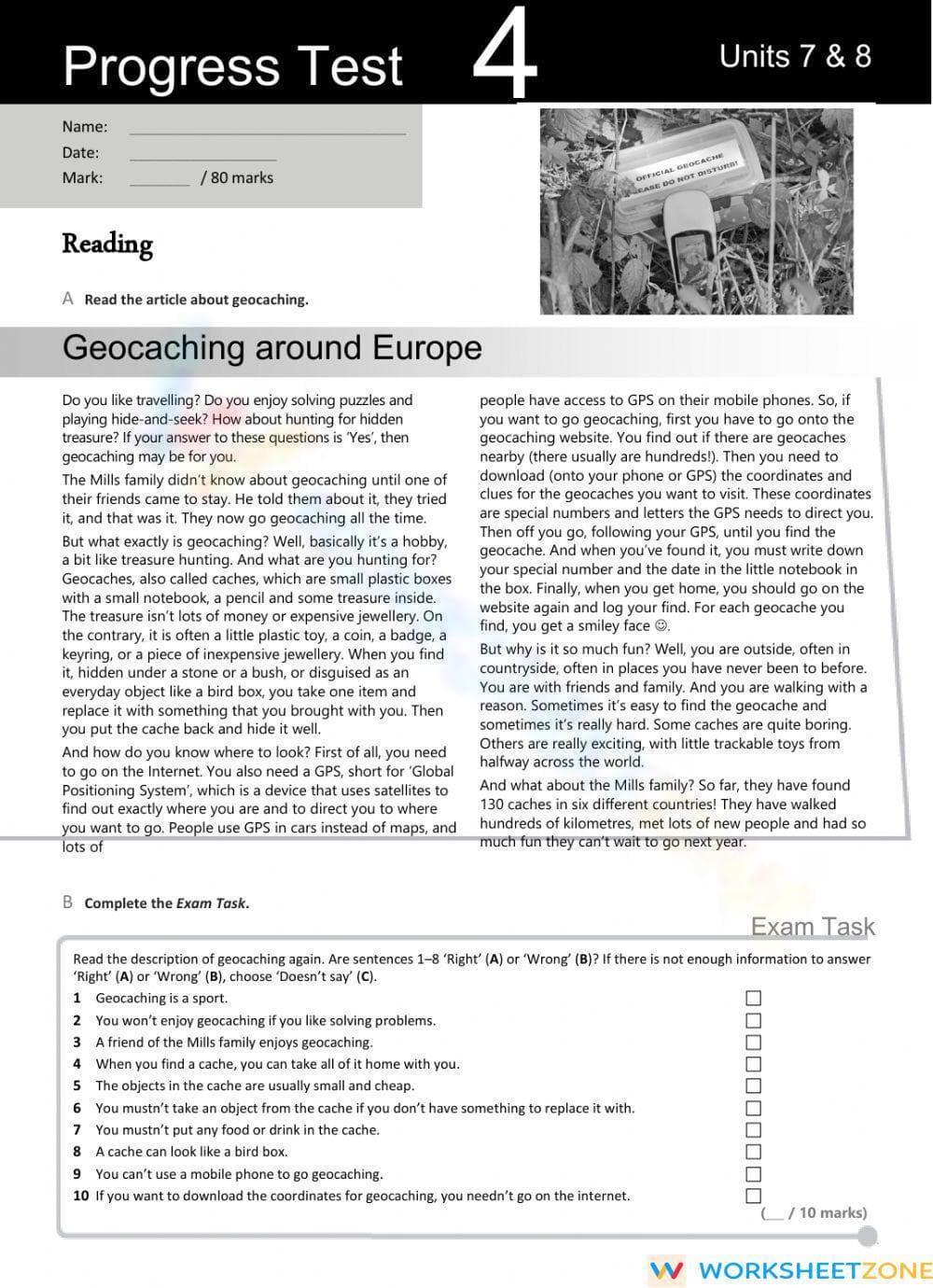
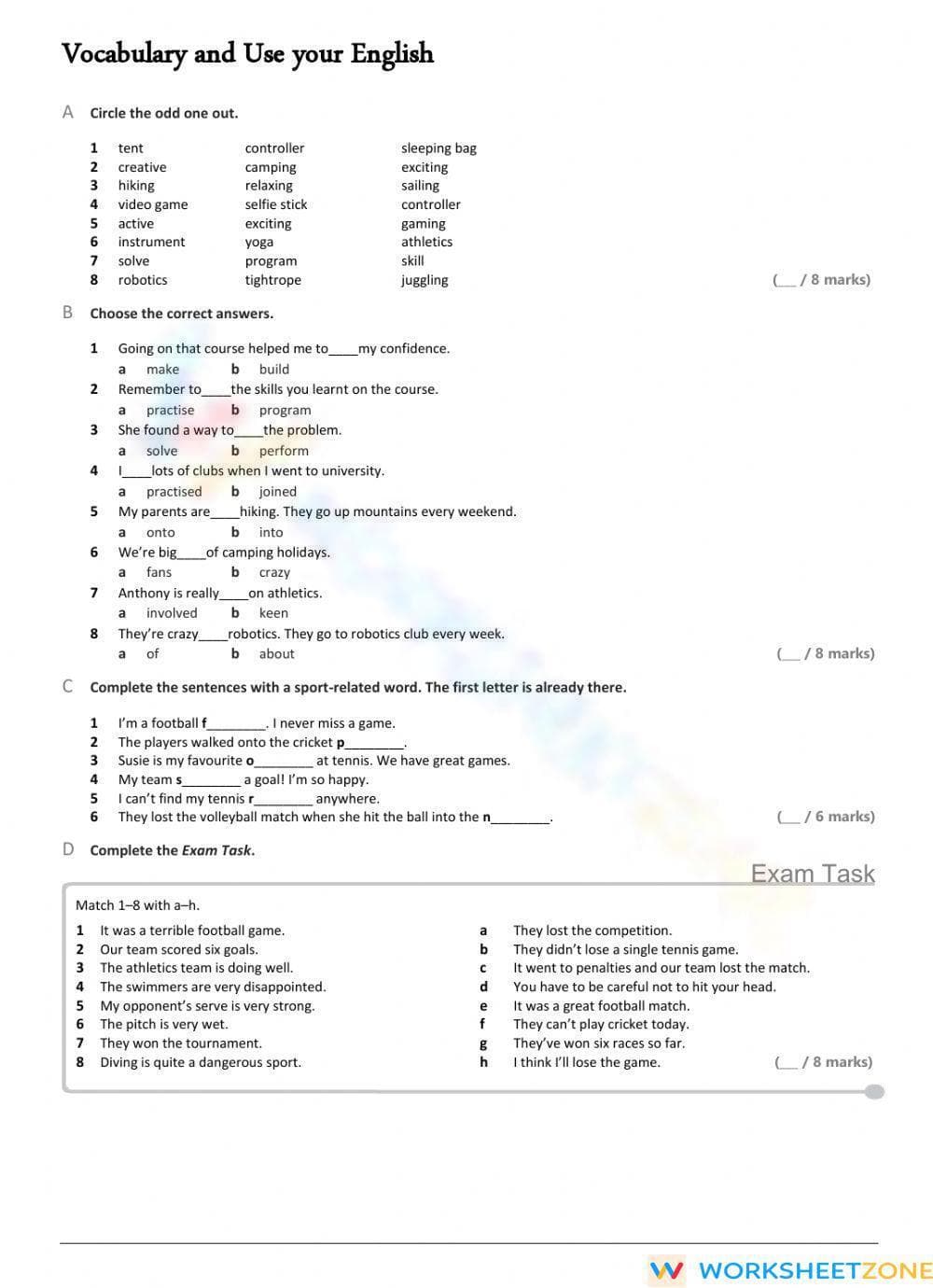
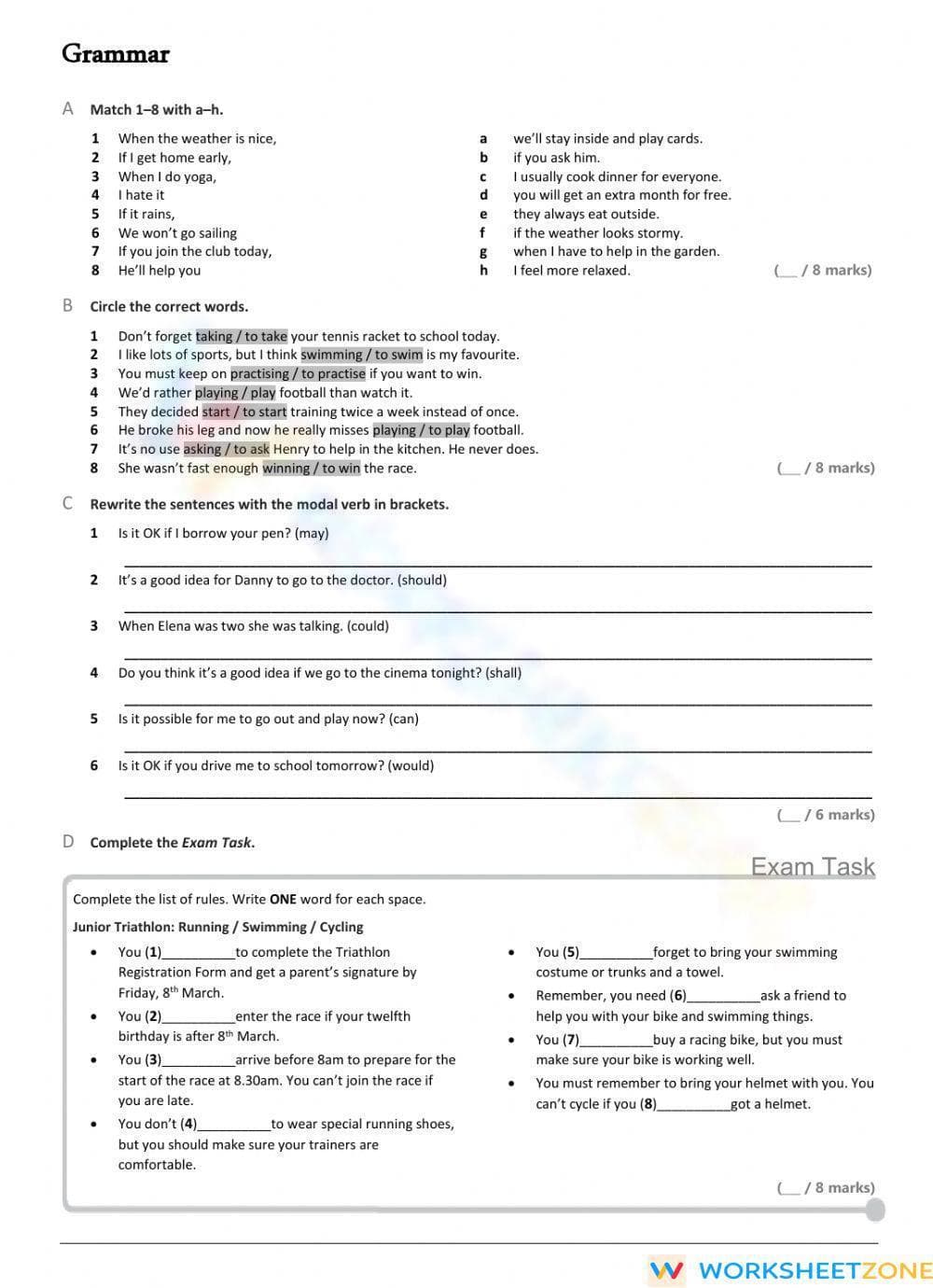
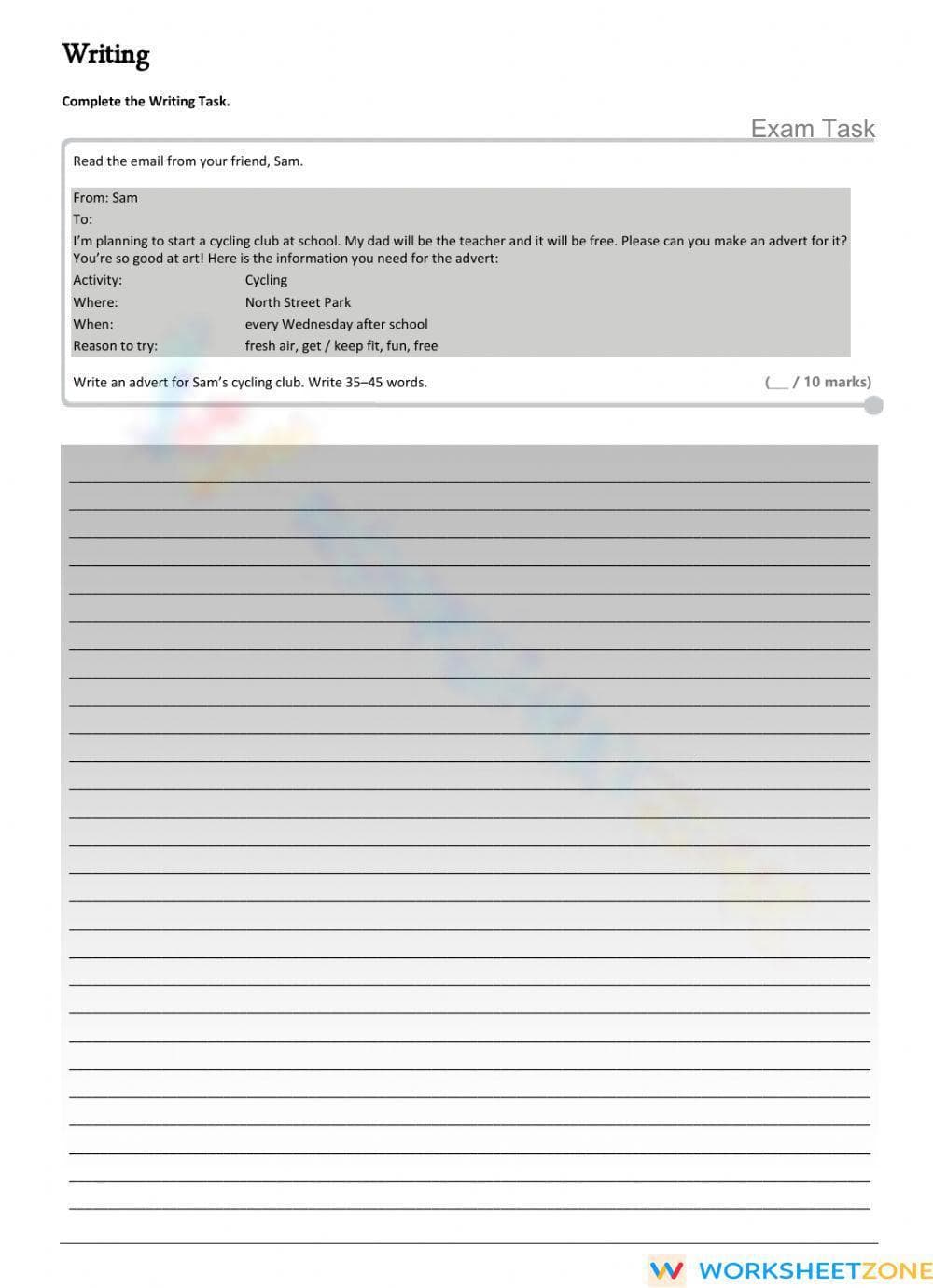
Inside this 4-page assessment is a "Geocaching around Europe" reading passage paired with ten comprehension questions. The "Vocabulary and Use your English" section features four distinct task types including "odd one out" and contextual sentence completion. The grammar module addresses conditionals, gerunds versus infinitives, and modal verbs. Finally, a functional writing task requires students to compose a club advertisement.
Mastery Evidence
Mastery evidence is captured through a tiered scoring system totaling 80 marks, allowing for granular data collection on specific sub-skills. Each section corresponds to essential ELA components, with the reading portion measuring evidence extraction while the grammar sections validate structural accuracy. The writing task employs a 10-mark scale to assess communicative competence. Results can be entered directly into gradebooks or used to inform IEP progress notes.
Standards Alignment
The primary alignment is to `CCSS.ELA-LITERACY.RI.9-10.1`, which requires students to cite strong and thorough textual evidence to support analysis of what the text says explicitly as well as inferences drawn from the text. Additionally, the grammar sections support `CCSS.ELA-LITERACY.L.9-10.1` by demonstrating command of the conventions of standard English grammar and usage. Both standard codes can be copied directly into lesson plans, IEP goals, or district curriculum mapping tools.
How to Use It
Use this test as a summative assessment after completing units on leisure, travel, or sport-related vocabulary and intermediate grammar. During the 60-minute session, observe how students navigate the "Doesn't say" option in the reading task to identify gaps in logical inference. For formative use, assign individual sections as warm-ups to check for retention of specific modal verb rules or vocabulary sets.
Who It's For
This resource is ideal for general education High School students, advanced ESL learners, and students requiring structured assessment environments. It pairs naturally with informational passages about modern hobbies or anchor charts focusing on conditional structures and modal verb functions. This comprehensive tool supports varied learners through clear instructions and predictable task formats.
This assessment prioritizes evidence-based reading and syntactic complexity, reflecting the rigorous demands of the CCSS.ELA-LITERACY.RI.9-10.1 standard. By integrating reading, grammar, and writing into a single instrument, it mirrors the holistic nature of contemporary ELA frameworks. EdReports (2024) confirms that materials balancing discrete skill practice with integrated application ensure long-term retention. Fisher & Frey (2014) highlight assessment cycles, which this test facilitates through varied difficulty. Functional writing tasks move students beyond recognition to active production, a key indicator of career readiness. This printable test provides a reliable metric for determining student growth and identifies specific areas for targeted intervention or enrichment. Both standard codes can be copied directly into lesson plans or IEP goals to track progress effectively.


