


























Views
Downloads

Take Sentences Apart Worksheet | Grade 2 Essential ELA
Paste this activity's link or code into your existing LMS (Google Classroom, Canvas, Teams, Schoology, Moodle, etc.).
Students can open and work on the activity right away, with no student login required.
You'll still be able to track student progress and results from your teacher account.
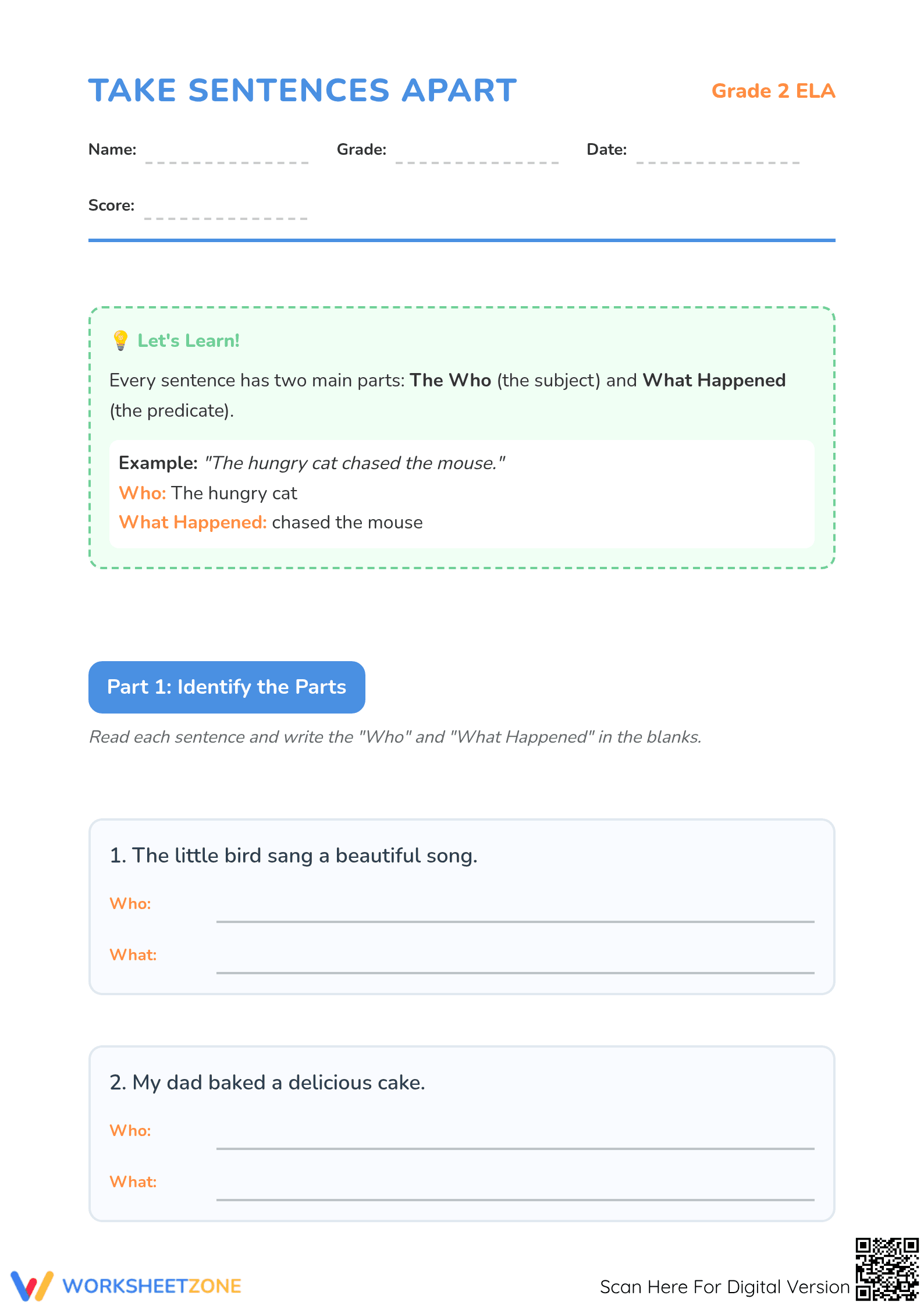
This comprehensive Grade 2 English Language Arts worksheet guides students through the fundamental components of sentence structure. By breaking down complete thoughts into the "Who" and the "What Happened," learners master the essential building blocks of clear communication. This activity ensures students can identify subjects and predicates accurately to improve their own writing and grammatical fluency.
At a Glance
- Grade: 2 · Subject: English Language Arts
- Standard:
CCSS.ELA-LITERACY.L.2.1— Demonstrate command of the conventions of standard English grammar and usage when writing- Skill Focus: Sentence structure (Subject and Predicate)
- Format: 4 pages · 12 problems · Answer key included · PDF
- Best For: Zero-prep morning work or sub plans
- Time: 20–30 minutes
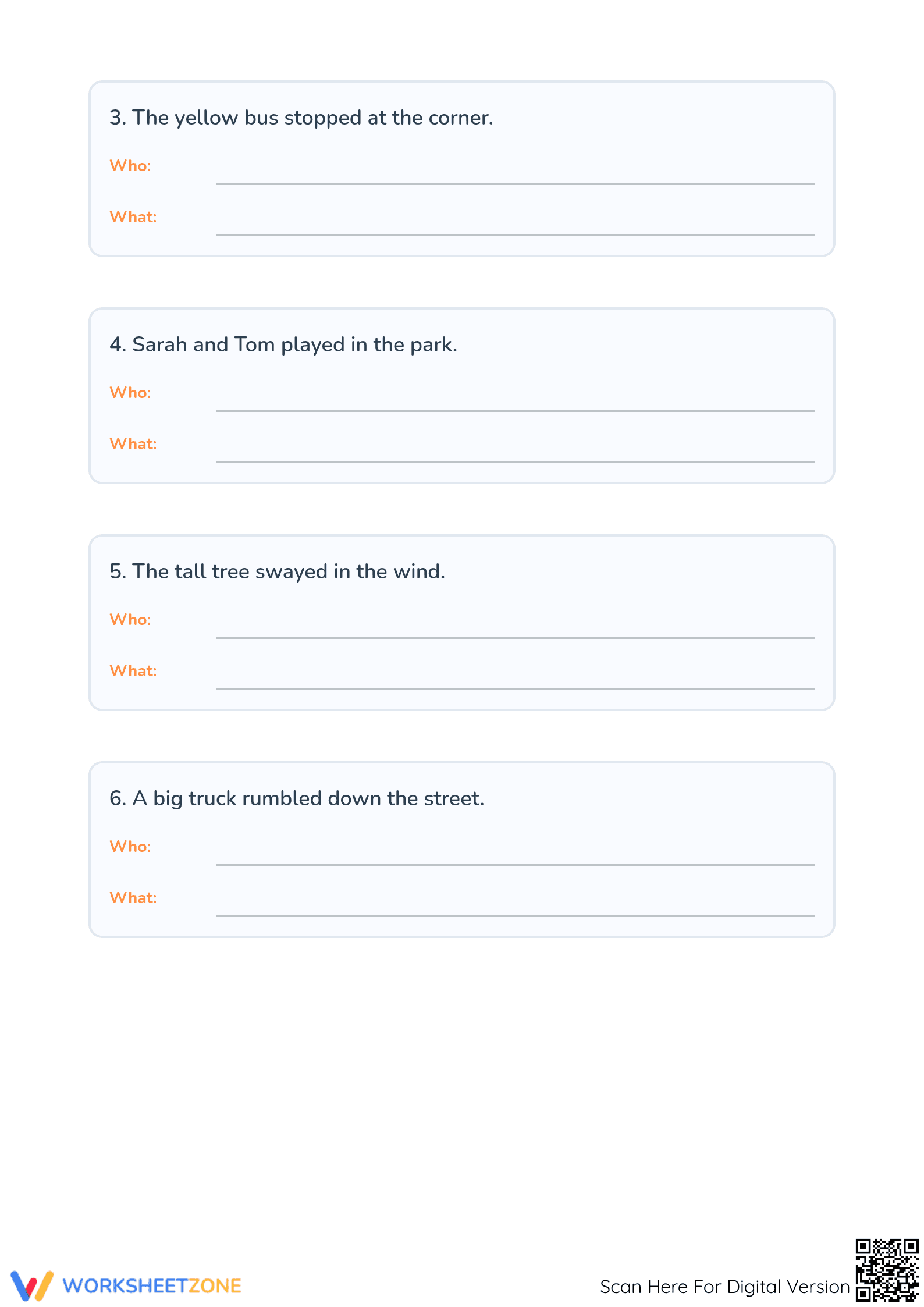
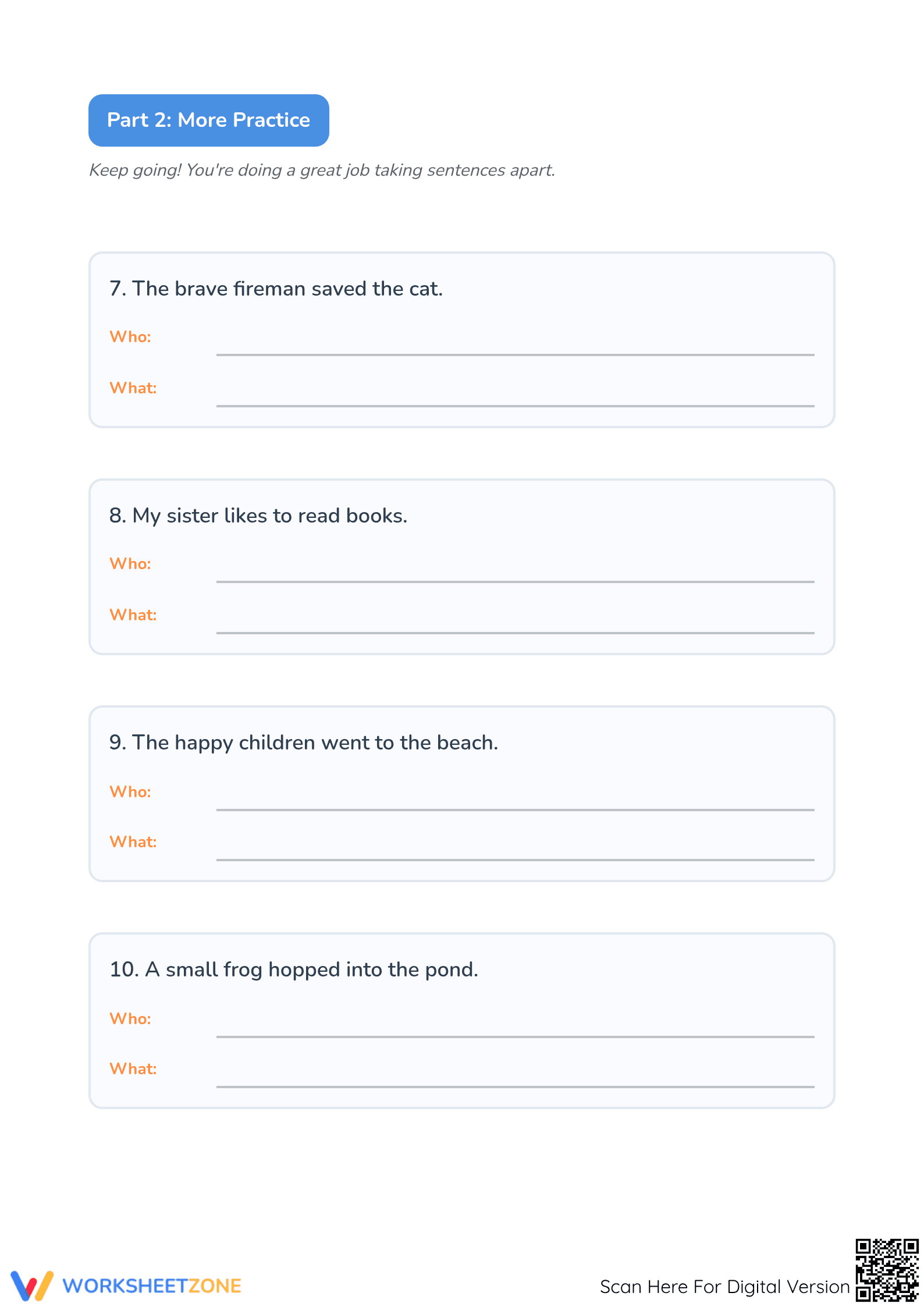
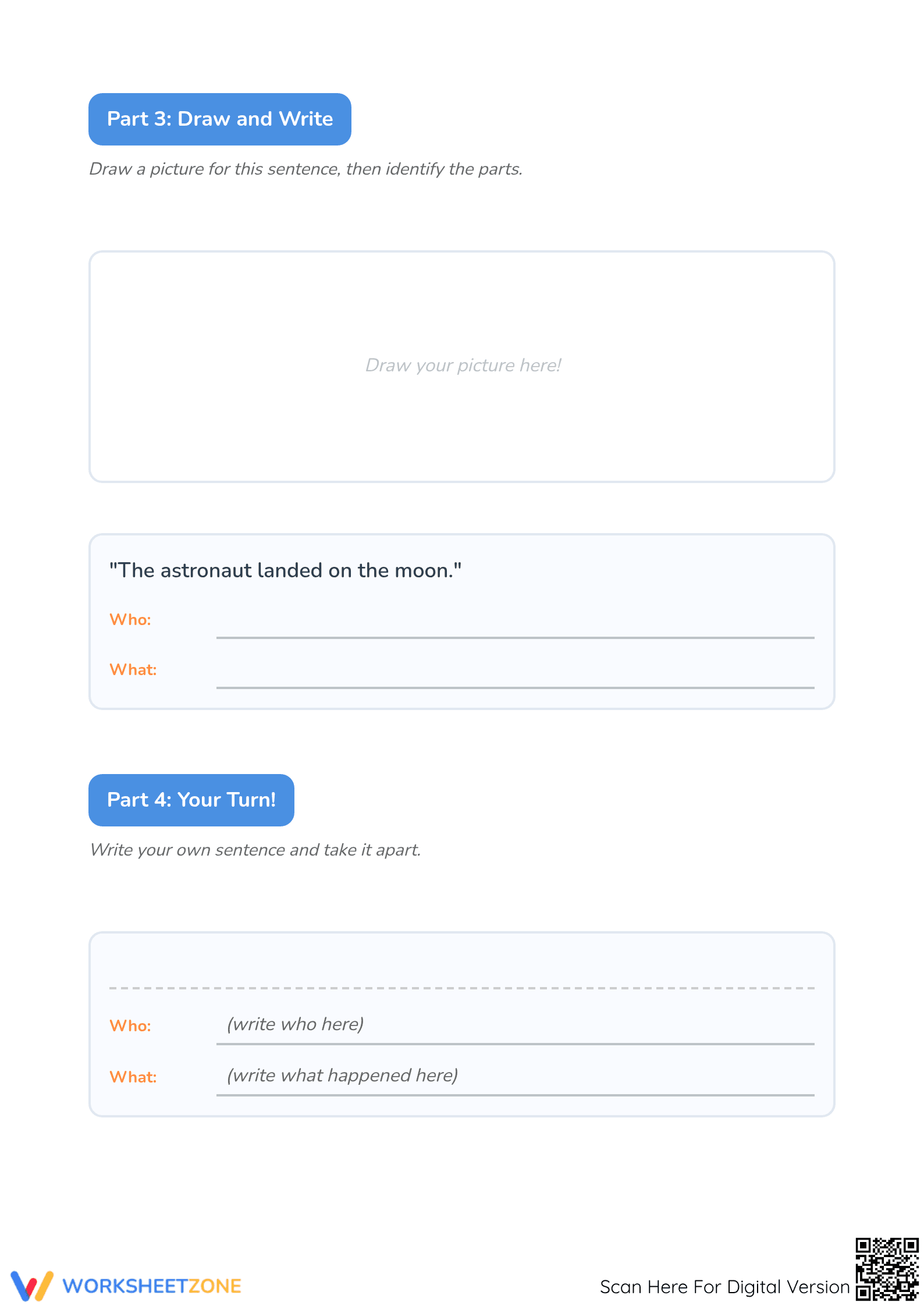
Inside this 4-page PDF, you will find a structured "Let's Learn!" instructional box that explains sentence parts using student-friendly language ("The Who" and "What Happened"). The resource features 10 identification tasks where students analyze provided sentences, one "Draw and Write" activity for visual reinforcement, and a "Your Turn!" creative application task. A complete answer key is included for rapid grading.
Zero-Prep Workflow
The workflow for this resource is designed for maximum efficiency. Teachers can Print (30 seconds) the multi-page set, Distribute (1 minute) to the class as a stand-alone lesson, and Review (5 minutes) using the provided answer key. With a total prep time of less than two minutes, this worksheet is an ideal solution for emergency sub folders, unexpected schedule shifts, or supplemental centers.
Standards Alignment
This resource aligns directly with CCSS.ELA-LITERACY.L.2.1, which requires students to "demonstrate command of the conventions of standard English grammar and usage when writing or speaking." By identifying the subject and predicate in various sentence types, students build the prerequisite skills needed to expand and rearrange complete sentences as outlined in sub-standard F. Both standard codes can be copied directly into lesson plans, IEP goals, or district curriculum mapping tools.
How to Use It
Use this worksheet as a formative assessment after introducing the concept of sentence parts. Distribute it during independent practice to observe if students can differentiate between the noun-based subject and the verb-based predicate. Educators should look for students who struggle with the "What Happened" section, as this often indicates a need for further instruction on action verbs. Expect a completion time of 25 minutes.
Who It's For
This resource is tailored for Grade 2 students but serves as an excellent intervention tool for Grade 3 learners needing a grammar refresh. It is particularly beneficial for English Language Learners who are still internalizing English syntax patterns. For a complete lesson, pair this worksheet with a short mentor text or an anchor chart highlighting different colorful subjects and predicates.
Effective writing instruction in the primary grades necessitates a clear understanding of sentence architecture. According to Fisher & Frey (2014), the gradual release of responsibility model—beginning with direct explanation and moving toward independent application—is critical for mastering grammatical conventions. This worksheet implements that research-backed strategy by providing a clear "Let's Learn!" instructional anchor before asking students to identify parts in 12 structured tasks. By focusing on the CCSS.ELA-LITERACY.L.2.1 standard, the resource ensures that Grade 2 students develop the syntax awareness required for more complex composition. The inclusion of visual drawing components further supports cognitive encoding of sentence meaning, a technique highlighted in NAEP proficiency reports as vital for early literacy success. This printable provides a high-utility, research-aligned bridge between recognizing sentence parts and producing original, grammatically sound work in an increasingly demanding academic environment.


