




























Views
Downloads

Essential Subject and Predicate Worksheet | Grade 2 ELA

Paste this activity's link or code into your existing LMS (Google Classroom, Canvas, Teams, Schoology, Moodle, etc.).
Students can open and work on the activity right away, with no student login required.
You'll still be able to track student progress and results from your teacher account.
This comprehensive worksheet helps Grade 2 students master the fundamental components of a complete sentence: the subject and the predicate. By identifying who or what the sentence is about and what is happening, learners develop the structural awareness necessary for clear writing. It provides a structured path from identification to independent sentence generation.
At a Glance
- Grade: 2 · Subject: ELA
- Standard:
CCSS.ELA-LITERACY.L.2.1— Demonstrate command of standard English grammar and usage when writing or speaking.- Skill Focus: Sentence Structure (Subject & Predicate)
- Format: 4 pages · 18 problems · Answer key included · PDF
- Best For: Small group instruction or independent practice
- Time: 25–35 minutes
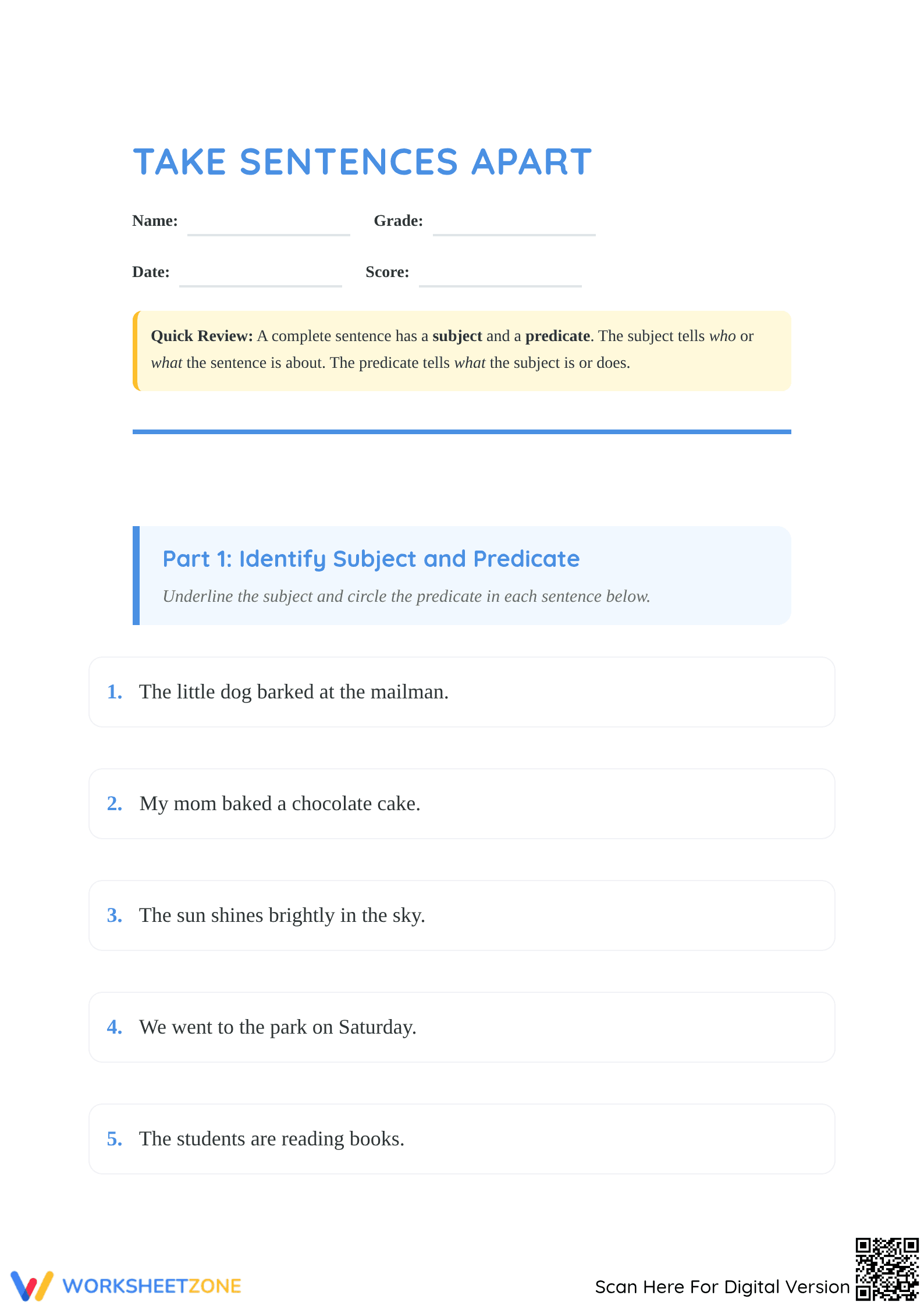
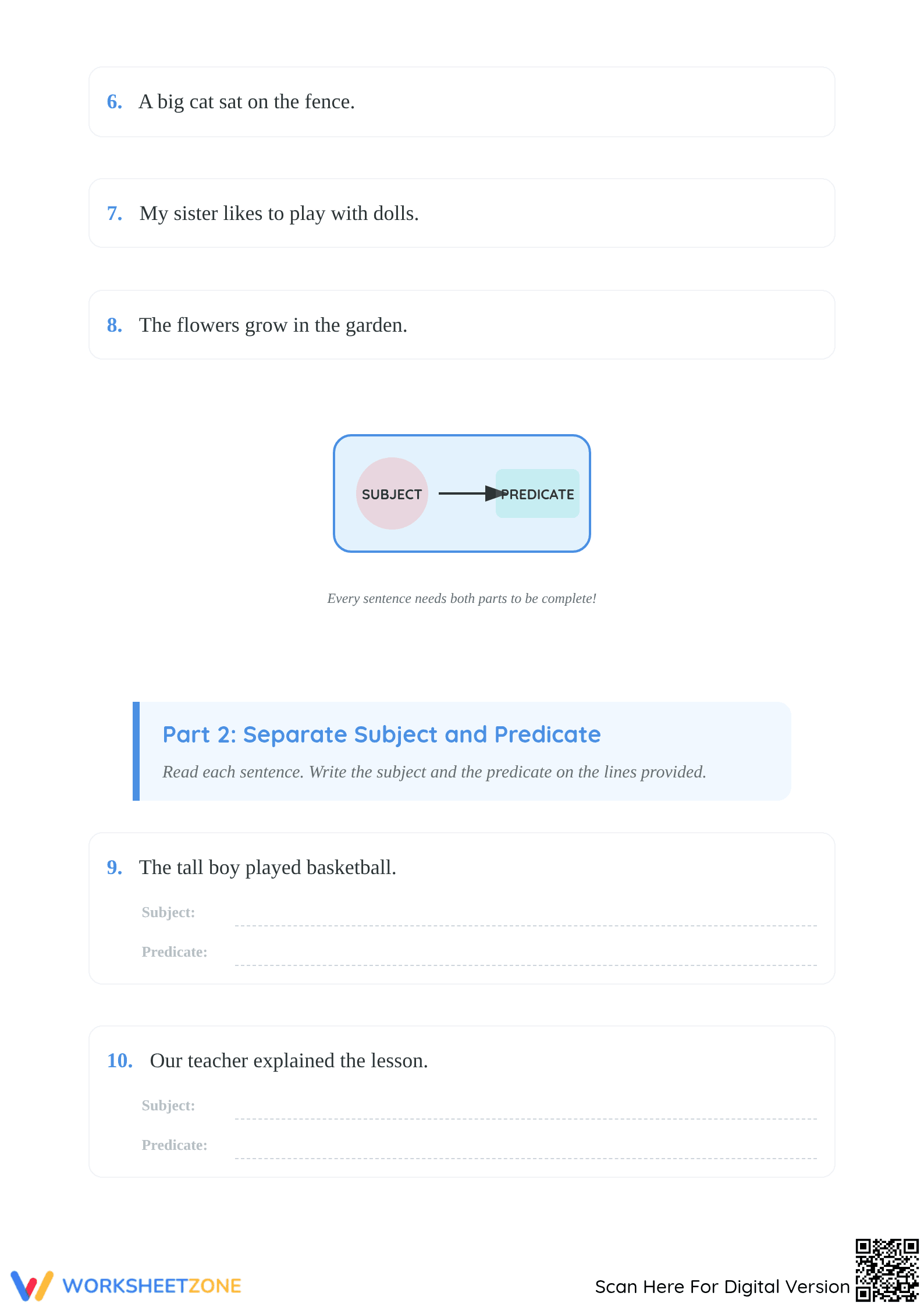
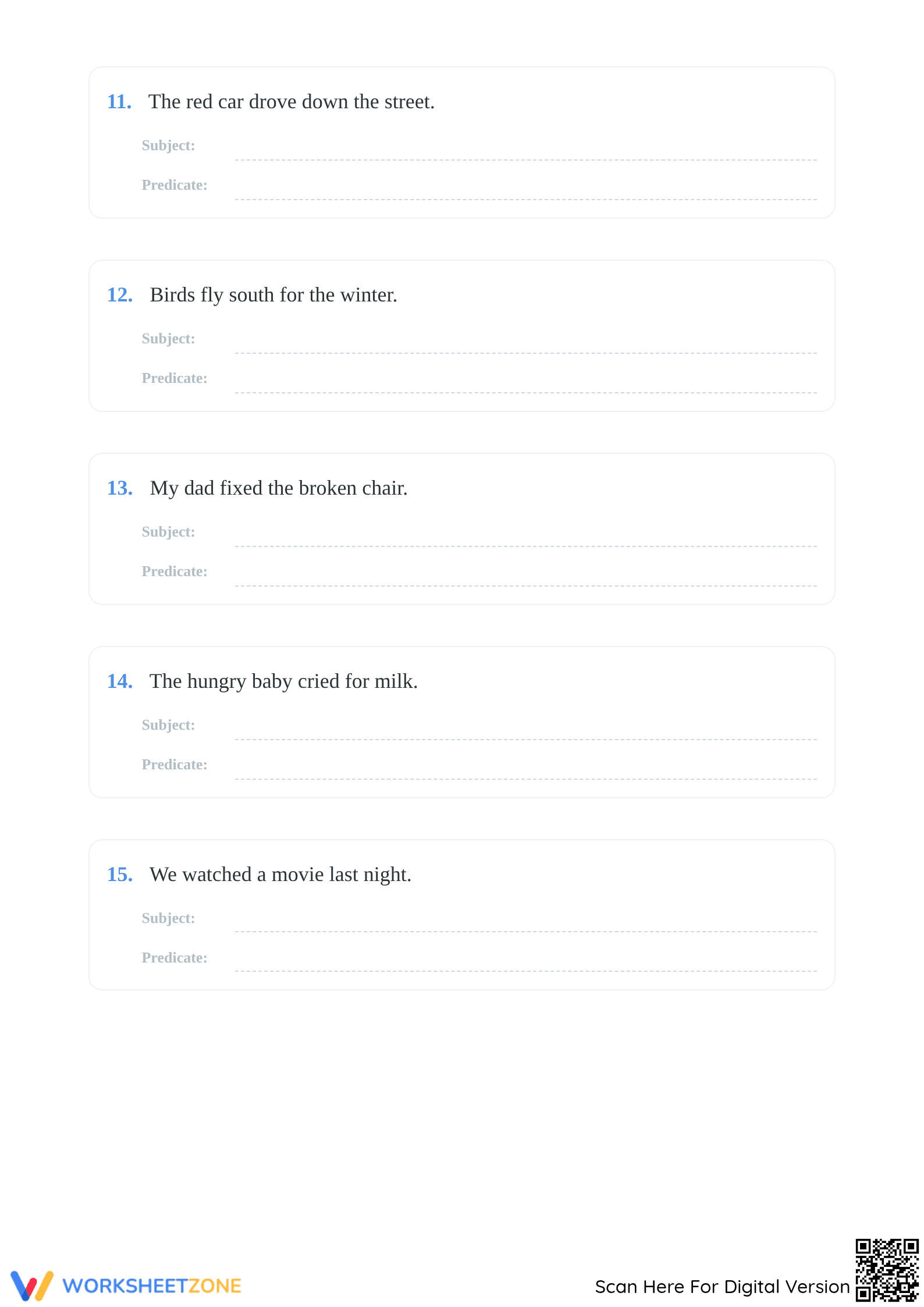
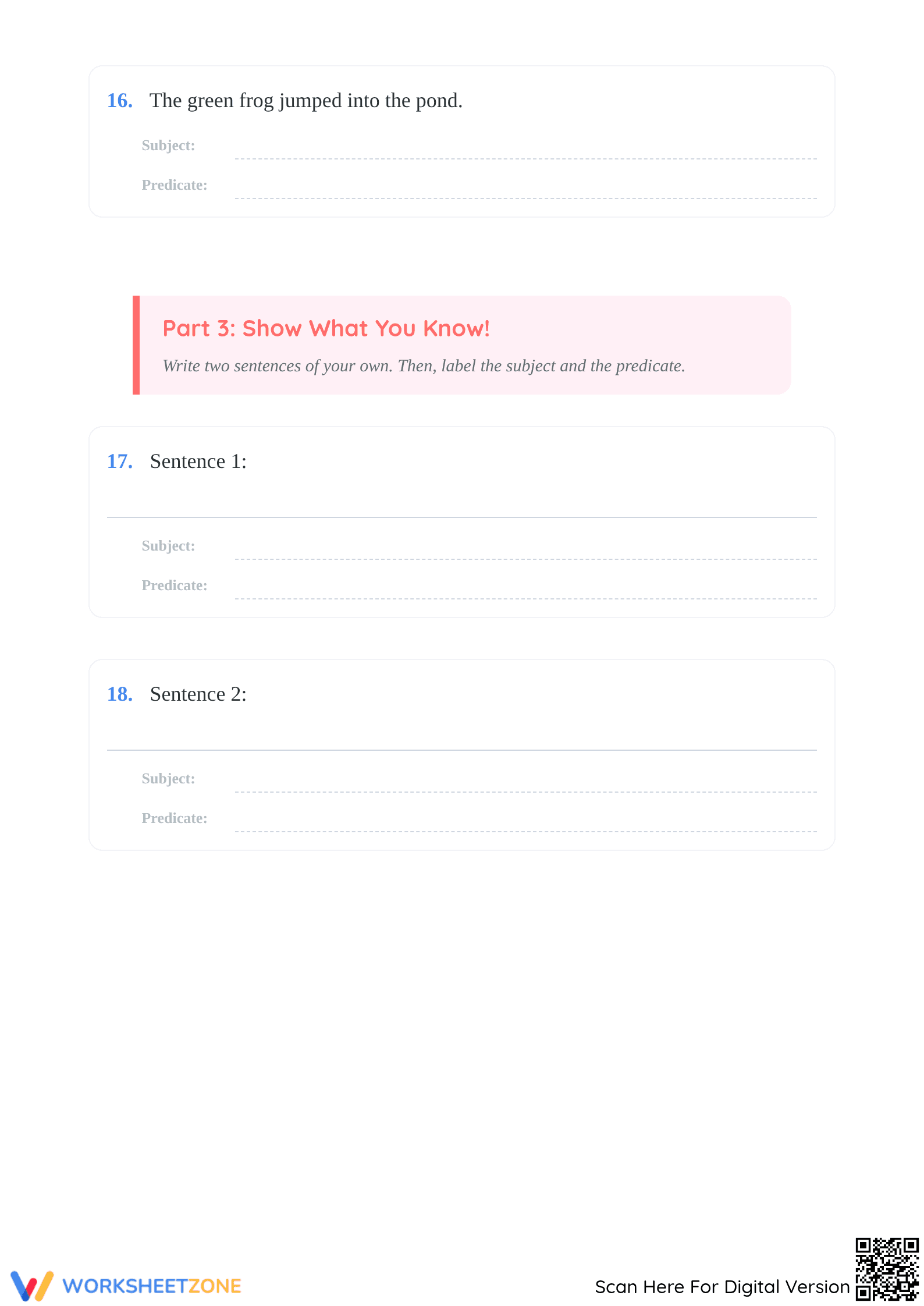
What's Inside: This 4-page PDF contains a complete lesson sequence. Part 1 features 8 sentences for identification via underlining and circling. Part 2 contains 8 items requiring students to physically write the subject and predicate on separate lines to reinforce separation. Part 3 challenges students to apply their knowledge by composing two original sentences and labeling the components. A "Quick Review" box and a visual diagram provide essential scaffolds throughout the document.
Zero-Prep Workflow: This resource is designed for immediate classroom use. Step 1: Print the 4-page packet for each student (less than 30 seconds). Step 2: Distribute during your grammar block or as a morning work activity (1 minute). Step 3: Use the provided answer key for rapid checking or student self-correction (under 5 minutes). Total teacher preparation time is less than two minutes, making it an ideal choice for emergency sub plans or busy instructional days.
Standards Alignment: This activity is directly aligned with `CCSS.ELA-LITERACY.L.2.1`, requiring students to demonstrate command of the conventions of standard English grammar. It specifically supports `CCSS.ELA-LITERACY.L.2.1.F` by helping students produce and expand complete simple and compound sentences. Both standard codes can be copied directly into lesson plans, IEP goals, or district curriculum mapping tools to ensure documented instructional compliance.
How to Use It: Use this worksheet as a primary practice tool after a direct instruction lesson on sentence parts. It works effectively during the independent practice phase of a gradual release model. For formative assessment, observe students during Part 2; if a student struggles to extract the predicate, it may indicate a need for a review of action verbs. Completion time typically ranges from 25 to 35 minutes depending on student writing speed.
Who It's For: This resource is tailored for Grade 2 students but is also appropriate for Grade 3 students requiring remedial grammar support. The clear formatting and included scaffolds assist English Language Learners (ELLs) in understanding sentence mechanics. Pair this worksheet with a short reading passage, asking students to find and label the subject and predicate in the first three sentences of the text for extended application.
Developing a command of sentence structure is a foundational milestone in primary literacy, as outlined in CCSS.ELA-LITERACY.L.2.1. This worksheet targets the specific ability to decompose sentences into subjects and predicates, a skill that Fisher & Frey (2014) identify as critical for the gradual release of responsibility in writing instruction. By moving from guided identification to independent construction, students internalize the logic of English syntax. Research from the NAEP consistently demonstrates that students who can articulate the relationship between sentence components exhibit higher proficiency in overall reading comprehension and writing clarity. This resource provides the necessary scaffolding to bridge the gap between recognizing sentence parts and applying them in original compositions. The 18-task sequence ensures that the concept is reinforced through multiple modalities, including underlining, circling, and writing. Educators can use these results to identify specific gaps in grammatical understanding before moving to complex sentence expansion.


