


























0
Views
0
Downloads

0.0
0
Save
0 Likes
Share
Exploring Nonfiction: Super Interesting Facts
0 Views
0 Downloads
Paste this activity's link or code into your existing LMS (Google Classroom, Canvas, Teams, Schoology, Moodle, etc.).
Students can open and work on the activity right away, with no student login required.
You'll still be able to track student progress and results from your teacher account.
Information
Description
What It Is:
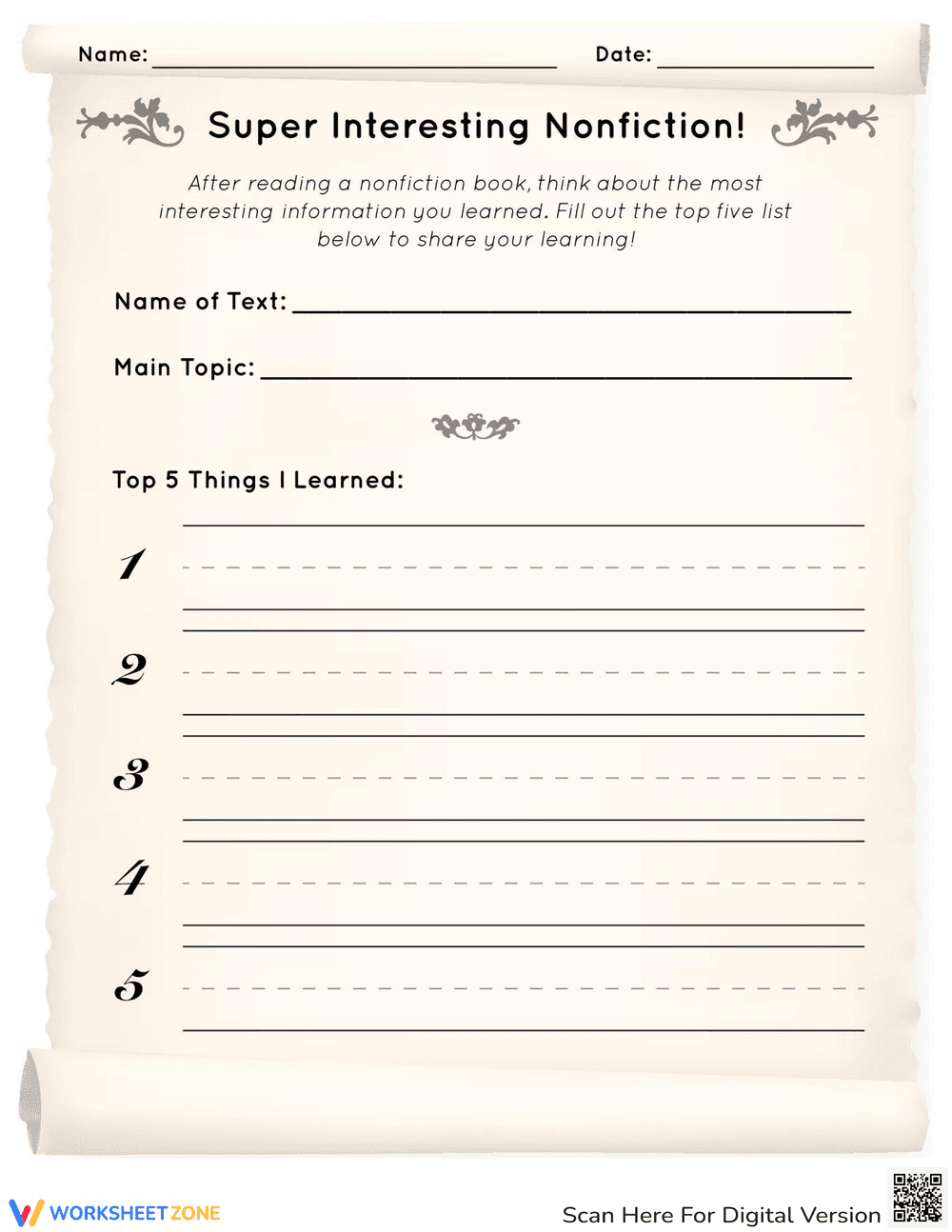
This is an educational worksheet titled 'Super Interesting Nonfiction!' It prompts students to record the 'Name of Text' and 'Main Topic' of a nonfiction book they have read. The worksheet then asks them to list the 'Top 5 Things I Learned' from the book, providing numbered lines for each point. There are also spaces for Name and Date at the top.
Grade Level Suitability:
This worksheet is suitable for grades 2-5. The task of identifying the main topic and summarizing key learning points from a nonfiction text is appropriate for students in these grades, as they develop their reading comprehension and summarization skills. The format with numbered lines and clear prompts makes it accessible to this age group.
Why Use It:
This worksheet helps students actively engage with nonfiction texts by encouraging them to identify the main idea and extract key information. It promotes critical thinking, reading comprehension, and summarization skills. It also provides a structured way for students to share what they have learned.
How to Use It:
After reading a nonfiction book, students should first fill in the 'Name of Text' and 'Main Topic' sections. Then, they should reflect on the book and list the top five most interesting or important things they learned, writing one point per numbered line. Encourage them to use their own words and focus on key details.
Target Users:
This worksheet is ideal for elementary school students in grades 2-5 who are working on reading comprehension and summarization skills. It is also useful for teachers looking for a simple and effective way to assess student learning after reading nonfiction texts.
This is an educational worksheet titled 'Super Interesting Nonfiction!' It prompts students to record the 'Name of Text' and 'Main Topic' of a nonfiction book they have read. The worksheet then asks them to list the 'Top 5 Things I Learned' from the book, providing numbered lines for each point. There are also spaces for Name and Date at the top.
Grade Level Suitability:
This worksheet is suitable for grades 2-5. The task of identifying the main topic and summarizing key learning points from a nonfiction text is appropriate for students in these grades, as they develop their reading comprehension and summarization skills. The format with numbered lines and clear prompts makes it accessible to this age group.
Why Use It:
This worksheet helps students actively engage with nonfiction texts by encouraging them to identify the main idea and extract key information. It promotes critical thinking, reading comprehension, and summarization skills. It also provides a structured way for students to share what they have learned.
How to Use It:
After reading a nonfiction book, students should first fill in the 'Name of Text' and 'Main Topic' sections. Then, they should reflect on the book and list the top five most interesting or important things they learned, writing one point per numbered line. Encourage them to use their own words and focus on key details.
Target Users:
This worksheet is ideal for elementary school students in grades 2-5 who are working on reading comprehension and summarization skills. It is also useful for teachers looking for a simple and effective way to assess student learning after reading nonfiction texts.


