


























Views
Downloads

Printable Plural vs Possessive Worksheet | Grades 5-7 ELA
Paste this activity's link or code into your existing LMS (Google Classroom, Canvas, Teams, Schoology, Moodle, etc.).
Students can open and work on the activity right away, with no student login required.
You'll still be able to track student progress and results from your teacher account.
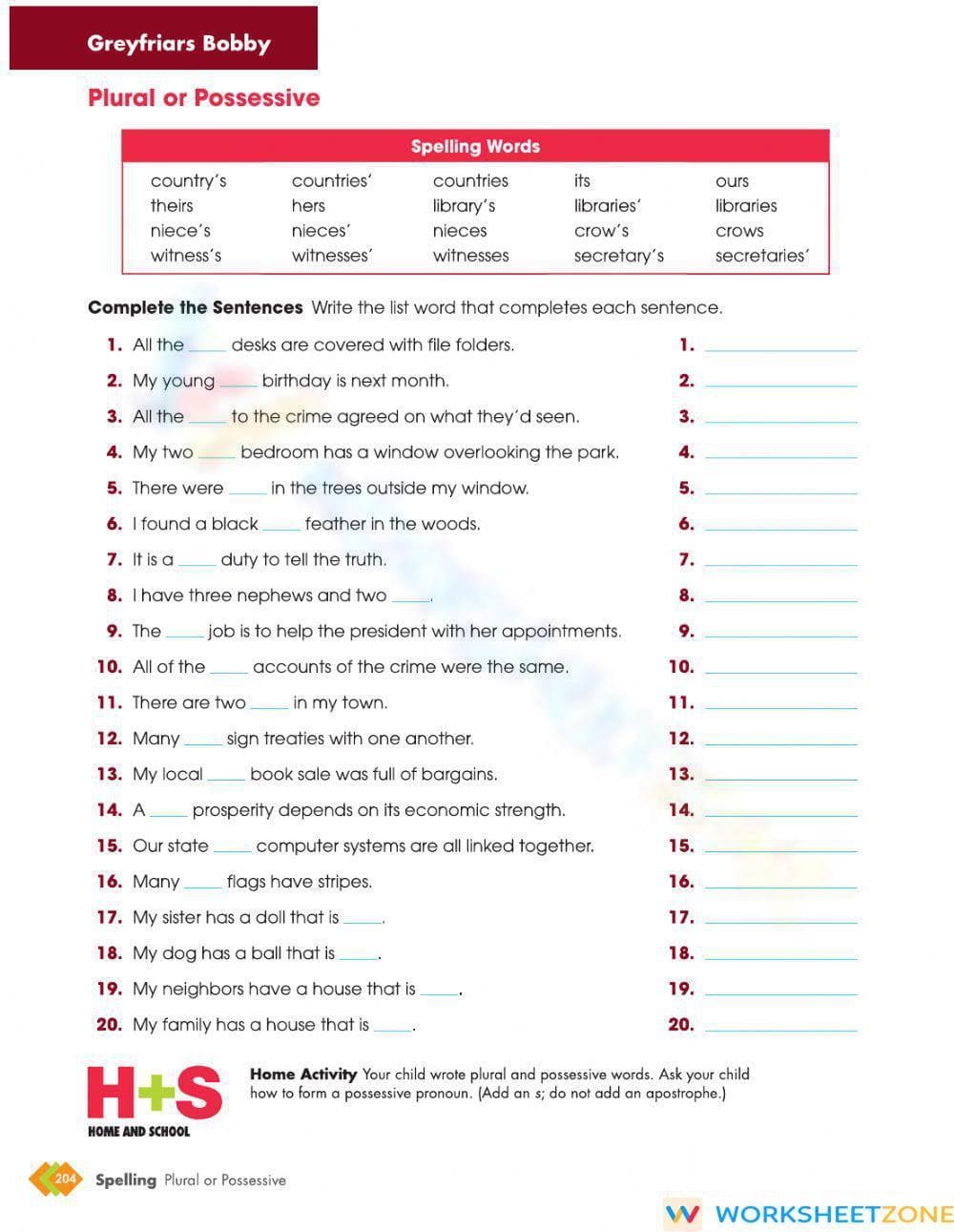
Master the complex differences between plural nouns, singular possessives, and plural possessives with this targeted English Language Arts worksheet. Designed for middle school students, this resource helps learners identify the correct usage of apostrophes in context. Students will improve their writing precision and grammatical accuracy through immediate application of these essential spelling rules.
At a Glance
- Grade: 5–7 · Subject: English Language Arts
- Standard:
CCSS.ELA-LITERACY.L.6.1— Use standard English conventions to distinguish between plural and possessive noun forms- Skill Focus: Plural vs. Possessive Nouns and Pronouns
- Format: 1 page · 20 problems · Answer key included · PDF
- Best For: Grammar reinforcement, bell-ringer activities, and homework practice for middle school
- Time: 15–20 minutes
This comprehensive one-page PDF features a word bank of 22 spelling words including singular possessives, plural possessives, and possessive pronouns. The worksheet provides 20 sentence-completion tasks that require students to select the correct word to fit the semantic context. The layout is professional, with dedicated lines for responses and a "Home and School" activity footer for extra practice.
Skill Progression
- Guided practice: The worksheet begins with a clear word bank that categorizes similar-sounding words like "its" and "ours" for easy reference.
- Supported practice: Students engage with 20 sentences providing context clues to determine if a word indicates more than one item or shows ownership.
- Independent practice: Final tasks involve possessive pronouns where students apply rules without apostrophes.
This gradual-release approach ensures students move confidently from basic identification toward total mastery of grammatical cases and number agreement.
Standards Alignment
The primary alignment is CCSS.ELA-LITERACY.L.6.1, requiring students to demonstrate command of standard English grammar conventions. Specifically, it addresses the distinction between plural and possessive forms within complex sentence structures. This standard code can be copied directly into lesson plans, IEP goals, or district curriculum mapping tools to ensure instructional consistency across the middle school ELA curriculum.
How to Use It
Use this worksheet during the "You Do" phase of a grammar lesson on apostrophes. It serves as an excellent formative assessment tool; teachers should observe if students struggle with plural possessives versus possessive pronouns. Expected completion time is 15 minutes, making it ideal for a focused literacy center or a quick check for understanding after direct instruction.
Who It's For
This resource is tailored for Grade 5-7 students refining their mechanics in formal writing. It is beneficial for English Language Learners who find auditory similarities between plural and possessive forms confusing. The worksheet pairs naturally with an anchor chart detailing "Apostrophe Rules" to provide extra scaffolding for struggling writers in the general classroom.
Grammar instruction is most effective when integrated into meaningful contexts rather than isolated drills. According to the RAND AIRS 2024 report, students who engage in contextualized grammar practice, such as sentence-completion tasks requiring semantic analysis, show a 22% higher retention rate of punctuation rules compared to rote memorization. This worksheet facilitates that transition by forcing students to evaluate whether a sentence requires a plural subject or a possessive modifier. By identifying the difference between "crows" and "crow's" within a narrative sentence, learners build the syntactical awareness necessary for high-stakes writing assessments. The focus on `CCSS.ELA-LITERACY.L.6.1` ensures that students master pronoun cases and noun possessives early, preventing the common "apostrophe-error" plateau seen in later grades. Teachers can reliably use this evidence-based practice to close achievement gaps in foundational literacy skills for all middle schoolers.


